


ART & CULTURE
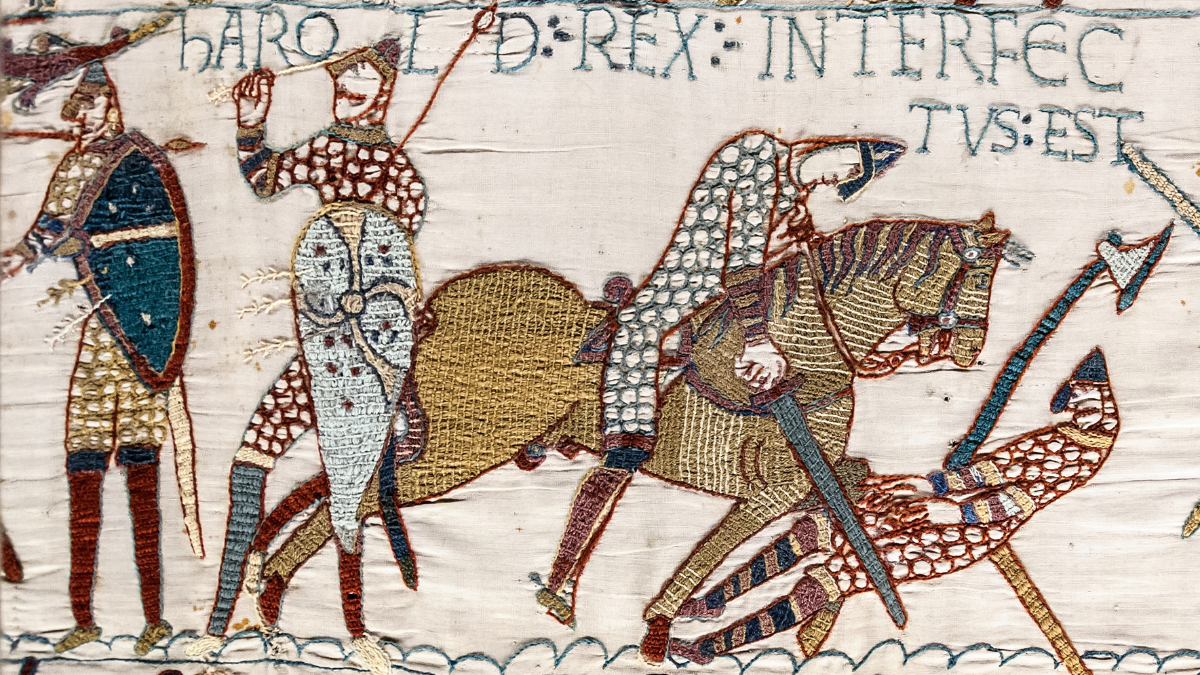
A work of art created nearly a thousand years ago has found itself at the centre of a thoroughly twenty-first-century argument. The Bayeux Tapestry, the extraordinary 11th-century embroidered account of the Norman conquest of England, is due to travel from France to Britain for a major exhibition at the British Museum. Measuring almost 70 metres, it tells its story through a remarkable sequence of people, ships, horses, battles, ceremonies and inscriptions, culminating in the events surrounding the Battle of Hastings in 1066.
For most visitors, seeing it will be the experience. But what happens when the visitor cannot see? That question has acquired new significance after visually impaired campaigners challenged the accessibility arrangements surrounding the exhibition, including the provision of audio description. The dispute reaches far beyond one exhibition or one museum. It goes to the heart of something cultural institutions around the world are increasingly being asked to confront: if someone can enter a museum but cannot meaningfully experience what is inside it, has the museum truly provided access?
More fundamentally, it raises a question that could reshape the museum of the future: who gets to experience art?
Access Is More Than An Open Door
For generations, museums largely understood accessibility in physical terms. Could someone enter the building? Was there a ramp or lift? Could a wheelchair reach the galleries? Those questions remain essential, but contemporary thinking about accessibility has expanded considerably. A blind or partially sighted visitor may require detailed audio description, tactile interpretation or objects that can safely be touched. A deaf or hard-of-hearing visitor may need captioning, transcripts or sign-language interpretation. Someone with autism or another sensory sensitivity may benefit from quieter visiting periods, clear information about noise and lighting, or spaces where sensory overload can be reduced.
The requirements can be just as varied beyond these examples. People with learning disabilities may need information presented differently. Older visitors may require seating, clearer signage or better lighting. Someone with limited mobility may technically be able to enter a gallery but find the distance between resting places exhausting. Accessibility is therefore not a single modification to a building or exhibition. It begins with recognising that people experience the world differently.
This principle is especially significant in museums because museums are fundamentally about interpretation. A painting, sculpture or historical object does not communicate in exactly the same way to every visitor. Even someone with perfect sight often requires context to understand why an object matters, where it came from and what it represented. Once that is acknowledged, accessibility stops looking like an additional service attached to the museum and becomes part of what a museum is supposed to do.
Seeing Through Words And Touch
Audio description provides a fascinating example. At its best, it does far more than announce what an object is. Imagine standing before a portrait. A basic label may provide the artist’s name, the subject, the date and the medium. A skilled audio description can construct the image spatially, explaining where the subject stands, the direction of the gaze, the position of the hands, the clothing, colours, expression, background, scale and the details that contribute to the emotional character of the work.
For the Bayeux Tapestry, the challenge becomes even greater because it is not a single image but a narrative. Kings, soldiers, messengers, animals and ships move through interconnected scenes. Battles unfold, political events are represented symbolically and Latin inscriptions accompany the images. Meaning lies partly in individual figures and partly in their relationship to everything around them. For a blind visitor, simply being told that the tapestry is present provides almost nothing of that experience. This is why the current argument matters: it asks whether accessibility means permitting someone to stand near an artwork or enabling that person to encounter its story.
Museums traditionally operate according to one of the most familiar rules of cultural life: visitors must not touch. There are good reasons for this. Oils from human skin can damage fragile surfaces, ancient objects cannot withstand thousands of hands, and conservation frequently requires distance. Tactile interpretation, however, is challenging the assumption that the original object must always be the only route to understanding it.
Three-dimensional reproductions can allow a blind visitor to explore the contours of a sculpture. Raised-line drawings can translate elements of paintings into tactile form, while replicas can communicate the shape, scale and texture of objects too fragile to handle. Major institutions have developed programmes around these ideas. The Metropolitan Museum of Art in New York offers programmes for visitors who are blind or partially sighted using verbal description, touch and other sensory approaches. Smithsonian museums provide a range of accessibility services, while the Louvre has also developed tactile experiences intended particularly for visitors with visual disabilities.
These initiatives point towards a larger idea. Touch does not have to be understood as a lesser substitute for sight. It can be another way of knowing. Once museums begin thinking in those terms, the benefits need not be restricted to visitors with disabilities. A tactile reproduction of a sculpture can help a child understand form. Detailed audio description may draw a sighted visitor’s attention to something previously overlooked. A multisensory exhibition can encourage visitors to slow down and engage rather than simply photograph an object and move on. Accessibility can therefore improve interpretation itself.
Hearing The Museum Differently
Similar questions arise for deaf and hard-of-hearing visitors as museums increasingly rely upon video, recorded interviews, sound installations and multimedia exhibits. Without captions or transcripts, significant portions of an exhibition can effectively disappear for someone unable to hear them. Sign-language interpretation can provide another route, particularly for tours, lectures and public programmes.
Genuine accessibility, however, involves more than converting spoken words into text. Deaf culture has its own languages and traditions, and sign languages are not merely visual versions of spoken languages. Institutions that work with deaf communities, rather than simply designing services for them without consultation, can create substantially richer experiences.
That principle applies across accessibility. Cultural institutions cannot always determine from the outside what another community requires. Consultation with people who actually encounter the barriers can reveal difficulties that architects, curators and exhibition designers may never have noticed. Accessibility works best when the people for whom it is intended participate in shaping it.
The Museum As A Physical Experience
There is a tendency to think about museums primarily as collections of objects, but visitors also experience them as buildings. A beautiful staircase may be an architectural feature to one person and a barrier to another. A dimly illuminated gallery may protect delicate manuscripts while making navigation difficult for someone with limited vision. A huge museum can become physically exhausting long before a visitor has finished seeing what they came for.
Historic buildings create particular challenges because many were constructed centuries before accessibility became an architectural consideration. Retrofitting them can be difficult, expensive and sometimes constrained by heritage-protection rules. These difficulties are real, but they also demonstrate why accessibility is increasingly moving from adaptation towards inclusive design.
Retrofitting essentially asks how different people can be helped to use a museum that has already been built. Inclusive design starts earlier by asking how a museum would be created if it were assumed from the beginning that visitors would have different bodies, senses and abilities. That change in perspective can affect everything from entrances, lifts and toilets to gallery layouts, seating, lighting, signage, interpretation and digital services.
When The Object Comes From Your Own Culture
For the global Indian community, another dimension of the museum experience deserves attention. Some of the world’s most significant collections of Indian and South Asian art are encountered far beyond India. A family of Indian origin living in London, New York, Washington, Toronto, Singapore, Melbourne or another global city may take its children to a museum and unexpectedly find itself standing before objects connected to ancestral history.
A Chola bronze can open a doorway into Tamil religious and artistic traditions. A Mughal miniature can begin a conversation about empire, literature, court life and craftsmanship. Textiles can reveal extraordinary networks of trade and design, while Buddhist and Gandharan objects can connect the subcontinent to cultural exchanges stretching across Asia. Manuscripts, jewellery, temple sculpture and everyday objects can reveal lives that conventional political histories sometimes overlook.
For a second- or third-generation member of the diaspora, such encounters can be deeply personal. The object may belong to a culture inherited through grandparents, food, language, religious practice or family stories, while its historical context remains largely unfamiliar. A museum can therefore become an unexpected bridge between contemporary identity and ancestral memory.
This introduces another dimension of accessibility, although it should not be confused with disability access. The barriers faced by a blind visitor or wheelchair user involve specific questions of equal participation and, in many jurisdictions, legal rights. Cultural interpretation raises a different but related question about a museum’s public purpose. An object can be physically visible and still remain culturally difficult to understand.
A label stating the date, material and geographic origin of a Hindu deity, for example, may be academically accurate while telling a visitor little about how such an image functions within a living religious tradition. A textile may be displayed principally for its beauty while the communities, techniques and social histories that produced it remain largely invisible. For diaspora visitors, museums can therefore become bridges to heritage or rooms filled with beautiful objects separated from their meaning.
Who Tells The Story?
This leads into one of the largest debates transforming museums today: who has the authority to interpret cultural objects? For much of modern museum history, interpretation was overwhelmingly controlled by curators and scholars within the institution. Their expertise remains indispensable. Serious museums cannot replace scholarship with whatever interpretation happens to be fashionable.
Many institutions, however, are increasingly involving source communities, indigenous groups, artists, faith communities and people connected to the cultures represented in their collections. Their participation can change the questions being asked. A curator may concentrate on when an object was produced, its artistic style and how it entered the collection. A community may explain how it was used. A religious practitioner may illuminate why its placement matters, while a descendant community may question how it left its place of origin in the first place.
These perspectives do not necessarily cancel one another. Together, they can make an object more comprehensible. For Indian-origin communities around the world, this shift has particular significance because debates around colonial collecting, provenance and restitution have brought renewed attention to how South Asian objects entered Western museums. Accessibility therefore intersects with another contemporary museum question: whose history accompanies the object?
India’s Museums And The Opportunity Ahead
India possesses one of the world’s richest cultural inheritances, ranging from archaeological sites and classical sculpture to tribal and folk traditions, manuscripts, textiles, painting, photography and modern art. Yet possessing extraordinary collections does not automatically make those collections accessible.
Indian museums vary enormously in resources, visitor experience and accessibility. Some institutions and cultural organisations have experimented with tactile exhibits, Braille interpretation, sign-language material and programmes designed for visitors with disabilities. Awareness is growing, but provision remains uneven. This creates an opportunity because India is modernising cultural institutions and developing new museums at precisely the moment when international thinking about museums is changing.
Rather than reproducing older museum models and adding accessibility afterwards, new and modernised institutions can incorporate it from the beginning. That could mean step-free access, thoughtful gallery layouts, accessible toilets, seating, tactile interpretation, captioned media, Indian Sign Language, audio description and digital material designed to work with assistive technologies.
There is also the question of language. India’s linguistic diversity presents a formidable interpretive challenge. A national collection explained principally through English and perhaps Hindi cannot assume that every visitor encounters those languages equally comfortably. The museum designed for India’s future will therefore need to think seriously not only about what it displays, but about the many different people expected to understand it.
Technology Opens New Doors
Technology is rapidly expanding what museums can offer. A smartphone can become a personalised museum guide, allowing visitors to choose audio description, captions, another language or additional historical context. Three-dimensional scanning can create tactile reproductions without requiring people to touch fragile originals. Augmented reality can reconstruct damaged monuments or demonstrate how an archaeological object may once have appeared, while virtual reality can make aspects of inaccessible sites available to people unable to travel physically.
Artificial intelligence introduces even greater possibilities. AI systems could assist in generating detailed visual descriptions, translating interpretation into multiple languages, answering questions about objects or personalising an exhibition according to a visitor’s interests and accessibility requirements. For a global Indian family, one can imagine a museum guide explaining an Indian object to grandparents in an Indian language while offering their primarily English-speaking grandchildren another level of historical interpretation.
The possibilities are exciting, but they demand caution. Art is not merely a collection of visually identifiable elements. Cultural meaning is subtle, religious symbolism can be misunderstood and historical controversies cannot always be compressed into confident answers. An AI system describing an unfamiliar cultural object can be eloquently wrong. Human scholarship and community knowledge therefore become more important, not less, as technology makes interpretation easier to generate. Technology should widen the doorway into culture without becoming the unquestioned authority standing inside it.
The Cost Of Inclusion
There is an uncomfortable practical reality behind all of this: comprehensive accessibility requires investment. Professional audio description requires research, writing and recording. Tactile replicas must be designed and manufactured. Historic buildings may require expensive modifications. Sign-language interpretation requires trained professionals. Websites and applications must meet accessibility standards, while staff need appropriate training.
A small regional museum cannot reasonably be expected to possess the resources of institutions such as the British Museum, Louvre, Metropolitan Museum of Art or Smithsonian. Financial and architectural constraints deserve acknowledgement, particularly for smaller cultural organisations struggling simply to preserve their collections.
Yet almost everything a museum considers important costs money. Climate-controlled cases, security, lighting, conservation, exhibition design and marketing all require investment because they are regarded as necessary parts of operating a cultural institution. The real debate is therefore not whether accessibility has a cost, but whether it is important enough to be considered among those necessary costs.
This is particularly important as new museums are planned. Accessibility incorporated during design can be far easier and less expensive than major modifications attempted years later. The decision is therefore not simply ethical. In many circumstances, it is practical.
Participation, Not Charity
The language surrounding accessibility matters. Disabled people should not be portrayed as passive recipients of cultural generosity. Blind people visit museums. Deaf people attend concerts and exhibitions. People with mobility disabilities travel, study history and create art. Neurodivergent people are artists, academics, curators and cultural professionals themselves.
The issue is not whether museums should kindly permit these communities to participate. They already belong to the public that museums claim to serve. The question is whether avoidable barriers prevent them from participating on equal terms.
This distinction changes accessibility from an act of charity into a matter of participation. A public cultural institution is not making a special concession when it enables a blind person to understand an exhibition or allows a wheelchair user to move independently through its galleries. It is fulfilling the purpose implied by the word public.
When Accessibility Improves The Museum For Everyone
One of the most encouraging lessons from inclusive design is that improvements created for one group frequently benefit many others. Captions help deaf visitors, but they also help someone watching a video in a noisy gallery or a visitor whose first language is not the language being spoken. A ramp assists a wheelchair user, but also a parent pushing a pram and an older visitor who finds stairs difficult.
Clearer signage may help someone with cognitive difficulties while also assisting a tourist unfamiliar with the building. Seating benefits visitors with mobility limitations but also a tired child, a pregnant woman or anyone who wants to spend longer contemplating an artwork. Audio description created for a blind visitor can reveal details that a sighted visitor may have overlooked.
Accessibility, viewed this way, is not about redesigning museums for a small minority. It is about recognising the enormous variety contained within the word visitor. The more thoughtfully a museum responds to that variety, the more welcoming and intelligible it can become for everyone.
From Preserving Objects To Sharing Culture
Museums have changed profoundly over centuries. Their earliest purpose was often to collect, followed by an imperative to classify and preserve. Modern museums increasingly embraced scholarship, education and public display. Now another transformation is taking place. The museum is being asked not simply to possess culture but to make culture genuinely experienceable.
That is a more demanding responsibility. It requires institutions to consider the wheelchair user who cannot reach a gallery, the blind visitor who cannot see a painting, the deaf visitor who cannot hear an installation, the autistic child overwhelmed by the environment, the older person who needs somewhere to sit and the young diaspora visitor standing before an object from an ancestral culture they are only beginning to understand. Their needs are not identical, but together they challenge the deeply rooted assumption that putting an object on display automatically makes it accessible.
For centuries, museums asked what humanity should preserve. Later, they asked what should be displayed. The question now confronting them is who they are displaying it for. The answer may determine what the museum of the future becomes.
Art does not truly become public merely because the doors of a museum are open. Its public purpose is fulfilled when the people who enter those doors are given a meaningful opportunity to understand, encounter and experience what lies beyond them.