


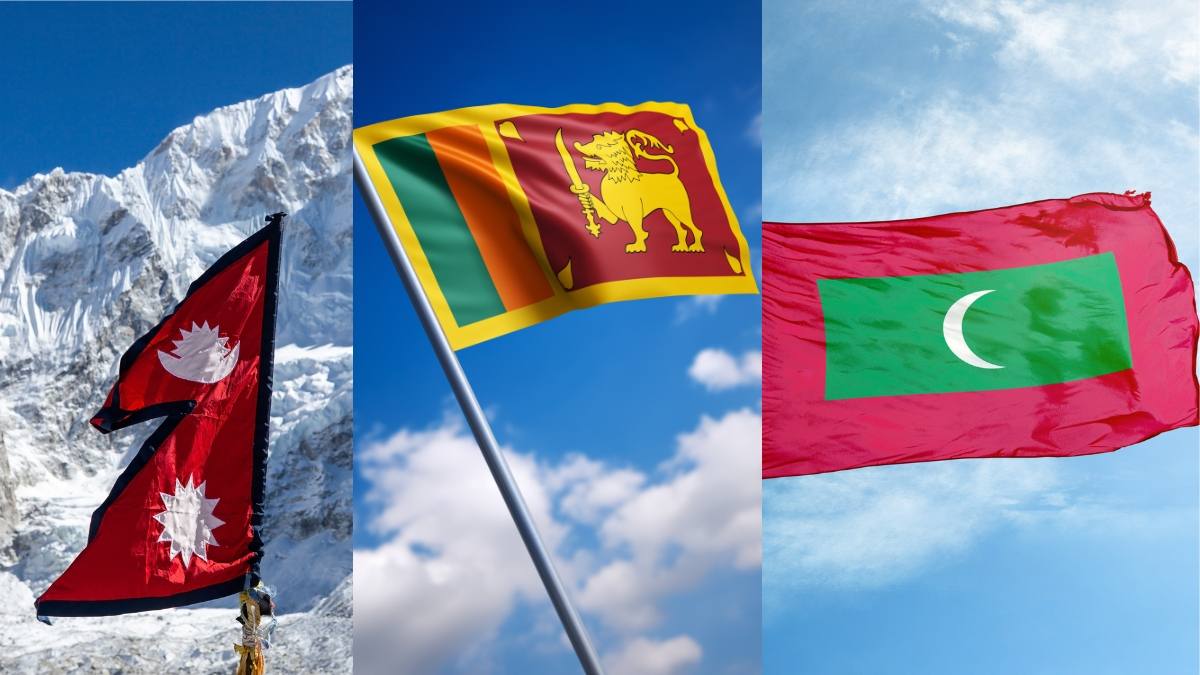
The Balancing Act: Nepal, Sri Lanka And Maldives Between Competing Powers
Small States In A Big Strategic Game
International politics has never been shaped solely by major powers. History repeatedly shows that countries occupying strategic locations often acquire influence far greater than their size or population might suggest. Maritime crossroads, mountain corridors and island chains have shaped trade routes, military strategy and diplomatic relationships for centuries.
In the twenty-first century, few regions illustrate this reality more clearly than the Indian Ocean and the Himalayan frontier. The growing importance of the Indo-Pacific has increased international attention on smaller states that once occupied relatively modest positions in geopolitical discussions. Among them are Nepal, Sri Lanka and Maldives, three countries whose locations have transformed them into important participants in wider regional competition.
Nepal sits between two of Asia’s largest economies and has long served as both a cultural bridge and a strategic buffer in the Himalayas. Sri Lanka lies close to some of the busiest maritime routes in the Indian Ocean, while the Maldives occupies island chains positioned near sea lanes carrying energy supplies and commercial traffic linking Asia with the Middle East, Europe and Africa.
As trade shifts towards Asia and maritime security becomes increasingly important, decisions taken in Kathmandu, Colombo and Malé attract growing attention from governments, investors and businesses across the world.
Economic development lies at the centre of this story. All three countries seek investment, infrastructure and tourism revenues capable of supporting growth and improving living standards. The challenge is to secure these opportunities while preserving strategic autonomy and avoiding excessive dependence upon any single partner.
The modern international system increasingly rewards this form of diplomatic balancing. Many countries now seek economic cooperation with one partner, security cooperation with another and technological partnerships with several others simultaneously. Nepal, Sri Lanka and the Maldives are becoming important examples of this emerging approach.
Their story is therefore about more than small states navigating international politics. It is also a story about the changing nature of power itself, where infrastructure, connectivity and commerce increasingly shape influence alongside traditional military strength.
Nepal: Between The Himalayas And The Indo-Pacific
Few countries illustrate the relationship between geography and diplomacy more clearly than Nepal.
Situated between India and China, Nepal has historically functioned as a cultural bridge, trading corridor and strategic buffer in Asia. Today, the rise of the Indo-Pacific and the expansion of regional connectivity projects have placed the Himalayan nation at the centre of discussions surrounding trade, infrastructure and regional influence.
Geography remains central to understanding Nepal’s position. Its northern frontier connects with China through the Himalayas, while its southern border remains deeply integrated with India economically, culturally and socially. Trade routes, labour migration and commercial activity have long tied Nepal’s prosperity to developments in neighbouring countries.
India continues to occupy a particularly important place in Nepal’s economic life through open borders, extensive people-to-people connections and deep historical ties. At the same time, China’s expanding economic presence has created new opportunities through infrastructure investment, transport connectivity and commercial partnerships.
Like many smaller states, Nepal increasingly seeks to benefit from multiple relationships while maintaining strategic flexibility.
Infrastructure development occupies a central place in these ambitions. As a landlocked country, efficient transport systems and regional connectivity are essential for competitiveness and growth. Improved roads, rail links and energy networks could reduce costs, encourage investment and strengthen integration with regional markets.
Hydropower represents another significant opportunity. Nepal possesses considerable renewable energy potential through its river systems and mountainous terrain, while stronger electricity connections could support both economic development and regional energy cooperation.
Tourism remains equally important. The Himalayas continue to attract visitors from around the world, making political stability, infrastructure development and environmental sustainability important economic priorities.
Climate change, however, introduces new challenges. Glacial retreat, changing weather patterns and environmental pressures increasingly affect agriculture, water resources and infrastructure planning across the Himalayan region.
For policymakers in Kathmandu, the challenge is not choosing between partners but managing relationships effectively with all of them. Nepal’s experience reflects a broader reality of twenty-first century diplomacy: prosperity often depends upon maintaining constructive relationships with multiple partners simultaneously.
Sri Lanka: The Indian Ocean’s Strategic Crossroads
Few countries possess a geographic advantage as striking as that of Sri Lanka.
Located just south of the Indian subcontinent and close to some of the busiest maritime routes in the world, Sri Lanka occupies a position that has attracted traders, explorers and strategic planners for centuries. Ships travelling between East Asia, the Middle East, Africa and Europe pass close to its shores, making the island one of the natural crossroads of the Indian Ocean.
In earlier centuries this geography made Sri Lanka an important centre for trade in spices and precious commodities. Today it has given the country renewed strategic importance in an era increasingly defined by maritime commerce and Indo-Pacific competition.
A substantial proportion of global energy shipments and container traffic pass through the Indian Ocean on their way to manufacturing centres and consumer markets across the world. Ports located near these routes therefore possess significance extending far beyond national economies.
Sri Lanka’s location allows it to participate directly in these flows. Port infrastructure, logistics services and maritime connectivity have consequently become central elements of the country’s economic strategy.
The opportunities are considerable. Efficient ports generate employment, attract investment and encourage supporting industries such as warehousing, logistics and financial services.
Yet strategic geography also attracts strategic attention.
As major powers increasingly focus on the Indo-Pacific, investments in maritime infrastructure are often viewed through both economic and geopolitical lenses. Ports and transport networks influence not only trade patterns but also diplomatic relationships and regional influence.
Sri Lanka’s recent economic difficulties highlighted the importance of these questions. Financial pressures and debt challenges demonstrated the vulnerabilities that can emerge during periods of global economic uncertainty while also underlining the importance of international cooperation and regional support.
The country’s recovery strategy increasingly focuses on diversification through tourism, logistics, manufacturing and digital services capable of supporting more resilient growth.
Like many smaller states, Sri Lanka seeks constructive relationships with multiple partners rather than exclusive alignment with any single power. Maintaining this balance has become one of the defining diplomatic challenges of the modern Indo-Pacific.
Maldives: Small Islands, Big Strategic Importance
At first glance, the Maldives appears an unlikely candidate for geopolitical significance.
Its population is relatively small, its land area limited and its economy heavily dependent upon tourism and services. Geography, however, has once again demonstrated that size alone rarely determines strategic importance.
Stretching across the central Indian Ocean, the Maldives occupies a position close to some of the world’s most important maritime trade routes. Commercial shipping carrying energy supplies from the Gulf and manufactured goods from Asia passes through nearby waters in enormous quantities.
As the centre of global economic activity shifts increasingly towards the Indo-Pacific, the strategic value of these sea lanes continues to grow.
The Maldives has consequently found itself at the centre of expanding international engagement involving infrastructure investment, tourism projects and connectivity initiatives.
Tourism remains the foundation of the Maldivian economy and is likely to remain central to the country’s prosperity for the foreseeable future. This dependence, however, creates both strengths and vulnerabilities, exposing the economy to global recessions, public health crises and fluctuations in international travel.
Climate change introduces another layer of strategic concern. The Maldives has become one of the countries most closely associated with discussions concerning rising sea levels and environmental vulnerability, giving it an influential voice in global climate diplomacy.
The country’s foreign policy reflects similar pragmatism. Like many smaller states operating amid great power competition, the Maldives seeks productive relationships with multiple partners while preserving strategic flexibility and decision-making independence.
For India, the Maldives occupies an important position within the wider security architecture of the Indian Ocean. Maritime cooperation, disaster response and economic engagement have become important components of bilateral relations.
The broader lesson emerging from the Maldivian experience is straightforward: in the modern international system, location, connectivity and access to trade routes often matter as much as territory or population.
The Art Of Strategic Balancing
One of the defining characteristics of contemporary international politics is the growing number of countries seeking to avoid exclusive alignment with any single major power.
Unlike the Cold War, today’s international environment rewards flexibility rather than rigid alliances. Economic partnerships, security relationships and technological cooperation increasingly involve different countries simultaneously.
Nepal, Sri Lanka and the Maldives represent this reality clearly. Their objective is not to choose one partner over another but to maintain constructive relationships with multiple powers while preserving political independence and policy autonomy.
This approach is often described as strategic balancing.
Multiple partnerships can increase bargaining power, create additional sources of investment and reduce the risks associated with dependence upon a single market or financier. At the same time, balancing is rarely straightforward. Infrastructure projects, trade agreements and security cooperation often create long-term commitments that shape foreign policy options for decades.
The Indo-Pacific has become one of the principal arenas in which these decisions are being made.
India remains a central factor in these calculations because of geography, trade, tourism and deep historical relationships across the region. China’s expanding economic presence has broadened the choices available to many smaller states, while countries in Europe, the Gulf and East Asia are becoming increasingly active through trade and development partnerships.
The result is a more diverse and multipolar diplomatic environment than existed only a generation ago.
For smaller countries, this diversity creates opportunities as well as responsibilities. Success increasingly depends upon institutional strength, economic resilience and the ability to ensure that international partnerships support national priorities rather than constrain future choices.
Why Small States Matter In The Indo-Pacific Century
The story of modern geopolitics is often told through the actions of major powers. Yet history repeatedly demonstrates that the decisions of smaller states can influence regional stability, trade routes and diplomatic relationships in ways that far exceed their size.
The experiences of Nepal, Sri Lanka and the Maldives illustrate this reality clearly.
Each occupies a strategic location that has become increasingly important as the global economy shifts towards Asia and the Indian Ocean. Their geography places them near major shipping corridors, expanding markets and some of the fastest-growing economies in the world.
The questions they face are becoming increasingly common throughout the developing world. How can growth be accelerated without creating excessive dependence? How can infrastructure investment be encouraged while preserving strategic autonomy? How can relationships with larger powers be managed without reducing policy flexibility?
The Indo-Pacific provides perhaps the clearest example of this transformation. Trade routes, energy corridors and digital infrastructure are becoming as important to international influence as traditional military capabilities.
For countries such as Nepal, Sri Lanka and the Maldives, this creates both opportunities and responsibilities. Their decisions influence shipping routes, tourism markets, investment flows and regional stability.
Perhaps the most important lesson is that power itself is changing.
Connectivity creates influence. Trade creates influence. Diplomacy creates influence. Geography continues to create influence.
The great powers will continue to shape the international system, but the smaller states standing between them may increasingly determine how that system works.
That is why Nepal, Sri Lanka and the Maldives matter.
And that is why their balancing act may become one of the defining geopolitical stories of the Indo-Pacific century.
Disclaimer: The views, opinions and interpretations expressed in articles published in WFY – World For You are those of the respective authors and contributors and do not necessarily reflect the official position of the Editor, Editorial Board, publishers or affiliated organisations. Every effort is made to ensure the accuracy and reliability of information at the time of publication. However, facts, figures, laws, regulations, policies, scientific understanding and global developments may change over time. Readers are advised to independently verify information and seek appropriate professional advice before making decisions relating to health, finance, legal matters, immigration, education, investments or any other specialised subject. Articles published in WFY – World For You are intended for general information, discussion and educational purposes only and should not be construed as professional, medical, legal, financial or other expert advice. References to organisations, institutions, products, services or individuals are made solely for editorial, informational or illustrative purposes and do not constitute endorsement or recommendation unless explicitly stated. All rights to original content remain with their respective authors and contributors unless otherwise specified. Unauthorised reproduction, distribution or republication of material published in WFY – World For You without prior written permission is prohibited. © 2026 WFY – World For You. All Rights Reserved.