


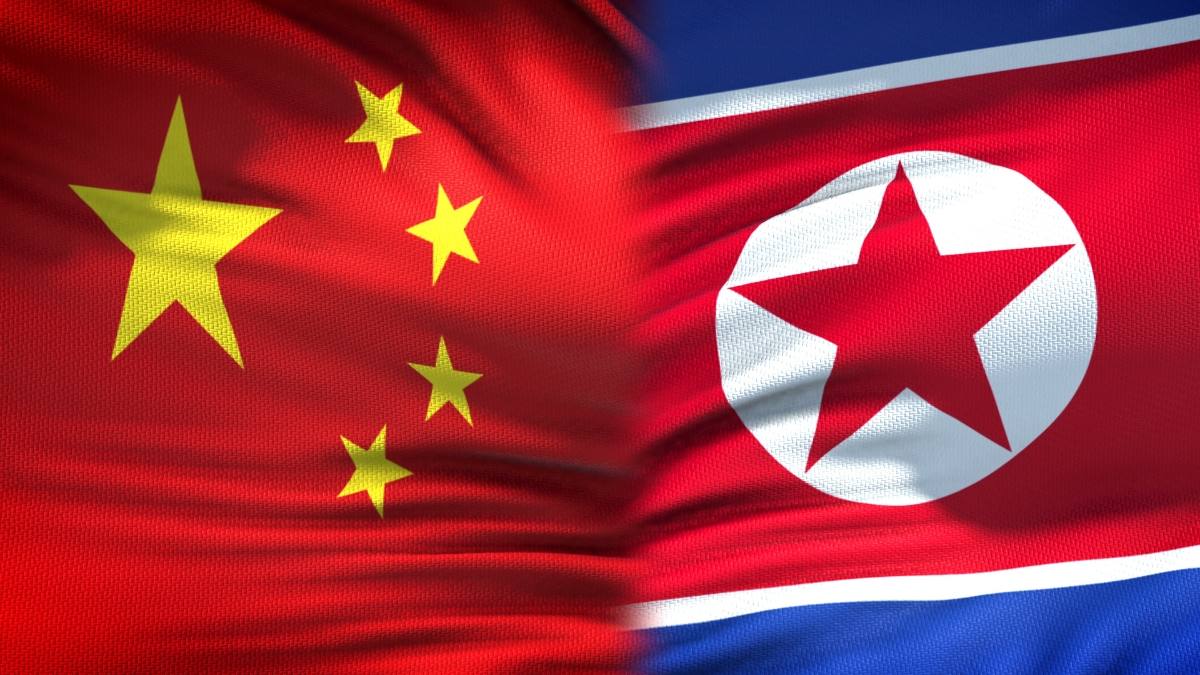
China, North Korea and the New Great Game in Asia: Power, Pressure and Strategic Calculations
By Aisha Sabah, WFY Bureau Desk
World Politics | WFY June Edition 2026
In international politics, appearances often conceal deeper realities. State visits, military parades, diplomatic handshakes and carefully choreographed displays of friendship frequently serve purposes far beyond symbolism. Such was the case when Chinese President Xi Jinping travelled to Pyongyang for a high-profile meeting with North Korean leader Kim Jong Un, a visit that attracted significant global attention and raised important questions about the evolving balance of power in East Asia.
Official statements from both governments emphasised friendship, shared history and strategic cooperation. Streets in Pyongyang were lined with banners, military guards and cheering crowds, while state media portrayed the relationship as strong and enduring. Yet beneath the public spectacle lies a far more complex geopolitical reality.
The relationship between China and North Korea is among the most unusual strategic partnerships in modern international affairs. They are allies but not entirely trusting allies. They are neighbours whose interests frequently overlap, yet whose ambitions often diverge. They rely on one another while simultaneously seeking to limit each other’s influence.
As tensions continue across Europe, the Middle East and the Indo-Pacific, the evolving relationship between Beijing and Pyongyang has become a critical factor in shaping global security. The consequences extend far beyond the Korean Peninsula, influencing the strategic calculations of the United States, Russia, Japan, South Korea and many other nations. For the global Indian diaspora, particularly those living and working across East Asia, North America and Europe, developments in this region carry increasing economic, political and security implications.
A Relationship Forged in History
The foundations of China-North Korea relations date back to the Korean War of 1950-53. When Chinese forces entered the conflict to support North Korea against United Nations forces led by the United States, the alliance was literally cemented through military sacrifice.
Both governments continue to describe their relationship as being “forged in blood”, a phrase that reflects not only historical memory but also strategic necessity. China remains North Korea’s most important economic partner, while North Korea serves as a geographical buffer between China and the US-allied South Korea.
For decades, Beijing viewed Pyongyang as an essential component of its regional security architecture. A stable North Korea prevented the possibility of American military forces directly reaching China’s border.
However, strategic necessity does not automatically create trust.
Over the years, Beijing has repeatedly found itself frustrated by North Korea’s unpredictable behaviour, particularly its missile launches and nuclear weapons programme. Every North Korean missile test creates instability in the region and strengthens arguments in Washington, Tokyo and Seoul for expanded military cooperation and defence spending.
From China’s perspective, North Korea is valuable precisely because it serves as a buffer state. Yet it can also become a liability when its actions provoke international crises.
This contradiction remains at the heart of the relationship.
Why Xi Jinping’s Visit Matters
Xi Jinping’s visit to Pyongyang was significant for several reasons.
Firstly, high-level exchanges between the two countries had become relatively infrequent in recent years. Diplomatic interactions had noticeably cooled, especially as North Korea expanded its engagement with Russia following Moscow’s invasion of Ukraine.
Secondly, the visit came at a time when global power alignments are undergoing profound transformation.
The world is increasingly moving towards a multipolar order in which China, the United States, Russia, India and regional powers compete for influence across multiple theatres simultaneously.
In this environment, Beijing cannot afford to lose strategic influence over North Korea.
The Chinese leadership understands that geopolitical influence is rarely permanent. It must be maintained through continuous engagement, economic incentives and diplomatic management.
Xi’s visit therefore represented an effort to reinforce China’s position as North Korea’s primary strategic partner at a moment when Russia’s influence in Pyongyang has been growing.
The Russia Factor
Perhaps the most important factor driving Beijing’s renewed attention towards North Korea is Moscow.
The Russia-Ukraine conflict has fundamentally reshaped relationships across Eurasia.
As Western sanctions isolated Russia from many traditional economic partners, Moscow began strengthening ties with countries willing to challenge Western influence. North Korea emerged as one of the most important of these partners.
Over the past two years, Russia and North Korea have significantly expanded military and strategic cooperation. Reports from Western intelligence agencies suggest that Pyongyang has supplied artillery shells, missiles and other military equipment to support Russian operations in Ukraine.
In return, North Korea is believed to have received economic assistance, energy supplies and potentially access to advanced military technologies.
The relationship deepened further when Russian President Vladimir Putin visited Pyongyang and signed a mutual defence agreement with Kim Jong Un in 2024.
This development inevitably raised concerns in Beijing.
China and Russia maintain a close strategic partnership, but they are also major powers with their own spheres of influence. Beijing does not want to see Moscow become the dominant external influence in North Korea.
A North Korea increasingly dependent on Russia would reduce China’s leverage and potentially complicate Beijing’s long-term regional strategy.
Xi’s visit can therefore be interpreted as an effort to ensure that Pyongyang remains firmly within China’s strategic orbit.
North Korea’s Balancing Act
While much attention focuses on China’s calculations, North Korea is also pursuing its own strategic objectives.
Kim Jong Un has consistently demonstrated a willingness to balance major powers against one another.
Rather than becoming overly dependent on any single country, North Korea seeks to maximise its strategic autonomy by maintaining relationships with multiple partners.
This approach allows Pyongyang to extract economic and political benefits from both China and Russia while preserving room for independent decision-making.
For Kim, dependence carries risks.
History has shown that excessive reliance on any external power can limit national sovereignty. North Korea’s leadership has long prioritised self-reliance, even while accepting foreign assistance when necessary.
Russia’s current importance may not be permanent. If the conflict in Ukraine eventually ends and Russia’s strategic priorities shift, Moscow’s interest in North Korea could diminish.
China, by contrast, will remain North Korea’s neighbour indefinitely.
This geographical reality ensures that Beijing will continue to play a central role in Pyongyang’s calculations.
China’s Nuclear Dilemma
One of the most delicate issues in the relationship concerns North Korea’s nuclear weapons programme.
China officially supports denuclearisation of the Korean Peninsula. It has repeatedly endorsed international efforts aimed at preventing nuclear proliferation.
At the same time, Beijing is reluctant to apply excessive pressure on Pyongyang.
This apparent contradiction reflects a complex strategic calculation.
If China pushes too hard against North Korea’s nuclear ambitions, it risks destabilising the regime or driving it further towards Russia.
If China does nothing, however, North Korea’s expanding nuclear capabilities continue to generate regional tensions.
According to international monitoring organisations, North Korea possesses an estimated arsenal of between 40 and 70 nuclear warheads, although exact numbers remain uncertain due to the country’s secrecy.
Over the past decade, Pyongyang has also developed increasingly sophisticated missile systems capable of reaching targets across Asia and potentially North America.
These developments concern not only Washington and its allies but also Beijing.
A nuclear-armed North Korea provides strategic complications for everyone involved.
Yet China appears to believe that careful management of the problem is preferable to aggressive confrontation.
The Strategic Geography of the Korean Peninsula
To understand China’s thinking, it is necessary to appreciate the geography of Northeast Asia.
North Korea shares a border of approximately 1,420 kilometres with China. The two countries are linked through trade routes, transportation networks and economic exchanges that have developed over decades.
Any major instability in North Korea would immediately affect China’s northeastern provinces.
A regime collapse could potentially trigger refugee flows involving hundreds of thousands of people crossing into Chinese territory.
It could also create uncertainty regarding control of North Korea’s nuclear facilities and military infrastructure.
For Beijing, maintaining stability is therefore not merely a foreign policy objective. It is a domestic security concern.
This explains why China often prioritises stability over ideological differences or policy disagreements with Pyongyang.
From Beijing’s perspective, an imperfect but stable North Korea is preferable to an unpredictable collapse.
The Economic Dimension
Economics forms another critical pillar of the relationship.
Despite international sanctions, China remains North Korea’s largest trading partner by a substantial margin.
Recent trade data indicates that Chinese exports to North Korea reached approximately $2.3 billion, the highest level in several years. Passenger rail connections between Beijing and Pyongyang have also resumed following pandemic-related disruptions.
The economic relationship covers a wide range of sectors, including:
- Food supplies
- Consumer goods
- Industrial machinery
- Energy products
- Construction materials
- Transportation infrastructure
For North Korea, access to Chinese markets and supplies is essential.
For China, economic engagement provides leverage and influence.
Trade becomes not merely a commercial activity but a strategic instrument.
Every shipment crossing the border reinforces interconnectedness and dependence.
The United States and Allied Responses
Developments between China and North Korea are closely monitored in Washington, Tokyo and Seoul.
The United States maintains approximately 28,500 troops in South Korea and around 55,000 in Japan, making Northeast Asia one of the most heavily militarised regions in the world.
North Korean missile tests and military activities frequently lead to joint military exercises involving the United States, South Korea and Japan.
In recent years, cooperation among these three countries has intensified considerably.
Shared concerns about China’s growing military capabilities and North Korea’s nuclear programme have encouraged deeper security coordination.
For Beijing, this presents a strategic challenge.
Chinese policymakers worry that North Korean provocations provide justification for increased American military presence near China’s borders.
This is one reason why Beijing remains cautious regarding Pyongyang’s nuclear ambitions.
A stronger US-led alliance system in Asia is not in China’s interests.
A New Cold War?
Many analysts increasingly describe global politics as entering a period resembling a new Cold War.
While today’s environment differs significantly from the US-Soviet rivalry of the twentieth century, several parallels are evident.
Major powers are once again organising around competing strategic blocs.
Technology restrictions, economic sanctions, military alliances and ideological competition are becoming increasingly prominent.
Within this emerging landscape, North Korea occupies a position far larger than its economic size might suggest.
Its geographic location, nuclear capabilities and relationships with both China and Russia make it a significant player in global security calculations.
Xi Jinping’s visit therefore carries importance beyond bilateral relations.
It reflects broader efforts by major powers to shape the evolving international order.
What This Means for Asia
The consequences of these developments extend across the Asian continent.
Greater strategic competition in Northeast Asia could affect:
- Regional trade routes
- Energy markets
- Investment flows
- Technology supply chains
- Defence spending
- Maritime security
Countries throughout Asia, including India, increasingly find themselves navigating a complex geopolitical environment in which rival powers compete for influence.
For India, developments involving China, Russia and North Korea are particularly relevant given New Delhi’s growing role in Indo-Pacific security discussions.
India has consistently advocated a rules-based international order while maintaining strategic autonomy in its foreign policy.
As geopolitical competition intensifies, balancing these priorities becomes increasingly important.
Implications for the Indian Diaspora
The global Indian diaspora has become deeply integrated into the economies of East Asia, North America, Europe and the Gulf.
Many Indians work in sectors directly affected by geopolitical stability, including:
- Technology
- Finance
- Shipping
- Manufacturing
- International trade
- Energy
- Higher education
Any significant escalation on the Korean Peninsula could affect global markets, supply chains and investor confidence.
South Korea, Japan and China are among India’s largest trading partners and important destinations for skilled professionals.
Instability in Northeast Asia would inevitably generate economic ripple effects felt across the world.
The Indian diaspora, with its growing presence in multinational corporations and international institutions, has a direct stake in maintaining peace and stability in the region.
Moreover, geopolitical developments increasingly influence immigration policies, employment opportunities and business conditions in many countries where Indian communities have established strong roots.
Friendship, Necessity or Leverage?
Ultimately, Xi Jinping’s visit raises a fundamental question.
Is the China-North Korea relationship driven by genuine friendship, shared ideology or strategic necessity?
The answer appears to be a combination of all three, though strategic necessity increasingly dominates.
Both governments continue to invoke historical bonds and revolutionary solidarity. Yet modern geopolitics operates according to interests rather than sentiment.
China needs North Korea as a buffer state and regional partner.
North Korea needs China as an economic lifeline and diplomatic protector.
Neither fully trusts the other.
Neither wishes to become dependent on the other.
Yet neither can afford to walk away.
That reality explains why diplomatic engagement continues despite recurring tensions and disagreements.
Conclusion: The Calculus of Survival
The images emerging from Pyongyang during Xi Jinping’s visit projected unity, friendship and shared purpose. Behind the ceremonial displays, however, lies a far more sophisticated geopolitical calculation. The visit reflected Beijing’s determination to maintain influence over a strategically important neighbour, prevent Russia from becoming the dominant external power in North Korea, and preserve stability along one of Asia’s most sensitive frontiers.
For North Korea, the visit underscored the continuing value of Chinese economic support and diplomatic protection while reinforcing its ability to balance relationships among major powers.
For the wider world, it offered a reminder that the Korean Peninsula remains one of the most consequential geopolitical fault lines of the twenty-first century.
As global competition between major powers intensifies, the relationship between Xi Jinping and Kim Jong Un will continue to shape regional security, influence international diplomacy and affect economic stability far beyond East Asia.
The banners in Pyongyang may speak of an “unbreakable” friendship, but the reality is more nuanced. What binds China and North Korea today is not merely history or ideology. It is a shared understanding that in an increasingly uncertain world, strategic necessity often proves stronger than trust.