


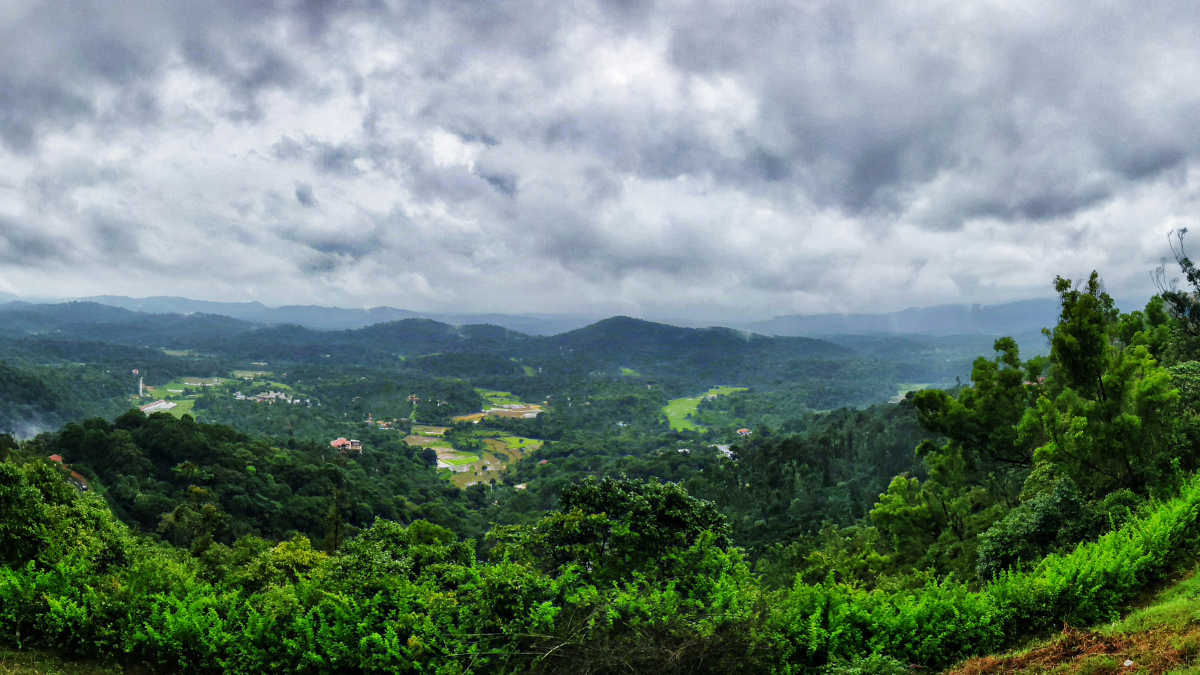
COORG / KODAGU – A TRAVELOGUE
The legendary author R.K. Narayan, who spent much of his life in Karnataka, once said:
“The weather had the bite of spring, the warmth of summer, and the gold of autumn all at once.”
This beautifully captures the timeless, enchanting climate of the Kodagu region, waiting for you to discover it.
The following is my travelogue on an amazing recent holiday to Coorg.
My hubby and I had been wanting to escape from the extended summer of Chennai. So we decided to go on a short vacation to Coorg.
Day 1: We took a direct flight from Chennai to Mysuru. We stayed overnight at Mysuru at Roopa Elite, a boutique hotel. The room was very comfortable and the food was excellent.
Day 2:
Next morning after breakfast we drove down to Coorg, famous for its coffee, chocolates and spices. On our way, we went to Nisty Coffee Plantations. There we hired a guide who took us around the spice, coffee and cocao plants. It was wonderful walking in the midst of these goodies.
The guide told us an interesting story of how coffee beans were first brought to India. It is believed that coffee was brought in the 17th century when a Sufi saint named Baba Budan smuggled seven raw coffee beans out of Yemen in his beard after visiting the port of Mocha in Yemen ! In the1600s, Arab traders strictly controlled the coffee market and banned the export of fertile, raw beans to maintain their global monopoly. It is said that the number seven holds a sacred significance in Islam.
After successfully smuggling the seeds to Karnataka, he planted them near his hut in the Chandragiri Hills of Chikmagalur. These hills are now known as the Baba Budangiri Hills in his honor. Initially grown as a small garden curiosity, the plants thrived in the moist, shaded Western Ghats. Later the Dutch helped encourage native cultivation and trade in the 17th and 18th centuries. Large-scale commercial plantations took root during the British Raj in the 19th century, expanding across southern states like Karnataka, Kerala, and Tamil Nadu. India remains famous for its unique “shade-grown” coffee method, where coffee grows beneath a natural canopy of tall trees to protect local biodiversity. Today, there are different varieties of coffee grown in India.
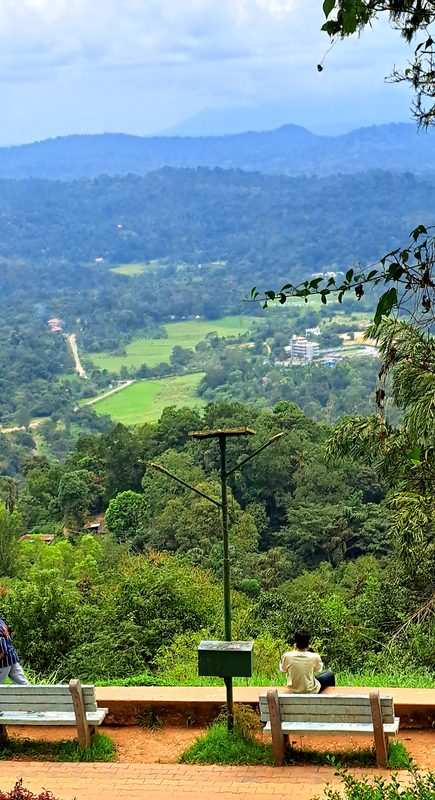
We then went to Raja Seat Garden. This place was used by the Kings and the Queens of Kodagu who were the rulers of Karnataka for over 200 years from 1600 to 1834 CE. It is built on a high level ground overlooking the misty cliffs and valleys of the Western Ghats.

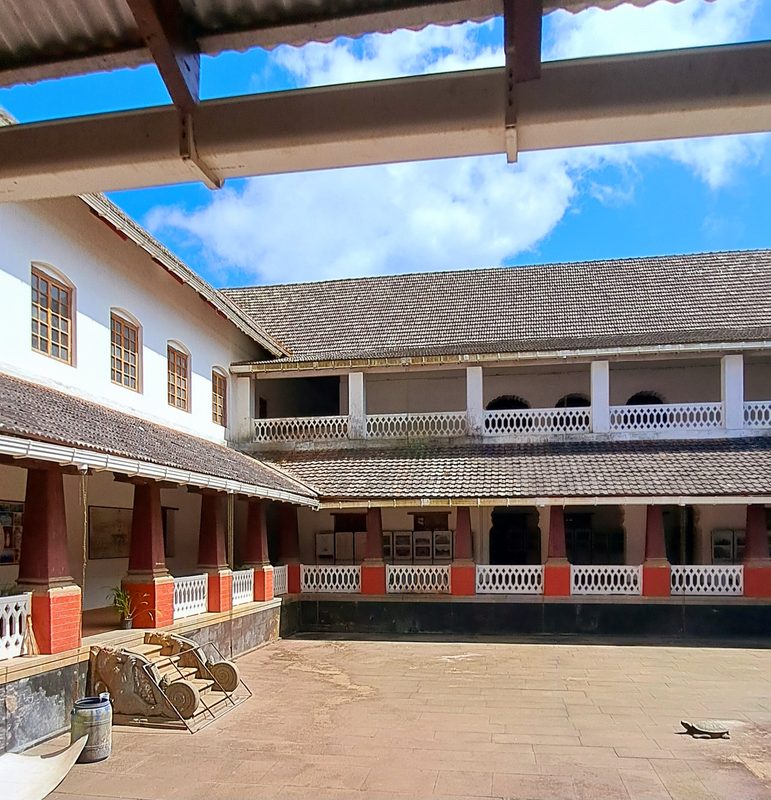
From Raja Seat Garden, we proceeded to Madikeri Fort. This is one of the many forts built or rebuilt by Tipu Sultan during his reign in the second half of the 18th century. In 1790, Dodda Vira Rajendra took control of the fort. The palace underwent renovations by Linga Rajendra II from 1812 to 1814. This Fort has a small collection of weaponry.

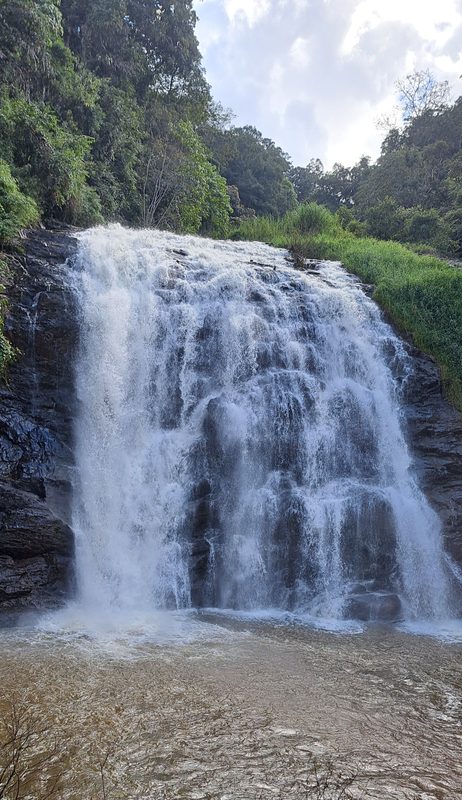
We then drove down to Abbey Falls. It is a beautiful sight of an impetuous mountain stream cascading over a rockface. The refreshingly cool waters of Abbey Falls, and the greenery of the surrounding coffee and cardamom estates make it a very popular picnic spot. Reaching Abbey Falls requires walking down approximately 150–200 steps through the spice and coffee estates. Climbing these steps back could be difficult for some. As for me, it was, so I had to take rest every now and then and complete the climb up.

From Abbey Falls, we drove down to Sterling Brookstone Resort where we stayed for the next 3 days in the midst of green mountains and coffee plantations. Overnight stay at Sterling Brookstone Resort.
Day 3:
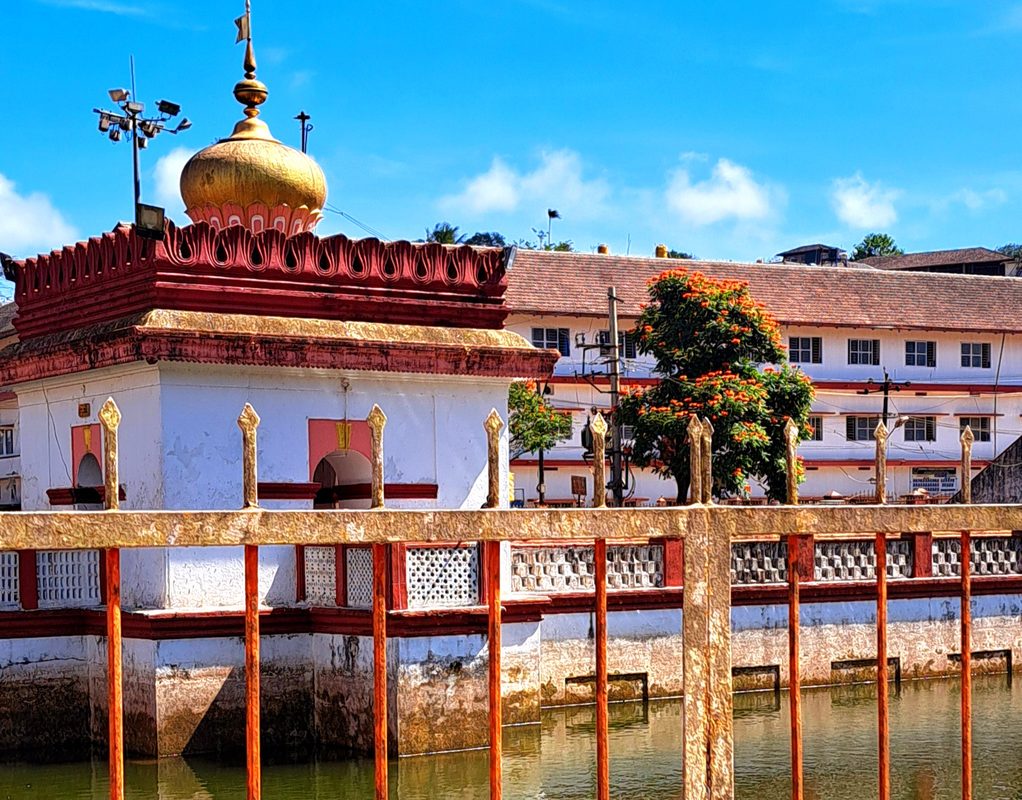
The following morning, after breakfast we went to the Omkareshwara Temple. This temple is dedicated to Lord Shiva. There are no pillared halls in the Temple, making it unique in design. Not having been to the sacred Omkareshwar Temple in Madhya Pradesh which houses one of the 12 revered Jyotirlingas, I was happy and felt blessed to have been to this Temple in Coorg.

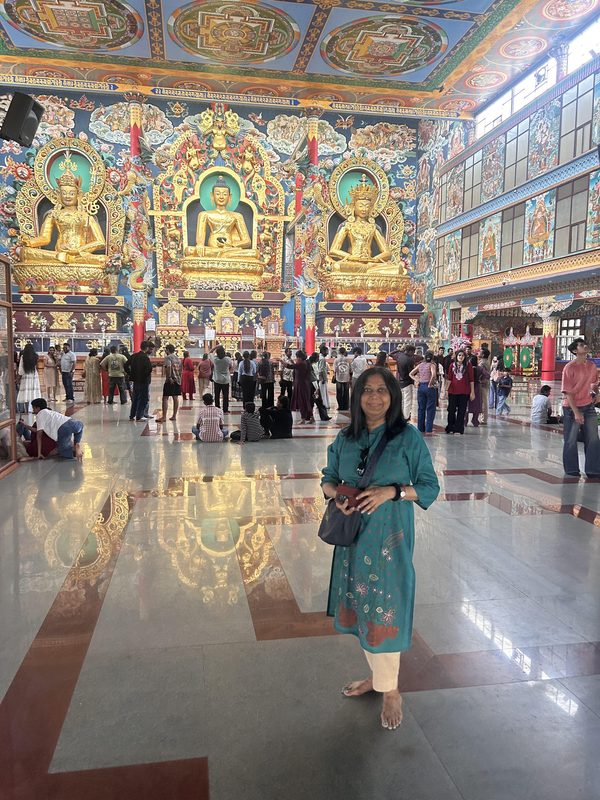
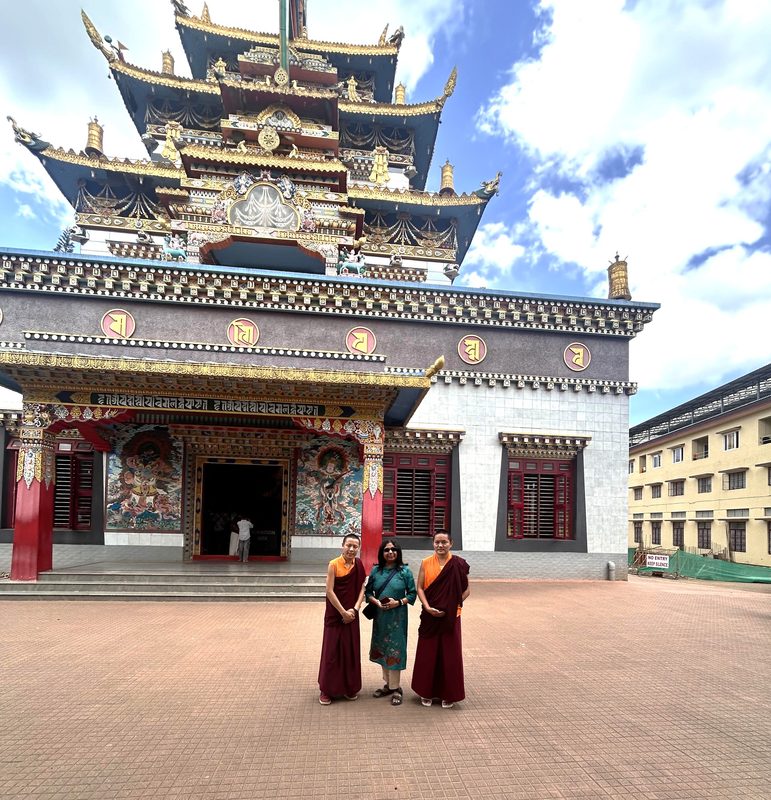
We then proceeded to Bylakuppe Namdroling Tibetan Monastery, It has an expansive temple complex that houses a beautiful Golden Temple. The major attraction of the place is the forty feet tall grand, golden Buddha statues, It is the largest teaching center of the Nyingma lineage of Tibetan Buddhism in the world. Located in Bylakuppe, part of the Mysuru district of the state of Karnataka, the monastery is home to a Sangha community of more than five thousand monks and nuns and qualified teachers, a junior high school named Yeshe Wodsal Sherab Raldri Ling, a Buddhist philosophy college or shedra for both monks and nuns, a home for the elderly, and a hospital.

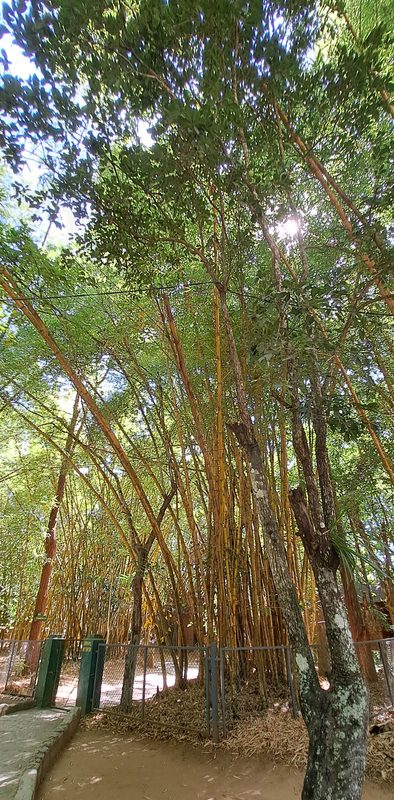
On our way back to our Resort, we went to the Bamboo Forest. This place was suggested by our driver and we were glad to have seen this unique forest. which is part of Kaveri Nisargadhama, a scenic 64-acre island reserve formed by the Kaveri River near Kushalnagar. The island is accessed by walking across a fun rope suspension bridge over the Kaveri River.

Overnight we stayed at Sterling Brookstone Resort.
Day 4:
We did a bit of shopping.
One can indulge in Coffee, chocolates and coco powder. Since Coorg is also famous for its rich, aromatic spice plantations nestled in the misty Western Ghats, one can buy spices such as cardamom, cloves, pepper, cinnamon, nutmeg, mace.
Coorg is also famous for its eco-friendly banana silk sarees and dress materials (also known as banana pith sarees) which are available at local handicraft centers and handloom shops. They are woven from natural fibers extracted from plantain (banana) stems and are famous for their soft and glossy texture, lightweight feel, durability, and breathability.
The places covered above come under Coorg phase 1.
Days 5 & 6:
We moved to Coorg phase 2.
We checked out from Sterling Brookstone Resort after breaakfast and drove down to Taneerhulla Ama Stays and Trails which is nestled in the midst of Tata coffee Plantation where we stayed for the next 2 nights and 3 days. Certain interesting facts about this place:
Taneerhulla Bungalow, nestled in Woshully Estate, Coorg, is a serene 900-meter-high retreat. This colonial-style haven is more than just a place to stay; it’s an experience steeped in the rich tapestry of Coorg’s natural beauty.
Each of the Taneerhulla Bungalow rooms reflect a careful balance between colonial elegance and modern comfort. The decor pays homage to the bungalow’s rich history, with antique furnishings and tasteful accents that evoke a bygone era, while ensuring guests enjoy contemporary amenities and the utmost in comfort. The presence of safety measures due to the proximity of wildlife adds to the adventure, allowing guests to feel secure while being close to nature.
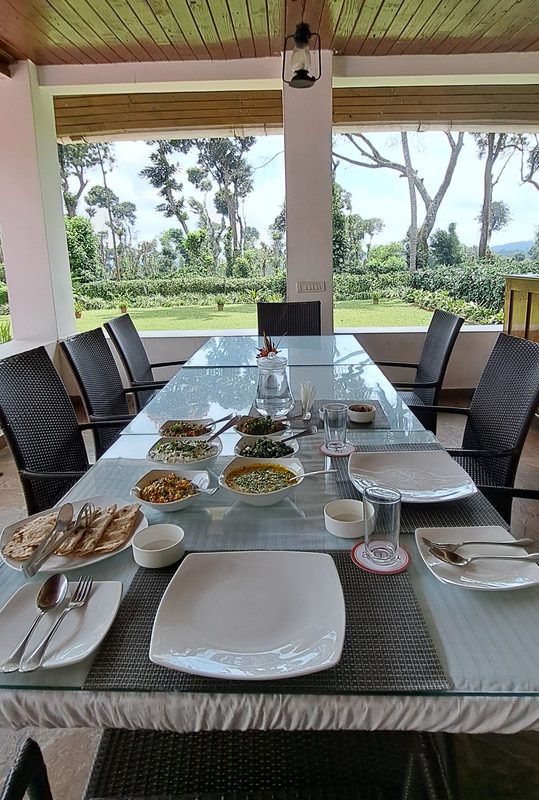
What we experienced at this Bungalow was just divine. There was so much of peace, tranquility, serenity, plenty of oxygen, greenery, beautiful – colourful – vibrant flora, chirping of birds, awesome weather, wonderful staff, healthy and delicious food….
Remembering the famous quote “If there is a heaven on earth, it is here, it is here, it is here” comes from the Persian couplet: “Gar firdaus bar roo-e zameen ast, hameen ast-o hameen ast-o hameen ast”.

Day 7:
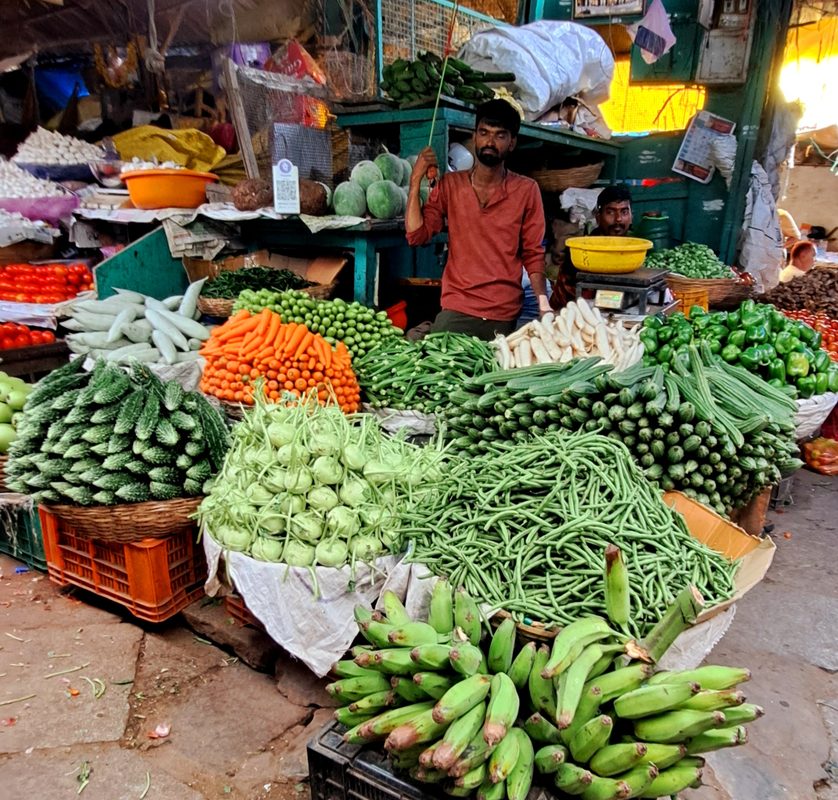
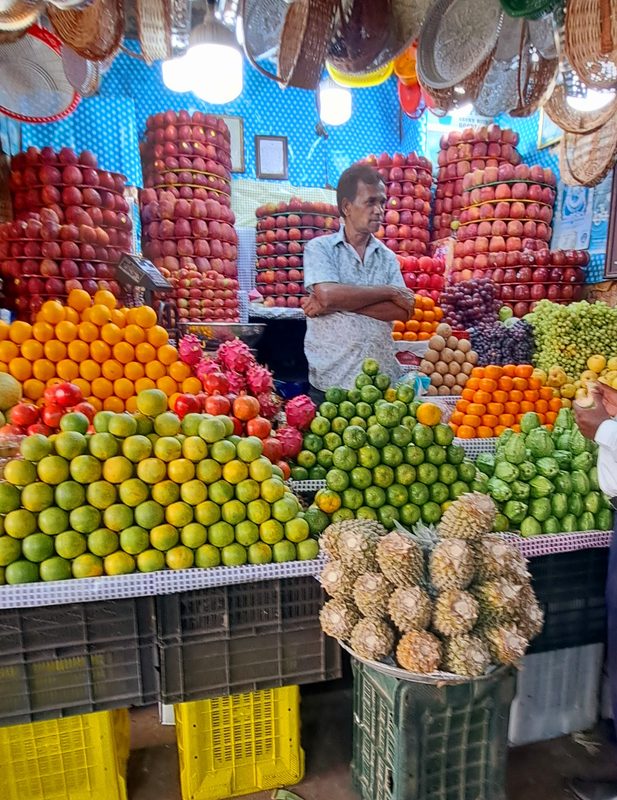
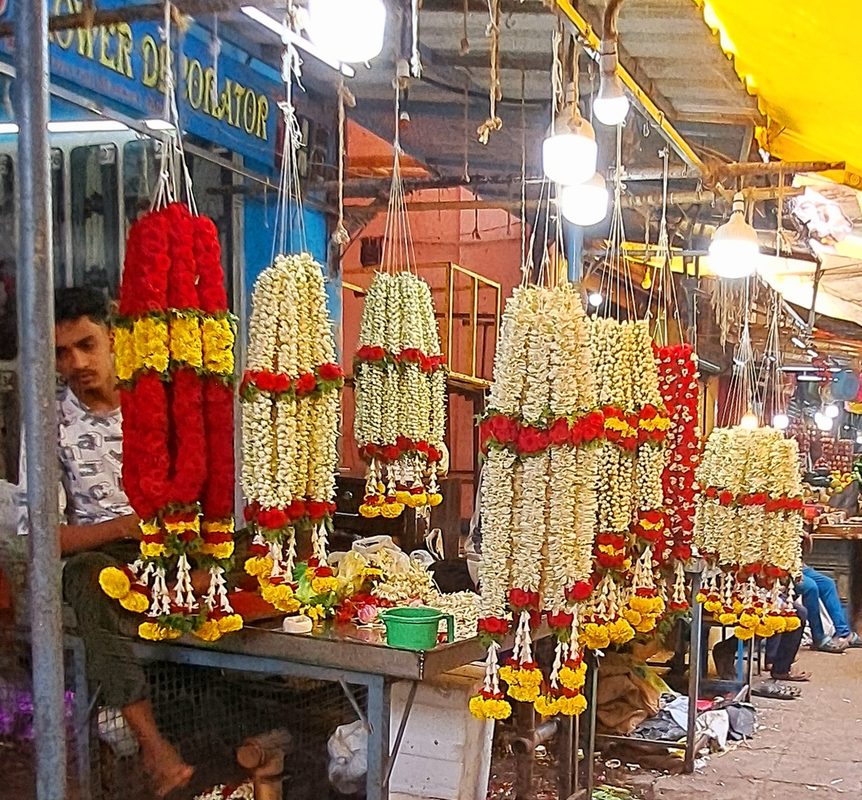
We drove to Mysuru for a flight back to Chennai. On our way to the airport, our good driver took us to the M D Touseef Vegetables market also known as Devaraj Market. It is a bustling and vibrant hub where merchants sell a variety of produce, such as flowers, fruits and vegetables. I found the place too crowded, yet filled with happy colours. The quality of products on sale was no doubt very high.



With this our holiday came to an end. We are now waiting and praying to be blessed with a good weather soon in Chennai. Please God answer our prayers, this summer has been far too hot, humid and long stretched for us to bear.