


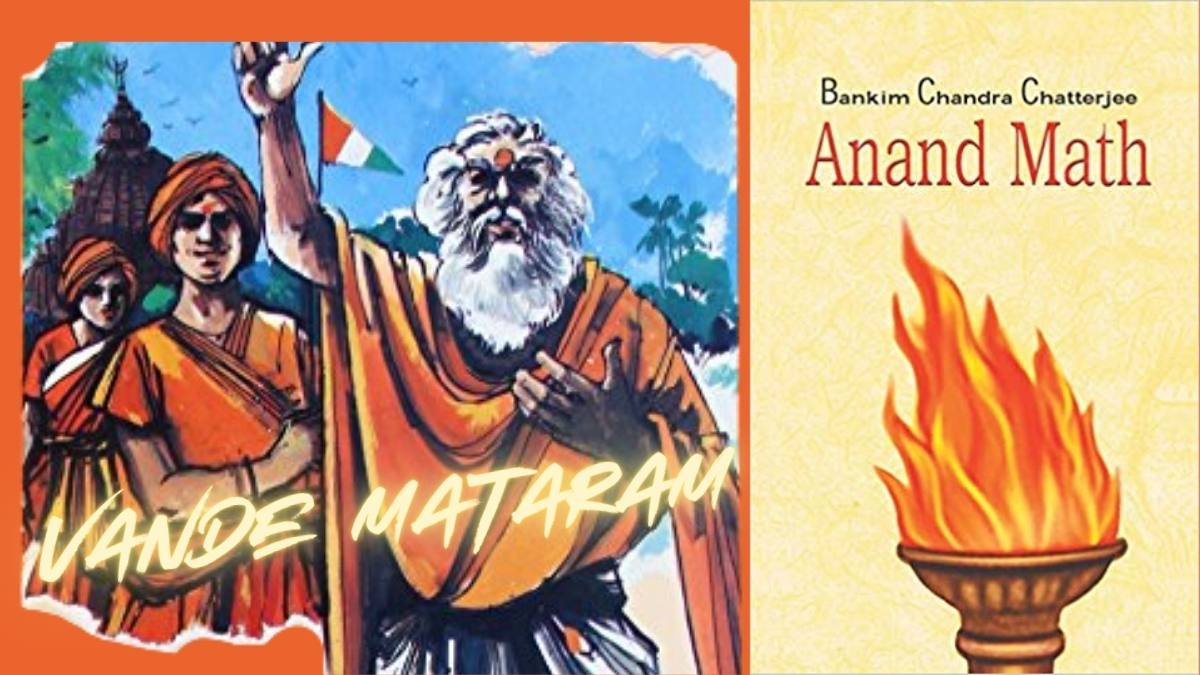
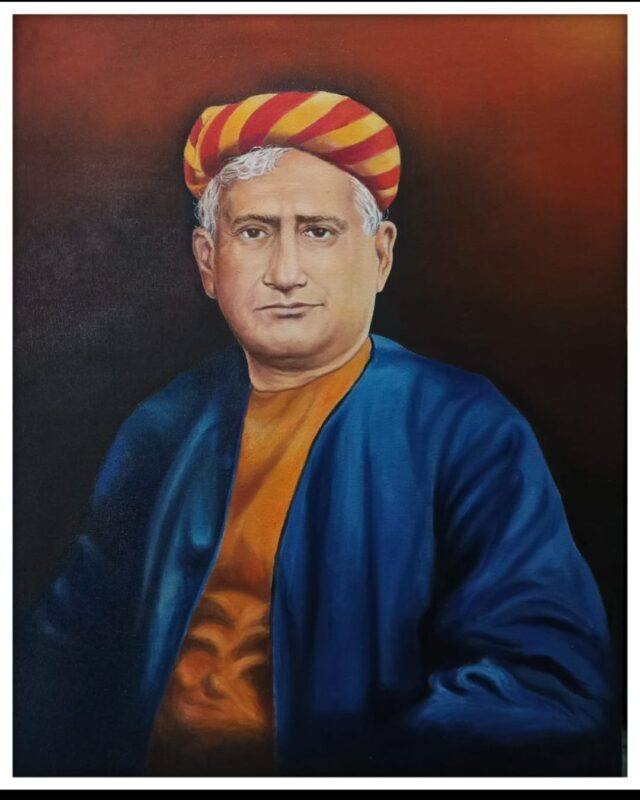
Bankim Chandra Chatterjee (1838–1894) was a pioneering Bengali novelist, poet and journalist, widely revered as Sahitya Samrat (Emperor of Literature). He is best known as the author of the patriotic hymn “Vande Mataram”, which later became India’s National Song and served as a powerful rallying cry during the country’s struggle for independence.
This year marks the 150th anniversary of Rishi Bankim Chandra Chatterjee’s celebrated literary masterpiece, Anandamath, and the immortal slogan “Vande Mataram”, along with the National Song of the same name.
Coined by Rishi Bankim Chandra Chatterjee, “Vande Mataram” became an inspiring mantra throughout India’s freedom movement.

Translated as “I bow to thee, Mother” or “Salutations to the Motherland,” the words resonated deeply within every patriotic heart. The slogan became synonymous with the freedom struggle, symbolising devotion to the motherland, a pledge to honour her, protect her people and safeguard her future. The patriotic fervour it inspired continues to resonate even today. “Vande Mataram” reminds every citizen that our duty extends beyond personal aspirations to include service to our nation. Nationalism and patriotism form an integral part of our collective identity, but a society derives its true strength from the commitment of its individual citizens.
Penned by Rishi Bankim Chandra Chatterjee on 7 November 1875, “Vande Mataram” became the defining slogan of freedom and patriotism during the Anti-Partition of Bengal Movement (Banga-Bhanga Movement) in 1905, where it evolved into the movement’s battle cry.
He originally composed “Vande Mataram” as a Sanskrit-Bengali stotra, personifying India as the Divine Mother. The hymn was later incorporated into his celebrated novel Anandamath (1882), which was subsequently banned by the British colonial administration because it vividly portrayed a successful rebellion against colonial rule, inspired by the historical Sannyasi Rebellion.
For more than three decades, Bankim Chandra served as a senior civil servant, holding the office of Deputy Magistrate and Deputy Collector under the British Government. While carrying out his official responsibilities by day, he devoted his nights to writing powerful works of literature that subtly but forcefully challenged colonial rule.

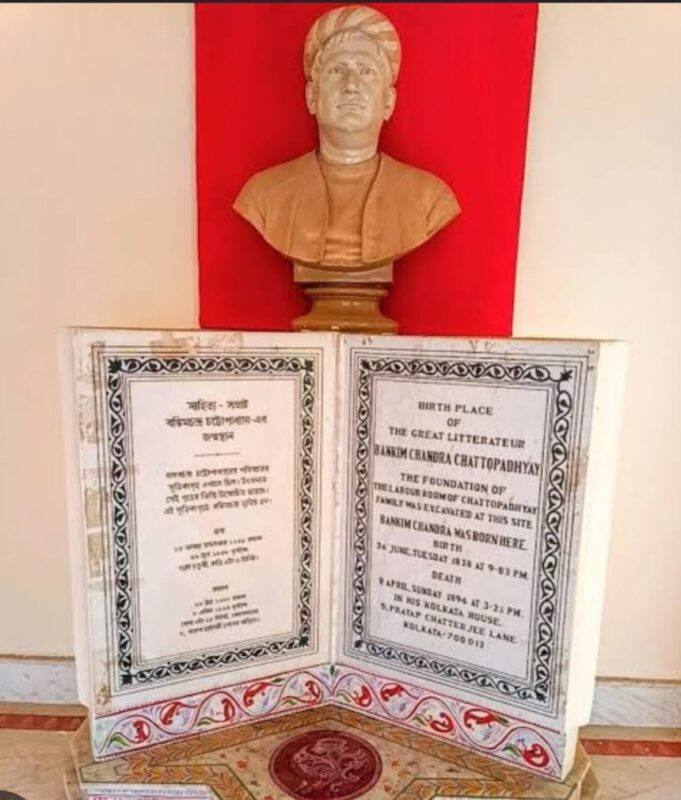
Rishi Bankim Chandra Chatterjee was born on 26 June 1838 in Kanthalpara, Naihati, in the 24 Parganas district of present-day West Bengal, into a distinguished Kulin Brahmin family. His father, Yadav Chandra Chattopadhyay, was a government official who later became the Deputy Collector of Midnapore, while his mother was Durgadebi.

He received his early education at Hooghly Collegiate School (then known as the Government Zilla School) and Hooghly Mohsin College, where he developed a profound interest in Sanskrit literature. In 1856, he joined Presidency College, Calcutta, and graduated with a Bachelor of Arts degree in 1858, becoming one of the first graduates of the newly established University of Calcutta. He later pursued legal studies and obtained his Bachelor of Law degree in 1869.
Although celebrated as the father of the modern Bengali novel, his first published novel, Rajmohan’s Wife (1864), was written in English.
Bankim Chandra possessed a remarkable ability to recognise literary talent. He was among the first to publicly acknowledge the genius of a young Rabindranath Tagore, hailing him as Viswakavi (Universal Poet). His own historical and culturally rich novels went on to influence generations of nationalist thinkers, writers and literary giants, including Tagore himself.

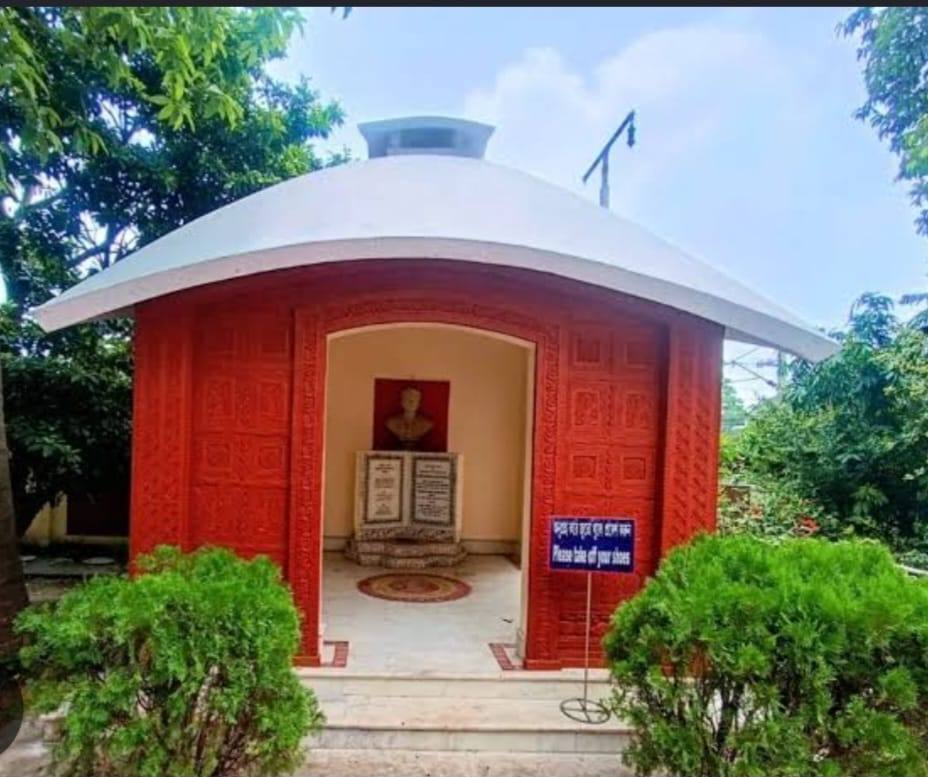
The name “Bankim” has an interesting meaning. In Bengali, Bankim translates as “slightly bent” or “curved”. A well-known anecdote recounts that the revered saint Ramakrishna Paramahansa once playfully asked Bankim Chandra why he was “bent”. With his characteristic wit, Bankim replied that it was because of “the kick of the Englishman’s shoe”, a humorous yet poignant reference to the pressures of serving under the British colonial administration.
In 1872, he founded Bangadarshan, a monthly literary magazine that transformed Bengali literary culture and played a pivotal role in the Bengal Renaissance. The magazine provided a platform for emerging writers and became one of the most influential literary journals of its time.
Bankim Chandra authored Rajmohan’s Wife (1864), recognised as the first English-language novel written by an Indian. He went on to write thirteen landmark Bengali novels, including Durgeshnandini (1865) and Anandamath (1882), both of which occupy an enduring place in Indian literary history.

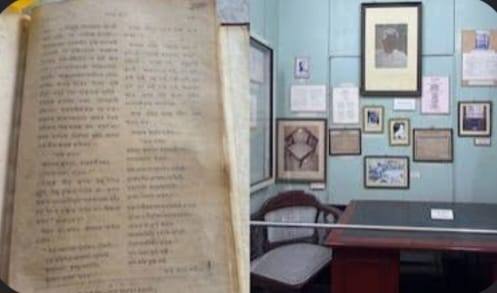
The hymn “Vande Mataram”, first published in Anandamath, personified India as the Divine Mother. On 24 January 1950, the Constituent Assembly of India formally adopted the first two stanzas of the hymn as India’s National Song, recognising its immense historical and cultural significance.
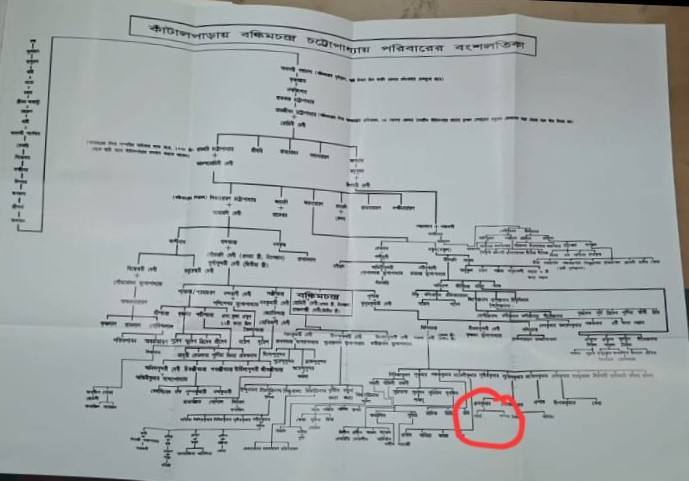
Bankim Chandra was the youngest of three brothers. His eldest brother, Sanjib Chandra Chattopadhyay (1834–1889), was a distinguished novelist, poet and journalist. He is best remembered for his celebrated travelogue Palamau, as well as his serialised writings in Bangadarshan. Like Bankim, he was among the early graduates of the University of Calcutta and made significant contributions to Bengali literature.
The middle brother, Bishwambhar Chattopadhyay, chose a quieter life and remained largely outside the literary limelight that brought fame to his brothers.
The youngest, Bankim Chandra Chattopadhyay (1838–1894), went on to become one of the greatest literary figures of modern India. Revered as Sahitya Samrat (Emperor of Literature), he was appointed a Companion of the Most Eminent Order of the Indian Empire (CIE) by the British Government in 1894, the same year in which he passed away. Despite this imperial honour, his literary legacy remains inseparable from the growth of Indian nationalism and the cultural awakening of the nineteenth century.
Bankim Chandra Chatterjee stands today as one of the towering personalities of the Bengal Renaissance, whose writings inspired generations of freedom fighters, scholars and literary figures.
He was married at the age of eleven to a five-year-old girl, in keeping with the social customs of that era. She passed away in 1859 without leaving any children. In 1860, he married Rajalakshmi Devi, a member of the distinguished Sabarna Roy Choudhury family of Halishahar. The couple had three daughters: Saratkumari, Neelabjakumari and Utpalkumari.

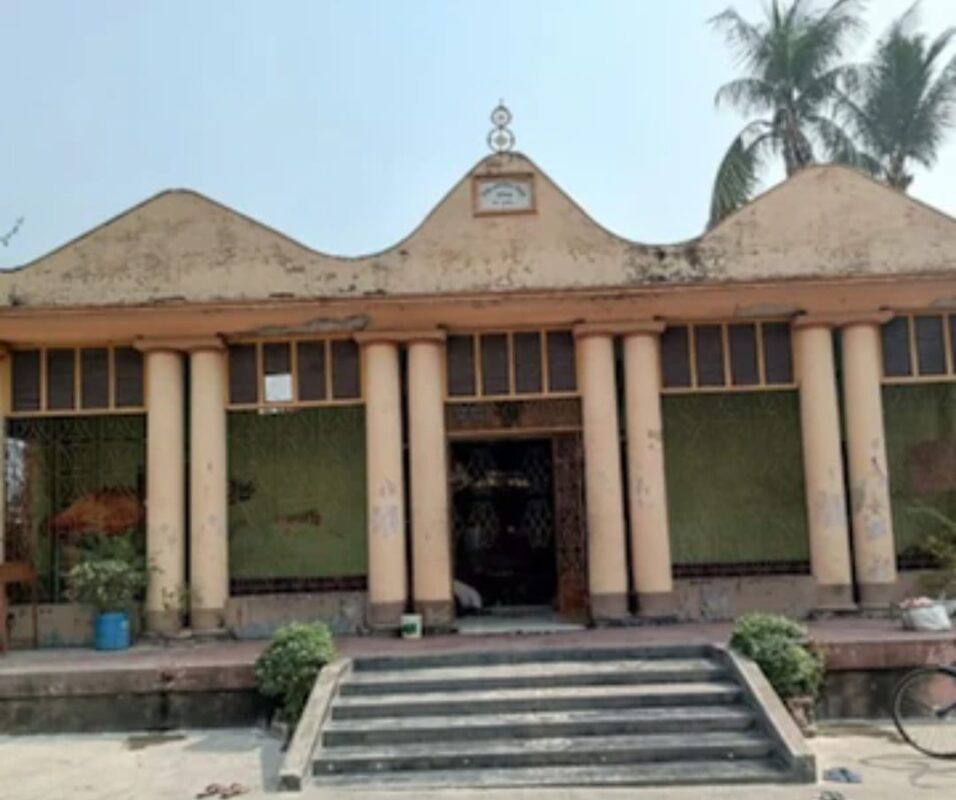
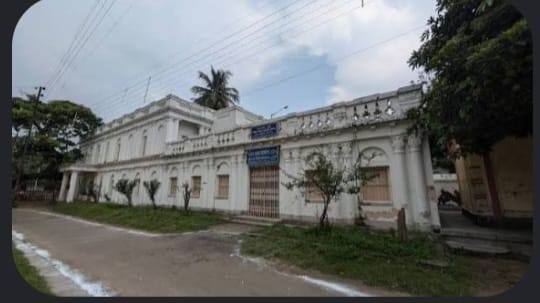
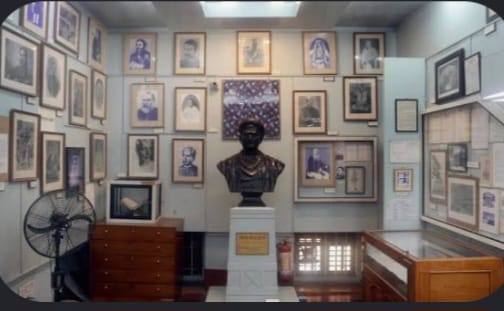
The Chattopadhyay ancestral home at Kanthalpara, Naihati, is today recognised as a heritage site by the Government of West Bengal. Over the years, members of the family have expressed concern regarding the preservation and maintenance of the property. The renowned film director Mrinal Sen is known to have contributed towards the restoration of parts of the ancestral residence, helping to preserve an important landmark of Bengal’s literary heritage.

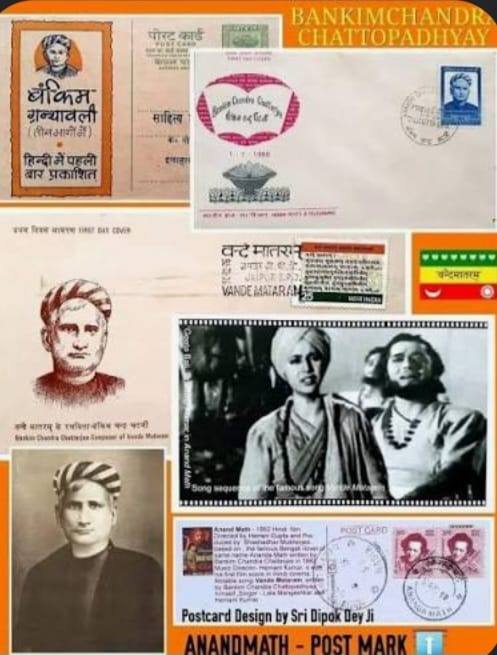


More than a century after his passing, Rishi Bankim Chandra Chatterjee continues to inspire generations through his literary genius, patriotic vision and enduring contribution to India’s cultural identity. His immortal words, “Vande Mataram,” remain far more than a national song. They continue to symbolise love for the motherland, courage in the face of adversity and an unwavering commitment to the ideals of unity, freedom and national pride. His legacy endures not only in India’s literary heritage but also in the hearts of millions who continue to draw inspiration from his timeless works.
Vande Mataram!
–Shampa Ganguli