


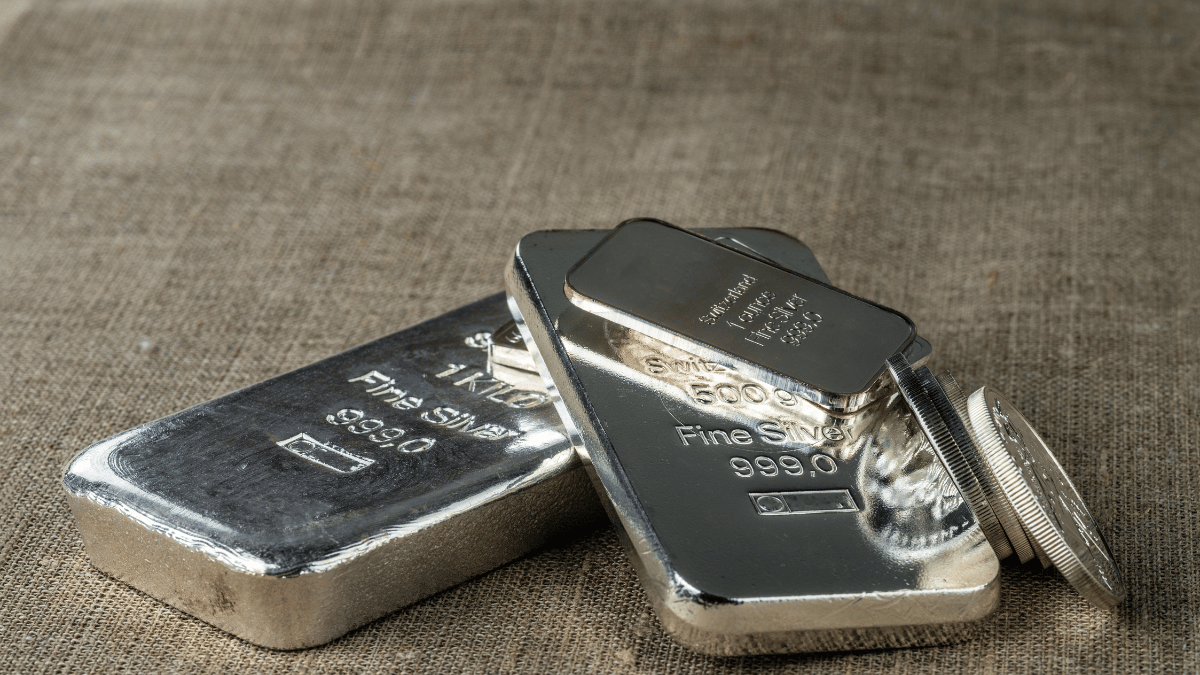
The final trading day of October delivered a sharp reminder of how quickly sentiment can change in the silver market. After a year marked by dramatic price swings, silver came under renewed selling pressure on Friday, 30 October 2026, as investors reassessed American inflation, interest rates and the outlook for industrial demand.
For Indian households, the fall arrived just ahead of the festive buying season. For businesses that use silver in manufacturing, it raised a different question: could lower raw-material prices offer some relief? And for investors who had watched silver reach extraordinary highs earlier in the year, the immediate concern was whether the latest decline represented an opportunity or a warning.
There is no single explanation. Silver sits at the intersection of monetary policy, financial-market speculation and physical industrial consumption. Those forces can pull its price in different directions, sometimes within the same trading session.
How Far Did Silver Fall in India?
The December 2026 silver futures contract on India’s Multi Commodity Exchange (MCX) was quoted at ₹1,78,900 per kilogram late on 30 October, a fall of ₹10,553, or 5.57 per cent, from the previous session’s quoted level.
These figures refer to an exchange-traded futures contract, not the amount a customer would necessarily pay for silver jewellery, coins or bars at a shop.
During the afternoon, reports had put silver futures around ₹1.85 lakh per kilogram. That distinction matters. A market price described as today’s rate in an early news report may be significantly different by the closing bell.
International silver also moved down towards the $50-per-troy-ounce region, far below its late-January peak above $120. Comparisons depend on the benchmark and whether one uses an intraday high or closing price, but the scale of the correction is unmistakable. Silver had surrendered more than half of its value from the year’s highest intraday levels.
Such falls can look surprising in a metal often presented as a store of value. Yet silver has historically been volatile, partly because its market is smaller and its sources of demand are more varied than those of gold.
The Immediate Trigger: Renewed US Inflation Pressure
The main economic development came from the United States on 29 October.
Official data for September showed that the Personal Consumption Expenditures (PCE) price index rose 0.5 per cent over the month and 3.6 per cent over the year.
The measure excluding food and energy, commonly called core PCE inflation, increased 0.3 per cent monthly and 3.1 per cent annually.
Why does an American inflation report matter to someone tracking silver prices in Mumbai, London or Singapore?
The answer lies in the Federal Reserve.
When inflation remains stubbornly above the central bank’s target, investors become less confident that borrowing costs will fall soon. They may instead expect interest rates to remain elevated for longer, with the possibility of further increases if price pressures persist.
Silver pays no interest. A bank deposit or government bond may offer an income stream, whereas a silver bar produces no regular cash flow.
When yields on competing assets appear more attractive, some investors reduce their exposure to precious metals. Higher US yields can also support the dollar, making dollar-priced silver more expensive for buyers using other currencies.
This relationship is important, but it is not automatic.
Silver can sometimes rise despite high interest rates when investors seek protection from currency weakness, financial instability or supply disruptions. On 30 October, however, the inflation report added to an already nervous mood.
What the Federal Reserve Actually Decided
The Federal Reserve had met on 28 October, one day before the PCE release.
It kept its policy rate in a range of 3.75 to 4.00 per cent. The decision was not unanimous: two members preferred a quarter-percentage-point increase.
That split helps explain why traders were sensitive to fresh inflation figures. Even though the central bank did not raise rates at the October meeting, the debate over the next move was clearly alive.
Some market commentary has focused on the probability of a December rate increase.
Such probabilities are estimates derived from futures-market pricing, not promises from the Federal Reserve. They can change from one day to the next as inflation, employment and other economic reports arrive. A precise percentage quoted without its observation time can quickly become misleading.
The practical point is simpler.
If investors come to expect higher US borrowing costs, the investment case for holding a non-yielding metal can become less appealing in the short term.
If subsequent data soften that expectation, the pressure may ease. Neither outcome is guaranteed.
Strong Economic Growth Complicated the Picture
The United States also reported that its economy grew at a 3.4 per cent annualised rate in the third quarter of 2026, according to an advance estimate.
That followed a 2.2 per cent pace in the previous quarter.
Investment, household spending and government spending contributed to the expansion, although trade movements offset part of the gains.
For silver, strong growth has two opposing implications.
On one hand, a resilient economy gives the Federal Reserve more room to keep monetary policy restrictive while trying to contain inflation. That can weigh on precious metals through yields and the dollar.
On the other hand, economic activity supports factories, electrical infrastructure and industries that consume silver.
This is precisely why the metal can be harder to interpret than gold. Its financial identity and its industrial identity do not always tell the same story.
The latest growth estimate also remains provisional and may be revised as more information becomes available.
Silver Is an Industrial Metal as Well as a Precious One
Silver’s distinctive appeal comes from its electrical and thermal properties.
It is used in electronic components, photovoltaic technology, automotive systems, electrical contacts and a range of specialised equipment.
Jewellery, silverware, coins, bars and investment products account for other important sources of demand.
This creates a delicate balance.
When investors are enthusiastic about precious metals, financial buying can lift prices sharply.
When manufacturers worry about costs, they may try to use less silver per product, substitute other materials where technically feasible or delay certain purchases.
The solar industry illustrates the trade-off.
More solar installations do not necessarily mean proportionately more demand for silver. Manufacturers have been working to reduce the amount of metal used in each panel.
A growing industry can therefore consume less silver than previously expected if efficiency improvements advance quickly enough.
In its World Silver Survey 2026, the Silver Institute’s research partners anticipated softer fabrication demand in some categories, alongside greater recycling activity.
Those trends can reduce immediate pressure on the physical market. They do not, however, make silver’s supply position straightforward.
Has the Global Silver Shortage Disappeared?
One tempting explanation for falling prices is that the world suddenly has enough silver.
The evidence calls for more care.
The April 2026 World Silver Survey forecast a 46.3-million-ounce deficit for 2026, which would mark the sixth consecutive year in which total demand exceeded new supply.
This is a forecast, not a confirmed final-year outcome. It shows why it would be premature to announce that the underlying shortage has ended.
At the same time, a market can experience a structural annual deficit and still see prices fall sharply.
Physical metal stored in vaults, exchange inventories and investment products can move back into active circulation.
Recycling can expand when prices encourage households and businesses to sell unused items.
Investment funds can experience redemptions, releasing metal or reducing buying pressure.
In other words, how much silver exists and how readily it can be purchased are different questions.
A shortage of immediately deliverable metal at a particular trading centre can lift local premiums even when substantial silver exists elsewhere.
The reverse can occur when metal moves into the market more freely.
The tight conditions that contributed to earlier price spikes may have eased, but the possibility of another squeeze cannot be ruled out solely because the price has fallen.
Nor should investors assume a deficit automatically means that prices must rise. Financial flows and expectations can dominate in the shorter term.
Why a Falling Price Can Attract Even More Selling
Silver’s speed of movement often has as much to do with trading positions as with jewellery or factory orders.
Some market participants use futures contracts to gain exposure with borrowed or margin-backed capital.
When prices fall abruptly, losses can trigger requests for additional collateral.
Traders unable or unwilling to provide it may close positions. This selling can reinforce a decline already under way.
Others follow price trends or adjust portfolios when their risk limits are reached.
A sharp move may therefore create a chain reaction, even if the economic news by itself would not justify the full change in price.
The reverse is equally possible.
If prices rebound, traders positioned for further losses may rush to reduce those positions, producing a rapid rally.
This is why silver’s short-term movements are difficult to forecast confidently from any single inflation statistic, supply report or chart pattern.
What the Decline Means for Indian Households
For Indian consumers, global prices are only the starting point.
The local value of silver also reflects the rupee-dollar exchange rate, import-related costs, taxes, dealer margins and the form in which the metal is purchased.
A futures quote on MCX is therefore not interchangeable with the final retail bill for a piece of jewellery or a silver coin.
The timing is notable.
Dhanteras falls on 6 November 2026, followed by Diwali on 8 November.
Buying precious metals during this period has cultural and family significance for many Indians, including diaspora communities who maintain the tradition abroad.
A lower quoted price may encourage shoppers who postponed a purchase during the earlier surge.
Yet festive demand alone cannot determine the global trend.
A rise in US yields, a stronger dollar or another wave of selling could outweigh seasonal interest.
Likewise, a recovery in investor sentiment could lift prices before buyers reach the counter.
Anyone planning a physical purchase should distinguish the metal’s quoted rate from the complete transaction cost.
For jewellery, workmanship and resale deductions may matter more than a small daily change in the headline silver price.
For bars and coins, purity, documentation, buy-back terms and the seller’s reliability deserve attention.
For an Indian living overseas, exchange-rate conversion and local dealer premiums introduce further differences.
A silver price displayed in rupees and one displayed in pounds, dollars or dirhams may not translate neatly into the same final cost.
What the Correction Means for Businesses
Manufacturers that use silver as an input may welcome lower prices, particularly after the intense cost pressures created by the previous rally.
But the benefit depends on how they buy their metal.
Some firms carry inventory acquired at older prices; others have contracts or hedging arrangements that delay the effect of a market move.
Jewellers may also face mixed results.
Lower raw-material costs can support consumer interest, but a sudden decline can leave existing stock valued above current replacement costs.
Sharp price instability makes pricing, inventory management and customer expectations more complicated.
For solar and electronics manufacturers, longer-term trends in efficiency, technological substitution and global production may matter as much as a single month’s price movement.
Five Signals to Watch Through November
Rather than relying on a single prediction, readers can follow the factors most likely to shape the next phase of the market.
1. US Inflation and Employment Reports
Fresh data can change expectations for the Federal Reserve’s next decision, particularly after September’s inflation acceleration.
2. Treasury Yields and the US Dollar
Rising yields and a stronger dollar can create headwinds for non-yielding precious metals, although other forces may offset them.
3. Investment Flows and Futures Positioning
Changes in exchange-traded product holdings and leveraged positions can magnify either buying or selling.
4. Industrial Demand, Recycling and Available Stocks
The balance between manufacturing needs, scrap recovery and metal in accessible vaults offers a fuller picture than any one inventory figure.
5. The Rupee and India’s Physical-Market Premiums
Exchange rates and local buying conditions help determine whether a global price change reaches consumers in the same proportion.
For readers considering silver as part of their savings, one further question matters more than guessing the next trading day’s price: what role is the asset meant to play?
Physical silver, exchange-traded products and leveraged futures have different costs, liquidity characteristics and risks.
Money needed for near-term living expenses or emergencies should not depend on an unpredictable price recovery.
The Bigger Lesson From October’s Silver Sell-Off
The 30 October decline cannot be reduced to a slogan about inflation or supply.
US price data increased concern over interest rates.
Strong economic growth complicated expectations for monetary policy.
Changes in industrial demand, recycling and the availability of physical metal influenced the longer-term backdrop.
Trading positions may have intensified the immediate fall.
Those forces will continue to interact as November unfolds.
For Indian consumers, the correction may offer more affordable entry points for traditional purchases, but retail prices and transaction costs still need checking.
For businesses, it offers a possible reprieve from elevated input costs.
For investors, it is a reminder that silver can behave like a precious metal one moment and an economically sensitive industrial commodity the next.
The sensible conclusion is not that silver has become a bargain or that its decline must continue.
It is that understanding why the market moved is more useful than treating a dramatic price change as a prediction of what comes next.
Disclaimer: This article provides general market information and analysis for educational and editorial purposes only. It is not personal financial advice, an investment recommendation or an invitation to buy, sell or trade silver or related products. Commodity prices, currency rates, contract quotations and market expectations can change rapidly. Physical purchases and derivatives carry different costs and risks. Readers should verify current prices and terms independently and consult a qualified financial adviser before making investment decisions.