


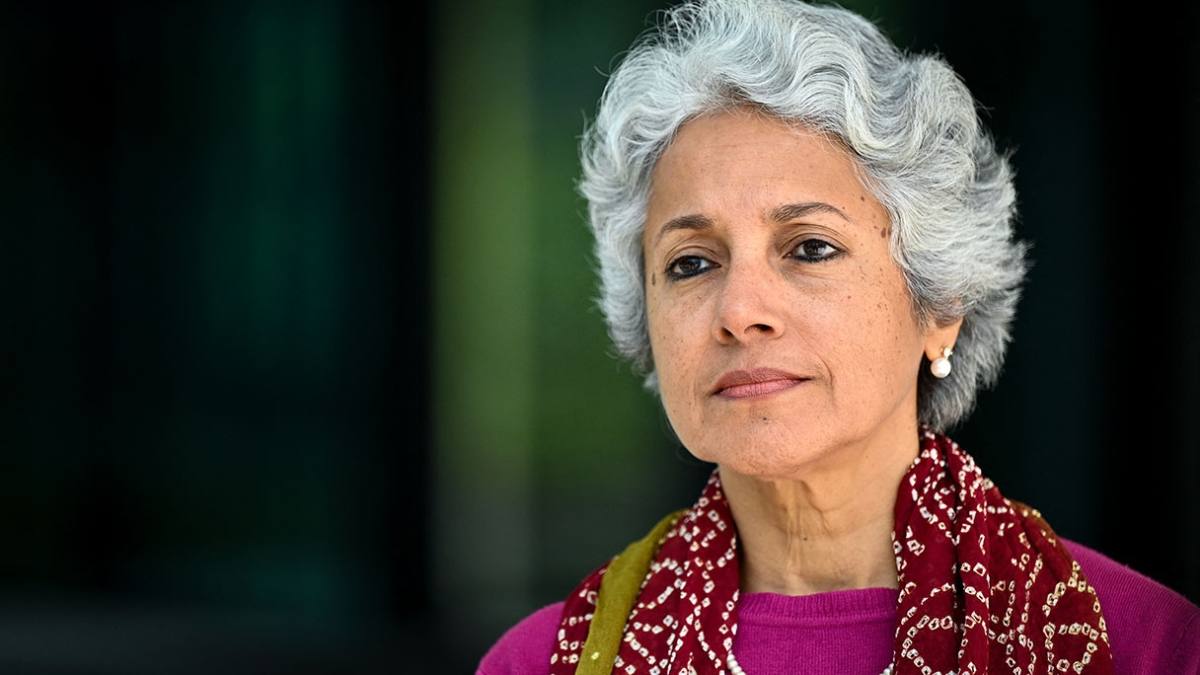
Dr Soumya Swaminathan is the WHO’s Chief scientist. She was appointed as WHO’s first Chief Scientist in March 2019.
In the years since the COVID-19 pandemic, her role has continued to be recognised globally as an example of steady scientific leadership during a time of crisis. Her ability to communicate complex medical developments in a clear and responsible manner made her one of the most trusted public health voices during that period.

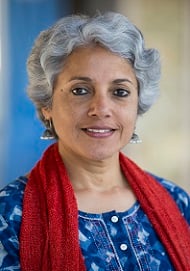
Chief Scientist,
World Health Organisation
During the pandemic outbreak Swaminathan was actively involved in combating the outbreak and her meticulous approach and wisdom bore fruit and brought respite to many lives affected. She has been very vocal in generating awareness and also helping to make policies. She played a key role in guiding global understanding of the pandemic through regular briefings and scientific inputs.
She is a paediatrician and a globally renowned and recognised researcher on tuberculosis and HIV. She has over three decades of clinical care and research experience to her kitty. She has been a frontrunner in converting research into impactful programmes.
Dr Swaminathan was Director General of the Indian Council of Medical Research from 2015 to 2017. She was also the Secretary, Health Research, Government of India. She was also the part of the committee that drafted surrogacy bill which ended commercial surrogacy in India.
During her tenure there, she kept her focus on bringing science and evidence into the health policy making, building the research capacity in Indian medical schools and forging south-south partnerships in health sciences. Her work during this period helped strengthen the link between scientific research and policy decisions in India’s healthcare system, with a focus on long-term institutional capacity.
From 2009 to 2011, she was the Coordinator of UNICEF/UNDP/World Bank/WHO Special Programme for Research and Training in Tropical Diseases in Geneva. This role gave her wider exposure to global health systems and strengthened her engagement with international collaborations in tackling infectious diseases.
Dr. Swaminathan received her academic training from India, United Kingdom and United States of America. She has more than 350 peer-reviewed publications as well as book chapters, to her credit.
Dr. Swaminathan, an elected Foreign Fellow of the US National Academy of Medicine and also a Fellow of all three science academies of India, which is a rare distinction.
The Science Division at WHO works towards ensuring that global health guidelines are based on the latest scientific evidence and remain relevant and timely;
- WHO stays ahead of the curve and leverages advances in science and technology for public health and clinical care.
- To ensure that, standards and guidelines produced by WHO are scientifically updated and up to the mark, relevant and timely.
Dr. Swaminathan’s vision is to ensure that WHO is at the cutting edge of science and is able to translate new knowledge into meaningful impact on population health worldwide.

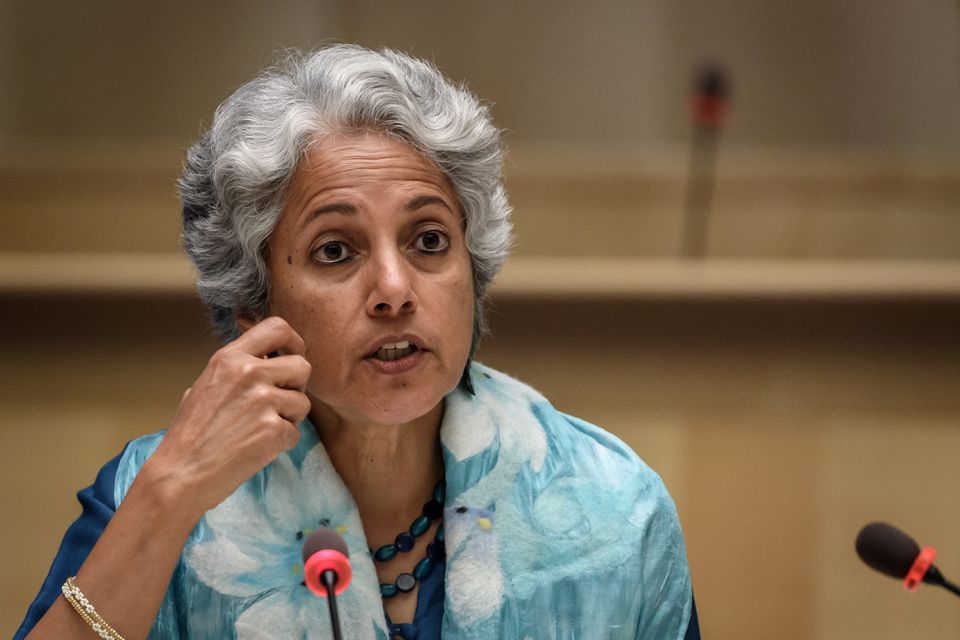
A closer look at her background provides insight into her journey….
Swaminathan was born on 2nd of May, 1959 to M. S. Swaminathan and Mina Swaminathan. Her father, M. S. Swaminathan is known as the “Father of Green Revolution of India”. Her mother, Mina Swaminathan was an educationalist. Dr. Soumya Swaminathan has two siblings, Madhura Swaminathan, a professor of economics at the Indian Statistical Institute, Bangalore, and Nithya Swaminathan, a Senior Lecturer in Gender Analysis in International Development at the University of East Anglia.
Swaminathan is married to Ajit Yadav, an orthopedic surgeon.
Swaminathan completed her M.B.B.S. from the Armed Forces Medical College in Pune. She further received an M.D. in paediatrics from All India Institute of Medical Sciences, New Delhi. She is also a DNB from National Board of Examinations. As part of her training, from 1987 to 1989, Swaminathan completed a post-doctoral medical fellowship in neonatology and paediatric pulmonology at the Children’s Hospital Los Angeles at the Keck School of Medicine of USC.
- From 1989 to 1990, Swaminathan was a Research Fellow (Registrar) in the Department of Paediatric Respiratory Diseases at the University of Leicester in the United Kingdom.
- She then worked as a Senior Research Officer (Supernumerary Research Cadre), Cardiopulmonary Medicine Unit, as well as an Adjunct Associate Clinical Professor at the Department of Public Health and Family Medicine at Tufts University School of Medicine in New Jersey.
- In 1992, Swaminathan joined the National Institute for Research in Tuberculosis a/k/a Tuberculosis Research Centre, where she was Coordinator, Neglected Tropical Diseases. She later became the director of the National Institute for Research in Tuberculosis.
- From 2009 to 2011, Swaminathan was Coordinator of the UNICEF/UNDP/World Bank/WHO Special Programme for Research and Training in Tropical Diseases in Geneva.
- Until 2013, she was Director, National Institute for Research in Tuberculosis (NIRT) in Chennai.
- From August 2015 to November 2017, Swaminathan was Director General of the Indian Council of Medical Research (ICMR) and Secretary of the Department of Health Research (Ministry of Health & Family Welfare) for the Government of India.
Her career with World Health Organisation
- From October 2017 to March 2019, Swaminathan was Deputy Director-General of the World Health Organization.
- In March 2019, Swaminathan became Chief Scientist of the World Health Organization, where she participated in regular twice weekly press briefings on the COVID-19 pandemic. She has urged countries to conduct whole genome sequencing of the SARS-CoV-2 virus more frequently and to upload sequences to the GISAID project. Her communication during this period helped bridge the gap between scientific developments and public understanding at a global level.
- In the preparations for the Global Health Summit hosted by the European Commission and the G20 in May 2021, Swaminathan was a member of the event’s High Level Scientific Panel.
Awards and Recognitions
- 1999: XI National Paediatric Pulmonary Conference, Dr. Keya Lahiri Gold Medal for best paper
- 2008: Indian Council of Medical Research, Kshanika Oration Award
- 2009: International Union against TB and Lung Diseases, Vice-Chair, HIV section
- 2011: Indian Academy of Pediatrics, Fellow
- 2011: Indian Association of Applied Microbiologists, Lifetime Achievement Award
- 2012: Tamil Nadu Science and Technology Award
- 2012: National Academy of Sciences, India, Fellow
- 2013: Indian Academy of Sciences, Bangalore, Fellow,
- 2016: NIPER, ASTRAZENECA research endowment award
- Alliance for Health Policy and Systems Research, Member of the Board
- Coalition for Epidemic Preparedness Innovations (CEPI), Non-Voting Member of the Board
- Global Antibiotic Research and Development Partnership (GARDP), Non-Voting Member of the Board of Directors
- Global Coalition Against TB, Member of the Expert Group
- WomenLift Health, Member of the Global Advisory Board
Research
Swaminathan’s areas of interest are paediatric and adult tuberculosis (TB), epidemiology and pathogenesis, and the role of nutrition in HIV-associated TB.
While at the National Institute for Research in Tuberculosis in Chennai, Swaminathan started a multi-disciplinary group of clinical, laboratory and behavioural scientists studying various aspects of TB and TB/HIV. Swaminathan along with her colleagues were among the first to scale up the use of molecular diagnostics for TB surveillance and care, to undertake large field trials of community-randomised strategies to deliver TB treatment to underserved populations. She was part of the TB Zero City Project which aimed to create “Islands of elimination” working with local governments, institutions and grassroots associations.
In 2021, Swanminathan was also appointed to the Pandemic Preparedness Partnership (PPP), an expert group chaired by Patrick Vallance to advise the G7 presidency held by the government of Prime Minister Boris Johnson.
In the years following the pandemic, the importance of strong public health systems and credible scientific leadership has become even more evident. Dr Soumya Swaminathan’s work continues to remain relevant as the world prepares for future health challenges. Her career reflects a consistent commitment to ensuring that science serves society in a meaningful and practical way.

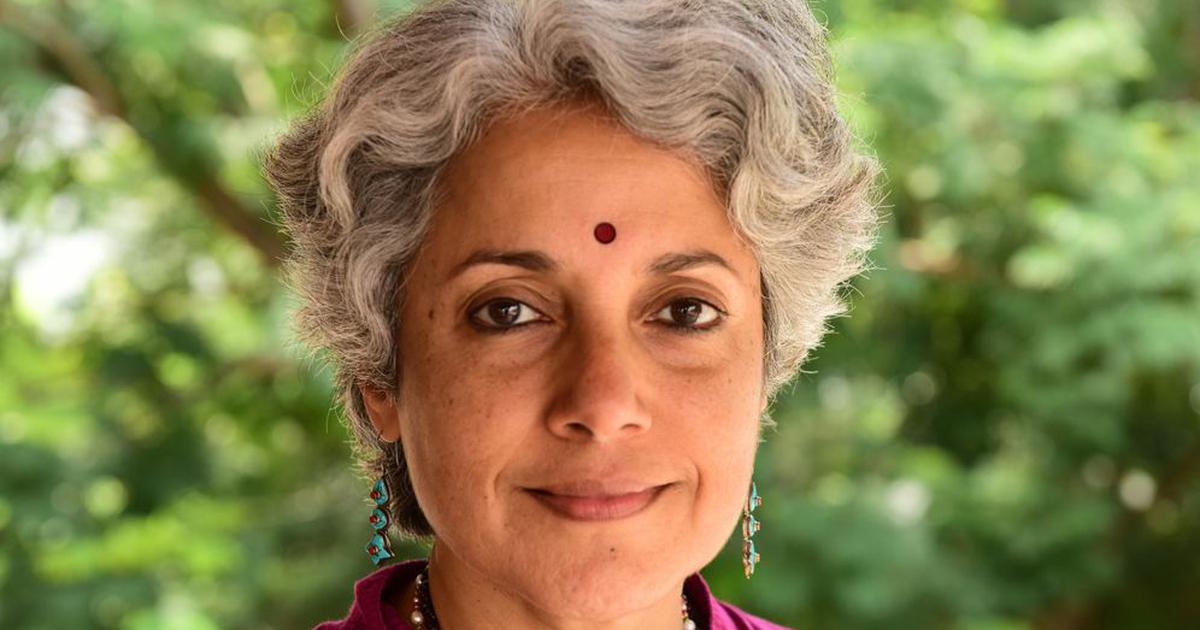
A Brief on Her Now
Dr Soumya Swaminathan: Continuing Her Work Beyond the WHO
In recent years, Dr Soumya Swaminathan has continued to remain an influential voice in public health, even after completing her tenure as Chief Scientist at the World Health Organization. While her role during the COVID-19 pandemic brought her global recognition, her work today reflects a continued commitment to addressing emerging health challenges, particularly in India and other developing regions.
One of the most significant developments in her recent work is her role as the Chairperson of the M. S. Swaminathan Research Foundation. In this position, she has been actively involved in initiatives that connect health with broader issues such as agriculture, environment, and community development. Her work here reflects a more integrated approach to public health, recognising that factors like nutrition, water quality, and climate conditions play a crucial role in overall well-being.
In addition to her institutional role, Dr Swaminathan has been consistently vocal about the need to strengthen India’s healthcare system. She has emphasised that public health spending in the country needs to increase to at least 2.5 percent of GDP. According to her, this increase is essential not only to improve infrastructure but also to ensure that primary healthcare systems are strengthened. She has repeatedly highlighted that preventive care must be given greater priority, rather than focusing only on treatment.
Her recent public engagements also show a strong focus on the future of healthcare. She has spoken about the growing risks posed by climate change, pointing out that environmental factors are increasingly linked to health outcomes. Issues such as rising temperatures, changing disease patterns, and water-related concerns are now becoming central to public health discussions, and she has been advocating for greater attention to these areas.
Another area she has highlighted is antimicrobial resistance, which is emerging as a serious global threat. She has pointed out that the misuse and overuse of antibiotics could lead to a situation where common infections become difficult to treat. Alongside this, she has also drawn attention to zoonotic diseases, which are infections that spread from animals to humans, stressing the importance of better surveillance and preparedness systems.
Dr Swaminathan has also addressed the role of technology in healthcare, particularly the use of artificial intelligence. She has noted that AI has the potential to bridge gaps in access to specialist care, especially in countries where medical resources are unevenly distributed. At the same time, she has stressed the importance of regulating these technologies to ensure that they are used ethically and safely.
Her involvement in public health has not been limited to discussions and policy advocacy. She continues to participate in various initiatives and programmes aimed at improving health outcomes at the community level. This includes work related to environmental health and water quality, where she has supported projects that aim to improve living conditions and reduce health risks.
Another important aspect of her recent work has been her continued engagement with the lessons of the COVID-19 pandemic. She has pointed out that while the immediate crisis has subsided, the virus has not disappeared completely. According to her, COVID-19 is likely to continue in waves, and there is still a need for caution, particularly for vulnerable groups. This reflects her consistent emphasis on preparedness and long-term thinking in public health.
She has also been part of discussions at national and international forums, where she continues to contribute her expertise to policy and research conversations. Her experience at the World Health Organization has positioned her as a valuable voice in shaping how countries prepare for future health emergencies.
What stands out in her recent work is the shift from crisis management to long-term system strengthening. Whether it is advocating for higher public health investment, highlighting emerging risks, or supporting community-level initiatives, her focus remains on building resilient health systems that can respond effectively to future challenges.
Dr Soumya Swaminathan’s current work shows that her contribution to public health did not end with her tenure at the World Health Organization. Instead, it has evolved into a broader engagement with some of the most pressing issues facing health systems today. Her continued involvement in policy, research, and public communication ensures that she remains a relevant and influential figure in the field.