The Red Bead Tree
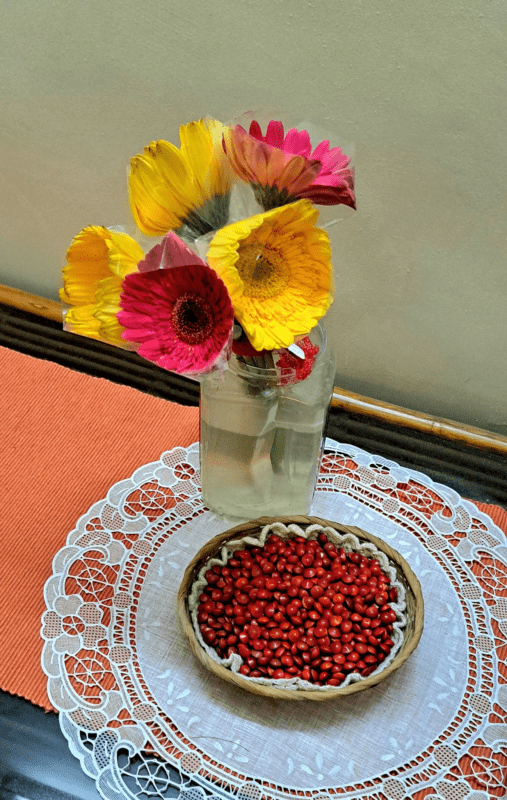
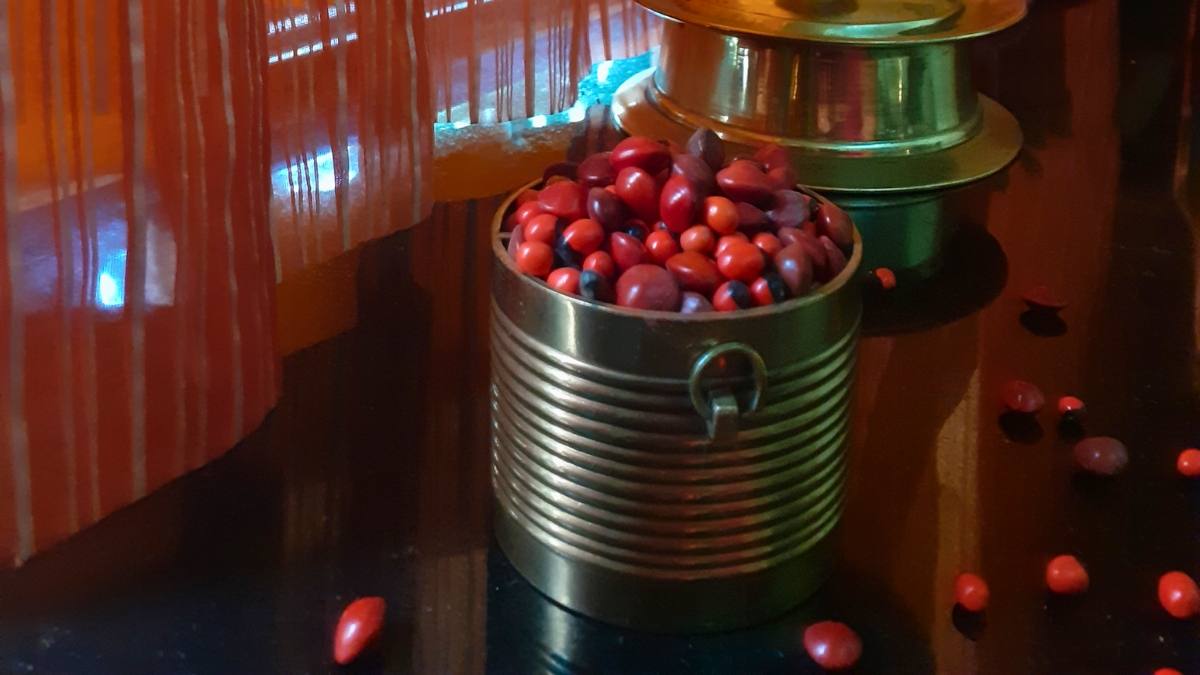
The street where I live has two beautiful red bead trees that shower us with innumerable red beads every now and then.

“Key Uses of the Red Bead Tree:
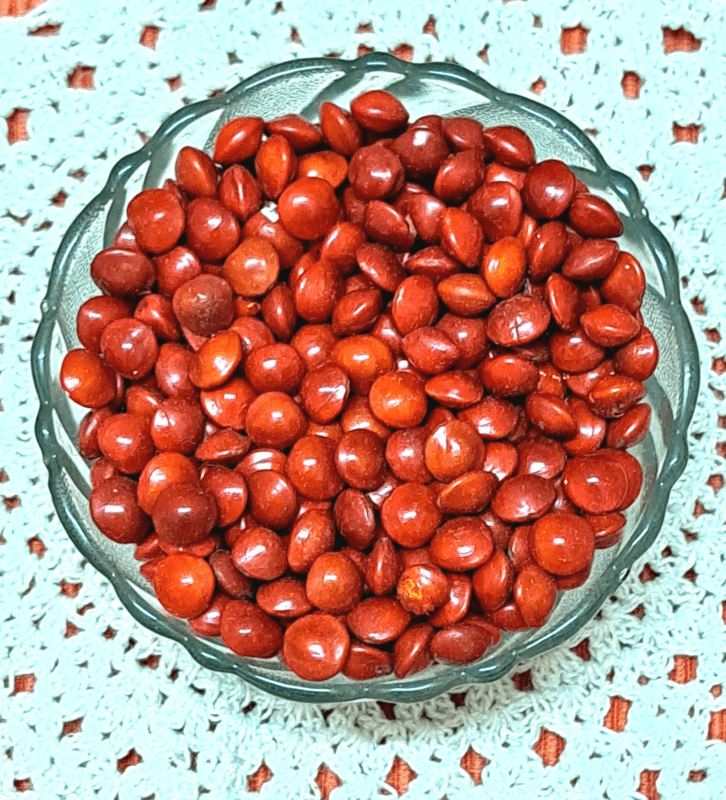
- Seeds (Red Beads): Used to make jewellery, necklaces, and rosaries due to their uniform size and colour. Historically used in India by goldsmiths to weigh precious metals (4 seeds =1 gram). They are also used in the children’s game ‘five-stones’ in Singapore.
- Wood: Known as “red sandalwood,” it is hard, durable, and used for furniture, cabinetry, building boats, and, in some regions, for construction or as high-quality firewood.
- Medicinal Purposes: A decoction of the young leaves and bark is used to treat diarrhoea, while ground seeds are used to treat inflammation, rheumatism, and, in some traditions, headaches and boils.
- Food: Young leaves are edible and can be cooked. The hard, bright red seeds can also be eaten when cooked, often tasting like soybeans.
- Ornamental & Environmental: Often planted for shade in gardens, parks, and around coffee plantations, as well as for nitrogen fixation to improve soil fertility.
- Dye: A red dye is sometimes obtained from the wood.
The seeds are considered toxic if consumed raw, but are safe when boiled or cooked. The plant is sometimes referred to as ‘false red sandalwood’ “.
…..
This beautiful red bead tree typically flowers throughout the year with a peak from March to May. That’s the best time to collect the gorgeous beads … just crouch on the roadside and pick out seeds from the mud/pavement/street, what have you. This is exactly what I do during my morning walks. And now I have collected quite a handful, to my satisfaction. I am in a position to give away a few to anyone who knows the value and fun of these seeds. As a child, I did not know the significance of these seeds. I just loved collecting them because it felt like I was collecting precious stones.
Talking about value and fun, there were times when organising games involving these seeds was a wonderful activity for kids. One such traditional game involved the skill of flicking one seed to the other without hitting or touching any other seeds around it. Thus, the more one had the seeds/beads, the better it was. It was just like a game of marbles, that was at one point of time very popular in India. Pallanguzhi, an ancient South Indian two player board game was also played using cowrie shells, seeds or these red beads.
I read somewhere that there were other kinds of games as well that were played with these red beads. It involved kids bringing a few red seeds with them and burying them in a heap of sand. Then each player in turn would have an allotted time to find as many seeds as possible. The player with the most seeds would be the winner. This was a philosophy that was just simple, soulful and bringing the kids in the neighbourhood to participate and have fun together. I wonder if kids these days would like to be involved in such simple, traditional activities. It is the AI age these days which comes with its own setbacks.
Also, it is an interesting fact that these seeds are offered to the Almighty in temples, say for e.g. in the Guruvayurappan Temple in Kerala, where offering these beads became a cherished tradition among devotees. These beads are also known as good luck seeds. The Almighty loves these beautiful jewel-like seeds.
These are the little things that give happiness. Lucky to have the most gorgeous seeds of the red bead tree on my street. And let me tell you, when you least expect it, you get a bountiful. Yes, one morning, while I was just picking up a few of these seeds that were strewn on the pavement in my street, this security guard, who was at the gate of a particular house, offered me a whole lot of it. He had apparently collected them the last few days to give it away to anybody who wanted it. This is called good fortune.
Thanks,
Sudha Mukhopadhyay