


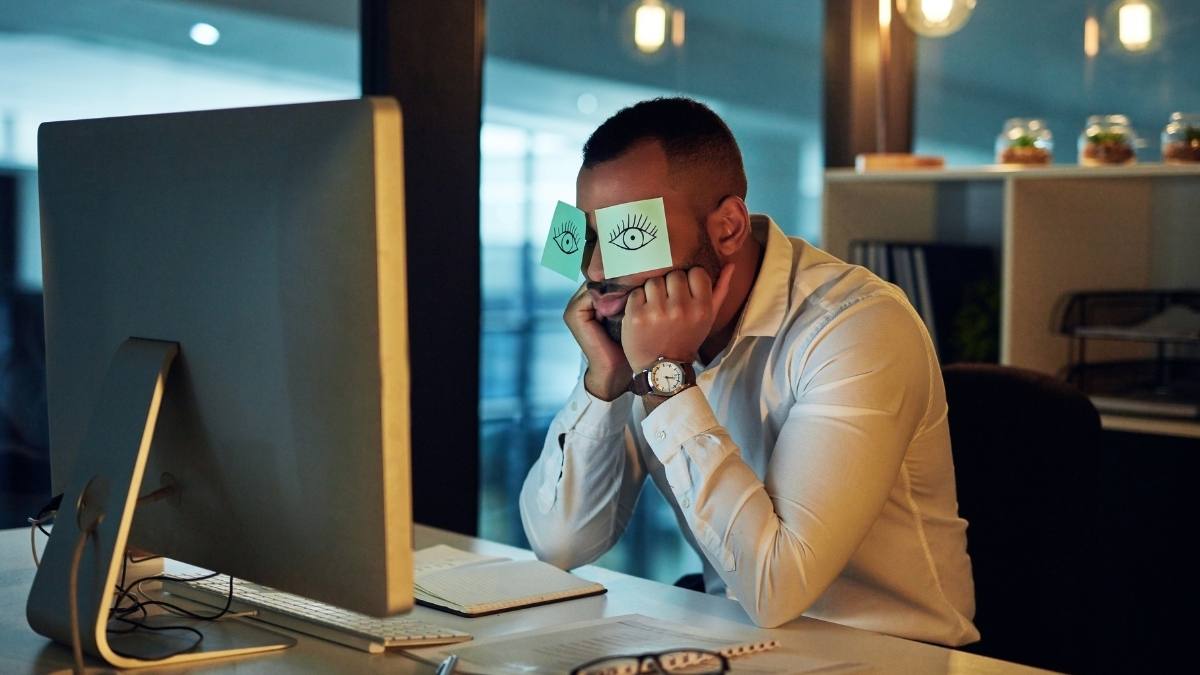
Burnout at Work: Why Modern Careers Are Exhausting a Generation
When Technology Stopped Saving Time
For much of the twentieth century, work followed a relatively predictable rhythm. Offices opened in the morning, closed in the evening and, with a few exceptions, professional responsibilities remained largely within the workplace. Employees returned home knowing that the working day had ended, while weekends and annual holidays provided genuine opportunities for rest and recovery. Although the boundary between professional and personal life was never perfect, it was generally visible and widely respected.
The digital revolution promised to improve this balance even further. Laptops would make work more efficient, smartphones would improve communication, video conferencing would reduce unnecessary travel and cloud computing would allow information to be accessed from anywhere in the world.
Technology, many believed, would give people greater control over their time and create more flexible, productive and satisfying careers.
Instead, millions of professionals feel they are working more than ever before.
The modern employee often wakes to overnight emails from colleagues in different time zones, responds to messages while commuting, spends much of the day moving between virtual meetings and continues monitoring notifications well into the evening. International collaboration has undoubtedly improved productivity, but it has also created a workplace culture in which the working day rarely has a clear beginning or end. For many professionals employed in knowledge industries, consulting, finance and technology, work no longer exists in a particular place. It exists wherever the smartphone happens to be.
This transformation has fundamentally altered the relationship between careers and wellbeing. In 2019, the World Health Organization formally recognised burnout as an occupational phenomenon, describing it as a syndrome resulting from chronic workplace stress that has not been successfully managed.
Symptoms include emotional exhaustion, detachment from work, reduced professional effectiveness and growing cynicism towards one’s profession. What was once viewed as an individual’s inability to cope is now increasingly recognised as a structural challenge affecting organisations and economies worldwide.
The scale of the problem is becoming difficult to ignore. Surveys conducted across North America, Europe, Asia and Australia consistently report rising levels of workplace stress, particularly among younger professionals navigating economic uncertainty, increasing living costs and highly competitive labour markets. Employees frequently describe feeling simultaneously overworked and under constant pressure to remain productive, while employers face growing concerns regarding absenteeism, employee retention and declining wellbeing.
Burnout has become one of the defining workplace challenges of the twenty-first century, affecting not merely specific professions but an entire generation attempting to build careers in an economy that rarely stops moving.
The Age of Permanent Connectivity
One of the greatest paradoxes of modern professional life is that the technologies designed to make work easier have often made it more difficult to escape from work altogether. Smartphones have become among the most powerful productivity tools ever created, allowing professionals to access documents, communicate with colleagues and make decisions from almost anywhere in the world. At the same time, they have quietly dismantled many of the boundaries that once protected personal time from professional obligations.
The emergence of multinational organisations operating across different time zones has accelerated this transformation. A manager in London may begin the day responding to emails from colleagues in Singapore, spend the afternoon attending meetings with European teams and conclude the evening speaking with partners in New York or California. Such connectivity enables organisations to collaborate more effectively than ever before, but it also extends the working day far beyond traditional office hours.
For many employees, constant accessibility has become an unspoken expectation. Messages arrive through email, instant messaging platforms, collaborative software and mobile notifications with relentless frequency. Many professionals check work communications before getting out of bed in the morning and again immediately before going to sleep at night. Holidays increasingly involve monitoring inboxes, while weekends become opportunities to complete tasks that could not be finished during the working week.
This culture of permanent availability has gradually normalised behaviours that earlier generations may have considered exceptional. Responding to emails late at night is often interpreted as commitment rather than poor work-life balance, while employees who disconnect completely during annual leave sometimes worry about appearing less dedicated than colleagues who remain constantly online. In highly competitive industries, visibility itself has become a form of professional currency, encouraging employees to demonstrate commitment through responsiveness rather than meaningful results.
The pandemic accelerated these trends significantly. Remote and hybrid working eliminated long commutes and provided greater flexibility for many employees, but they also removed many of the physical routines that once separated work from home life. Dining tables became offices, bedrooms became meeting rooms and living spaces increasingly evolved into permanent extensions of the workplace. The daily commute, which had traditionally provided time to mentally transition between professional responsibilities and personal life, disappeared almost overnight.
Research conducted in numerous countries since the pandemic consistently shows increases in digital communication, virtual meetings and online collaboration. Many employees describe entire days spent moving from one video meeting to another while simultaneously responding to messages and completing work between calls. Productivity tools intended to simplify work have, in some cases, created additional layers of communication, administration and monitoring that consume rather than save time.
The consequences extend beyond physical fatigue. Mental exhaustion differs fundamentally from physical tiredness because employees often leave the office—or simply close a laptop—while continuing to carry unfinished conversations, unresolved problems and unanswered messages into the evening.
Work no longer ends when the working day finishes; it continues occupying attention long after employees have technically stopped working.
Recognising these concerns, several countries have begun reconsidering workplace boundaries. France introduced the widely discussed “right to disconnect”, allowing employees to ignore work-related communications outside designated working hours without fear of professional consequences. Similar discussions have emerged across parts of Europe, Australia and Canada as governments and employers seek to redefine healthy boundaries in an increasingly connected economy.
These developments reflect an important realisation. Technology itself is neither the problem nor the solution. The challenge lies in how organisations use technology and what expectations accompany its adoption. The ability to work from anywhere can be liberating when supported by autonomy and trust. It becomes exhausting when accompanied by an expectation of permanent availability.
The Productivity Trap
If technology created the infrastructure for burnout, modern workplace culture helped legitimise it. Over the past two decades, professional success has increasingly become associated with visible busyness rather than sustainable productivity. Long working hours, overflowing calendars, late-night emails and constant travel gradually evolved from signs of organisational inefficiency into symbols of ambition and commitment. In many industries, exhaustion itself became a badge of honour, worn almost as proof that an individual was working hard enough to deserve success.
Social media amplified this transformation. Professional networking platforms became filled with stories celebrating five o’clock starts, eighteen-hour working days and relentless pursuit of success. Entrepreneurs and business leaders frequently promoted narratives centred on hustle, sacrifice and continuous optimisation, creating the impression that exceptional achievement required exceptional exhaustion. Slogans encouraging people to “outwork everyone else” or treat sleep as a weakness gradually evolved from motivational rhetoric into workplace expectations influencing how many younger professionals viewed career progression.
The problem is not that hard work lacks value. Few worthwhile achievements are possible without effort, discipline and perseverance. The difficulty arises when productivity becomes confused with constant availability and when activity is mistaken for accomplishment. An employee attending meetings continuously for ten hours may appear productive while achieving relatively little of lasting value. Similarly, responding instantly to every message may create an impression of efficiency while simultaneously destroying the concentration necessary for strategic thinking, creativity and meaningful problem-solving.
Increasingly, organisational psychologists and economists distinguish between visibility and genuine output. Many workplaces continue rewarding responsiveness because it is easy to observe and measure, whereas creativity, long-term planning, mentoring and innovation often require quieter forms of work that are less visible but ultimately far more valuable. In highly competitive environments, employees naturally optimise for what organisations reward rather than for what is genuinely effective. It is within this culture that burnout has quietly become not simply an individual health issue but one of the defining lifestyle challenges of the modern professional world.
Remote Work Changed the Workplace, Not the Workload
The rapid adoption of remote and hybrid working has been one of the most significant workplace transformations of the past decade. Accelerated by the Covid-19 pandemic, organisations around the world discovered that employees could remain productive without being physically present in an office every day.
Video conferencing replaced boardrooms, cloud-based collaboration replaced paper files and digital communication became the foundation of modern business operations. For millions of employees, remote work offered greater flexibility, eliminated lengthy commutes and made it easier to balance professional responsibilities with personal commitments.
Yet the transition also exposed a less visible challenge. While work moved out of the office, it did not necessarily become less demanding. In many organisations, meetings multiplied because virtual conversations were easier to schedule than face-to-face discussions. Employees found themselves attending back-to-back video calls while simultaneously responding to emails, instant messages and project deadlines. The convenience of working from home often translated into longer working hours rather than better work-life balance.
The absence of clear physical boundaries further complicated matters. In traditional office environments, leaving the workplace usually signalled the end of the working day. Remote work removed that natural separation. Kitchen tables became workstations, bedrooms became offices and laptops remained within easy reach throughout the evening. Many employees found themselves returning to unfinished tasks after dinner, responding to late-night messages or beginning work earlier than before because the office was only a few steps away.
Hybrid work introduced another layer of complexity. Employees were often expected to divide their time between home and the office while maintaining identical levels of productivity in both environments. Rather than reducing workload, hybrid arrangements sometimes created additional coordination challenges as organisations attempted to synchronise teams working across different locations and schedules. The flexibility that many employees valued therefore came with an increased expectation of constant adaptability.
Studies conducted across multiple countries suggest that remote working has improved job satisfaction for many professionals, particularly those seeking greater autonomy and flexibility. However, the same research also highlights increasing concerns about digital fatigue, social isolation and the blurring of professional and personal boundaries. The experience has demonstrated that workplace flexibility alone cannot eliminate burnout if organisational cultures continue rewarding constant availability over sustainable performance.
A Generation Redefining Success
One of the most significant workplace developments of recent years has been the changing attitude of younger professionals towards careers and personal wellbeing. Previous generations often viewed professional success through relatively traditional measures such as salary, seniority and long-term job security. While these goals remain important, many younger employees are placing equal emphasis on flexibility, purpose, personal fulfilment and quality of life.
This shift has sometimes been misunderstood as a declining work ethic. In reality, many younger professionals continue to work exceptionally hard but increasingly question whether professional achievement should come at the expense of physical health, family relationships or personal happiness. Rather than rejecting ambition, they are redefining what a successful career should look like.
The popularity of concepts such as work-life balance, mental wellbeing and flexible working arrangements reflects broader changes in social expectations rather than temporary workplace trends. Employees increasingly seek organisations that value outcomes instead of hours worked, encourage continuous learning and recognise that sustainable performance depends upon adequate rest and recovery. The pandemic accelerated these conversations by prompting millions of people to reassess personal priorities, family life and long-term career aspirations.
Employers have also begun recognising that attracting and retaining talented professionals requires more than competitive salaries. Organisational culture, leadership quality, flexibility and opportunities for professional development have become increasingly important factors influencing recruitment and employee retention. Companies that fail to adapt may struggle to compete for skilled workers in an increasingly competitive global labour market.
At the same time, expectations must remain balanced. Every profession inevitably involves periods of pressure, demanding deadlines and unexpected challenges. The objective is not to eliminate hard work but to create workplaces where periods of intense effort are supported by realistic workloads, effective leadership and organisational cultures that value long-term performance over short-term exhaustion.
Why Burnout Has Become a Business Issue
Burnout is no longer viewed solely as an individual health concern. Increasingly, it is recognised as an organisational and economic issue with significant consequences for productivity, innovation and long-term business performance. Companies investing heavily in recruitment, training and professional development cannot afford to lose experienced employees because workplace cultures make sustained performance impossible.
Research consistently suggests that chronic workplace stress contributes to higher absenteeism, increased staff turnover, reduced employee engagement and declining organisational performance. Employees experiencing burnout are often less creative, less collaborative and more likely to make costly errors. Decision-making, customer service and innovation may all suffer when individuals operate under prolonged stress without adequate opportunities for recovery.
The financial implications extend beyond individual organisations. Burnout contributes to rising healthcare costs, reduced economic productivity and growing pressure on public health systems. As knowledge-based industries become increasingly important to national economies, protecting employee wellbeing is becoming not only a human resources priority but also an economic necessity.
Forward-looking organisations are beginning to respond. Many have introduced flexible working policies, employee assistance programmes, mental health support, leadership training and initiatives designed to encourage healthier working practices. Some companies are redesigning meeting cultures, limiting after-hours communication and encouraging managers to focus on measurable outcomes rather than constant visibility. While these initiatives vary in effectiveness, they reflect a broader recognition that sustainable productivity depends upon creating environments in which employees can perform at their best without sacrificing their long-term wellbeing.
These developments also represent a significant change in leadership philosophy. Rather than viewing employee wellbeing as separate from business performance, many organisations increasingly recognise the two as closely interconnected. The most successful workplaces of the future are unlikely to be those demanding the greatest number of working hours. They are more likely to be those capable of combining high performance with healthy, sustainable working environments.
Finding Balance in the Digital Age
The discussion surrounding burnout has gradually shifted from treating it as an individual weakness to recognising it as a consequence of broader economic, technological and cultural change. Modern careers are being shaped by forces that previous generations never experienced. Globalisation has connected businesses across continents, digital technology has eliminated traditional workplace boundaries and rapid economic change has intensified competition across almost every profession. In this environment, maintaining a healthy relationship with work has become considerably more challenging than simply managing time effectively.
Technology will undoubtedly remain central to the future of work. Artificial intelligence, automation, digital collaboration and remote working will continue transforming industries and creating new opportunities for businesses and employees alike. The challenge is therefore not to resist technological progress but to ensure that it serves people rather than quietly controlling the rhythm of their lives. Productivity should be measured by the quality of outcomes rather than by the number of hours spent online or the speed with which emails are answered.
Increasingly, organisations are recognising that sustainable performance depends upon creating healthier working environments. Several companies have begun reducing unnecessary meetings, encouraging uninterrupted periods for focused work and introducing clearer expectations regarding communication outside working hours. Leadership training now places greater emphasis on empathy, trust and employee engagement, while organisations are investing in professional development, wellbeing initiatives and more flexible working arrangements. These changes reflect an important shift in management thinking. Employee wellbeing is no longer viewed simply as a welfare initiative but as an essential component of long-term organisational performance.
Employees also have an important role to play. Establishing healthy digital boundaries, taking regular breaks, using annual leave properly and recognising the importance of rest are increasingly viewed as professional responsibilities rather than signs of reduced commitment. Career success is becoming less closely associated with constant availability and more closely linked to effectiveness, creativity and the ability to sustain high-quality performance over many years. The ability to disconnect has become as valuable as the ability to connect.
Redefining Success for a New Generation
One of the most significant outcomes of the burnout debate has been a broader reconsideration of what professional success actually means. For decades, career progression was often measured through promotions, income and increasingly demanding responsibilities. While these remain important indicators of achievement, many professionals are beginning to recognise that long-term success cannot be measured solely through financial reward if it comes at the expense of physical health, meaningful relationships or personal fulfilment.
This shift is particularly visible among younger professionals, who increasingly seek careers that combine purpose, flexibility and opportunities for personal growth. They continue to value ambition and achievement but are less willing to accept workplace cultures that reward excessive working hours while neglecting wellbeing. Rather than rejecting work, they are questioning whether success should require permanent exhaustion.
Employers are responding accordingly. Competitive salaries remain important, but they are no longer sufficient on their own. Organisations increasingly compete through workplace culture, flexibility, professional development, inclusive leadership and opportunities for meaningful contribution. Companies capable of creating supportive, adaptable and purpose-driven working environments are likely to attract and retain talented professionals more successfully than those relying solely on traditional management models.
The debate therefore extends beyond burnout itself. It reflects a broader cultural transformation in which employees and employers are collectively redefining the relationship between work and life. Careers remain central to personal identity and economic security, but they are increasingly viewed as one important part of a fulfilling life rather than its sole purpose.
The Future of Work and Wellbeing
As workplaces continue evolving, burnout is likely to remain an important organisational challenge. Artificial intelligence will automate routine tasks, digital collaboration will become even more sophisticated and global teams will continue working across multiple time zones. These developments will undoubtedly increase efficiency, but they may also introduce new pressures if organisations fail to establish healthy expectations regarding workload, communication and performance.
The future of work will therefore depend not only on technological innovation but also on leadership, organisational culture and thoughtful public policy. Governments in several countries have already begun considering legislation addressing digital wellbeing, working hours and employees’ right to disconnect.
Businesses are experimenting with four-day working weeks, greater flexibility and alternative approaches to measuring productivity. Although no single model will suit every organisation, the broader direction is becoming increasingly clear. Sustainable performance requires sustainable working practices.
For globally connected societies, including the Indian diaspora, these issues carry particular significance. Professionals frequently collaborate across continents, manage international teams and work within organisations operating around the clock. While technology enables these opportunities, it also demands greater awareness of personal boundaries and organisational responsibility. The ability to balance global connectivity with individual wellbeing may become one of the defining professional skills of the coming decades.
Work Should Support Life, Not Replace It
Work has always been an essential part of human progress. It creates opportunity, drives innovation and enables individuals, families and societies to prosper. Yet the purpose of work has never been simply to occupy every available moment. The modern workplace has reached a point where efficiency can no longer be measured by busyness alone, nor commitment by constant availability.
The burnout debate reminds us that technological progress should ultimately improve the quality of life rather than diminish it. Artificial intelligence, remote working and digital communication possess enormous potential to make careers more productive, flexible and rewarding. Whether they achieve that goal depends not on the technologies themselves but on the choices made by governments, employers and employees.
The future workplace will belong to organisations capable of combining ambition with balance, innovation with wellbeing and productivity with humanity. Employees who remain healthy, motivated and engaged are ultimately more creative, more resilient and better equipped to contribute over the long term than those working under constant pressure without opportunities for recovery.
Burnout is therefore not simply a health issue or a workplace trend. It is a reflection of how society chooses to define success in an increasingly connected world. As technology continues transforming careers, the greatest challenge will not be learning how to work harder. It will be learning how to work better, more sustainably and with a clearer understanding that professional achievement should enhance life rather than consume it.