


By WFY Bureau | Science & Technology | The WFY Magazine, December, 2025 edition
How migrant professionals, innovators and researchers influence the world’s next wave of technological progress.
Technology has become the language of global progress, and across continents it is impossible to ignore the quiet but powerful presence of Indian minds shaping the systems that define modern life. From cloud computing to artificial intelligence, robotics, biotechnology, and space research, Indian-origin professionals have woven themselves into the scientific fabric of the world. Their influence is visible in global companies, research laboratories, universities, venture capital ecosystems and start-up networks.
Yet the story of global Indian talent is not simply about numbers or corporate roles. It is also about the long journey of adaptation, determination and quiet leadership. Many Indian professionals abroad come from modest backgrounds yet carve their place in industries that shape global behaviour and choices. Their success is built on technical skill, cultural adaptability and a steady commitment to learning.
This article explores the scientific and technological impact of the Indian diaspora in 2025, tracing how their contributions reshape global thinking, corporate strategies, research agendas and innovation patterns. Through data, trends and case-style illustrations, we examine where this influence comes from, what it means for the world and how it is likely to evolve.
A Global Workforce Rooted in Skill and Persistence
The global technology workforce has transformed over the past two decades, and Indian professionals have played a central role in this shift. From North America to Europe, East Asia and the Middle East, companies depend heavily on talent from India to build, maintain and expand critical systems.
Large international surveys tracking migration and workforce composition show that Indians make up a notable share of skilled talent in several high-tech sectors. In some major economies, the proportion of Indian engineers and researchers in key industries is higher than that of most other migrant groups. Their concentration is especially visible in software engineering, artificial intelligence, cloud infrastructure and specialist research fields.
This widespread presence results from decades of investment in education and technical training within India, combined with strong English proficiency, cultural adaptability and a willingness to work in demanding environments. For employers, these qualities make Indian professionals dependable contributors in industries that depend on precision and innovation.
Technology Ecosystems Built on Indian Expertise
Indian-Origin Leaders Transforming Global Technology
The influence of the Indian diaspora becomes particularly visible when examining global leadership in top technology companies.
Satya Nadella


Chairman and Chief Executive Officer of Microsoft. His leadership strengthened the company’s cloud computing and artificial intelligence strategies, positioning Microsoft as a dominant global player. His work reflects how Indian-origin leaders shape decisions that affect millions.
Arvind Krishna

Chairman and CEO of IBM. He has guided the company’s transition toward advanced cloud systems, artificial intelligence tools and quantum computing. His strategic decisions highlight Indian involvement at the highest levels of enterprise technology.
Padmasree Warrior

Veteran technologist and founder of a technology venture. She previously held major leadership roles in global technology firms and now serves on international boards. Her career reflects the influence of Indian-origin women in advanced engineering and corporate innovation.
Pushmeet Kohli

Senior research leader at DeepMind, working on frontier artificial intelligence. His research contributes to developments in machine learning, safety systems and advanced computational methods. His presence in a leading global AI research organisation demonstrates the scientific depth of Indian diaspora talent.
Aravind Srinivas
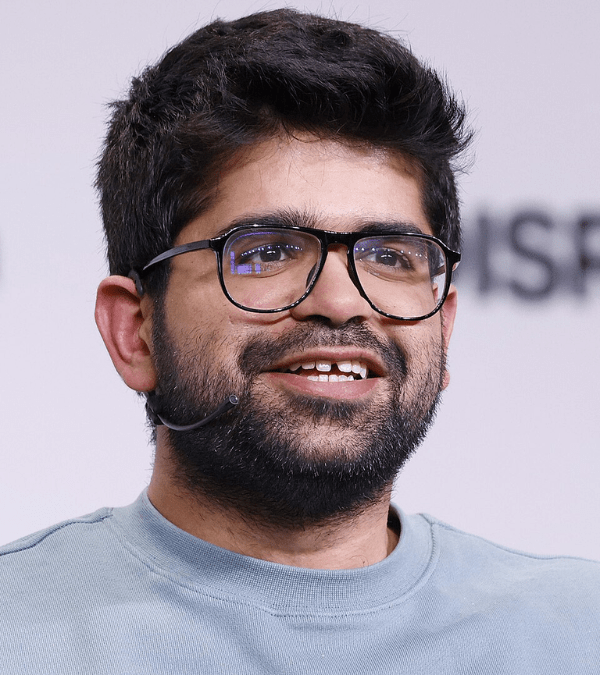
Co-founder and CEO of Perplexity AI. He represents a new generation of Indian-origin founders shaping emerging fields such as generative search and conversational intelligence. His work reflects how diaspora entrepreneurship is redefining access to information.
Vijaye Raji

Appointed Chief Technology Officer of Applications at OpenAI after the acquisition of his company. His work illustrates how Indian-origin innovators contribute to structural transformation within globally influential AI platforms.
These leaders represent only a small share of the diaspora’s impact, but their influence shows how deeply Indian-origin professionals are integrated into global technology decision-making.
Global technology systems are complex structures that require continuous development. Indian professionals help shape these ecosystems at every stage.
Engineering and Software Development
Indian engineers are deeply embedded in software design, data infrastructure and automation systems. They help create products used by millions, from everyday applications to specialised industrial platforms. Their work ensures stability, scalability and security in systems used across continents.
Research and Development Environments
Many international research laboratories rely on Indian scientists and doctoral students. Their contributions span machine learning, materials science, climate modelling, medical technology and robotics. They help open new directions in research that influence both commercial and academic progress.
Start-up Ecosystems and Innovation Hubs
Indian founders have established successful start-ups in cities such as San Francisco, London, Berlin, Singapore, Dubai and Toronto. These ventures focus on clean energy, biotechnology, AI-driven tools, financial technology, healthcare platforms and advanced analytics. Their presence adds diversity to local ecosystems while integrating global perspectives.
Corporate Leadership
Indians hold influential positions in global companies. They guide decisions related to technology adoption, research priorities, organisational growth and long-term strategy. Their leadership shapes how companies adapt to change and explore new opportunities.
These interconnected roles demonstrate how Indian expertise influences global technology far beyond individual achievements.
Case-Style Illustrations of Indian Influence
These brief illustrations capture the range of contributions made by Indians abroad across various technology fields.
Case 1: The Robotics Engineer in Tokyo
Soundarya Ramakrishnan: She works in a laboratory focused on next-generation robotics for ageing populations. Her algorithms help robots interact safely and naturally with elderly patients. Her work supports Japan’s efforts to address demographic challenges through advanced technology.
Case 2: The Data Security Specialist in Dubai
Giriraj Pandey: He designs protocols that protect financial institutions from cyber-attacks. His team monitors vulnerabilities across regional networks. His decisions affect the security of millions of digital transactions every day.
Case 3: The AI Researcher in Toronto
Kanwaljeet Kaur: She works on adaptable learning systems used in education and healthcare. Her research influences how public institutions use artificial intelligence responsibly, ensuring that these systems serve a wider population rather than a narrow group of users.
Case 4: The Biotech Scientist in London
Soman Chakraborty: He contributes to research involving genetic analysis and disease-prevention tools. His team develops early detection systems that help reduce long-term medical complications. His work strengthens international collaborations in health technology.
Case 5: The Cloud Architect in Melbourne
Surmoyi Chakraborty: She manages infrastructure supporting online learning platforms used by students across several countries. Her decisions improve reliability and user experience for millions of learners.
These examples reflect how Indian professionals integrate into global teams and strengthen innovation across specialised disciplines.
How Indian Talent Shapes Artificial Intelligence and Data Science
Artificial intelligence has become a defining technology of the decade. Indian researchers, developers and analysts play a crucial role in advancing AI across countries.
Global Research Contributions
Indians contribute significantly to AI publications, conferences and research groups. They work on applied machine learning, natural language processing, predictive modelling and responsible AI design.
Industry Applications
Many international companies rely on Indian experts to implement AI solutions in areas such as logistics, healthcare, finance, education and retail. These implementations increase efficiency and open new opportunities.
Ethical and Responsible AI
Indian professionals contribute to discussions on responsible AI design. They examine fairness, privacy, transparency and accountability. Their presence in these conversations helps shape international standards.
AI Education and Mentorship
Indians often guide new professionals entering the field. They share knowledge through training, mentoring and open learning communities, helping build a more inclusive future for AI.
This broad influence demonstrates how Indian talent supports the responsible and effective development of artificial intelligence globally.
Technology Leadership Across Continents
As global industries expand, technology leadership becomes essential. Indian professionals contribute to leadership roles through structured thinking, clear communication and a focus on long-term solutions.
Strategic Decision-making
They guide teams in planning, resource management and innovation direction. Their decisions influence product design, research priorities and growth strategies.
Cross-cultural Team Management
Indians abroad often manage teams composed of people from diverse backgrounds. Their cultural flexibility helps maintain harmony and productivity.
Transforming Workplace Culture
By integrating values of collaboration, discipline and continuous learning, Indian professionals contribute to workplace cultures that support innovation.
Policy and Governance Roles
Some Indians contribute to advisory groups and committees that shape regulations related to digital privacy, cybersecurity and public technology infrastructure.
Their leadership presence expands each year, reflecting the trust placed in their ability to manage complex technological systems.
The Silent Force: Indian Women Transforming Global Technology
Indian women abroad have become influential figures in science and technology. They excel as engineers, researchers, designers and project leaders.
A. Expanding Representation
More Indian women are entering fields such as robotics, biotechnology, aerospace, data science and cybersecurity. Their presence transforms industries that were historically dominated by men.
B. Balancing Work and Migration Challenges
Their journeys often involve managing cultural adjustment, family responsibilities and workplace expectations. Their resilience strengthens the wider diaspora experience.
C. Leadership and Mentorship
Indian women lead teams, mentor peers and contribute to knowledge sharing. Their work inspires younger generations to pursue scientific careers.
Their contributions enrich global innovation, helping create technology that is more inclusive and representative.
Space Science: The Global Rise of Indian Expertise
Indian professionals abroad contribute significantly to international space programmes. They work in mission design, satellite communication, planetary science and advanced research.
A. Collaborative Missions
Indians participate in multinational missions aimed at exploring planets, studying climate patterns and improving communication systems. Their inputs support mission safety, navigation and scientific analysis.
B. Satellite and Communication Technology
Indian engineers and scientists help design and manage satellite systems used for weather forecasting, navigation, communication and environmental monitoring.
C. Space Research
Many Indian doctoral students and researchers contribute to studies on planetary formation, space materials, propulsion systems and long-distance communication.
Their work reflects India’s growing identity as a space-aware nation that contributes knowledge beyond its borders.
The Rise of Diaspora Innovators and Founders
Start-up ecosystems across continents benefit from Indian-origin founders.
A Deep Culture of Problem-Solving
Many founders draw on experiences across India and their host countries to design solutions suited for global markets.
Cross-Border Funding
Indians abroad attract international venture capital support due to their technical clarity and disciplined execution.
Fields of Innovation
Indian founders abroad have made progress in clean energy, AI-powered platforms, fintech, digital health, climate solutions and educational technology.
Example
Aravind Srinivas’s work in AI-driven search demonstrates the boldness of new diaspora entrepreneurs in shaping next-generation technologies.
The rise of such innovators ensures sustained Indian influence in global tech ecosystems.
Biotechnology and Health Technology
Biotechnology evolves rapidly, and Indians abroad play a pivotal role in developing tools that support global health.
A. Medical Research and Diagnostics
Indian scientists contribute to diagnostic platforms, biomedical devices and early detection systems. Their work helps reduce costs and improve accessibility.
B. Pharmaceutical Innovation
They support research involving vaccines, therapeutic solutions and drug-delivery systems. Their contributions help improve treatment outcomes.
C. Digital Health Technologies
Indians play a significant role in designing AI-based tools for hospitals, clinics and public health systems. These tools improve decision-making and efficiency.
D. Global Health Challenges
Their work contributes to addressing diseases that affect both developed and developing countries, making their impact universal.
Biotechnology remains a strong field for Indian professionals across research institutions and global companies.
Cybersecurity and Digital Protection
As digital systems expand, cybersecurity becomes crucial. Indian professionals play significant roles in safeguarding global digital infrastructure.
Threat Monitoring
Analysts track suspicious patterns across networks used by businesses and governments.
Data Protection and Encryption
They develop tools that safeguard sensitive information stored in global databases.
Threat Detection and Prevention
Indian experts work on identifying vulnerabilities and preventing cyber attacks. Their work protects financial systems, transportation networks and public services.
Infrastructure Protection
Engineers build secure systems that protect sensitive information and ensure continuity.
Public Safety and National Security
Their analysis helps governments understand new threats in the digital environment. Their work supports national efforts to protect infrastructure and digital systems.
This field reflects how diaspora talent quietly safeguards the world’s digital environment.
Corporate Security Management
Indians lead security operations centres responsible for monitoring and responding to incidents.
Their contributions strengthen digital stability, which directly affects the safety of millions of users.
Green Technology and Climate Innovation
Climate change affects every nation. Indian professionals contribute significantly to clean-energy innovation, sustainability research and global climate solutions.
A. Renewable Energy
They work on solar, wind and hydrogen technologies that support global energy transitions.
B. Climate Modelling
Indian researchers contribute to climate prediction models used by governments and global agencies.
C. Sustainable Design
Engineers and architects of Indian origin develop environmentally conscious designs for buildings, transport and infrastructure.
D. Clean-tech Start-ups
Indians abroad establish start-ups focused on sustainable materials, recycling systems and energy-efficient devices.
Their work supports global environmental goals and offers practical solutions to urgent challenges.
The Next Wave: Indian Students Shaping the Future
Indian students studying abroad form a large and influential group. Their research, internships and innovation projects contribute to global progress.
A. Academic Excellence
Many Indian students excel in engineering, science and technology programmes. Their research is often integrated into real-world applications.
B. International Exposure
Studying abroad gives them access to advanced laboratories, research funding and global collaborations.
C. Future Workforce
These students form the next generation of global technologists, carrying forward the strengths of earlier diaspora waves.
D. Entrepreneurial Aspirations
Many start companies abroad or return to India with new ideas and methods.
Their presence shapes future innovation landscapes across several countries.
The Broader Impact on Global Societies
The contributions of Indians abroad extend beyond technology.
A. Strengthening Economies
Their technical skills support economic growth, productivity and industrial development.
B. Enhancing Education
They share knowledge, mentor young talent and contribute to academic programmes.
C. Supporting Public Systems
Indians contribute to public health systems, transportation networks, communication systems and environmental planning.
D. Encouraging Cultural Exchange
Their presence fosters understanding across cultures, strengthening global cooperation.
The impact is both economic and social.
Challenges Faced by Indian Techies Abroad
Despite the success stories, the journey is not easy.
Visa and Work Restrictions
Tech workers often face uncertainties linked to immigration policy changes.
Workplace Bias
Subtle biases in evaluation, communication or opportunities affect career growth.
Pressure to Perform
High-tech environments demand precision, speed and continuous learning.
Cultural Adjustment
Managing expectations across two cultures creates emotional strain
Balancing Personal and Professional Life
Long hours, cultural expectations and distance from family create emotional strain.
Understanding these challenges helps humanise the diaspora experience.
The Road Ahead: What the Future Holds
Indian professionals are expected to play an even greater role in global technology.
Future trends include:
• Increased leadership roles
• More Indian-founded global start-ups
• Higher representation in research and academia
• Greater influence in responsible AI and digital ethics
• Expanding roles in green technology and climate science
• More cross-border collaboration
The future of global technology will be shaped by how diaspora talent adapts to emerging challenges and opportunities.
The global influence of Indians in science and technology reflects far more than professional success. It reflects ambition, sacrifice, relentless curiosity and the strength of a culture that values learning. It reveals how individuals can leave home, adapt to new environments and still carry something of their identity into the systems they help build.
Indian-origin professionals abroad are not simply working in global technology. They are shaping it. They are designing the platforms people use every day, strengthening scientific discovery, protecting digital systems, improving healthcare, advancing space exploration and laying the foundations for future innovation. Their work shows how migration, knowledge and opportunity come together to produce global progress.
The story of Indians abroad in technology is one of steady influence, quiet leadership and enduring impact. It is a story still unfolding, and its next chapters will continue to shape the technological direction of the world.
Disclaimer: This article is intended for informational and editorial purposes. It does not offer technical, academic or professional advice. Readers should consult qualified experts for specific guidance.