By WFY Bureau I Art and Culture
The Venice International Film Festival has always contained two worlds.
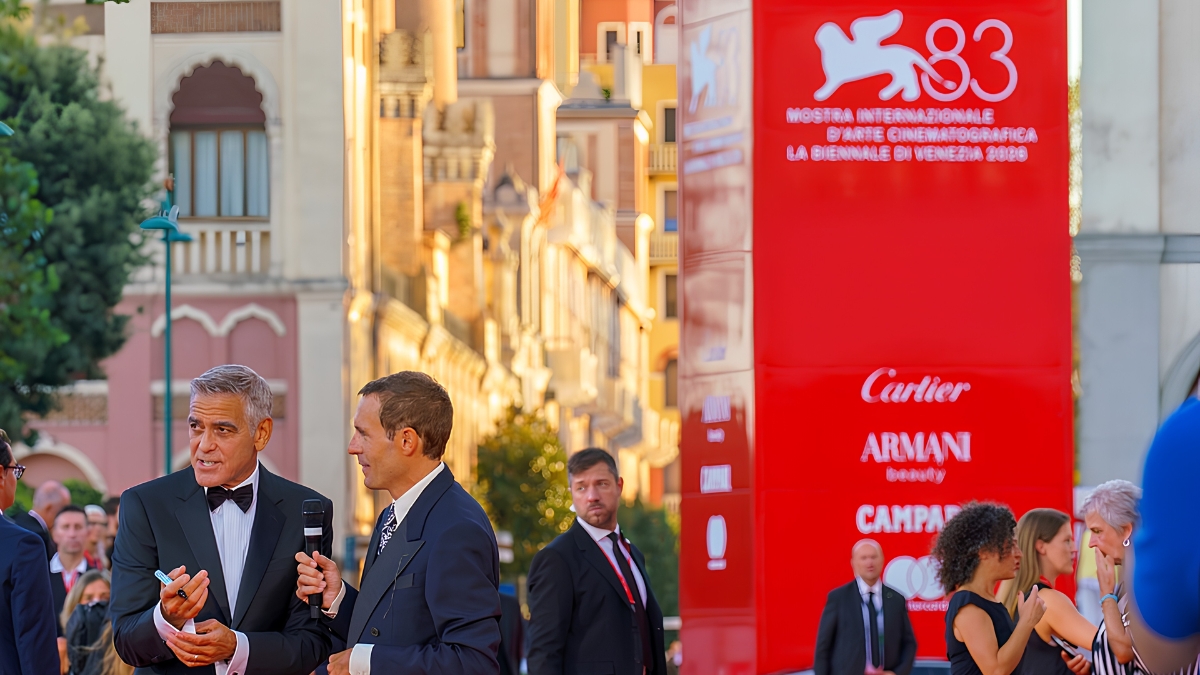
One arrives by water taxi, poses before photographers and speaks about cinema beneath the flash of cameras. The other enters through the films themselves, carrying war, displacement, political anger and the experiences of people who will never walk the festival’s red carpet.
At its 83rd edition, which opened on 2 September, the distance between those worlds appears especially narrow. The programme includes films and documentaries concerning Gaza, Russia’s war in Ukraine, immigration enforcement in the United States, the power of media empires and the global influence of Elon Musk.
Venice describes its purpose as promoting cinema “as art, entertainment and as an industry, in a spirit of freedom and dialogue”. In 2026, each part of that statement is under pressure.
The festival is an artistic showcase, but also an international marketplace. It creates space for political expression, but depends upon institutions, sponsors and distributors. It celebrates filmmakers as independent voices, yet its main competition contains only one film directed solely by a woman.
This raises a fundamental question. Is a major festival a place where the world confronts itself through cinema, or an elegant stage on which cultural institutions display their awareness?
The Red Carpet Meets the Front Page
The opening film, Danny Boyle’s Ink, examines Rupert Murdoch’s acquisition of the British tabloid The Sun in 1969 and the development of a media operation that would reshape British public life. Starring Guy Pearce and Jack O’Connell, the film arrives at a moment when the political influence of media ownership has become impossible to separate from debates about democracy.
Its selection is an effective statement of the festival’s tone. Ink is not concerned only with journalism or one newspaper. It asks how information becomes power and how popular anger can be organised, amplified and sold.
Elsewhere, Alex Gibney’s documentary Musk devotes nearly four hours to one of the world’s most powerful technology entrepreneurs. Elon Musk is not merely a businessman or celebrity. Through companies involved in social media, artificial intelligence, satellite communication, transportation and space, he occupies territory once divided between corporations, governments and media organisations.
A film about Musk is therefore also a film about the concentration of private power.
Laura Poitras and Rachel Lauren Mueller’s They’re Here turns towards immigration raids and enforcement in the United States. Documentaries involving Gaza and Palestinian lives sit beside work by independent Russian journalists and films reflecting upon Ukraine, authoritarianism and propaganda.
According to Associated Press, festival director Alberto Barbera said contemporary political and social concerns dominated the thousands of submissions considered by the selection team. This does not appear to be a festival forcing politics into cinema. It is cinema arriving already saturated with politics.
What Does It Mean to Bear Witness?
The phrase “bearing witness” is frequently attached to political filmmaking. It implies that the camera can preserve what power would prefer to hide.
A witness does more than observe. A witness creates a record.
In war, that record may consist of ruined homes, frightened families, intercepted messages or the testimony of survivors. Under authoritarianism, it may preserve images and voices that official narratives attempt to erase. In a media investigation, it may show how influence is built behind public spectacle.
Cinema is particularly powerful because it joins information with presence. A written report can describe a bombing, arrest or forced removal. A film can allow an audience to hear the silence after it, see the face of the person affected and remain in the room longer than a news bulletin permits.
Yet the camera is never neutral. Someone decides where it points, when it begins recording and what is removed during editing. Music can direct emotion. The order of testimony can influence judgment. Even a documentary constructed from verified material remains an authored interpretation.
Political cinema should therefore not be judged by whether it has a position. Nearly every serious film has one. It should be judged by the honesty of its method, the strength of its evidence and its willingness to recognise complexity.
A film can bear witness without pretending to deliver the final word.
Can a Festival Film Change Anything?
The influence of politically engaged cinema is easy to exaggerate.
A film premieres before critics, distributors and industry professionals who may already share its concerns. It receives an emotional standing ovation, earns favourable reviews and enters another festival. Months later, it may reach a limited theatrical audience or appear quietly on a streaming platform.
The war continues. The law remains. The political leader survives.
This does not make the film irrelevant. Cultural influence rarely operates as a direct command. A documentary may give journalists new evidence, provide campaigners with language, preserve testimony for future legal or historical use, or make an issue emotionally comprehensible to people who had previously encountered it only as statistics.
Festival recognition can protect a vulnerable film by making its suppression more visible. It can help secure distribution, translation and international press. A work created under dangerous conditions acquires witnesses of its own.
But festivals must be careful not to confuse applause with impact. A politically admired film can circulate within a closed cultural world without reaching the audiences most resistant to its argument.
The measure of success should extend beyond the premiere. Who will distribute the film? In which countries can it be screened? Will it reach schools, universities, community organisations and viewers outside major cultural centres? Can audiences in the places represented see it themselves?
A festival can open the door. It cannot claim the entire journey.
Gaza and the Politics of Selection
No subject places greater pressure upon cultural institutions at present than Gaza.
Festivals face demands to condemn, exclude, include, contextualise or take sides. Artists and activists scrutinise invitations, funding relationships and institutional language. Silence is interpreted as complicity, while statements are examined for what they omit.
Venice added Naza, from filmmakers Yuval Abraham and Rachel Szor to its programme amid continuing public pressure over the representation of Gaza. The film examines Palestinian civilian deaths and enters a cultural argument that extends beyond its images.
Its presence demonstrates the value of festival space, but selection alone does not resolve the underlying political question. A festival may show a difficult film while avoiding a direct institutional position. It may defend artistic freedom but decline to address demands concerning governments, artists or sponsors.
This tension is not necessarily evidence of hypocrisy. Cultural institutions should be cautious about turning selection decisions into political loyalty tests. Excluding artists solely because of nationality can reproduce the collective judgment that art is often asked to resist.
At the same time, claims of neutrality become unconvincing when institutions selectively apply them. Every invitation, rejection and funding choice has consequences. A festival cannot remain outside politics simply by describing its decisions as artistic.
The strongest position is neither compulsory agreement nor convenient silence. It is a consistent defence of expression, transparency in selection and space for serious disagreement.
Ukraine and the Limits of Cultural Neutrality
The relationship between Russian art and the war in Ukraine presents a related problem.
Some Ukrainian artists argue that Russian cultural participation can normalise a state using culture as an instrument of influence. Others warn that excluding dissident Russian filmmakers weakens precisely those voices challenging authoritarian power.
The Venice Biennale has faced controversy over Russian representation, even as the film festival includes work by filmmakers critical of the Russian state and its historical narratives.
The difficulty lies in distinguishing artists from governments without ignoring the ways governments use art. A filmmaker may oppose a regime while still benefiting from institutions connected to it. Another may be independent but unable to make a public statement without endangering colleagues or relatives.
Festivals need careful evaluation rather than nationality-based formulas. Who financed the work? Under what conditions was it made? Does it reproduce state propaganda, question it or operate independently? What risks did the filmmakers accept?
Cultural freedom includes the right to criticise one’s country. It also includes the right of those living under attack to challenge the platforms given to representatives of an aggressor state.
A serious festival should hold both truths without reducing either to a slogan.
The Power Behind the Image
The political character of Venice 2026 is not limited to war. Several major works examine the institutions that shape what societies see and believe.
Ink concerns newspaper power. Musk concerns technological and corporate power. They’re Here examines the power of the state over movement and belonging.
Together, they reveal a contemporary anxiety: the people and systems controlling information may exercise as much political influence as elected governments.
Film festivals themselves participate in this system. A premiere can transform an unknown work into an awards contender. Reviews from Venice can influence international sales, distribution and future financing. A prominent competition place tells the industry which films deserve attention.
Venice is also an important opening gate to the American awards season. Films arrive not only to be seen but to begin carefully planned campaigns. Art, commerce and prestige are inseparable on the Lido.
This does not invalidate the work. Serious cinema needs financing and audiences. The contradiction becomes troubling only when a festival celebrates political courage while allowing marketability, celebrity or awards potential to dominate access.
A festival that presents itself as a public conscience must also examine its own power to decide whose conscience is heard.
Twenty-One Films, One Woman Director
The clearest challenge to Venice’s cultural authority comes from its own competition list.
Only one of the 21 films competing for the Golden Lion is directed solely by a woman: May el-Toukhy’s Woman Unknown. Women are better represented in other sections, and American actor and filmmaker Maggie Gyllenhaal is presiding over the main jury. Neither fact removes the imbalance at the centre of the programme.
Barbera has acknowledged the problem while pointing to inequality across the film industry. That explanation is relevant but insufficient. Major festivals do not merely reflect the industry. They influence it.
A competition selection increases a director’s international profile, attracts buyers and strengthens the ability to finance another film. When women are repeatedly underrepresented, the effect travels beyond one festival edition.
The argument is not that films should be chosen through numerical equality regardless of quality. It is that “quality” is assessed within an industry where opportunity has never been evenly distributed. Whose films receive large budgets? Who is trusted with ambitious subjects? Who gains access to established producers, agents and sales companies? Who can continue directing after one commercial failure?
By the time films reach a selection committee, years of inequality have already shaped the pool.
The disparity is particularly conspicuous in a festival presenting itself as attentive to injustice and power. A programme can condemn exclusion on screen while reproducing it behind the camera.
Political cinema is not defined only by subject matter. It is also defined by who is allowed to make it.
The Pressure on Artists to Declare Themselves
Film festivals increasingly ask artists to perform two roles: present their work and explain their politics.
Actors and directors are questioned about wars, governments and public controversies during press conferences. Wearing a badge, signing a letter or declining to answer can become a headline. Silence is treated as a statement, whether intended or not.
Artists with knowledge or direct experience may use the platform powerfully. Their visibility can draw attention towards people denied access to the same microphones.
But celebrity does not automatically create expertise. A performer promoting a film may be asked to provide an immediate response to a complicated conflict on which governments and scholars disagree. The demand can produce rehearsed declarations rather than meaningful thought.
There is also an inequality of risk. A celebrated Western actor may speak without serious professional consequences. A filmmaker from an authoritarian country may endanger family members, colleagues or future work. An emerging artist dependent upon international financing may be far more vulnerable than an established star.
Festivals should protect the right to speak without making public declaration a compulsory test of moral worth. The film itself may be the artist’s most considered political statement.
Protest Is Part of the Festival
Protest outside film festivals is sometimes described as an interruption to culture. It is more accurately part of the cultural event.
The red carpet is designed to attract attention. Activists naturally seek access to the same cameras. Demonstrations concerning war, representation, labour or sponsorship challenge the festival’s preferred image of itself.
This creates inconvenience and sometimes anger, but a festival committed to dialogue cannot welcome political films while treating political speech outside the theatre as an embarrassment.
The responsibility is shared. Protesters should not threaten artists or prevent audiences from engaging with work merely because they disagree with it. Festival authorities should not use security as an excuse to remove peaceful dissent from view.
Cinema and protest have long occupied the same public space. Both attempt to interrupt habitual ways of seeing.
Beyond the Lido
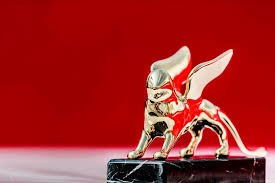
Venice remains one of cinema’s most influential institutions because it can bring a work from relative obscurity into global discussion. In 2026, it is using that power to present films concerned with some of the most painful questions of the present.
That deserves recognition, but not reverence.
The festival should be judged by the rigour of the films it selects, the diversity of the filmmakers it supports and the distance those works travel after their premieres. Political seriousness cannot be measured by the number of topical subjects in a programme.
A film about Gaza must be more than evidence that a festival noticed Gaza. A documentary about media power must invite scrutiny of the cultural institutions distributing prestige. A programme concerned with exclusion must confront the near absence of women from its own principal competition.
Cinema cannot stop a war, reverse an immigration raid or dissolve a media empire. It can preserve testimony, reveal systems of power and deny audiences the comfort of not knowing.
That is not everything. It is not nothing.
As Venice opens its theatres in September 2026, the festival becomes more than a celebration of new films. It becomes a temporary court in which images, institutions and audiences examine one another.
The screen bears witness to the world. The world, in turn, is watching the festival.