


Pakistan, Balochistan And The Future Of South Asian Stability
A Region At The Crossroads Of Asia
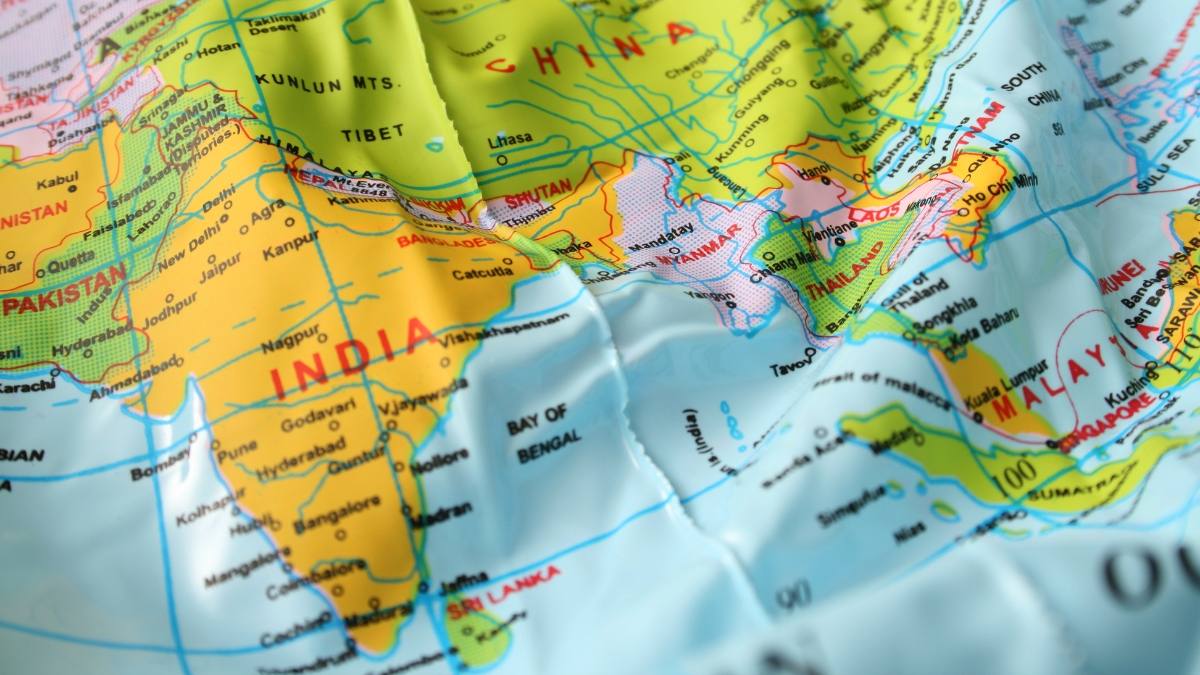
South Asia remains one of the world’s most strategically important regions. Home to nearly a quarter of humanity, it sits at the intersection of the Middle East, Central Asia, the Indian Ocean and East Asia. Major maritime trade routes pass along its coastline, energy corridors traverse its western approaches and some of the world’s fastest-growing economies operate within its borders.
Stability in South Asia therefore influences not only the lives of its own populations but also wider patterns of trade, investment and international security.
Within this landscape, developments in Pakistan carry particular significance. As one of South Asia’s largest economies and military powers, Pakistan occupies a position of considerable geopolitical importance. Its relationships with neighbouring countries, its participation in regional connectivity projects and its domestic political developments all influence the wider strategic environment of the region.
Among the issues attracting growing international attention is the future of Balochistan.
Covering almost half of Pakistan’s land area while accounting for a relatively small share of its population, Balochistan occupies a location of exceptional strategic value. Bordering both Iran and Afghanistan while providing access to the Arabian Sea, the province sits close to some of the most important trade and energy routes in the world.
As a result, developments in Balochistan increasingly resonate beyond provincial politics.
The province occupies an important place in discussions concerning infrastructure, energy security and regional trade corridors linking South Asia with Central Asia and the Middle East. Questions surrounding governance, development and local participation in economic projects therefore possess significance extending well beyond Pakistan itself.
Geography, Resources And Strategic Importance
Few places illustrate the continuing importance of geography in international affairs more clearly than Balochistan.
Stretching from the mountains bordering Afghanistan to the coastline overlooking the Arabian Sea, the province occupies a natural bridge between South Asia, Central Asia and the Middle East. Geography alone explains much of its strategic importance.
Its coastline overlooks sea lanes that connect the energy-producing Gulf states with the manufacturing economies of Asia and the consumer markets of Europe. Oil, liquefied natural gas and commercial goods pass through nearby waters every day, making maritime stability in the region a matter of international concern.
Natural resources add another dimension to Balochistan’s importance. The province possesses significant reserves of natural gas and substantial deposits of minerals including copper and gold. In an era in which strategic minerals increasingly influence industrial competitiveness and technological development, such resources attract growing international interest.
Infrastructure and connectivity have become closely linked to these opportunities.
Roads, railways, pipelines and ports have the potential to reshape trade patterns by linking landlocked regions of Central Asia with maritime markets in the Indian Ocean. Increasingly, governments view such projects not merely as engineering initiatives but as instruments of economic transformation.
Yet geography creates challenges alongside opportunities.
Large territories with difficult terrain and dispersed populations require considerable investment if economic growth is to reach local communities effectively. International experience demonstrates that infrastructure projects achieve their greatest success when they generate employment, stimulate local businesses and create opportunities that are widely shared.
Roads and ports alone rarely guarantee prosperity. Long-term success depends equally upon education, skills development, institutions and governance capable of converting strategic advantages into broad-based economic growth.
For Pakistan, Balochistan therefore represents both an opportunity and a responsibility.
For South Asia more broadly, it occupies an increasingly important place in discussions surrounding regional integration, trade routes and future economic geography.
Trade routes linking Central Asia, the Middle East and the Indian Ocean are likely to play a major role in shaping the region’s future prosperity. In an age defined by digital technologies and global finance, the physical realities of geography, natural resources and access to markets remain among the most powerful forces shaping international politics and economics.
Continuing with the condensed version of the article in the same publication-ready style.
Governance, Development And National Cohesion
The long-term stability of any country depends not only upon its external relationships but also upon the strength of its internal institutions and governance systems.
Pakistan faces many of the challenges common to large and diverse emerging economies. Economic reform, employment generation, infrastructure development and public service delivery remain central priorities as demographic growth and rising expectations place increasing pressure upon institutions and policymakers.
Demographics add both opportunity and urgency to these challenges. Pakistan possesses a relatively young population capable of supporting productivity, innovation and industrial growth if sufficient opportunities exist in education, entrepreneurship and employment. Without such opportunities, demographic advantages become more difficult to convert into sustained economic progress.
Regional development forms an important part of this equation.
Large countries frequently experience uneven patterns of growth between provinces and regions. Managing these disparities effectively strengthens national cohesion, supports political stability and ensures that economic development is shared more widely across society.
Infrastructure investment can play an important role in this process. Transport networks, energy systems and digital connectivity strengthen integration between regions while improving access to markets, labour mobility and investment opportunities. Their success, however, depends not only upon expenditure but also upon implementation quality and local participation.
Governance remains central to these outcomes.
Efficient institutions, transparent decision-making and predictable regulations create the confidence necessary for businesses to invest and communities to plan for the future. International experience repeatedly demonstrates that institutional quality often matters as much as policy ambition.
For Pakistan, as for many emerging economies, the challenge lies in combining economic ambition with institutional resilience and political adaptability.
Connectivity, Corridors And Regional Opportunity
Throughout history, trade routes have shaped the rise of cities, empires and entire regions. In the twenty-first century, economic corridors are emerging as the latest expression of the relationship between connectivity and prosperity.
South Asia occupies a strategic position linking the Middle East, Central Asia, East Asia and the Indian Ocean. Increasingly, governments view roads, railways, ports and energy infrastructure not merely as transport projects but as instruments capable of attracting investment, supporting industry and integrating domestic markets with global supply chains.
Balochistan occupies an important position within these discussions.
Its geographical location provides potential access between Central Asia, the Arabian Sea and the wider Indian Ocean trading system, attracting interest from policymakers, businesses and investors seeking more efficient trade routes.
Yet successful economic corridors involve far more than roads and ports.
Their success depends upon industrial development, logistics networks, energy systems, skilled workforces and supportive business environments. Infrastructure creates possibilities, but institutions and investment determine whether those possibilities become reality.
South Asia itself remains one of the least economically integrated regions in the world despite its geographic proximity and considerable commercial potential. Improved connectivity could increase trade, reduce transport costs and create opportunities for businesses operating across borders.
The economic benefits could be substantial. Lower logistics costs improve competitiveness, encourage investment and expand markets for domestic industries. Smaller economies particularly benefit from access to larger regional markets capable of supporting industrial expansion and economies of scale.
Energy security provides another powerful incentive for regional integration. Pipelines, electricity grids and transport corridors can diversify supply sources and strengthen resilience during periods of geopolitical uncertainty and supply chain disruption.
Technology is also reshaping the nature of connectivity.
Digital infrastructure increasingly complements physical infrastructure, while e-commerce platforms, data networks and digital payment systems are becoming essential components of modern trade. The economic corridors of the future may carry information as efficiently as they carry goods.
For India, regional connectivity carries strategic significance alongside economic benefits. Trade routes linking South Asia with Southeast Asia, Central Asia and the Middle East influence export opportunities, industrial competitiveness and energy security.
The Indian diaspora similarly benefits from stronger commercial links. Business networks, investment flows and entrepreneurial opportunities often expand alongside improvements in transport and communications infrastructure.
Economic corridors therefore represent far more than construction projects. They are mechanisms for creating opportunity, transforming geography into advantage and turning borders from barriers into bridges.
Security In An Interconnected Region
Security in South Asia has rarely been confined within national borders.
The geography of the region, the movement of people and goods and the close economic relationships linking neighbouring societies ensure that developments in one country frequently influence calculations elsewhere.
Pakistan occupies a particularly important position within this environment. Located at the intersection of South Asia, Central Asia and the Middle East, the country influences trade routes, energy corridors and security dynamics extending far beyond its immediate neighbourhood.
The Arabian Sea provides one of the clearest examples of this interconnectedness.
Maritime routes passing close to Pakistan’s coastline connect Gulf energy producers with Asian manufacturing centres and consumer markets across Europe and Africa. The security of these routes remains essential for international commerce, energy affordability and industrial production.
Energy security introduces another important dimension. South Asia’s growing economies require reliable access to oil, natural gas and electricity to support industrial expansion and rising living standards. Supply disruptions can quickly affect inflation, growth and public finances throughout the region.
Technology is reshaping these discussions further. Cybersecurity, digital infrastructure and communications networks now form an increasingly important component of national resilience alongside traditional military considerations.
Climate change adds another layer of complexity. Water management, agricultural resilience and environmental pressures increasingly require regional cooperation on issues that extend beyond national borders.
In an interconnected world, internal stability and regional stability are becoming progressively more difficult to separate.
Stability As The Foundation Of Prosperity
For India, Pakistan and their neighbours, the broader lesson emerging from recent decades is increasingly clear: long-term prosperity depends heavily upon stability.
Investment depends upon confidence. Trade depends upon predictability. Infrastructure projects and economic corridors achieve their greatest potential when supported by secure and cooperative regional environments.
South Asia possesses enormous economic advantages. It is home to young populations, expanding consumer markets and growing technological capabilities. The region occupies one of the most strategically important locations in the world, sitting astride major maritime trade routes and close to some of the fastest-growing economies of the twenty-first century.
Yet geography alone does not guarantee prosperity.
Economic ambition requires political predictability. Strategic influence increasingly depends upon economic performance and institutional resilience. Infrastructure can attract investment and create employment, but roads, ports and energy corridors alone cannot deliver long-term growth without effective governance, skills development and local participation.
The same principle applies across the wider region. Connectivity works best when it is inclusive. Development works best when it is broad-based. Growth works best when it creates opportunities that are widely shared.
South Asia remains one of the least economically integrated regions in the world despite its geographic proximity and considerable commercial potential. Improved transport links, energy cooperation and trade facilitation could generate substantial benefits for businesses, consumers and governments alike.
History repeatedly demonstrates that trade creates incentives for stability. Commercial relationships encourage dialogue, investment encourages predictability and economic interdependence often strengthens the case for cooperation even between countries with complex political relationships.
For India and Pakistan alike, the costs of instability are becoming increasingly visible, while the rewards of cooperation are becoming increasingly attractive.
The Diaspora Dimension
The South Asian diaspora understands these connections particularly well.
Business networks, investment relationships and family ties frequently span borders and respond quickly to changes in political and economic conditions. Stability encourages investment, travel and commercial engagement, while uncertainty often produces the opposite effect.
South Asians living and working across the world contribute investment, expertise and international networks that strengthen economic ties and create new opportunities for cooperation. Their experiences frequently demonstrate that shared economic interests can coexist alongside diverse political and cultural identities.
For countries seeking greater international influence, diaspora communities increasingly represent strategic assets as much as social and cultural bridges.
Looking Towards The Future
South Asia enters the third decade of the twenty-first century with extraordinary possibilities and equally significant challenges.
The region possesses many of the ingredients necessary to emerge as one of the principal centres of global growth during the coming decades. Its youthful population, entrepreneurial energy and strategic location place it in a favourable position within an increasingly interconnected global economy.
However, the foundation for that future is neither military strength nor economic size alone.
It is stability.
Stable societies attract investment. Stable regions support trade. Stable institutions allow governments, businesses and communities to plan confidently for the future.
Without stability, much of South Asia’s potential may remain unrealised. With stability, however, the region possesses the capacity to become one of the defining economic and strategic centres of the twenty-first century.
The discussions surrounding Pakistan and Balochistan ultimately reflect a broader reality extending far beyond any single province or country. Questions of governance, connectivity, development and security are increasingly interconnected throughout the modern world.
The future of South Asia may therefore depend less upon geography itself than upon how effectively the region chooses to use its geography.
The choice between these futures will not be determined by borders, resources or location alone. It will depend upon governance, cooperation and the willingness of countries across the region to recognise a simple but increasingly important truth:
Prosperity and stability no longer travel separate roads.
Increasingly, they travel together.
Disclaimer: The views, opinions and interpretations expressed in articles published in WFY – World For You are those of the respective authors and contributors and do not necessarily reflect the official position of the Editor, Editorial Board, publishers or affiliated organisations. Every effort is made to ensure the accuracy and reliability of information at the time of publication. However, facts, figures, laws, regulations, policies, scientific understanding and global developments may change over time. Readers are advised to independently verify information and seek appropriate professional advice before making decisions relating to health, finance, legal matters, immigration, education, investments or any other specialised subject. Articles published in WFY – World For You are intended for general information, discussion and educational purposes only and should not be construed as professional, medical, legal, financial or other expert advice. References to organisations, institutions, products, services or individuals are made solely for editorial, informational or illustrative purposes and do not constitute endorsement or recommendation unless explicitly stated. All rights to original content remain with their respective authors and contributors unless otherwise specified. Unauthorised reproduction, distribution or republication of material published in WFY – World For You without prior written permission is prohibited. © 2026 WFY – World For You. All Rights Reserved.