
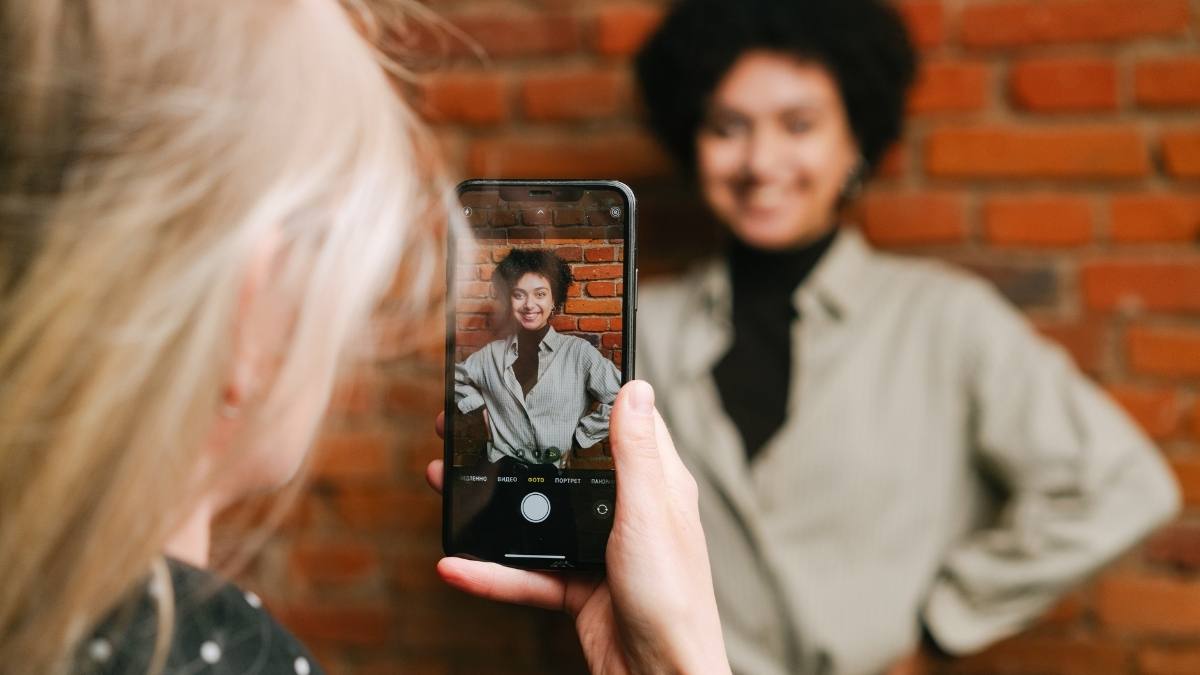
Mind-blowing: How Phones Edit Your Photos Now
By Nikhil Rao, WFY Bureau | Science & Technology | The WFY Magazine, February 2026 Edition
Are You Aware of It?
The photograph is no longer a straightforward record. Each time a phone camera is raised, a chain of invisible decisions begins to operate before the image is saved. Software selects frames, adjusts light, smooths textures, reconstructs faces, and sometimes fills in details that were never there to begin with. These changes are usually subtle, often welcome, and rarely noticed. Yet as artificial intelligence becomes central to everyday photography, the question is no longer about image quality alone. It is about memory, perception, and the quiet shift in how reality itself is presented back to us.
When photography stopped being passive
The change did not arrive with an announcement. There was no clear moment when phone cameras crossed from documentation into interpretation. It happened gradually, through updates, defaults, and background processes most users never see.
Early mobile cameras struggled with low light, motion blur, and limited dynamic range. The solution was software. Phones began taking multiple images at once and combining them into a single photograph. Shadows were lifted. Highlights were softened. Grain was removed. Faces were sharpened. The result looked closer to what people felt they had seen, even if it was not what the sensor had captured.
This approach worked. Photos improved dramatically. Mobile photography became reliable, even impressive.
But over time, the balance shifted. Phones did not just correct limitations. They began to infer missing information. Algorithms learned patterns. They recognised objects. They predicted how something should look, not simply how it did look.
The phone stopped asking what light reached the sensor. It began asking what the image was meant to be.
How AI photography actually works
To understand the implications, it helps to understand the process.
When a modern smartphone takes a photograph, it does not capture a single frame. It typically records several images in quick succession, sometimes before the shutter is even pressed. These frames differ in exposure, focus, and colour balance.
Artificial intelligence systems then analyse these frames. They identify faces, skies, buildings, food, text, and motion. Each element is processed differently. Skin tones are smoothed. Skies are deepened. Noise is reduced in darker areas. Edges are sharpened where the system expects clarity.
In some cases, particularly at extreme zoom or in low resolution, the system goes further. It fills in missing detail using learned patterns. Craters on the Moon. Strands of hair. The shape of an eyebrow. The direction of a gaze.
This is not always malicious or deceptive. The goal is usually to produce a pleasing image that matches user expectations. But it introduces a new variable into photography: creative decision-making without human consent or awareness.
Enhancement versus invention
There is a meaningful difference between correction and creation.
Adjusting brightness or contrast aims to bring an image closer to how a scene was experienced. Removing digital noise reduces a technical flaw. These processes have existed for decades.
Inventing detail is different.
When a phone adds texture that was not captured, it crosses from enhancement into fabrication. The image no longer represents a moment. It represents an interpretation of what that moment should have been.
Most users are not told when this happens. The distinction is buried in technical explanations or marketing language. “Detail enhancement.” “Scene optimisation.” “Computational reconstruction.”
The result is a photograph that looks convincing but may no longer be truthful in a strict sense.
This matters less when photographing landscapes. It matters more when photographing people.
Faces, bodies, and quiet distortion
AI systems are particularly active around faces.
They smooth skin. Brighten eyes. Adjust contours. In some regions, they subtly reshape features to align with cultural beauty standards. These changes may be automatic and enabled by default.
For many users, especially younger ones, this becomes the baseline. A face seen through a phone screen becomes more familiar than a face in the mirror.
Over time, this can affect self-perception. The gap between lived appearance and photographed appearance grows. The camera no longer reflects the self. It presents an idealised version.
Research in psychology and media studies has already linked heavily filtered images to body dissatisfaction and distorted self-image. AI-driven photography accelerates this effect by embedding modification into the act of capture itself, not just post-editing.
The photo feels natural because it arrives fully formed. The intervention is invisible.
Memory is not neutral
Photographs are not just images. They are memory anchors.
Family albums. Childhood pictures. Wedding photographs. Festival gatherings. These images shape how events are remembered long after details fade.
When photographs are altered, even subtly, memory follows. Studies in cognitive science suggest that people often remember photographs more vividly than lived experiences. If the photograph is modified, the memory adapts to match it.
A moment becomes smoother. A crowd thinner. A smile wider. A flaw erased.
This raises an uncomfortable question. Are we preserving memories, or rewriting them in real time?
The Indian context: phones as primary memory tools
In India, the implications are amplified.
Smartphones are the primary cameras for most people. They document everyday life, major rituals, and once-in-a-lifetime events. Weddings, religious ceremonies, family milestones, and public celebrations are increasingly captured on phones rather than professional cameras.
Social sharing intensifies the effect. Images are not just stored. They are circulated, compared, and validated through likes and comments. A photograph that looks “better” gains visibility. That visibility reinforces the style.
Beauty filters, skin smoothing, and facial refinement have found wide acceptance in many markets. In some devices sold in Asia, these features are enabled by default. Turning them off requires effort and awareness many users do not have.
For a generation growing up with these tools, the edited image becomes normal. The unedited one feels unfinished.
When reality becomes negotiable
None of this implies malicious intent by manufacturers. The industry responds to demand. Users want better photos. They want clarity, confidence, and shareability.
But the cumulative effect is significant.
Photography has long carried an implicit promise of truth. Not perfect truth, but a record tied to reality. AI complicates that promise. Images now sit somewhere between capture and creation.
The danger is not deception alone. It is habituation.
When people grow accustomed to adjusted reality, unadjusted reality can feel lacking. Ordinary moments feel dull. Natural appearances feel insufficient. The camera becomes a mediator between experience and acceptance.
This shift happens quietly. There is no alarm. No error message. Just a steady recalibration of expectation.
Control is limited, but not absent
Users do have options, though they are often buried.
Many phones allow AI features to be reduced or disabled. Some offer raw shooting modes that bypass most processing. Third-party camera apps can capture images closer to sensor output.
These images are rougher. Grain appears. Colours look flatter. Details are softer. They require editing if they are to look polished.
Most users do not choose this path. Convenience wins.
The question is not whether AI photography should exist. It is whether users should be more aware of when and how it intervenes.
Transparency matters. Choice matters. Defaults shape behaviour more than settings.
A cultural shift, not a technical one
The deeper issue is cultural.
Photography used to be an act of witnessing. Now it is an act of negotiation between human intention and machine interpretation.
AI does not merely improve images. It standardises them. Each brand develops a “look”. Each algorithm learns preferences. Over time, visual diversity narrows.
The world begins to look the way machines expect it to look.
This is not necessarily dystopian. But it is consequential.
As AI becomes more capable, the line between memory and manufacture will blur further. The decisions we make now, about transparency, consent, and expectation, will shape how future generations understand their own past.
What remains unresolved
There is no clear solution.
People want beautiful photographs. They want phones that perform well in difficult conditions. They want memories that feel good to revisit.
At the same time, there is value in imperfection. In grain. In blur. In honesty.
The camera has always been an interpreter. AI simply makes that role explicit, powerful, and constant.
The question is not whether phones will continue to edit reality. They will.
The question is whether we will continue to notice.
Disclaimer: This article is based on publicly available research, industry analysis, and observed trends in consumer technology as of early 2026. It is intended for informational and reflective purposes only. Features, defaults, and AI capabilities may vary by device, region, and software version, and are subject to change over time.