
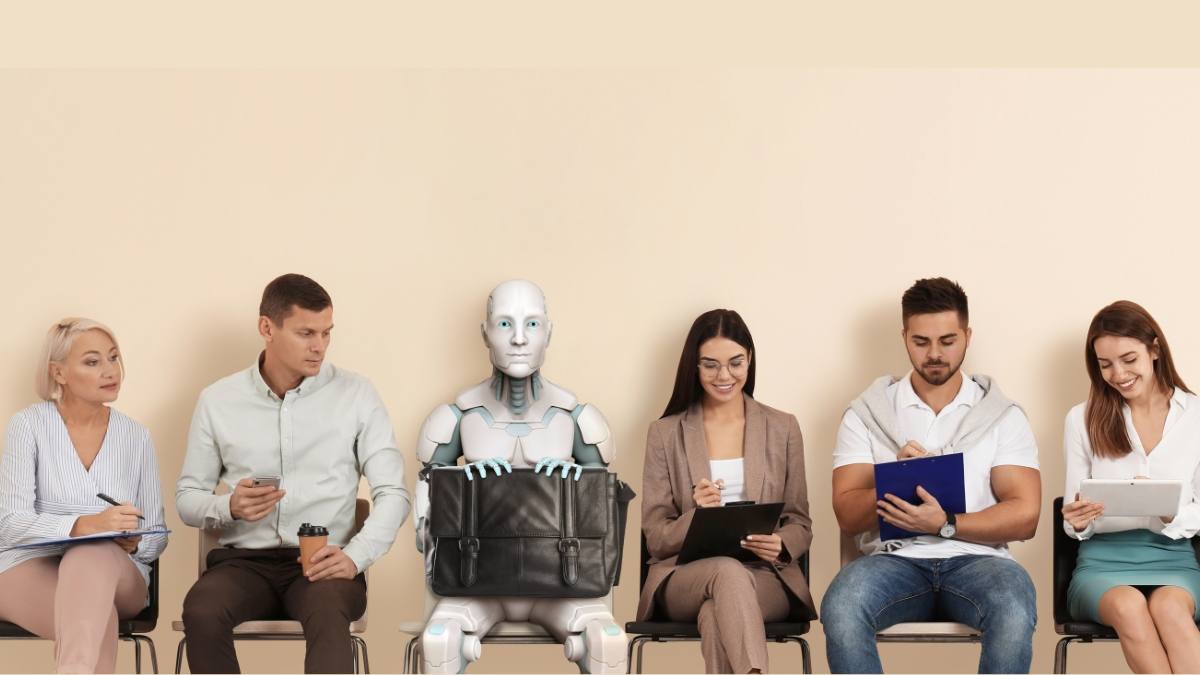
Artificial Intelligence: The New Reality Of The White-Collar Workforc
Will Artificial Intelligence Rewrite White-Collar Employment?
The Next Workplace Revolution
Every major technological revolution has transformed the nature of work. The Industrial Revolution mechanised manufacturing, the computer revolution reshaped offices and administrative functions, and the internet connected businesses and consumers on a global scale while creating entirely new industries.
Artificial intelligence represents the next stage of this evolution, but with one important distinction. Earlier waves of automation primarily replaced physical labour and repetitive manual tasks. AI is increasingly influencing work long regarded as uniquely human, including analysing documents, drafting reports, reviewing contracts, writing software, interpreting medical images and producing creative content.
This shift has generated both excitement and concern across professional sectors. Lawyers are evaluating AI-assisted legal research, accountants are adopting automated auditing systems, journalists are experimenting with AI-supported reporting and software developers are increasingly working alongside coding assistants capable of generating functional programmes within seconds.
The economic implications are significant. White-collar employment forms the backbone of modern economies, spanning finance, consulting, technology, healthcare, education and professional services. Any technology capable of fundamentally increasing productivity across these sectors has the potential to reshape labour markets, business models and educational priorities worldwide.
History, however, offers an important perspective. Technological progress has consistently eliminated certain tasks while creating entirely new categories of employment. Computers reduced demand for typists and filing clerks but generated careers in software development, cybersecurity and digital marketing. Automated teller machines transformed banking without eliminating financial institutions or professional advisers.
Artificial intelligence is likely to follow a similar path. The critical questions are not whether AI will influence white-collar work, but how rapidly that transformation will occur, which professions will change most significantly and how workers, businesses and governments will adapt.
For the global Indian diaspora, these questions carry particular relevance. Indian-origin professionals are strongly represented in technology, engineering, finance, healthcare and research, many of the sectors now leading both the development and adoption of artificial intelligence.
Rather than signalling the end of professional employment, AI is more likely to redefine how professionals work, creating closer collaboration between human expertise and intelligent machines. Whether this transition expands opportunity or deepens inequality will become one of the defining economic questions of the coming decade.
From Factory Floors to Office Floors
For much of the twentieth century, automation was associated with factories rather than offices. Industrial robots transformed manufacturing by replacing repetitive physical tasks, while professional occupations remained largely insulated because they relied on judgement, creativity and interpersonal skills.
Computers undoubtedly changed office work, replacing ledgers with spreadsheets, filing cabinets with databases and internal mail with email. Yet these technologies largely improved existing professions rather than fundamentally challenging them.
Artificial intelligence is altering that distinction.
Modern AI systems can increasingly analyse information, recognise patterns and generate content, activities central to many white-collar occupations. Legal assistants reviewing contracts, financial analysts preparing reports and journalists conducting background research are all performing tasks that AI can now support or partially automate.
This does not necessarily eliminate professions. More often, it changes how those professions operate.
Lawyers may spend less time searching for precedents and more time advising clients. Accountants may shift from routine bookkeeping towards financial planning and business strategy. Doctors may rely increasingly on AI-assisted diagnostics while devoting greater attention to patient communication and clinical decision-making.
The experience mirrors earlier industrial automation. Robots did not eliminate manufacturing; they changed the nature of factory work. Employees increasingly supervised automated systems, maintained equipment and focused on higher-value responsibilities.
A similar transition is now occurring across professional workplaces. Routine administrative work is gradually giving way to activities requiring interpretation, judgement, creativity and human interaction. Rather than producing every element themselves, professionals increasingly validate, refine and supervise machine-generated outputs.
The pace of change will differ across industries. Occupations dominated by structured, predictable processes are more susceptible to automation than those requiring negotiation, empathy or complex decision-making. AI therefore automates tasks more readily than entire jobs.
Businesses are already reorganising accordingly. Many are using AI to automate routine workflows while redeploying employees towards strategic, client-facing and creative responsibilities. The objective is not simply cost reduction but improved productivity and competitiveness.
For employees, however, this transformation requires continual adaptation. Career paths are becoming less predictable, technical skills require more frequent updating and lifelong learning is increasingly shifting from professional aspiration to economic necessity.
The movement of automation from factories to offices therefore represents one of the most significant labour market transitions of the digital age. Professional work is no longer immune to technological disruption. Instead, it is becoming the next frontier of economic transformation.
Which Jobs Will Change Most?
Perhaps the most common question surrounding artificial intelligence is also the most misunderstood: which jobs will disappear?
The answer is rarely straightforward because AI generally replaces tasks rather than entire professions. Most occupations consist of numerous activities, some highly repetitive and others dependent on judgement, creativity or interpersonal relationships. As a result, the future of work is more likely to involve job redesign than wholesale job replacement.
Professions built around repetitive information processing and rule-based analysis are likely to experience the greatest disruption. Data entry, transcription, routine bookkeeping, compliance reviews and standard report preparation increasingly fall within AI’s capabilities.
The legal profession provides an instructive example. AI can rapidly analyse contracts, identify inconsistencies and summarise lengthy documentation, allowing lawyers to devote greater attention to negotiation, litigation, commercial advice and client strategy.
Accounting is evolving in a similar direction. Automated bookkeeping and tax preparation enable accountants to focus increasingly on financial planning, business advisory services and risk management rather than routine calculations.
Journalism is also adapting. AI can efficiently generate earnings reports, sports summaries and financial updates based on structured data, enabling journalists to concentrate on investigative reporting, interviews, analysis and original field reporting where human judgement remains indispensable.
Healthcare presents a more nuanced picture. AI is demonstrating remarkable capabilities in diagnostics and medical image analysis, yet medicine extends far beyond diagnosis. Communication, empathy, ethical judgement and treatment planning remain deeply human responsibilities, making AI a powerful assistant rather than a replacement.
Education follows a similar pattern. AI tutors can personalise learning, provide immediate feedback and reduce administrative workloads, but teachers continue to play essential roles in mentorship, motivation and social development.
At the same time, several categories of work may become even more valuable. Leadership, negotiation, creativity, relationship management and emotional intelligence are difficult to automate and are therefore likely to command increasing importance as routine analytical work becomes more automated.
The professionals who prosper will not necessarily be those competing against AI but those capable of combining technological capability with distinctly human strengths.
The Productivity Revolution
Businesses are investing heavily in artificial intelligence for one overriding reason: productivity.
Across many advanced economies, productivity growth has slowed despite decades of investment in digital technologies. AI is increasingly viewed not simply as another software tool but as a platform capable of improving efficiency across a broad range of professional activities.
The attraction is clear. Financial analysts can process larger volumes of market data more quickly. Marketing teams can develop campaigns, analyse customer behaviour and generate content in a fraction of the time previously required. Customer service departments can automate routine enquiries, allowing employees to focus on more complex issues requiring judgement and empathy.
Even modest productivity improvements can produce substantial commercial benefits. Businesses operating in highly competitive markets therefore have strong incentives to adopt technologies capable of reducing costs while improving responsiveness and service quality.
Unlike earlier waves of automation that required significant investment in machinery and factories, many AI applications can be deployed through existing digital infrastructure. This relatively low barrier to adoption explains why artificial intelligence is spreading rapidly across legal services, finance, healthcare, consulting, education, media and manufacturing.
Software development illustrates this transformation particularly well. AI coding assistants can generate code, detect errors and recommend improvements, enabling developers to spend less time on routine programming and more time designing systems and solving complex problems.
Law firms are using AI to analyse contracts and regulatory documents, consultants are employing it for market research and data analysis, while news organisations increasingly rely on AI for transcription, translation and background research. Governments and healthcare providers are also exploring its potential to improve public administration and reduce administrative workloads.
The economic impact could be profound. Sustained productivity growth has historically driven rising living standards and long-term economic expansion. AI therefore has the potential to reshape not only individual organisations but entire national economies.
The more important question, however, concerns distribution. Will higher productivity translate into better wages, shorter working hours and improved working conditions, or will the gains remain concentrated among businesses and highly skilled professionals? As with previous technological revolutions, the outcome will depend largely on public policy, labour market institutions and access to education and reskilling.
Artificial intelligence is therefore not merely a technological breakthrough. It is an economic transformation whose long-term benefits will depend upon how societies manage the transition.
Education, Skills and the Reinvention of Professional Careers
Artificial intelligence is also redefining the value of education.
For generations, professional careers followed a relatively predictable path. Individuals completed their education, entered a profession and gradually progressed through experience accumulated over several decades. Technical knowledge acquired at university often remained relevant throughout much of a working life.
That model is rapidly changing.
Technological advances are shortening the lifespan of professional skills, making continuous learning an essential component of career development. Universities are increasingly expected not only to provide knowledge but also to prepare graduates for occupations likely to evolve repeatedly during their working lives.
Adaptability is therefore becoming as valuable as technical expertise. Employers increasingly seek professionals capable of learning new technologies, integrating AI into existing workflows and responding confidently to changing business environments.
Lifelong learning is no longer optional. Finance, law, healthcare, engineering and information technology already require continuous professional development, and AI is accelerating this trend. Universities and training providers are expanding online programmes, short-term certifications and industry partnerships to support ongoing reskilling throughout professional careers.
Technical literacy will become increasingly important across almost every occupation. While not everyone will become an AI engineer, understanding how intelligent systems operate, their capabilities and their limitations may soon become as fundamental as digital literacy is today.
At the same time, human capabilities are becoming more valuable. Communication, leadership, creativity, negotiation and ethical judgement remain difficult to automate and are likely to distinguish successful professionals in increasingly AI-assisted workplaces.
Interdisciplinary expertise is also gaining importance. Professionals capable of combining law with technology, medicine with data analytics or engineering with finance may possess significant competitive advantages as industries become more interconnected.
The professional career of the future is therefore likely to involve continuous reinvention rather than lifelong reliance on a single qualification. Those most willing to learn, adapt and evolve are likely to remain the most competitive.
The Diaspora Advantage in the AI Economy
Periods of technological transformation often reward adaptability, and diaspora communities possess qualities that may prove particularly valuable during this transition.
Migration itself develops resilience. Professionals who establish careers across different countries routinely adapt to unfamiliar institutions, regulations, business cultures and social environments. These experiences foster flexibility, cross-cultural communication and interdisciplinary thinking, capabilities that align closely with the demands of an AI-driven economy.
The global Indian diaspora occupies an especially influential position. Indian-origin professionals hold leadership roles across technology companies, financial institutions, universities, healthcare systems and research organisations that are shaping both the development and deployment of artificial intelligence.
Their role extends beyond adopting new technologies. Many are directly involved in designing AI systems, establishing ethical standards and developing policies governing privacy, security and responsible innovation.
Entrepreneurship also stands to benefit. Artificial intelligence is reducing the costs associated with software development, marketing, customer service and administration, enabling smaller firms to compete internationally with comparatively limited resources. Combined with global business networks, this creates significant opportunities for diaspora entrepreneurs operating across multiple markets.
Remote and hybrid work further strengthen these advantages by enabling professionals to contribute internationally while remaining connected to their home countries. AI-powered collaboration, translation and communication tools are making globally distributed careers increasingly practical.
Nevertheless, diaspora professionals will face many of the same disruptions affecting other knowledge workers. The difference may lie in preparedness. Communities accustomed to mobility, continuous learning and international collaboration may be better positioned to adapt to rapid technological change.
Conclusion: The Future Is Collaboration, Not Competition
Public debate often portrays artificial intelligence as a contest between humans and machines. History suggests a more nuanced outcome.
Previous technological revolutions rarely eliminated work altogether. Instead, they reorganised labour markets, replacing certain tasks while creating entirely new professions and industries. Artificial intelligence is likely to follow a similar trajectory.
Routine cognitive work will increasingly be automated, but judgement, creativity, leadership, empathy and ethical decision-making are becoming more valuable rather than less. The professionals most likely to succeed will not be those competing directly with AI, but those capable of combining technological capability with uniquely human strengths.
The central economic question is therefore changing. Rather than asking whether AI can perform specific tasks, businesses are increasingly asking how work should be redesigned to combine human expertise with machine efficiency.
Education and public policy will largely determine how successfully societies navigate this transition. Investments in lifelong learning, reskilling and adaptable education systems will become as important as technological innovation itself. Governments must also ensure that productivity gains translate into broader prosperity rather than becoming concentrated within relatively small sections of society.
For the global Indian diaspora, the stakes are particularly high. Indian-origin professionals are deeply embedded in the industries leading artificial intelligence adoption, placing them at the centre of one of the most significant labour market transformations of the twenty-first century.
There is reason for optimism. Artificial intelligence will undoubtedly reshape white-collar employment, but history suggests that technological disruption also creates new professions, industries and opportunities that are difficult to anticipate during periods of change.
The future of work is therefore unlikely to belong exclusively to humans or machines. It will increasingly belong to organisations and individuals that learn to combine the strengths of both.
Artificial intelligence may rewrite white-collar employment, but the professionals who continue learning, adapting and innovating are likely to write the next chapter themselves.