Iran War: The New Peril That Could Disrupt Everyday Life
By Aisha Sabah
At sea, a war can become frighteningly close to people who have never seen a battlefield. A crew approaches a narrow passage, its cargo destined for distant ports and its members hoping to return to their families. Decisions taken in foreign capitals may determine whether that journey is safe. The vessel is not a participant in a diplomatic dispute, but it can become one of its casualties.
This is part of the reality surrounding the Strait of Hormuz, the waterway connecting the Persian Gulf to the Gulf of Oman and the wider ocean. Since the conflict involving the United States, Israel and Iran intensified in February 2026, attacks and threats against shipping have helped turn an already tense region into a source of global uncertainty. The International Maritime Organization reported in September that it had verified 80 attacks on merchant vessels in and around the Strait since the fighting began, with at least 22 seafarers killed.
For the people directly affected, those figures represent families and lives interrupted. For governments and businesses, they are also a warning about the wider consequences of a conflict whose political settlement remains elusive.
The immediate question is whether renewed diplomacy can stop the fighting. The more difficult question is how to prevent a war centred on Iran from drawing the wider region into a prolonged cycle of retaliation.
How the Conflict Reached This Point
The present confrontation did not emerge from a single disagreement. It developed against years of tension over Iran’s nuclear programme, the activities of armed groups across the Middle East, sanctions, threats to Israel and competing approaches to regional security. A separate round of attacks on Iranian nuclear facilities in 2025 had already damaged prospects for renewed trust.
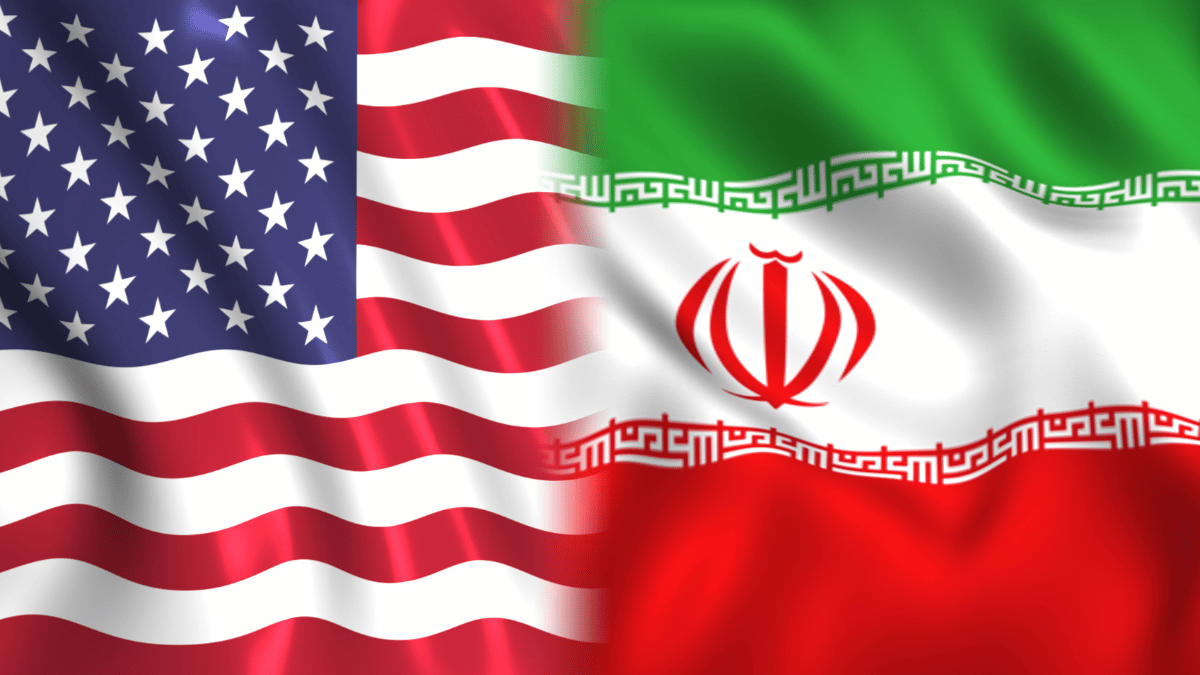
On 28 February 2026, the United States and Israel began a new military campaign against Iran. Iran responded, and the consequences spread across the Gulf. A Pakistan-mediated understanding and a memorandum in June interrupted major fighting, but the arrangement did not deliver a lasting political settlement. Further exchanges and disputes continued.
By late October, negotiators were considering fresh proposals. Qatar and Pakistan had emerged as significant intermediaries, while Saudi Arabia and Türkiye were involved in regional consultations. Reports described proposed short timetables for confidence-building measures, but Tehran and Washington remained divided over the sequence and substance of any agreement.
The central difficulty is that the parties are negotiating several disputes at once. The United States wants credible restrictions and scrutiny concerning Iran’s nuclear activities. Iran demands relief from economic pressure and restrictions affecting its oil exports and ports. The safety of shipping, possible security guarantees and the threat of renewed attacks are bound up with those demands.
An agreement that merely pauses fire without resolving these issues may reduce immediate suffering, but could leave the region preparing for the next confrontation.
Why the Nuclear Question Remains Central
Iran maintains that its nuclear programme serves peaceful purposes. The United States, Israel and other governments have raised concerns about the programme’s scale, the level of uranium enrichment and the adequacy of international oversight. These positions have become deeply entrenched.
Independent verification is therefore essential. The International Atomic Energy Agency has repeatedly stressed the importance of access, monitoring and a diplomatic solution. Its technical role is not to decide every political dispute but to provide credible information about nuclear material and activities under the applicable safeguards framework.
The challenge is practical as well as political. Military attacks on nuclear-related facilities, disrupted inspections and mistrust between governments can make verification more difficult precisely when reliable information is most needed. Without it, each side may judge the other by its worst possible intentions.
The nuclear issue cannot simply be removed from negotiations. Nor can a demand for monitoring, by itself, settle Iran’s security concerns or the consequences of sanctions. A durable agreement would have to connect verifiable commitments with an orderly, credible process for reciprocal measures.
That is considerably harder than announcing a ceasefire. It requires the parties to accept scrutiny, keep promises over time and make political compromises that may be unpopular at home.
A Regional Conflict Is More Than One Battlefield
The Middle East contains overlapping disputes with different histories and actors. The war involving Iran has intersected with tensions concerning Israel, Lebanon, Yemen and Gulf states. Those conflicts should not be treated as a single interchangeable struggle. Local communities have their own political grievances, and armed groups make choices that cannot always be reduced to instructions from a larger power.
Nevertheless, escalation in one theatre can affect another. Attacks attributed to Iran-aligned Houthi forces and retaliation involving Saudi Arabia have created an additional source of danger. The Red Sea and the Bab el-Mandeb passage, near Yemen, are strategically important to maritime trade; disturbances there can compound problems already affecting Hormuz.
The risk lies in the chain reaction. One strike prompts a response. The response is interpreted as preparation for something larger. A third country feels compelled to protect its territory or demonstrate deterrence. Each government insists that it is acting defensively, yet the combined result is a wider conflict.
This is how an escalation can occur even when no government publicly says it wants a regional war.
For the Gulf states, the dilemma is acute. They have strong interests in protecting infrastructure, ports, cities and investment. They also have extensive relations with countries on different sides of the confrontation. An extended war threatens the economic diversification and stability that many have spent years building.
Their participation in diplomatic consultations is therefore more than a gesture of goodwill. It reflects a direct need to prevent regional security arrangements from being determined entirely by military confrontation.
The Strait of Hormuz Shows How Local Violence Becomes Global Pressure
Hormuz is geographically narrow but economically immense. According to a United States Congressional Research Service assessment, approximately a quarter of global seaborne trade in crude oil and petroleum products, and about 19 per cent of liquefied natural gas trade, passed through the Strait in 2025.
Not every interruption produces a complete closure. The more common danger is uncertainty. Shipowners may delay voyages, insurers may raise premiums, ports may face congestion, and energy traders may price in the possibility of further disruption. Even a perceived threat can alter commercial decisions before another attack occurs.
The International Maritime Organization has warned that seafarers themselves are bearing a severe burden. Its August assessment described thousands living or working under prolonged uncertainty, with hundreds of vessels unable to depart safely from the Gulf at that time. Maritime workers from many countries, including India, keep these routes functioning. Their safety cannot be treated as a secondary concern.
The economic effects are similarly far-reaching. Higher transport and energy costs can increase the price of food, fertiliser, manufactured goods and everyday travel. Countries with limited financial reserves may find it especially hard to shield vulnerable households.
The lesson is straightforward: a threat to a shipping passage can become a threat to livelihoods thousands of kilometres away.
The Human Consequences Must Not Disappear Behind Strategy
Military debates often focus on missiles, air defences, naval routes and negotiation deadlines. Those matters are important, but they can obscure the people enduring the consequences.
Civilians in Iran and other affected countries have faced the fear of attacks, disruption of essential services and uncertainty over what may happen next. Families in neighbouring states have had to worry about the safety of airports, neighbourhoods, workplaces and infrastructure. Civilian sailors have faced risks while carrying out ordinary commercial work.
The protection of civilians is not a favour that governments may choose to grant after achieving their strategic aims. International humanitarian law places obligations on parties to armed conflict, including rules concerning distinction, proportionality and precautions in attack. Allegations of violations require careful, independent examination, not political slogans.
United Nations human-rights experts have raised serious concerns about civilian casualties and damage to protected sites during the campaign against Iran, while also addressing retaliatory strikes affecting civilians and civilian infrastructure in the wider Gulf. The concern must be consistent: a civilian life has the same value regardless of nationality, religion or the identity of the force responsible.
This matters for journalism too. An account limited to the calculations of governments may be accurate in a narrow sense while still presenting an incomplete picture of the war. The people living beneath the flight paths and working aboard threatened vessels belong at the centre of the story.
Why the Negotiations Are So Difficult
Diplomacy often stalls because parties cannot agree on which concession comes first. One side may demand an end to restrictions before discussing wider obligations. The other may insist on assurances and verification before easing pressure. Both may fear that an initial compromise will reduce their leverage without securing the promised response.
That problem appears in the current mediation. Qatar has engaged Tehran with proposals intended to establish a sequence of steps. Pakistan has also played a role, and consultations involving Saudi Arabia and Türkiye indicate that regional governments recognise the need for broader guarantees. Yet proposals reported in October did not amount to an agreed settlement, and Iranian officials disputed whether some ideas were acceptable.
There is a difference between negotiating a pause and negotiating a durable peace. A short cessation of hostilities may require immediate restraint, communication channels and measures to protect ships. A lasting arrangement would have to address nuclear verification, sanctions, security assurances, unresolved regional tensions and mechanisms to handle alleged breaches.
Without independent monitoring, each new incident may become an argument that the other side has abandoned the deal. Without clear sequencing, either side may claim it has given more than it received. Without regional support, neighbouring states may see their security interests overlooked.
There is also the problem of domestic politics. Leaders who have described an opponent in uncompromising terms may find it difficult to explain concessions to their own supporters. Diplomacy nevertheless depends on the ability to distinguish a necessary settlement from a public display of surrender.
The longer fighting continues, the greater the danger that distrust itself becomes the main obstacle.
The Interests of India and the Wider Diaspora
India’s stake in Gulf stability is substantial. The region is closely connected to India’s energy needs, trade routes, aviation networks and the lives of Indian citizens working overseas. Millions of people across the Indian diaspora have family, employment or business links in the Gulf and neighbouring countries.
For them, the war is more immediate than an international headline. Uncertainty can affect travel arrangements, job security, company operations, education and the ability to support relatives at home. Seafarers, engineers, healthcare professionals, service workers and entrepreneurs may encounter very different forms of the same regional risk.
India also has diplomatic relationships across the region and beyond it. Its challenge is to preserve those ties while supporting measures that protect civilians, maintain open sea routes and encourage negotiated solutions. A country with extensive connections to the Gulf cannot treat regional instability as someone else’s problem.
Yet India’s concerns are not unique. Import-dependent economies in Africa and Asia, businesses in Europe and households around the world are exposed to the consequences of energy and supply-chain disruptions. The case for de-escalation rests not only on national interests but also on the wider harm caused when a regional conflict spreads through an interconnected economy.
Three Possible Paths Ahead
The first possibility is a limited, monitored reduction in hostilities. Negotiators could agree on a sequence of confidence-building steps, safer shipping arrangements and further talks on the issues that remain unresolved. Such a process would be fragile, but it could provide the breathing space needed for a broader settlement.
The second is a prolonged period of intermittent confrontation. The parties might avoid full-scale escalation while continuing threats, limited strikes, restrictions and retaliatory actions. This can be politically easier to sustain than open war, but it leaves civilians and markets exposed to recurring danger. It also allows a single miscalculation to undo temporary calm.
The third is a wider regional crisis. Renewed major attacks could provoke responses involving additional countries or armed groups, with serious risks to Gulf infrastructure and maritime routes. It is not inevitable, but its potential costs are high enough that governments should take the possibility seriously.
None of these outcomes can responsibly be declared certain. A dramatic headline about imminent war can mislead as easily as an overly confident promise of peace. What matters is whether the choices made in the coming weeks reduce the incentives for further attacks and establish reliable channels for addressing disputes.
What Meaningful De-escalation Would Require
The first requirement is protection of civilian life and essential services. Diplomatic initiatives cannot be judged solely by what they offer governments; they must be measured by whether people become safer.
The second is secure commercial navigation. The rights and safety of civilian mariners must not be used as bargaining chips. Maritime security arrangements should respect international law and provide dependable passage rather than temporary exceptions granted at a political price.
Third, any settlement of nuclear concerns needs credible verification. Political declarations have limited value if the parties and the wider international community cannot establish whether commitments are being met.
Fourth, regional governments must have a meaningful role in arrangements that affect their security. A bargain negotiated over their heads could create new grievances and undermine compliance.
Finally, negotiators need a mechanism for handling incidents without allowing every violation allegation to restart the war. Direct communication, independent fact-finding and clearly defined responses may be less dramatic than military threats, but they can prevent mistakes from becoming catastrophes.
Peace Is Measured by What Does Not Happen Next
The Iran conflict illustrates a hard truth of international politics. Military power may alter the immediate balance on the ground or at sea, but it cannot by itself build the trust, verification and political accommodation required for lasting security.
The Middle East’s governments have legitimate concerns about their populations, territory and future. Those concerns cannot be settled by expecting civilians, sailors and neighbouring countries to absorb an indefinite series of retaliatory blows.
Diplomacy will succeed only if it produces verifiable restraint and a credible process for addressing the causes of confrontation. It need not remove every disagreement. It must make disagreement less likely to end in violence.
For now, the world is watching possible new strikes and difficult negotiations. The people most affected are waiting for something less theatrical and more valuable: an ordinary day when ships pass safely, children attend school and families can plan tomorrow without fearing the next explosion.
That is the real test of any peace agreement. Not the announcement that ends a meeting, but the lives that are no longer placed in danger when the meeting is over.
Disclaimer: This feature is independent geopolitical analysis based on reports and official statements available up to 31 October 2026. It is not an official account of military operations, a legal finding about responsibility or a prediction of future events. Conflict reports may be incomplete, disputed or revised; readers should check updated official and independently verified sources for developments after this date.