
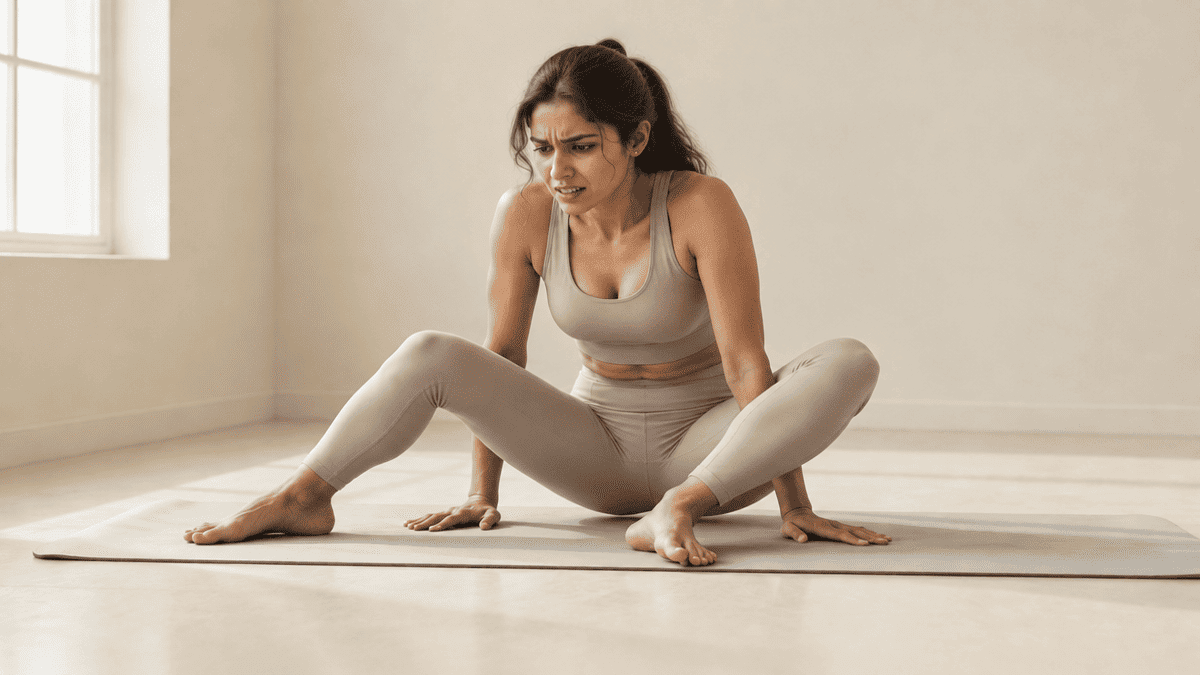
Can’t Sit Cross-Legged? A Few Ways To Reclaim Free Movement
A familiar floor-sitting position can become uncomfortable for several reasons, from reduced hip mobility to knee or ankle problems. Understanding where movement is restricted matters more than forcing the body into a pose.
By WFY Bureau, Health & Wellness | November 2026
For many people, sitting cross-legged is woven into ordinary life. It may be part of a yoga or meditation practice, a family meal, a religious gathering or simply an evening spent on the floor with children. A position that once seemed effortless can therefore become an unexpected reminder that the body has changed.
Sometimes the change is gradual. The knees no longer settle as comfortably, the hips feel stiff or getting back to standing takes more effort. Sometimes it is sudden, accompanied by pain after an injury or a flare-up of an existing joint problem. The two experiences deserve different responses.
Losing comfort in a cross-legged position does not automatically mean that someone is ageing badly, has arthritis or needs to stretch harder. Human joints differ in shape and range of movement. Past injuries, muscle strength, daily activity, pain and medical conditions can all influence which postures feel natural.
The useful question is not whether every adult should be able to sit on the floor in a particular way. It is what has changed, whether the change affects daily functioning and how movement can be maintained safely.
One Simple Position, Several Demanding Movements
Cross-legged sitting looks passive, but getting into it requires the hips, knees and ankles to move together. The hips flex, move outward and rotate externally. The knees bend deeply, while the feet and ankles settle into positions that differ according to body proportions and the way the legs are arranged. The trunk also needs enough control to remain comfortable and balanced.
Studies of floor-sitting positions show that cross-legged sitting can demand substantial hip rotation and knee flexion. The exact angles vary between individuals, which helps explain why two people of the same age may experience the position differently.
If the hips cannot rotate comfortably, the body may try to make up the difference elsewhere. This can place unwanted stress on a bent knee when someone pulls or presses the legs into position. A cushion under the pelvis or support beneath the knees may reduce strain, but pain should never be treated as a challenge to push through.
It also helps to distinguish difficulty lowering into a position, discomfort while holding it and difficulty rising from the floor. These can involve overlapping but different issues. Someone might have reasonable flexibility but lack the leg strength or balance needed to stand up without support.
Five Reasons Cross-Legged Sitting May Become Difficult
1. The Hips Have Less Comfortable Movement
People who spend much of the day sitting at a desk, driving or remaining in one position may gradually use a narrower range of movement. That does not mean chair sitting inevitably shortens every hip muscle, but a routine with little physical variety can leave someone less accustomed to the movements floor sitting demands.
The muscles around the hips, including the gluteal and inner-thigh muscles, can contribute to a feeling of restriction. Joint structure, previous injuries and hip conditions also matter. Some people have naturally less external rotation than others, even without disease.
The discomfort is not always experienced at the same place. Tightness may be felt in the buttock or upper thigh, while a problem inside the hip joint may produce pain in the groin or surrounding area. These patterns cannot reliably diagnose the cause on their own.
Gentle, regular movement may help when inactivity or muscular stiffness contributes to the problem. Persistent pain, one-sided loss of movement or worsening restriction deserves assessment rather than an increasingly forceful stretching routine.
2. The Knee Objects to Deep Bending
Cross-legged sitting requires substantial knee flexion. A person with painful arthritis, a previous ligament or meniscus injury, ongoing swelling or another knee condition may find that bend uncomfortable.
The knee may also hurt because the hip is not moving sufficiently and extra twisting force is being applied to the lower leg. This is particularly important in yoga or stretching sessions where someone is tempted to press a raised knee towards the floor.
Do not use the knee as a lever to increase hip flexibility. If a movement produces sharp knee pain, catching, locking or a sense that the joint may give way, stop and seek appropriate advice. Deep knee bending is not necessary for everyone, and modifying the position is often the sensible choice.
Knee discomfort may be temporary after an unusual activity, but recurrent symptoms should not be dismissed simply because walking on level ground remains possible.
3. The Ankles or Feet No Longer Settle Comfortably
Although attention usually goes to the hips and knees, the ankles and feet also need to tolerate the chosen position. A previous sprain, joint stiffness, arthritis or sensitivity around the outer foot can make it unpleasant to rest the legs on the floor.
People may notice pressure at the ankle bones, tingling in the feet or an awkward angle that becomes uncomfortable after several minutes. Sometimes a folded blanket or a different arrangement of the legs provides enough support. Persistent numbness, swelling or pain needs closer attention.
Ankle circles and gentle foot movements may help some people maintain comfortable motion, but they should not be used to force a joint that is injured or inflamed.
4. Strength and Postural Endurance Have Changed
Comfortable floor sitting is partly a matter of endurance. If the back and trunk muscles tire quickly, a person may begin to slump or seek support. More importantly, weak or deconditioned leg muscles can make getting down to the floor and standing again more demanding.
It would be inaccurate to assume that everyone who struggles with cross-legged sitting has a weak core. Joint range, pain and body proportions may be more relevant. Still, general strengthening can improve the ability to move between positions, maintain balance and perform everyday tasks.
For older adults, the ability to rise safely from the floor is a useful functional skill, although it is distinct from the ability to hold a particular seated pose. Training for that skill may require a chair, stable support and guidance suited to the person’s present abilities.
5. A Joint or Medical Condition Is Affecting Movement
Osteoarthritis can cause pain, stiffness and reduced function in the hips or knees. Inflammatory conditions, including rheumatoid arthritis, can also affect joints, sometimes with swelling, warmth and stiffness after rest. Previous fractures, operations and long-standing back or nerve problems may alter which positions feel comfortable.
Pain travelling from the lower back into a leg, particularly with tingling or numbness, may suggest a nerve-related issue rather than a simple lack of flexibility. This needs a different assessment from routine muscular tightness.
No single symptom proves the diagnosis. Age alone is not enough, either. A healthcare professional may consider the pattern of discomfort, how long it has been present, recent injuries, existing illnesses and the effects on walking or other activities before recommending treatment.
Does Ageing Mean You Must Give Up Floor Sitting?
Age can bring changes in strength, balance and joint function, but those changes vary enormously between individuals. Some older adults remain comfortable sitting on the floor for years, while younger people may have limited movement after an injury or long periods of inactivity.
Ageing should not be used as an automatic explanation for a new problem. Nor should an older person feel compelled to demonstrate flexibility by sitting through pain. The goal of healthy movement is to preserve independence and comfort, not to meet someone else’s idea of an ideal posture.
Regular activity, suitable strengthening and attention to balance can support function at many ages. Where arthritis or other conditions are present, an individualised exercise programme can still be beneficial, but the range and intensity may need adjustment.
How to Improve Comfort Without Forcing the Position
If there has been no recent injury, significant pain or other concerning symptom, gradual movement may be worth exploring. A physiotherapist can help identify whether the main limitation is in the hip, knee, ankle, strength or balance and suggest appropriate exercises.
Move More Often During the Day
Regular walking and short breaks from prolonged sitting can help maintain overall mobility. The benefit comes from varying activity rather than trying to achieve a single perfect posture. Standing, walking and changing position periodically are useful habits even for people who never intend to sit cross-legged.
Warm Up Before Gentle Mobility Work
Trying a demanding floor position straight after hours at a desk may feel harder than attempting it after a short walk. Begin with comfortable movement, then explore the available range without bouncing, pulling or pushing through pain.
Hip movements can be practised while supported in a chair or standing, depending on comfort and balance. An individual may benefit from gentle outward rotation, controlled hip movement or stretching around the buttocks and thighs. The correct exercises depend on the source of the restriction, not simply the location where tightness is felt.
Strengthen the Legs and Trunk
Simple movements such as standing up from a stable chair, controlled walking, appropriate lower-limb strengthening and balance exercises can support daily function. The intensity should match current ability. People with significant joint pain, recent surgery or reduced balance should seek professional guidance before attempting unfamiliar exercises.
Health authorities generally recommend that adults include muscle-strengthening activity at least twice a week, alongside regular aerobic movement. These are broad health recommendations, not a prescription to force any particular yoga or floor-sitting position.
Use Support and Adapt the Pose
A folded blanket beneath the hips may make the pelvis more comfortable. Cushions beneath the knees can reduce the feeling that the legs are hanging unsupported. Sitting with the back against a wall, changing the arrangement of the legs or using a chair for meditation may be better options.
No one needs to press both knees flat to the floor. The ability to do so varies with joint structure and comfort. Some people will find an alternative seated position healthier and more sustainable than attempting to reclaim a posture that repeatedly causes pain.
Progress Gradually and Pay Attention Afterwards
Gentle muscular effort is different from sharp joint pain. If a movement produces a stabbing sensation, increasing swelling, numbness or symptoms that continue to worsen afterwards, stop and obtain advice. Progress may occur over weeks rather than days, and not every restriction can be removed through stretching.
Consistency is useful; forcing the range is not.
When to Ask a Clinician for Help
Professional assessment is advisable when discomfort persists, limits walking or normal activities, repeatedly disrupts sleep, or appears with swelling, reduced joint movement or a history of injury. A doctor or physiotherapist can assess the likely cause and advise whether rehabilitation, further tests or specialist care are appropriate.
Seek urgent medical assessment for severe pain after a fall or injury, an inability to bear weight, a visibly deformed joint, or a hot, markedly swollen joint, particularly with fever or feeling unwell. A knee that suddenly locks and cannot be straightened also warrants prompt attention.
If back or leg symptoms are accompanied by new bladder or bowel problems, numbness around the groin or rapidly worsening weakness, seek emergency care. These are not ordinary signs of being inflexible.
Do not attempt intensive stretches to work through these symptoms while waiting to see whether they disappear.
A Practical Test of Everyday Mobility
Rather than judging health by whether the knees touch the floor in a cross-legged pose, consider how comfortably you can manage ordinary movements. Can you walk at your usual pace? Rise from a chair without unusual difficulty? Step over a low obstacle? Turn safely, carry out household tasks and get down to or up from the floor when needed?
Changes in these activities may provide more meaningful information about functional wellbeing. Someone who cannot sit cross-legged but walks, climbs stairs and exercises comfortably may not have a significant mobility problem. Someone who sits cross-legged easily but struggles to stand without support may benefit from strength and balance work.
Neither situation should be reduced to a single flexibility score. Movement is a collection of abilities, and good health rarely depends on one pose.
The Cultural Place of Floor Sitting
Across many Indian homes and communities, sitting on the floor has long been associated with family meals, prayer, conversation and traditional practices. For some people living overseas, those habits also provide a familiar connection to home.
When the body no longer tolerates the position, it can feel like losing a small part of an everyday tradition. But the purpose of a practice matters more than its exact physical form. A person can participate in meditation, religious gatherings or family occasions from a chair or with appropriate support. Adaptation is not a failure of discipline or cultural commitment.
Yoga and other movement practices can be valuable when taught and modified responsibly. They should not become competitions in joint range or endurance. Listening to pain and respecting an individual’s anatomy are part of practising safely.
Listen to the Change, Not the Challenge
Difficulty sitting cross-legged may be a reminder to move more regularly, strengthen neglected muscles or address a joint problem. It may also reflect natural differences in body structure or a medical condition that needs attention. The position itself cannot reveal which explanation is correct.
The sensible response is curiosity rather than force. Notice where discomfort occurs, whether it is new, how it affects other activities and whether simple modifications help. Seek assessment when pain or loss of function persists, and treat sudden severe symptoms as a reason for prompt medical attention.
Maintaining mobility is about keeping useful movement available for everyday life. A comfortable chair, a supported floor position or a safely adapted routine can serve that aim just as well as sitting cross-legged without assistance.
Disclaimer: This article is intended for general health education and is not a medical diagnosis, physical assessment or individual exercise prescription. Joint pain, stiffness and movement restrictions have many possible causes. Exercises and positions that suit one person may be unsafe for another, particularly after injury or surgery or with existing joint or neurological conditions. Do not force painful movements. Consult a qualified healthcare professional or physiotherapist for persistent symptoms, and seek urgent care for the warning signs described above.