
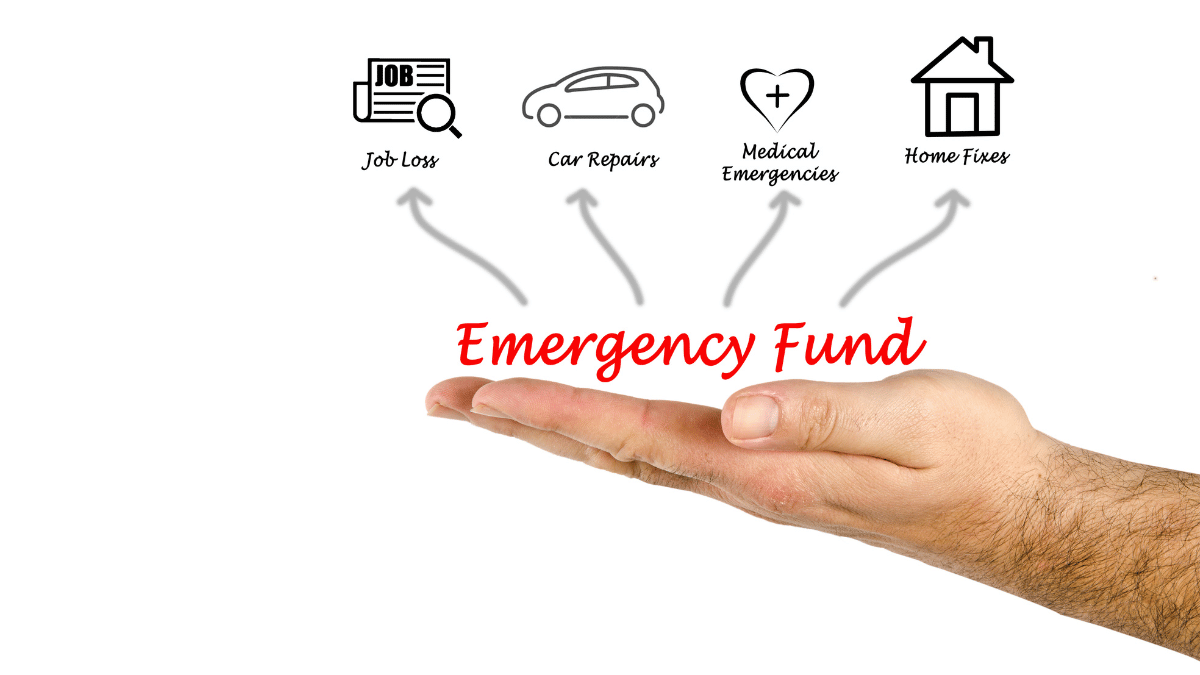
Emergency Fund In India: Reliable Choices, Risky Mistakes To Know
An emergency fund must work when life does not go to plan. Here are five places to consider for accessible savings, four to keep outside your emergency reserve and the rules that matter before you move your money.
By WFY Editorial Team, Finance & Legal | November 2026
A sudden hospital admission, an unexpected job loss or a major repair at home can place enormous pressure on a household. The trouble is rarely confined to the expense itself. It is often the speed at which the money is needed. A payment may be due before a salary arrives, while the family’s investments could be temporarily difficult to sell or worth less than expected.
This is why an emergency fund belongs in a different category from long-term savings. Its first job is to preserve spending power that can actually be accessed when necessary. Earning a competitive return is useful, but it comes after three questions: Is the money reasonably secure? Can I withdraw it in time? Will I lose a meaningful amount by doing so?
For households in India, bank accounts, fixed deposits and certain low-risk mutual funds can each play a role. They are not interchangeable. Deposit insurance, withdrawal conditions, settlement delays and the possibility of market losses need to be understood before a single rupee is committed.
How Much Emergency Money Is Enough?
Three to six months of essential household expenditure, rather than gross salary, is a useful starting range for many families. Count rent or mortgage payments, groceries, utilities, school fees, insurance premiums, necessary transport, loan instalments and other unavoidable commitments.
A household spending ₹60,000 a month on essentials would need ₹1.8 lakh for three months or ₹3.6 lakh for six months. Someone with irregular earnings, a single source of income, elderly dependants or substantial medical needs may reasonably prefer a larger cushion, potentially nine to twelve months or more. There is no universal amount, and an emergency fund cannot substitute for suitable health or income protection.
The best target is the one that reflects your actual risks. Begin with a smaller milestone if the full amount seems out of reach. Even one month’s essential expenses can reduce reliance on expensive short-term borrowing.
It also helps to divide the reserve into two layers. The first should be available immediately, including evenings and weekends. The second can be held in places that may take a working day or require a small premature-withdrawal adjustment. The five options below are ways of constructing those layers, not a shopping list that everyone must use.
Five Places to Consider for Your Emergency Fund
1. An Insured Bank Savings Account: Your First Line of Defence
A savings account with a bank covered by India’s Deposit Insurance and Credit Guarantee Corporation (DICGC) is generally the most practical location for money needed without notice. It supports familiar access routes such as UPI, debit cards, ATMs and bank transfers, depending on the account and the availability of banking services.
Keep enough here to cover at least the first few weeks of essential expenses. For many families, around one month is a sensible initial objective, although immediate medical or caregiving needs may justify more. The precise percentage of the total fund matters less than being able to make urgent payments without waiting for a market or branch to open.
There is an important protection limit. DICGC covers eligible deposits up to ₹5 lakh per depositor per insured bank, including principal and interest, when held in the same right and capacity. Savings accounts, recurring deposits and fixed deposits at different branches of the same bank are generally added together for this calculation. Opening five accounts at one bank does not create five separate ₹5 lakh insurance limits.
Coverage is not a promise that money will be available instantly if a bank fails or withdrawals are restricted. Insurance claims follow a legal process. That is one reason a second operational bank account can be valuable, particularly if your main account is temporarily inaccessible because of an outage, a blocked card or a security issue.
2. Sweep-In Fixed Deposits: A Link Between Access and Interest
Some banks provide an auto-sweep or flexi fixed deposit facility. Once the savings balance crosses a specified threshold, surplus money may move into a linked deposit. If the transaction account needs funds, the bank can arrange a reverse sweep according to the product’s terms.
This can be convenient for someone who wants everyday banking access while earning fixed-deposit interest on money not used regularly. However, automatic sweep arrangements are not identical across banks. Minimum balances, deposit sizes, interest calculations, premature-break charges and the speed of reverse sweeps can differ.
Before using one for emergencies, check whether the linked money can be accessed through the channels you actually use. Test a modest withdrawal rather than assuming the facility will work exactly like cash in the savings account. Also remember that deposits held in the same capacity at the same insured bank count together towards the DICGC limit.
3. A Ladder of Short-Term Bank Fixed Deposits
A fixed deposit can provide greater certainty about the agreed interest rate than a market-linked investment. But one large deposit may be inconvenient if only a small amount is needed urgently.
Consider splitting part of the emergency reserve into several smaller deposits with differing maturity dates. For example, three deposits of ₹50,000 each may be easier to manage than a single ₹1.5 lakh deposit. If the bank permits partial or individual premature closure, one deposit can be broken while the others remain untouched.
The details matter. Banks may apply a lower interest rate for the actual period held, levy a premature-withdrawal penalty or impose product-specific restrictions. Some fixed deposits cannot be closed early. Read the conditions before opening them, and avoid unnecessarily long maturities when the objective is emergency liquidity.
As with savings and sweep-in deposits, separate fixed deposits at the same bank do not automatically increase the insured amount. Spread funds across genuinely different insured banks if your eligible deposits exceed the insurance limit and diversification is appropriate for your circumstances.
4. A Post Office Savings Account: A Government-Backed Alternative
For eligible resident savers, an India Post savings account offers another place to hold accessible money. Post office small-savings arrangements have government backing, and savings accounts have banking facilities that may include ATM access, internet banking and transfers, subject to account activation and service availability.
This option can be especially useful where post office access is convenient or a household prefers to avoid keeping all of its reserves with commercial banks. Yet it should not automatically replace a well-functioning everyday bank account. Withdrawal limits, processing requirements and the capabilities of an individual branch may affect how quickly a large amount becomes available.
A vital distinction for WFY’s overseas readers: non-resident Indians are not eligible to open a new Post Office Savings Account under the applicable rules. Anyone whose residence status has changed should check the treatment of existing accounts and applicable restrictions rather than assume the same options are available after moving abroad.
Do not confuse this savings account with longer-term post office products such as National Savings Certificates or Public Provident Fund accounts. Government backing does not mean every scheme allows immediate withdrawal.
5. Liquid or Overnight Mutual Funds: Only for the Secondary Layer
Liquid mutual funds invest in short-maturity debt and money-market securities, generally with maturities of up to 91 days. Overnight funds hold instruments with very short, typically one-business-day maturities. These funds can be considered for a portion of the emergency reserve that is unlikely to be required within the next few hours.
Their attraction lies in relatively limited interest-rate exposure and the ability to redeem on business days. But they are not bank deposits, are not covered by DICGC insurance and do not guarantee capital or returns. Credit, market, liquidity and operational risks remain, even when a fund’s portfolio is conservative.
Ordinary redemption proceeds from liquid and overnight funds are generally paid on the next business day, subject to the applicable rules and processing conditions. Weekends, holidays, verification issues and banking disruptions can therefore matter.
Certain liquid-fund schemes offer an optional instant-access feature. Under SEBI’s framework, the eligible amount may be limited to the lower of ₹50,000 or 90% of the available folio value, with further scheme and investor conditions. Not every fund offers the service, and it should never be assumed to cover an entire emergency reserve. Some liquid funds also apply a graded exit load for redemptions during the first seven calendar days.
If you use this option, review the scheme’s risk information, portfolio, fees, redemption rules and instant-access facility. The money that must pay an urgent hospital bill tonight should remain in a bank account, not depend on a mutual-fund redemption.
Four Places That Do Not Belong in Your Core Emergency Reserve
1. Shares and Equity Mutual Funds
Equities may be suitable for long-term wealth creation, but short-term market movements can be severe. An emergency could arrive during a downturn, forcing a sale when prices are depressed. A household should not have to choose between funding essential care and accepting avoidable market losses.
Keep long-term investments and emergency money mentally and operationally separate. The ability to sell an investment does not make it a reliable emergency reserve.
2. Retirement and Locked-In Savings Products
Public Provident Fund (PPF), National Savings Certificates (NSC) and the National Pension System (NPS) have purposes that differ from immediate cash protection. Their restrictions and withdrawal procedures make them poor substitutes for money needed at short notice.
This does not mean withdrawals are impossible in every circumstance. PPF permits eligible partial withdrawals after a prescribed period, and NPS allows specified partial withdrawals subject to conditions that have changed over time. Those exceptions are not equivalent to having money freely available tonight. Use these products for the goals they were designed to serve, and maintain a separate accessible buffer.
3. Property and Physical Gold
Real estate may represent considerable family wealth, but selling it requires time, documentation and a willing buyer. A rushed sale can produce a poor price. Jewellery and physical gold may be easier to sell or pledge, yet valuation differences, deductions, loan costs and practical delays can reduce their usefulness during a crisis.
These assets may form part of broader household wealth. They are simply not dependable substitutes for readily available cash.
4. Corporate Deposits and Long-Duration Debt Funds
Corporate fixed deposits can offer attractive advertised interest rates, but they carry the issuer’s credit risk and generally do not receive DICGC insurance merely because they are called deposits. Money committed to an institution that encounters financial trouble may be difficult to recover when needed most.
Long-duration debt mutual funds present a different problem. Their prices can react materially to changes in interest rates, while credit quality and fund liquidity also matter. Selling at an unfavourable time may result in a loss. Such products should not be mistaken for cash equivalents.
For the same reasons, speculative investments and unregulated products have no place in the core reserve, regardless of promised returns.
What About Arbitrage Mutual Funds?
Arbitrage funds are sometimes promoted as parking places for short-term money because they seek to benefit from price differences between equity cash and derivatives markets. Some investors also examine them for their potential tax treatment as equity-oriented schemes.
They can have a place in a wider investment strategy, but they are not a straightforward replacement for emergency cash. Returns are not guaranteed, portfolios can fluctuate, exit loads may apply and redemption is not equivalent to an immediately available bank balance. Any perceived tax advantage depends on holding period, the investor’s circumstances and the rules in force when units are sold.
Tax efficiency should not take priority over access to emergency money.
For this reason, an arbitrage fund is best considered separately from the essential first-line reserve rather than treated as automatically safer than a liquid fund.
A Simple Way to Divide the Money
Suppose your target is ₹3.6 lakh, representing six months of essential spending at ₹60,000 a month.
An illustrative arrangement might be:
- ₹60,000 to ₹1.2 lakh in an immediately accessible bank savings account, depending on the household’s likely urgent bills.
- The next ₹1.2 lakh to ₹1.8 lakh across suitable sweep-in or smaller short-term bank fixed deposits.
- Any remaining amount in another accessible and eligible savings arrangement, or, for those comfortable with mutual-fund risk and settlement times, a conservative liquid or overnight fund.
These are examples, not prescribed allocation percentages. Someone with an upcoming operation may sensibly favour immediate bank access. A household with secure dual incomes might need a smaller buffer than a self-employed person with seasonal earnings. If total eligible deposits at one bank exceed ₹5 lakh, consider the insurance implications as well as convenience.
The most practical arrangement is often the least complicated one that will work reliably under stress.
Check These Details Before an Emergency Happens
A fund can be perfectly designed on paper and still fail in practice if the account holder has forgotten the password or a family member does not know where the money is held.
Review the basics periodically: Are account details and nominations current? Can you access funds if your phone is lost? Is your registered mobile number correct? Can your spouse or another trusted person identify the accounts and relevant documents if you are incapacitated? Do you understand the withdrawal restrictions and the time needed for funds to reach the spending account?
For Indians living overseas, currency and location are also important. If the potential emergency is likely to occur in the country where you reside, keeping the entire buffer in India could create delays, exchange-rate exposure and transfer complications. Conversely, those supporting parents or property in India may benefit from maintaining a separate local reserve. NRE, NRO, resident accounts and investment products have different eligibility and operational rules, so residency and tax status must be checked.
Review the target after major changes such as a new child, a job transition, an increase in rent or a family member’s illness. If the fund has been used for a genuine emergency, rebuilding it should become a priority once finances stabilise.
The Real Measure of a Good Emergency Fund
An emergency fund will seldom be the most exciting part of a financial plan. That is precisely its strength. It is money that does not need to win a race for returns or depend on market conditions to fulfil its purpose.
For most households, the foundation is an accessible account at an insured bank, supported where appropriate by carefully selected short-term deposits. Post office savings and low-risk mutual funds may serve additional roles for eligible savers who understand their limitations. What matters most is that the money is available in the right amount, at the right time, with as little uncertainty as possible.
Financial confidence begins with knowing that an unexpected event will not immediately force the family to sell a long-term investment, borrow at an excessive rate or abandon an essential payment. That is the value an emergency fund is meant to provide.
Disclaimer: This article provides general financial information for educational and editorial purposes. It is not personalised financial, investment, tax or legal advice. Deposit insurance applies only under the relevant DICGC rules, and mutual funds carry investment risks, including possible loss of capital. Interest rates, eligibility criteria, withdrawal conditions, fees, taxation and settlement practices may change. Readers, particularly non-residents, should confirm current terms with the relevant institution and consult a qualified adviser before making financial decisions.