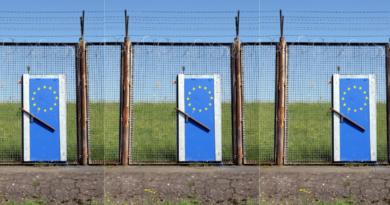

Geoeconomics: This Is The New Battlefield Of World Politics
How Trade, Technology, Energy and Supply Chains Have Become the New Instruments of Global Power
The War Without Soldiers
Just after sunrise, one of the world’s largest container ships slowly approaches a major international port. On board are semiconductor manufacturing equipment, electric vehicle components, lithium batteries, pharmaceutical ingredients, rare earth minerals and sophisticated electronic systems worth billions of dollars. Thousands of kilometres away, government officials in Washington, Beijing, Brussels, New Delhi and Tokyo are not discussing troop movements or military exercises. Instead, they are debating export controls, tariff schedules, investment restrictions, sanctions and technology regulations.
No missiles have been launched. No borders have been crossed by invading armies. No war has been formally declared. Yet the decisions being made in ministries, financial institutions and corporate boardrooms could reshape international alliances, influence elections, redirect trillions of dollars in investment and determine which countries emerge as the dominant powers of the twenty-first century.
This is not the geopolitics of the Cold War. It is not the free-market globalisation that characterised the decades following the collapse of the Soviet Union. Instead, it represents a new phase in international relations where economics has become one of the principal instruments through which nations pursue strategic objectives.
The language of global politics has changed remarkably. Terms such as tariffs, sanctions, critical minerals, semiconductors, supply-chain resilience, friend-shoring, de-risking, export controls and strategic autonomy now dominate discussions that were once centred almost exclusively on military alliances and diplomatic negotiations. Economic decisions increasingly carry geopolitical consequences, while geopolitical rivalries increasingly shape economic policy.
This transformation is giving rise to a concept that has rapidly become central to understanding international affairs: geoeconomics.
Unlike traditional geopolitics, which focuses primarily on military capability, territorial influence and diplomatic power, geoeconomics examines how states use economic instruments to achieve strategic objectives. Trade agreements, financial sanctions, investment policies, technological innovation, infrastructure financing, energy security and access to natural resources have become tools through which nations compete for influence without necessarily engaging in direct military confrontation.
The battlefield has changed. The competition has not.
Perhaps nowhere is this transformation more visible than in the relationship between the world’s largest economies. The United States and China remain deeply interconnected through trade and investment, yet simultaneously compete across technology, manufacturing, artificial intelligence, semiconductor production and critical mineral supply chains. Europe is reassessing its economic dependencies, India is positioning itself as both a manufacturing alternative and a strategic bridge between competing blocs, while countries across Africa, Latin America and Southeast Asia increasingly find themselves at the centre of global competition for resources, markets and influence.
Military power continues to matter. Nuclear deterrence remains central to international security, armed conflicts continue in several regions and defence spending has risen significantly in recent years. Yet the defining contests of our era are increasingly fought through shipping routes rather than battlefields, investment flows rather than troop deployments, technology standards rather than territorial expansion and economic partnerships rather than military occupation.
Understanding modern world politics therefore requires looking beyond traditional concepts of war and peace. Increasingly, the decisive struggles shaping the international order are taking place through economic competition.
This is the age of geoeconomics.
When Economics Became a Strategic Weapon
Throughout much of recorded history, states pursued power through remarkably familiar means. Strong armies protected territory, naval fleets secured maritime trade, diplomacy managed alliances and military victories often determined the rise and fall of empires. Economic strength undoubtedly mattered, but it was generally viewed as supporting military power rather than serving as a strategic instrument in its own right.
The twentieth century gradually began changing that relationship. The devastation caused by two World Wars demonstrated that military victory alone could not guarantee lasting stability or prosperity. After 1945, governments increasingly recognised that economic reconstruction, international trade and financial cooperation would become essential foundations of global peace.
Institutions such as the International Monetary Fund, the World Bank and the General Agreement on Tariffs and Trade, later replaced by the World Trade Organization, were established to encourage economic cooperation and reduce the likelihood that commercial disputes would escalate into military conflict. Expanding trade created deeper economic interdependence, while multinational corporations invested across borders on an unprecedented scale. Globalisation accelerated rapidly during the final decades of the twentieth century, creating supply chains that stretched across continents and linking national economies more closely than ever before.
Many observers believed this growing interdependence would reduce geopolitical rivalry. Countries that traded extensively with one another, it was argued, would have stronger incentives to resolve disagreements peacefully because conflict would impose unacceptable economic costs on all sides. For a time, this assumption appeared remarkably persuasive.
China’s integration into the global economy, the expansion of the European Union, increasing foreign direct investment and unprecedented growth in international commerce seemed to suggest that economic cooperation would gradually replace geopolitical competition as the defining feature of international relations. Markets became increasingly global while businesses optimised production across borders according to efficiency rather than politics.
Yet history rarely moves in a straight line.
Rather than eliminating geopolitical competition, globalisation created new forms of strategic vulnerability. Nations discovered that dependence on overseas manufacturing, imported energy, critical technologies and foreign investment could become sources of geopolitical risk. Economic integration produced extraordinary prosperity but also generated complex interdependencies that governments could potentially exploit during periods of diplomatic tension.
The financial crisis of 2008 further accelerated this reassessment. Confidence in the existing international economic order weakened as governments reconsidered assumptions regarding financial stability, market efficiency and global governance. The subsequent decade witnessed growing concerns over technological leadership, industrial competitiveness and national resilience.
Gradually, economic policy ceased to be viewed solely through the lens of growth and efficiency. It increasingly became an instrument of national security.
From Globalisation to Strategic Competition
The first phase of globalisation focused overwhelmingly on efficiency. Companies located production wherever costs were lowest, components crossed multiple borders before final assembly and international supply chains became increasingly sophisticated. Consumers benefited from lower prices, businesses expanded into new markets and developing economies experienced unprecedented industrial growth.
Governments generally welcomed this transformation. Open markets, foreign investment and expanding trade were widely regarded as mutually beneficial. International organisations promoted liberalisation while multinational companies built production networks extending across dozens of countries.
However, the very success of this model created new strategic questions.
What happens if a country depends heavily on another nation for pharmaceuticals, semiconductor chips or rare earth minerals? How secure are supply chains concentrated in only a handful of locations? Should national security permit unrestricted dependence on overseas technology providers? Can economic relationships remain entirely separate from political disagreements?
Events over the past decade have made these questions impossible to ignore.
Trade disputes between major powers, disruptions caused by the Covid-19 pandemic, geopolitical tensions affecting energy markets and continuing competition over advanced technologies have demonstrated that economic interdependence also creates strategic leverage. Countries increasingly recognise that whoever controls essential technologies, critical infrastructure or indispensable raw materials possesses influence extending well beyond commercial relationships.
Consequently, governments have begun reassessing decades of economic policy. Rather than pursuing efficiency alone, policymakers now emphasise resilience, diversification and strategic security. New concepts such as friend-shoring, near-shoring and de-risking reflect efforts to reduce excessive dependence upon any single country while maintaining the benefits of international trade.
This represents a significant philosophical shift. The objective is no longer simply producing goods at the lowest possible cost. It is ensuring that supply chains remain reliable during geopolitical crises, public health emergencies or diplomatic disputes. Economic efficiency remains important, but it is increasingly balanced against considerations of resilience and national security.
Businesses are adapting accordingly. Investment decisions now take account not only of labour costs and market opportunities but also political stability, regulatory predictability and geopolitical risk. Governments are offering incentives to encourage domestic manufacturing in strategically important industries, while multinational corporations diversify production across multiple countries to reduce exposure to future disruptions.
These developments illustrate the central principle of geoeconomics. Economic policy is no longer viewed solely as an instrument for generating prosperity. It has become an essential component of national strategy, shaping diplomacy, security, technological development and international influence.
The consequences extend far beyond individual countries. As economic relationships become increasingly strategic, the distinction between commerce and geopolitics continues to blur. Trade agreements carry security implications, technology policies influence diplomatic relationships and investment decisions increasingly reflect geopolitical priorities alongside commercial considerations.
The twenty-first century is therefore witnessing not the end of globalisation but its transformation. Economic integration continues, yet it is increasingly guided by strategic calculation rather than commercial efficiency alone.
Globalisation connected the world.
Geoeconomics is determining how that connected world will now compete.
The Return of Great Power Competition
The optimism that characterised the early decades of globalisation rested on a powerful assumption: expanding trade and economic interdependence would gradually reduce geopolitical rivalry. Nations investing in one another’s economies and participating in integrated global markets were expected to resolve disputes through diplomacy because the economic costs of conflict would be too great to bear. For a time, this vision appeared remarkably convincing.
Today, that assumption is being fundamentally reassessed.
The twenty-first century has witnessed the re-emergence of strategic competition among major powers, but unlike the ideological rivalry that defined much of the Cold War, today’s contest is driven by technology, innovation, industrial capability and economic influence. Military strength remains an important component of national power, yet governments increasingly recognise that economic resilience may determine strategic success as decisively as military capability.
The relationship between the United States and China illustrates this transformation more clearly than any other. Despite remaining each other’s major trading partners in several sectors, the two countries are simultaneously engaged in intense competition across advanced manufacturing, artificial intelligence, telecommunications, semiconductor production, quantum computing and strategic infrastructure. Their economies remain deeply interconnected, yet both governments are actively seeking to reduce vulnerabilities that could be exploited during future geopolitical crises.
This dynamic has fundamentally altered the international political landscape. Competition is no longer measured solely by the number of aircraft carriers, fighter aircraft or overseas military bases. Increasingly, influence depends upon who develops the most advanced technologies, controls critical supply chains, dominates emerging industries and establishes the technical standards that shape future innovation.
Europe has also begun adapting to this new reality. The European Union increasingly speaks of strategic autonomy, seeking to reduce excessive dependence on external suppliers while strengthening its technological and industrial capabilities. Japan has expanded investment in semiconductor manufacturing and supply-chain resilience. South Korea continues reinforcing its position as a global technology leader, while Australia has emerged as a crucial supplier of critical minerals essential for advanced manufacturing and clean energy technologies.
India occupies a particularly significant position within this evolving landscape. Rather than aligning exclusively with any single geopolitical bloc, it has pursued a strategy that combines expanding manufacturing capacity, strengthening strategic partnerships and maintaining diplomatic flexibility. As global companies diversify production away from excessive concentration in any one country, India has increasingly positioned itself as both a manufacturing destination and a major participant in the emerging geoeconomic order.
The significance of these developments extends beyond bilateral relationships. Rather than dividing the world into two rigid ideological camps, the contemporary international system is becoming increasingly multipolar. Middle powers such as India, Indonesia, Saudi Arabia, Brazil, Türkiye, Vietnam and the United Arab Emirates are exercising greater influence by leveraging their economic importance, strategic geography and diplomatic flexibility. Their growing role demonstrates that geoeconomic influence is no longer determined solely by military strength but also by the ability to occupy critical positions within global commerce and technology.
This emerging environment differs fundamentally from previous eras of great power competition. Countries continue trading with one another even while competing strategically. Cooperation and rivalry increasingly coexist within the same relationships, making modern international politics considerably more complex than the ideological divisions of the twentieth century.
Tariffs: The New Front Lines
Few developments better illustrate the rise of geoeconomics than the renewed use of tariffs as instruments of strategic policy. Traditionally, tariffs were primarily viewed as economic tools designed to protect domestic industries or generate government revenue. Today, they increasingly serve broader geopolitical objectives, influencing industrial policy, technological development and international negotiations.
The renewed prominence of tariff disputes has demonstrated that international trade is no longer governed solely by commercial considerations. Governments now evaluate imports and exports through the lens of national security, technological leadership and long-term strategic resilience. Economic policy has therefore become closely integrated with foreign policy.
Recent years have witnessed an expansion of tariff measures affecting industries considered strategically important. Steel, aluminium, electric vehicles, renewable energy technologies, batteries and advanced manufacturing sectors have all become subjects of increasingly complex trade policies. These measures are often justified on grounds extending beyond traditional economic protectionism. Governments argue that maintaining domestic industrial capacity is essential for economic security, technological independence and national resilience.
For businesses, this represents a profound change in the global trading environment. Companies can no longer assume that production decisions based solely on efficiency will remain commercially viable indefinitely. Tariff policies, changing regulations and shifting geopolitical relationships now influence investment strategies almost as strongly as labour costs or consumer demand.
Consumers also experience the consequences. Tariffs frequently increase production costs, disrupt established supply chains and contribute to higher prices for imported goods. Yet many governments increasingly accept these economic costs as necessary investments in long-term strategic security. The objective is no longer simply reducing prices but ensuring that essential industries remain resilient during periods of international instability.
Tariffs therefore represent far more than commercial policy. They have become instruments through which governments encourage domestic manufacturing, influence corporate investment decisions and strengthen industries regarded as strategically indispensable. In the age of geoeconomics, customs duties increasingly resemble diplomatic signals rather than purely fiscal measures.
Sanctions: The Economic Weapon of Modern Diplomacy
If tariffs represent economic competition, sanctions have emerged as one of the most powerful instruments of economic coercion available to governments. Unlike military intervention, sanctions enable states to impose significant pressure on other countries without deploying armed forces. Financial restrictions, trade limitations, asset freezes and export controls can profoundly influence national economies while remaining below the threshold of direct military conflict.
Over recent decades, sanctions have become increasingly sophisticated. Rather than targeting entire economies indiscriminately, governments now frequently impose highly specific restrictions aimed at financial institutions, technology companies, defence industries, political leaders and strategically important sectors. These measures seek to alter political behaviour by restricting access to international finance, advanced technologies or critical commercial relationships.
The effectiveness of sanctions remains widely debated. In some cases, they have imposed substantial economic costs while achieving limited political change. In others, they have influenced diplomatic negotiations or constrained technological development. Regardless of differing assessments regarding their long-term success, sanctions clearly demonstrate the growing importance of economic instruments within international politics.
Financial systems occupy a particularly significant position within this framework. Access to international payment networks, reserve currencies and global banking institutions increasingly forms part of the broader architecture of geopolitical influence. Countries capable of shaping these systems possess considerable leverage extending beyond traditional diplomatic channels.
The growing use of sanctions has also encouraged many governments to reconsider economic dependence. Nations increasingly seek diversified trading relationships, alternative payment mechanisms and stronger domestic industries capable of reducing exposure to external economic pressure. This trend reinforces the broader movement towards resilience that now characterises geoeconomic strategy.
The implications extend well beyond governments. Multinational corporations operating across multiple jurisdictions must increasingly navigate complex regulatory environments in which commercial decisions carry geopolitical implications. Compliance departments now monitor international sanctions regimes as carefully as financial performance, illustrating how deeply politics has become integrated with global commerce.
The Semiconductor War
Among all the industries shaping modern geopolitics, none better illustrates the logic of geoeconomics than semiconductors. Although rarely visible to ordinary consumers, semiconductor chips form the foundation of the modern digital economy. They power smartphones, computers, automobiles, aircraft, telecommunications systems, medical equipment, industrial machinery, artificial intelligence platforms and advanced military technologies. Without them, contemporary civilisation would struggle to function.
Their strategic importance has transformed semiconductor manufacturing into one of the world’s most closely watched geopolitical competitions.
For decades, semiconductor production evolved through highly specialised international supply chains. Research, design, manufacturing equipment, fabrication and assembly became distributed across multiple countries according to technological expertise rather than political considerations. This model produced extraordinary innovation while reducing costs, but it also created significant strategic dependencies.
Governments now recognise that dependence on overseas semiconductor production presents risks extending beyond commercial concerns. Access to advanced chips increasingly determines competitiveness in artificial intelligence, autonomous systems, cybersecurity, telecommunications and defence technologies. Consequently, semiconductor capability has become a central element of national security policy.
This has triggered an unprecedented wave of public investment. Governments across North America, Europe and Asia are supporting domestic semiconductor industries through subsidies, research initiatives and industrial partnerships. Simultaneously, export controls governing advanced chip technologies have become increasingly significant instruments of international policy, reflecting concerns regarding technological leadership and strategic competition.
The implications extend far beyond the technology sector itself. Artificial intelligence, perhaps the defining technological revolution of the coming decades, depends fundamentally upon advanced semiconductor capability. Whoever leads semiconductor innovation will possess significant advantages across numerous industries, from healthcare and finance to defence and scientific research.
Taiwan occupies an especially important position within this landscape. As home to some of the world’s most advanced semiconductor manufacturing facilities, the island has acquired extraordinary strategic significance extending well beyond its geographical size. The concentration of advanced chip production within a limited number of facilities has transformed semiconductor security into one of the most sensitive issues in contemporary international politics.
For governments and businesses alike, semiconductors symbolise a broader reality. Technological leadership has become inseparable from geopolitical influence. The competition for innovation increasingly determines diplomatic relationships, industrial policy and national security planning. The semiconductor industry therefore represents not merely an economic sector but one of the principal arenas in which the future balance of global power is being negotiated.
In many respects, semiconductor fabrication plants have become the strategic fortresses of the twenty-first century. Their importance illustrates the central argument of geoeconomics: the decisive contests of modern international politics are increasingly fought through technology, industrial capability and economic resilience rather than conventional military confrontation alone.
The Battle for Critical Minerals
Every technological revolution has depended upon access to strategic resources. The Industrial Revolution was fuelled by coal and iron. The twentieth century was shaped by oil, steel and uranium. The twenty-first century, however, is increasingly being defined by a different group of resources that, until recently, attracted little public attention.
Lithium, cobalt, nickel, graphite, copper and rare earth elements have become indispensable to modern economies. They are essential components of electric vehicles, renewable energy infrastructure, advanced electronics, telecommunications, aerospace, defence systems and artificial intelligence hardware. Without these minerals, the global transition towards digital technologies and clean energy would simply not be possible.
Their growing importance has transformed mining from a commercial activity into a strategic geopolitical priority.
Governments increasingly view access to critical minerals as an issue of national security rather than merely industrial policy. Countries possessing significant reserves have acquired renewed geopolitical importance, while nations heavily dependent on imports are actively seeking to diversify supply chains and strengthen domestic processing capabilities.
This competition extends well beyond mining itself. Refining, processing and manufacturing often determine where the greatest economic value is created. Control over these stages enables countries to influence global industries far more effectively than simply possessing mineral deposits. Consequently, competition increasingly centres not only on ownership of natural resources but also on the industrial ecosystems that transform raw materials into advanced technologies.
Africa has emerged as one of the principal theatres of this new competition. The continent possesses significant reserves of cobalt, manganese, graphite and several rare earth minerals essential for global manufacturing. International investment in African mining has expanded considerably as governments and multinational corporations seek reliable long-term supplies. Similar developments are visible across Latin America, where countries such as Chile and Argentina occupy increasingly important positions within global lithium production, while Australia remains one of the world’s leading suppliers of critical minerals.
Greenland, once viewed primarily through the lens of geography and climate, has acquired renewed strategic importance because of its mineral resources and Arctic location. Central Asia, Southeast Asia and parts of South America have likewise become increasingly significant within global resource strategies. Across these regions, infrastructure investment, diplomatic engagement and long-term commercial partnerships increasingly reflect broader geopolitical calculations.
The competition for critical minerals therefore represents far more than a race for natural resources. It reflects the recognition that whoever secures access to the materials underpinning future technologies will influence industries that shape economic growth, military capability and scientific innovation for decades to come.
The mineral wealth of the twenty-first century is becoming as strategically significant as oil was during the twentieth.
Supply Chains Have Become National Security
Few events demonstrated the strategic importance of supply chains more clearly than the Covid-19 pandemic. As factories temporarily closed, shipping networks experienced unprecedented disruption and demand shifted dramatically, governments around the world discovered how dependent modern economies had become upon highly integrated international production systems.
Products previously taken for granted suddenly became difficult to obtain. Medical equipment, pharmaceutical ingredients, electronic components, shipping containers and industrial materials experienced shortages that affected countries regardless of their level of economic development. What initially appeared to be a public health emergency quickly exposed structural vulnerabilities within the global economy.
The experience fundamentally altered policy thinking.
For decades, efficiency had been the dominant objective of supply-chain management. Businesses sought to minimise costs by locating production wherever labour, infrastructure and logistics provided the greatest commercial advantage. Inventory levels were reduced, manufacturing became increasingly specialised and production networks stretched across numerous countries.
The pandemic demonstrated that efficiency alone could not guarantee resilience.
Governments consequently began reassessing industries regarded as strategically essential. Pharmaceuticals, semiconductors, medical equipment, telecommunications infrastructure, defence technologies and food security increasingly became subjects of national industrial strategies. Diversification replaced concentration as the guiding principle of supply-chain planning.
New concepts rapidly entered the vocabulary of policymakers. Friend-shoring encouraged production among trusted partners sharing similar political values. Near-shoring promoted manufacturing closer to major consumer markets. China-plus-one strategies encouraged businesses to diversify production across multiple countries rather than depending overwhelmingly upon a single manufacturing base. Although these approaches differ in emphasis, they all reflect a common objective: reducing strategic vulnerability while preserving the benefits of international trade.
Businesses have adapted accordingly. Rather than concentrating production in one location, multinational corporations increasingly establish manufacturing capacity across several countries, improving resilience against future disruptions. Supply-chain transparency has become a strategic priority, while governments offer incentives encouraging domestic investment in sectors considered essential to national security.
This transformation represents one of the defining features of geoeconomics. Supply chains are no longer viewed simply as commercial networks designed to maximise efficiency. They have become strategic assets influencing diplomatic relationships, industrial competitiveness and national resilience.
In an interconnected world, the ability to maintain reliable access to essential goods has become a fundamental component of geopolitical power.
Energy: The Strategic Resource That Never Lost Its Importance
Although new technologies dominate many contemporary geopolitical discussions, energy remains one of the most enduring foundations of international power. Oil, natural gas and electricity continue to influence diplomatic relationships, economic stability and strategic decision-making despite the rapid expansion of renewable energy.
The global energy transition has undoubtedly accelerated. Investment in solar power, wind energy, hydrogen technologies and battery storage has expanded significantly, while governments pursue ambitious climate objectives and seek to reduce dependence upon fossil fuels. Yet this transition has not diminished the geopolitical importance of energy. Instead, it has broadened it.
Countries are now competing not only over oil and gas but also over the technologies, infrastructure and minerals required for cleaner energy systems. Electricity grids, battery manufacturing, hydrogen production and renewable energy equipment increasingly form part of broader national security strategies.
Liquefied natural gas has become particularly significant as governments diversify energy sources and strengthen supply resilience. New pipelines, export terminals, undersea electricity cables and hydrogen corridors increasingly influence diplomatic partnerships across Europe, Asia and the Middle East. Energy security now encompasses not only resource availability but also infrastructure resilience and technological capability.
Maritime shipping routes remain equally important. Approximately ninety per cent of international trade continues to travel by sea, making strategic waterways among the world’s most valuable geopolitical assets. The Strait of Hormuz, the Strait of Malacca, the Suez Canal, the Bab el-Mandeb Strait and the Panama Canal each occupy positions where regional instability can affect global commerce within days.
These maritime chokepoints illustrate the close relationship between geography and geoeconomics. Disruptions affecting even a single shipping route can influence energy prices, manufacturing costs and inflation across continents. Consequently, protecting maritime trade has become an increasingly important objective for governments whose economic prosperity depends upon uninterrupted global commerce.
Energy therefore remains central to international politics not because it has resisted change but because it continues adapting alongside technological transformation. Whether generated from hydrocarbons, renewable sources or future innovations, access to reliable energy remains indispensable to economic growth, industrial competitiveness and national security.
The Global South Moves to the Centre of the Story
Perhaps one of the most significant consequences of geoeconomics has been the growing importance of countries collectively described as the Global South. For much of the twentieth century, international politics was frequently interpreted through the actions of a relatively small number of major powers. Today, emerging economies are exercising far greater influence over trade, investment, energy markets and international institutions.
This transformation reflects both demographic and economic realities. Many emerging economies possess rapidly growing populations, expanding consumer markets, abundant natural resources and increasing industrial capacity. Their importance extends beyond development alone; they have become indispensable participants within global supply chains and strategic industries.
India exemplifies this evolution. Its expanding manufacturing sector, digital economy, technological capabilities and strategic location within the Indo-Pacific have strengthened its position as an important participant in the emerging geoeconomic landscape. Rather than serving merely as a destination for international investment, India increasingly contributes to shaping discussions surrounding trade, technology, infrastructure and global governance.
Southeast Asia has similarly become a focal point for manufacturing diversification. Countries such as Vietnam, Indonesia, Malaysia and Thailand have benefited from companies seeking alternatives to concentrated production networks. Their expanding industrial sectors now occupy increasingly important positions within global supply chains spanning electronics, automotive manufacturing and advanced technology.
The Gulf region is also redefining its international role. Long recognised primarily through energy exports, countries including Saudi Arabia and the United Arab Emirates are investing heavily in logistics, finance, artificial intelligence, renewable energy and advanced manufacturing. Their ambitions illustrate how economic diversification itself has become a strategic geopolitical project.
Across Africa, Latin America and parts of the Middle East, governments are seeking to convert natural resource wealth into broader industrial development rather than remaining exporters of raw materials alone. Infrastructure investment, digital transformation and regional integration increasingly reflect aspirations extending well beyond commodity production.
The Global South is therefore no longer merely participating in international politics. It is helping reshape the economic architecture upon which future geopolitical influence will increasingly depend.
India’s Strategic Opportunity
Few countries illustrate the opportunities created by geoeconomics more clearly than India. Over the past three decades, India has steadily transformed from a largely services-driven economy into one that increasingly combines digital innovation, advanced manufacturing, infrastructure development and global diplomacy. As geopolitical tensions encourage governments and businesses to diversify production networks, India has emerged as an important destination for investment seeking stability, scale and long-term growth.
This transformation has not occurred by accident. Large-scale investments in highways, ports, airports, freight corridors, digital infrastructure and manufacturing incentives have strengthened India’s ability to participate more actively in global supply chains. Initiatives promoting semiconductor manufacturing, electronics production, renewable energy, defence manufacturing and digital payments reflect a broader effort to position the country within industries likely to shape the global economy over the coming decades.
India’s diplomatic approach has reinforced these economic ambitions. Rather than aligning exclusively with one geopolitical bloc, New Delhi has pursued a policy that maintains strategic partnerships across a diverse range of countries. It continues strengthening defence cooperation with the United States and its partners through forums such as the Quad while maintaining long-standing relationships with Russia. Simultaneously, India has expanded engagement with Europe, the Gulf, Southeast Asia and Africa, reflecting an increasingly pragmatic foreign policy centred on national interest.
This strategic flexibility has become one of India’s greatest advantages. In an international system characterised by competing economic blocs, countries capable of maintaining constructive relationships with multiple partners are likely to enjoy greater room for diplomatic manoeuvre. India increasingly represents such a balancing power, engaging with developed and developing economies alike while advocating reforms that give greater voice to emerging nations within global institutions.
Manufacturing also occupies a central place in India’s geoeconomic strategy. As multinational companies seek alternatives to concentrated production networks, India has positioned itself as a destination capable of combining a large domestic market with an expanding industrial base. Sectors such as electronics, pharmaceuticals, renewable energy equipment, automotive manufacturing and aerospace are attracting increasing investment as companies diversify global operations.
Equally significant is India’s digital transformation. The rapid expansion of digital payments, public digital infrastructure and technology entrepreneurship has demonstrated how innovation itself can become an instrument of national influence. Rather than merely adopting international technologies, India is increasingly contributing models that attract global attention, particularly among developing economies seeking affordable and scalable digital solutions.
The challenge, however, remains substantial. Competing successfully within the geoeconomic era requires sustained investment in education, scientific research, logistics, advanced manufacturing and institutional capacity. Building resilient supply chains demands efficient ports, modern transport systems, reliable energy supplies and regulatory stability. The competition for global investment will increasingly depend not only upon labour costs but also upon innovation, productivity and governance.
India therefore stands at an important historical moment. The evolving geoeconomic landscape presents significant opportunities, but realising them will depend upon maintaining long-term economic reforms while strengthening the capabilities that modern strategic competition increasingly rewards.
The Next Frontier of Geoeconomics
If the first phase of geoeconomics centred on trade, manufacturing and energy, the next phase is likely to be defined by technology. Artificial intelligence, quantum computing, biotechnology, digital currencies, cybersecurity, advanced telecommunications and space technologies are rapidly becoming areas where economic leadership and national security increasingly overlap.
Artificial intelligence occupies a particularly significant position. Unlike earlier technological revolutions confined largely to specific industries, AI possesses the potential to transform healthcare, education, manufacturing, finance, defence, scientific research and public administration simultaneously. Countries capable of leading AI development are therefore likely to enjoy advantages extending across almost every sector of the modern economy.
This competition depends upon far more than algorithms. Advanced computing infrastructure, semiconductor manufacturing, data governance, energy availability, research institutions and highly skilled talent all influence technological leadership. Consequently, AI has become both an economic opportunity and a strategic priority.
Quantum computing represents another frontier with potentially profound geopolitical implications. Although commercial applications remain under development, quantum technologies may eventually revolutionise cybersecurity, scientific simulation, logistics optimisation and financial modelling. Governments worldwide are investing heavily in research, recognising that breakthroughs in quantum capability could significantly alter the balance of technological power.
Digital currencies and financial technologies are also reshaping international economics. Central banks are exploring digital currencies while governments consider new payment systems capable of improving efficiency and reducing transaction costs. Although these developments remain at different stages across countries, they illustrate how finance itself is becoming part of broader strategic competition.
Cybersecurity has similarly evolved from a technical issue into a geopolitical priority. Modern economies depend upon digital infrastructure supporting communications, banking, transportation, healthcare and public administration. Protecting these systems increasingly requires cooperation between governments, private industry and international organisations, further blurring the distinction between economic resilience and national security.
Space has become another important dimension of geoeconomics. Satellites support navigation, communications, agriculture, disaster management, financial transactions and military operations. Commercial space industries are expanding rapidly, while governments recognise that access to space-based infrastructure carries significant strategic implications.
These developments collectively demonstrate that the future of international competition will increasingly depend upon knowledge, innovation and technological capability rather than traditional measures of industrial capacity alone. Economic power is becoming progressively intertwined with scientific leadership.
The New International Order
The emergence of geoeconomics does not imply that traditional geopolitics has disappeared. Military alliances remain important. Territorial disputes continue influencing regional stability. Diplomatic negotiations remain essential to managing international relations. However, the context within which these activities occur has fundamentally changed.
Power today is increasingly multidimensional. Military capability remains indispensable, but it is now complemented by technological leadership, industrial resilience, financial influence, supply-chain security and the ability to shape international standards. Countries capable of integrating these different sources of power are likely to exercise the greatest influence in the decades ahead.
This transition is contributing to a more multipolar international system. While the United States and China remain central actors, other countries increasingly possess opportunities to shape global outcomes through economic strength rather than military dominance alone. Middle powers are expanding diplomatic influence by leveraging strategic geography, industrial capability, energy resources and technological expertise.
International organisations also face important questions. Institutions created during the mid-twentieth century must increasingly adapt to realities shaped by digital technologies, artificial intelligence, climate transition and global supply chains. Economic governance is becoming more complex as geopolitical competition intensifies, requiring new forms of cooperation capable of balancing national interests with shared global challenges.
Climate change provides an important example. The transition towards cleaner energy requires unprecedented international collaboration while simultaneously generating new competition over technologies, minerals and industrial leadership. Cooperation and competition increasingly coexist, illustrating the complexity of modern international politics.
Perhaps the defining characteristic of the emerging order is that no country can achieve complete economic self-sufficiency. Even the world’s largest economies remain interconnected through trade, finance, technology and investment. The challenge therefore is not abandoning globalisation but reshaping it to balance openness with resilience, efficiency with security and competition with cooperation.
The Battlefield Has Changed
For centuries, historians explained the rise and fall of nations through military victories, territorial expansion and diplomatic alliances. The twenty-first century demands a broader understanding of power.
Today, influence increasingly depends upon who designs the most advanced semiconductor chips, controls critical mineral supplies, develops artificial intelligence, secures reliable energy networks, protects digital infrastructure and builds resilient supply chains. Ports, data centres, research laboratories, manufacturing facilities and financial markets have become as strategically significant as military bases and naval fleets.
This does not mean wars will disappear. Armed conflict remains a tragic reality in many parts of the world, and military deterrence continues underpinning international security. Yet many of the most consequential contests shaping the future will unfold without conventional battlefields. Decisions concerning technology standards, industrial policy, infrastructure investment and economic partnerships will increasingly determine which countries lead and which struggle to keep pace.
Geoeconomics therefore represents far more than a new academic concept. It describes a profound transformation in the way nations pursue power, protect national interests and compete for global influence. The boundaries between economics, technology and foreign policy have become increasingly difficult to distinguish because they now reinforce one another in ways unprecedented in modern history.
For businesses, understanding geoeconomics is no longer optional. Investment decisions increasingly depend upon geopolitical stability, regulatory environments and supply-chain resilience. For governments, economic policy has become inseparable from national security. For citizens, the consequences are already visible through changing prices, evolving technologies, shifting employment opportunities and the restructuring of global industries.
The twenty-first century will not be remembered solely for the military conflicts it witnessed. It may instead be remembered as the era in which economics became the principal arena through which nations projected influence and protected their strategic interests.
The battle for global leadership has not ended. It has simply moved to new terrain.
The defining battlefields of our age are no longer found only along contested borders or distant front lines. They are increasingly located in semiconductor fabrication plants, research laboratories, shipping corridors, critical mineral mines, financial institutions, digital networks and innovation hubs. The weapons are no longer limited to tanks and missiles. They now include technology, trade, investment, data, energy, finance and industrial capability.
That is the defining reality of the new international order.
This is the age of geoeconomics.