India’s Beautiful Pankha: The Forgotten Hand Fan Lives On
THE GREAT HAND FAN – PANKHA
Art & Culture
**This small write up is based on materials available on the internet.
This is a simple subject, but it has a lot of chill factor. Yes, this is about our hand held Fans.
My earliest memory of handheld fans is seeing my grandmother use them to quicken the burning of a fire in a traditional mud stove called chulha that was fuelled by locally gathered dry wood from native trees like neem, mango, etc. It was also used to keep insects such as the mosquitoes away.
As kids, we sometimes used hand fans for cooling off during summer days, playing games like royalty, making fans from paper by crafting accordion style pleats and colouring them. It used to be a fun-filled activity.
Before the advent of technology in Indian homes, pankha or a hand fan used to be the major instrument to beat the heat away, and our Indian Bamboo hand fans were undoubtedly the simplest of the products to stay naturally cool wherever one was. It should, however, be noted that although the cost of making a simple bamboo pankha is minimal, the workmanship, effort and personal touch make these delicate objects invaluable.
Ancient hand fans date back over 5,000 years to ancient Egypt, where they were rigid, feather-mounted, and used as sacred instruments. They symbolised power, divinity, and royalty across early civilizations. The folding fan was later invented in Japan around the 8th century, taking inspiration from the folding wings of a bat.
In India, hand fans have had a rich cultural and historical presence. References to fans appear even in the Mahabharata, illustrating their ancient use in temples, royal courts, and noble households. Temple fans ranged from small, delicate ones to large ceremonial pieces that required strength to move.
Each region of India developed its own distinct style of hand fans, crafted from local materials and adorned with intricate designs. These fans are not only practical tools but also works of art that reflect India’s craftsmanship and cultural diversity. Even today, traditional fan-making is carried out by artisans across rural India, keeping this centuries-old craft alive.
The Department of Posts, India, released the following special series of 16 commemorative postage stamps celebrating the exquisite artistry of Indian hand fans from different states:
- Appliqué Hand Fan (Rajasthan): Made using ornamental needlework with colourful frills, showcasing Rajasthan’s vibrant appliqué tradition.
- Zardozi Hand Fan (Rajasthan): Embellished with intricate gold thread work, these antique fans reflect royal grandeur.
- Painted Hand Fan (Rajasthan): Decorated with hand-painted images, often used in Krishna temples.
- Mirror Work Hand Fan (Gujarat): Adorned with mirrors and beads, these cotton fans are traditional yet decorative.
- Phadh Hand Fan (Uttar Pradesh): Crafted with silk and zari, once used by royalty and nobles.
- Beads Hand Fan (Gujarat): Covered with colourful beads, featuring a unique swivel handle.
- Satin Ceiling Fan (Rajasthan): A hand-pulled ceiling fan used in royal palaces, operated by Pankhawalas.
- Palm Leaf Fan (Odisha): A large, natural fan made from palm leaves, simple yet elegant.
- Feather Hand Fan (Delhi): Made from peacock feathers, symbolizing beauty and grace.
- Sola Pith Hand Fan (West Bengal): Crafted from milky-white sponge-wood used in traditional Bengali rituals.
- Temple Hand Fan (Rajasthan): Brass fans with long handles offered to temple deities.
- Leather Hand Fan (Kutch, Gujarat): Handmade from stitched and decorated leather.
- Date Palm Hand Fan (Sindh): Woven from soft palm leaves, used across western India.
- Embroidery Hand Fan (Gujarat): Decorated with mirror work and embroidery by women artisans.
- Palm Leaf Hand Fan (West Bengal): Known as Tal-Patri Pankha, light and portable household fans.
- Bamboo Hand Fan (Bihar): Brightly coloured and sturdy, made from finely woven bamboo.
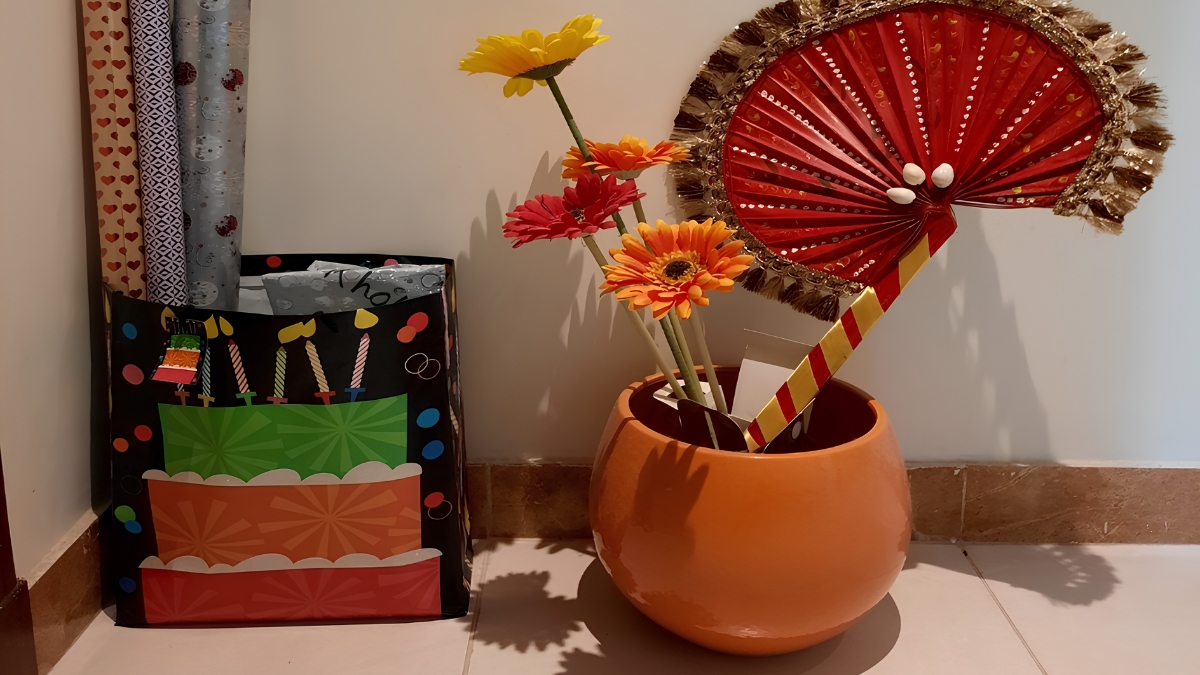
Simple hand fans remain handy, budget friendly, cooling tools in rural areas, even today. However, in cities, during power outages, inverters are being utilised to run household appliances, thereby seeing the exit of usage of hand pankhas. They thus double beautifully as minimalist bohemian wall art when not in active use.