
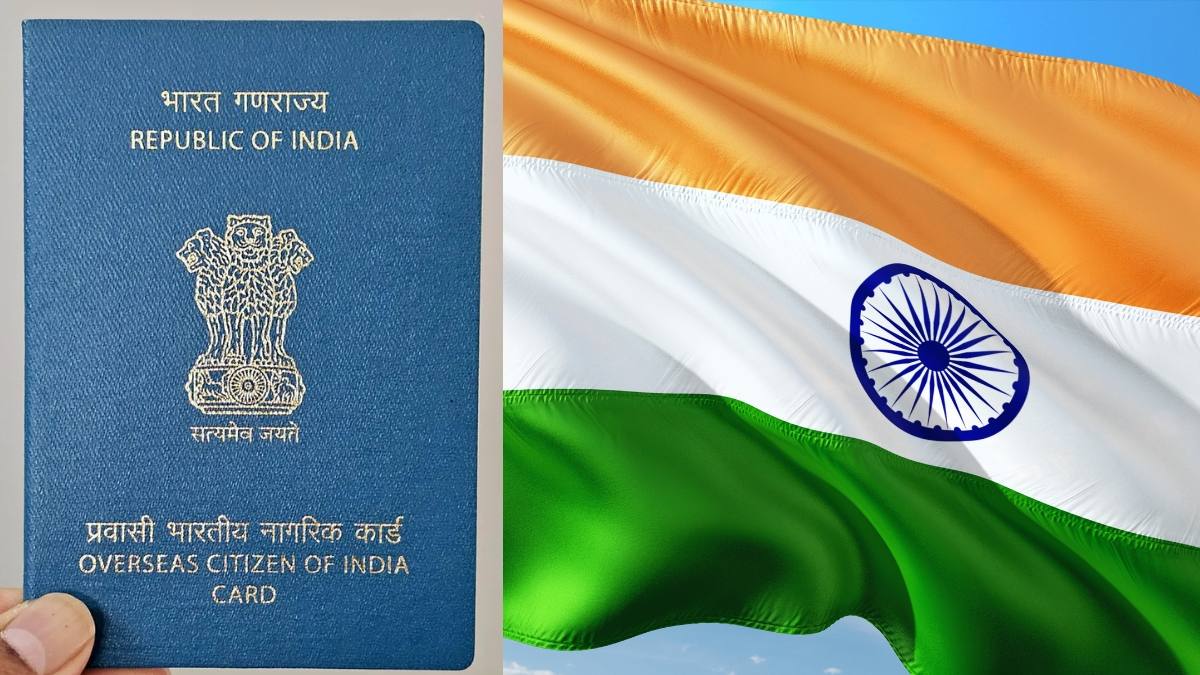
India’s New OCI Rules 2026: What You Need To Know About The Changes
India’s New OCI Rules: A Digital Shift with Wider Doors and Tighter Controls
In a move that reflects both administrative modernisation and a recalibration of its relationship with the global Indian diaspora, the Government of India has introduced sweeping changes to the Overseas Citizen of India (OCI) framework through the Citizenship (Amendment) Rules, 2026.
The revised rules mark the most significant overhaul of the OCI system in over a decade, touching almost every stage of the process, from application and documentation to compliance and eligibility.
At first glance, the changes appear procedural. Applications are now fully digital. Documentation has been streamlined. A new electronic OCI format has been introduced. Yet beneath these administrative updates lies a deeper shift. India is not merely digitising its diaspora interface; it is redefining how access, accountability, and identity intersect for millions of people of Indian origin across the world.
The OCI scheme, first introduced in 2005, has long served as a bridge between India and its diaspora. It allows foreign citizens of Indian origin to live, work, and travel in India with relative ease. While it does not grant full citizenship or political rights, it offers a lifelong visa and a degree of economic and social parity with Non-Resident Indians. Over the years, the scheme has grown in scale and importance, reflecting India’s expanding global footprint.
The 2026 amendments must therefore be understood not as isolated policy tweaks, but as part of a broader effort to modernise governance, enhance oversight, and respond to changing global realities.
A Fully Digital Turn
The most immediate and visible change is the shift to an entirely online application system. All OCI-related processes, including registration and renunciation, must now be completed through the official government portal. Paper submissions, duplicate documentation, and manual processes have been phased out.
This move aligns with India’s wider push towards digital governance. Over the past decade, the country has invested heavily in digitising public services, from tax filings to identity verification systems. Bringing OCI services into this framework was a logical next step.
For applicants, the transition promises greater convenience. The need to physically submit documents or navigate bureaucratic channels has been reduced. Processing times are expected to become more predictable, and the scope for inconsistencies across different Indian missions abroad may diminish.
However, the digital shift also places greater responsibility on applicants. Errors in online submissions, incomplete uploads, or delays in updating records could now have more immediate consequences. The system is more efficient, but also less forgiving.
The Emergence of e-OCI
Alongside the digital application process, the government has introduced an electronic OCI format. Registered individuals may now receive either a traditional physical card or a digital version, commonly referred to as e-OCI.
This change reflects a broader global trend towards digital identity systems. Many countries are moving away from physical documentation in favour of secure, electronically verifiable records. For India, the integration of OCI data into digital platforms opens the door to faster verification, especially at immigration checkpoints.
The e-OCI system is expected to work in conjunction with biometric data. Applicants are now required to provide consent for biometric collection, which will be linked to the Fast Track Immigration Programme. The aim is to enable quicker clearance at airports through automated systems that match passport and OCI data in real time.
For frequent travellers, particularly business professionals and diaspora members who move between countries regularly, this could significantly reduce waiting times and procedural delays.
Ending the Six-Month Wait
One of the more consequential changes is the removal of the six-month residency requirement that previously applied to certain OCI applications. Under the new rules, eligible foreign nationals can apply for an OCI card soon after arriving in India, provided they hold a valid long-term visa and the necessary documentation.
This change is likely to have a direct impact on professionals, researchers, and entrepreneurs who engage with India on a short-term basis but require longer-term access. By eliminating the waiting period, the government has made it easier for global talent to integrate more quickly into Indian academic, economic, and cultural ecosystems.
It also signals a recognition that mobility today is more fluid than before. Individuals often move across borders for work, study, or collaboration. Policies that impose rigid timelines can become barriers in such an environment.
Stricter Compliance: The $25 Rule
While access has been broadened in some areas, compliance requirements have been tightened. One of the most notable changes is the introduction of a mandatory passport update rule.
OCI cardholders must now upload a copy of their new passport and a recent photograph within three months of receiving a new passport. Failure to do so will result in a penalty of 25 US dollars.
On the surface, the fine appears modest. However, its significance lies in the principle it establishes. The government is signalling that maintaining accurate and up-to-date records is not optional. Incomplete or outdated information may not only lead to penalties but could also result in complications during travel, particularly at immigration checkpoints.
At major airports such as Delhi and Bengaluru, authorities are increasingly relying on digital records for verification. Any mismatch between passport details and OCI data could trigger additional scrutiny.
The rule also introduces clarity regarding reissuance. A mandatory reissue of the OCI card is now required only when a new passport is obtained after the age of 20. This simplifies earlier requirements, which were often seen as confusing by applicants.
Expanding the Definition of Eligibility
Perhaps the most socially significant aspect of the 2026 amendments is the expansion of eligibility criteria for certain communities.
The new rules extend OCI eligibility to fifth- and sixth-generation Indian-origin Tamils in Sri Lanka. Previously, eligibility was largely limited to fourth-generation descendants. By broadening the criteria, the government has opened the door to a wider segment of the Sri Lankan Tamil diaspora, many of whom have long-standing historical and cultural ties to India but lacked the documentation required under earlier rules.
Importantly, Sri Lankan government-issued records are now accepted as proof of ancestry in these cases. This is a practical adjustment that acknowledges the challenges faced by communities whose historical documentation may be incomplete or fragmented.
The change carries both symbolic and practical significance. It reinforces India’s cultural connection with diaspora communities while also addressing long-standing concerns about access and recognition.
Clearer Rules for Minors and Renunciation
The revised rules also bring clarity to the status of minor children holding OCI cards. A key provision states that a minor cannot simultaneously hold both an Indian passport and a foreign passport. This aligns with the broader legal framework governing citizenship in India, which does not permit dual citizenship in the conventional sense.
For families navigating cross-border identities, this rule provides clearer guidance, though it may also require careful planning to ensure compliance.
In cases of renunciation, individuals are now required to surrender their physical OCI card to the nearest Indian mission or designated authority. The process itself must be completed online, reinforcing the broader shift towards digital administration.
Fee Structure and Financial Implications
The revised rules also standardise the fee structure for OCI services. Fresh applications filed outside India are set at 275 US dollars, while applications submitted within India cost ₹15,000. Reissuance or updates involving passport changes or personal details are priced at 25 dollars, while replacement of lost or damaged cards costs 100 dollars.
The introduction of a more uniform global fee system is intended to reduce discrepancies across different countries and missions. However, applicants are still advised to check local variations, as exchange rates and administrative practices may influence the final payable amount.
While the fees themselves are not drastically different from previous structures, the emphasis on digital processing may reduce indirect costs associated with travel, documentation, and intermediaries.
OCI Is Not Citizenship
Despite its name, the OCI scheme does not confer citizenship. This distinction remains unchanged and continues to be emphasised under the new rules.
OCI cardholders do not have the right to vote, contest elections, or hold public office in India. They are also restricted from purchasing agricultural or plantation property. The status is best understood as a long-term visa with additional privileges, rather than a pathway to full citizenship.
This distinction is rooted in India’s constitutional framework, which grants Parliament the authority to regulate citizenship under the Citizenship Act, 1955. The OCI scheme operates within this framework, offering a balance between inclusion and legal clarity.
Balancing Access and Oversight
The 2026 amendments reflect a dual approach. On one hand, they simplify processes, expand eligibility, and enhance user experience. On the other, they introduce stricter compliance measures and greater scrutiny.
The rules also make it clear that OCI status can be cancelled if an individual provides false information or engages in activities considered against national interest. This includes certain forms of political or social media activity, though the exact scope of such provisions may be subject to interpretation.
For the government, this balance is essential. As India deepens its engagement with a global diaspora that spans continents and professions, it must also ensure that its systems remain secure and accountable.
A Larger Policy Direction
Taken together, the changes point to a broader policy direction. India is moving towards a more integrated, technology-driven model of governance, where identity, mobility, and compliance are closely linked.
For the diaspora, the implications are significant. The OCI card remains a valuable instrument for maintaining ties with India, but it now comes with clearer expectations. Timely updates, accurate documentation, and adherence to rules are no longer administrative details; they are central to maintaining status.
At the same time, the expansion of eligibility and removal of certain barriers suggest a continued commitment to inclusivity. India appears to be signalling that while it welcomes its global community, it expects a higher degree of engagement with its regulatory framework.
Conclusion
The Citizenship (Amendment) Rules, 2026, represent more than a procedural update. They reflect a shift in how India views its relationship with people of Indian origin worldwide.
By embracing digital systems, the government has made OCI processes more accessible and efficient. By tightening compliance, it has reinforced the importance of accountability. By expanding eligibility, it has acknowledged historical and cultural connections that extend beyond documentation.
For millions of OCI cardholders and potential applicants, the message is clear. The doors remain open, but the framework has changed. Navigating this new system will require awareness, attention to detail, and a willingness to adapt to a more structured and technology-driven approach.
In the evolving story of India and its diaspora, the OCI card continues to be a vital link. The 2026 reforms ensure that this link is not only stronger, but also more clearly defined for the years ahead.