
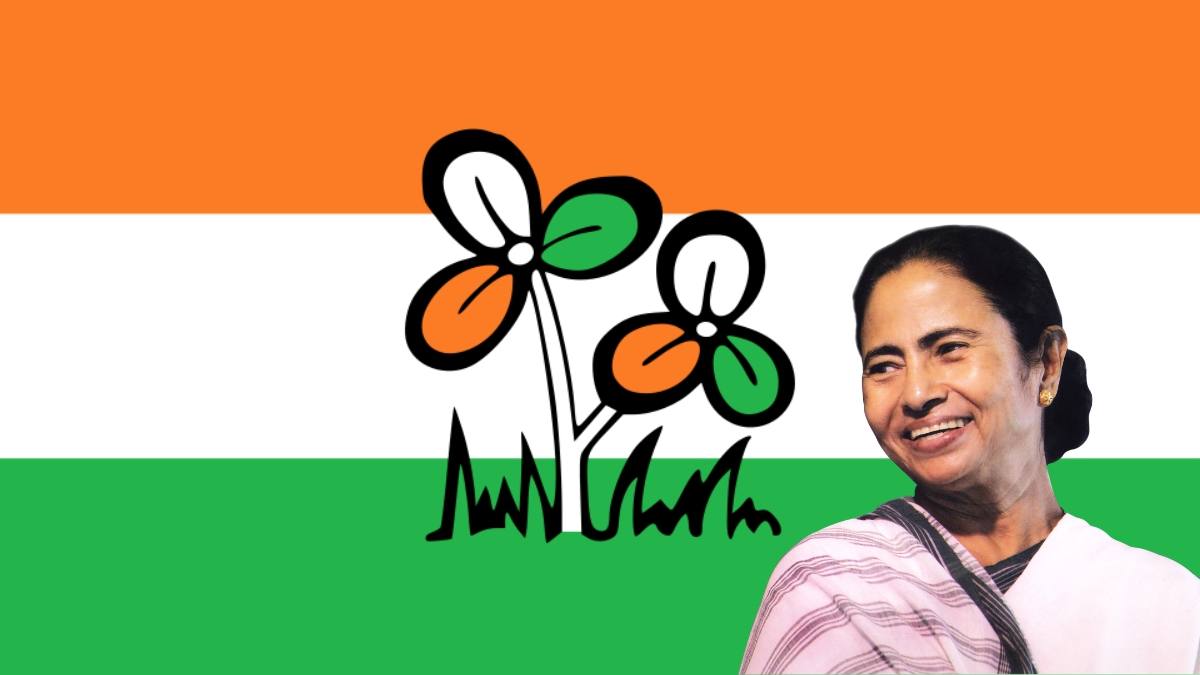
Revealing: Crisis Of The Regional Powerhouses In Indian Democracy Now
The Rise and Struggle of Regional Powerhouses: What the Trinamool Congress Crisis Reveals About Indian Democracy
By Arvind Patel
For nearly a decade and a half, the Trinamool Congress (TMC) under the leadership of Mamata Banerjee appeared politically invincible in West Bengal. The party had transformed itself from a regional challenger into one of India’s most powerful political forces, successfully ending 34 years of uninterrupted Communist rule in 2011 and establishing a formidable electoral machine that dominated the state’s political landscape. Mamata Banerjee herself emerged as one of the most influential opposition leaders in India, often positioned as a national counterweight to Prime Minister Narendra Modi and the Bharatiya Janata Party (BJP).
Today, however, the party finds itself confronting a crisis that extends far beyond a simple electoral defeat. The developments unfolding in West Bengal offer a revealing insight into the changing nature of Indian politics, the vulnerabilities of personality-driven parties, and the growing dominance of national political forces over regional formations. What is happening within the TMC is not merely a state-level political drama. It is part of a broader national story about power, succession, party structures and the future of federal politics in the world’s largest democracy.
The End of an Era in West Bengal
The BJP’s victory in West Bengal marked one of the most significant political developments in recent Indian politics. For fifteen years, the TMC had governed the state, building a political organisation deeply rooted in local networks, welfare programmes and Mamata Banerjee’s personal appeal. Her rise from a grassroots activist to Chief Minister had become one of India’s most remarkable political success stories.
The 2026 election changed that equation. Although the TMC retained a substantial vote share and remained a significant political force, the loss of government represented far more than a routine electoral setback. In politics, defeat is often survivable. The loss of power, however, can expose weaknesses that remain hidden during years of electoral success.
Within weeks of the election results, those weaknesses became visible.
Reports of rebellion among legislators, divisions within the parliamentary wing and public disagreements over leadership signalled that the party was facing challenges far deeper than a temporary loss at the ballot box. What appeared initially to be dissatisfaction among a few members quickly evolved into a broader crisis of confidence within the organisation.
Why Political Parties Struggle After Losing Power
Political history around the world demonstrates that many parties are built to win elections but not necessarily to survive defeat. When parties remain in power for long periods, organisational structures often become closely linked to government authority. Access to resources, influence, patronage networks and political opportunities creates incentives that help maintain internal discipline.
Once power disappears, those incentives begin to weaken.
The TMC’s current predicament reflects this reality. Political analysts have long argued that the party’s cohesion depended heavily on two interconnected factors: Mamata Banerjee’s personal popularity and the advantages that accompany control of government institutions. Both factors reinforced each other for years. Success at the polls strengthened Banerjee’s image as an unbeatable leader, while government authority helped sustain an extensive organisational network across the state.
When the BJP captured power, both pillars came under pressure simultaneously.
The loss of government reduced access to administrative influence, while electoral defeat challenged the perception of invincibility that had surrounded the party leadership. The resulting uncertainty created opportunities for internal rivals and encouraged defections among leaders seeking political security elsewhere.
The Challenge of Leadership Succession
At the heart of the TMC’s crisis lies a question that has troubled political movements across democracies: succession.
Many successful political parties are built around charismatic founders whose authority remains largely unquestioned during periods of electoral success. Problems often emerge when discussions about future leadership begin to take shape. Ambitious second-rung leaders who willingly accepted the founder’s authority may become less comfortable with the prospect of power being concentrated within a single family.
In the case of the TMC, much attention has focused on Abhishek Banerjee, Mamata Banerjee’s nephew and a prominent figure within the party. Although he has played an increasingly important role in party affairs, his growing prominence has generated concerns among some leaders about the future direction of the organisation.
This challenge is not unique to West Bengal.
Across India, several regional parties have grappled with similar issues. Political formations built around powerful personalities often struggle to create institutional mechanisms for leadership transition. Instead, succession becomes closely linked to family relationships, creating tensions between inherited authority and organisational merit.
The experience of parties such as Shiv Sena in Maharashtra illustrates how succession disputes can trigger large-scale political realignments. What begins as a debate over leadership can quickly evolve into a struggle over the future identity of the party itself.
The BJP’s Expanding Political Influence
The TMC’s troubles cannot be understood without considering the broader transformation of Indian politics over the past decade.
The BJP’s rise has altered the country’s political landscape in significant ways. Beyond winning elections, the party has emerged as a powerful national political centre capable of attracting leaders, legislators and entire factions from rival organisations. This ability has fundamentally changed the calculations made by politicians at both state and national levels.
In earlier periods, dissident leaders often faced considerable risks when breaking away from established parties. They had to build new organisations, secure financial support and develop independent political structures. Today, many defectors view the BJP as an alternative source of political influence, organisational support and electoral opportunity.
This dynamic has increased pressure on regional parties across India. Leaders who once remained loyal despite internal disagreements may now see viable alternatives available to them. As a result, electoral defeat can trigger rapid fragmentation as politicians seek new alignments before their influence diminishes.
For regional parties, the challenge is profound. They must compete not only against electoral opponents but also against the gravitational pull of a nationally dominant political organisation.
A Broader Crisis for Regional Politics
The developments in West Bengal reflect broader questions about the future of regional parties in India.
For decades, regional formations played a crucial role in Indian democracy. They represented local aspirations, regional identities and state-specific concerns that national parties often struggled to address. Their rise contributed significantly to the federal character of Indian politics and ensured that power remained distributed across multiple political centres.
Yet many regional parties share structural weaknesses.
They are frequently centred around a single leader or family. Internal elections are rare. Decision-making tends to be concentrated among a small group of individuals. Organisational institutions often remain weaker than the personalities who dominate them.
These characteristics can be advantageous during periods of growth and electoral success. Strong leadership can provide clarity, discipline and public recognition. However, they can also create vulnerabilities during times of crisis.
When charismatic leaders lose elections, retire or face succession challenges, parties often discover that they lack the institutional resilience necessary to withstand political shocks. The resulting instability can trigger defections, factional disputes and organisational decline.
The TMC’s experience serves as a reminder that electoral success alone does not guarantee long-term political durability.
Can Mamata Banerjee Recover?
Despite the severity of the current crisis, writing off Mamata Banerjee would be a mistake.
Throughout her political career, she has repeatedly overcome challenges that many observers considered insurmountable. She defeated one of the world’s longest-serving elected communist governments. She survived intense political opposition, organisational setbacks and repeated predictions of her political decline.
Her personal popularity remains significant. Even critics acknowledge that she continues to command attention and influence in West Bengal. Few political figures in the state possess comparable name recognition or grassroots appeal.
The question is whether personal charisma alone will be sufficient.
Political analysts increasingly argue that any meaningful revival of the TMC will require organisational renewal rather than reliance on individual leadership. Rebuilding trust among party workers, addressing internal grievances, strengthening democratic structures and clarifying future leadership arrangements may prove essential to the party’s survival.
The challenge facing Banerjee today is fundamentally different from those she encountered in the past. Defeating political opponents is one task. Rebuilding a fractured organisation after the loss of power is another altogether.
What This Means for Indian Democracy
The significance of the TMC’s crisis extends beyond West Bengal. It highlights several important trends shaping contemporary Indian politics.
First, it underscores the growing dominance of national parties and the increasing pressures faced by regional formations. Second, it raises important questions about leadership succession and institutional development within political organisations. Third, it demonstrates how rapidly political fortunes can change in a highly competitive democratic environment.
At the same time, the situation illustrates the resilience of Indian democracy itself. Political transitions, leadership challenges and party realignments are not signs of democratic weakness. They are often evidence of democratic competition at work. Voters remain capable of altering political landscapes, while parties must continually adapt to changing expectations and realities.
The future of the TMC remains uncertain. The rebellion could lose momentum, allowing the party to regroup under Mamata Banerjee’s leadership. Alternatively, the crisis could deepen, leading to a more fundamental restructuring of West Bengal’s political landscape.
Whatever the outcome, the developments offer an important lesson. In modern democracies, electoral victory can create power, but only strong institutions can sustain it. Parties built primarily around personalities often discover that their greatest challenge begins not when they face their opponents, but when they must survive without power.
For Mamata Banerjee and the Trinamool Congress, that challenge has now arrived. Whether they can overcome it may determine not only the future of the party but also the future shape of opposition politics in one of India’s most politically significant states.