
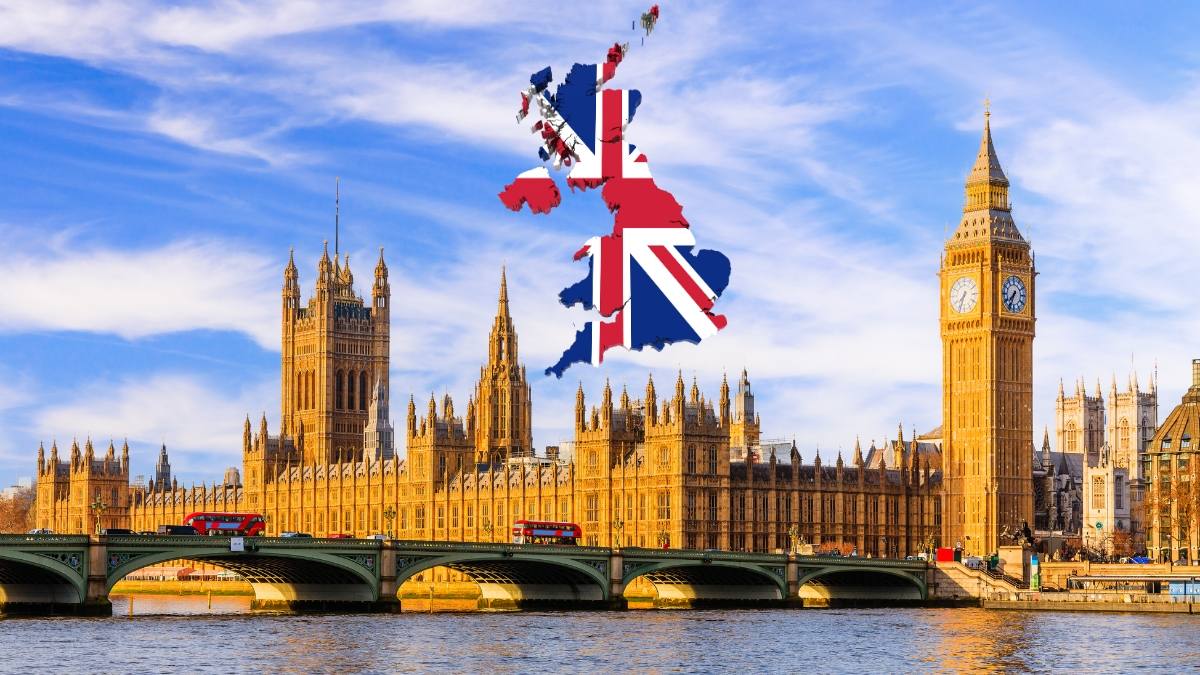
Why Is The Debate Over Migration Reshaping UK Politics Now?
Britain’s Immigration Reset: Why the Debate Over Migration Is Reshaping UK Politics
By Selvan Durairaj , WFY Bureau Desk
World Politics | WFY June Edition 2026
The United Kingdom’s immigration debate has once again moved to the centre of national politics. What was once a policy issue discussed primarily in government departments and parliamentary committees has evolved into one of the defining political questions of modern Britain. Recent figures showing a sharp decline in net migration have not settled the argument. Instead, they have intensified discussions about how much immigration Britain needs, how many migrants it can absorb, and what the future should look like for those seeking to build lives in the country.
The latest chapter in this ongoing debate emerged when Andy Burnham, the Mayor of Greater Manchester and Labour’s candidate in the crucial Makerfield by-election, argued that net migration “needs to fall further” despite official figures showing a dramatic reduction already. His comments reflect a broader shift taking place across British politics, where concerns about immigration are increasingly influencing electoral strategies, party leadership contests, economic planning and social policy.
For the millions of immigrants who call Britain home, including one of the largest Indian-origin communities outside India, these discussions are more than political rhetoric. They affect visas, settlement rights, employment opportunities, higher education, business investment and family reunification. They also influence how Britain defines itself in an increasingly interconnected world.
The immigration debate unfolding in Britain today is therefore not merely about numbers. It is about economics, identity, political trust, demographic change and Britain’s place in the global order.
A Dramatic Fall in Migration
The latest figures from the Office for National Statistics revealed that net migration to the United Kingdom fell to approximately 171,000 during the past year, representing a substantial decline from the record highs witnessed in the years immediately following the pandemic. The figure marked the lowest level since 2012, excluding the extraordinary circumstances of the Covid period.
The numbers tell a remarkable story.
Only a few years ago, Britain was experiencing net migration figures exceeding 900,000 annually. The combination of post-pandemic labour shortages, special humanitarian programmes for Ukraine and Hong Kong, international student inflows and employer demand for overseas workers created one of the highest migration periods in British history.
Today, the situation looks very different.
Tighter visa regulations, restrictions on dependants accompanying international students, changes to skilled worker requirements and a slowing economy have all contributed to the sharp decline.
For the Labour government, the figures offer evidence that existing measures are having an impact. Yet for many politicians, including Burnham, the decline is viewed as only the beginning rather than the conclusion of the process.
The message emerging from Westminster is clear: immigration remains politically sensitive, regardless of whether numbers are rising or falling.
Why Immigration Dominates British Politics
Immigration has influenced British elections for more than two decades.
From debates surrounding European Union enlargement in the early 2000s to the Brexit referendum of 2016, migration has repeatedly emerged as one of the most powerful political issues affecting voter behaviour.
Several factors explain its enduring importance.
First, immigration touches everyday concerns that many voters experience directly. Housing availability, school capacity, healthcare services, transport infrastructure and local government resources all become part of the conversation.
Second, migration raises questions of national identity. Britain has become one of the most ethnically and culturally diverse societies in Europe. While many celebrate this transformation, others worry about social cohesion and cultural change.
Third, immigration is often linked to broader concerns about government competence. Voters frequently judge governments based on whether they appear capable of controlling national borders and implementing policies effectively.
This explains why politicians across the political spectrum increasingly discuss migration even when overall numbers are falling.
Public perceptions often matter as much as statistical realities.
Labour’s New Balancing Act
The debate presents a particular challenge for the Labour Party.
Historically, Labour has drawn support from urban voters, minority communities, younger generations and many immigrant groups. At the same time, it also depends on working-class constituencies where concerns about immigration can be significant.
This creates a delicate balancing act.
Prime Minister Sir Keir Starmer has attempted to position Labour as both economically pragmatic and socially responsible. His government has sought to reduce migration levels while avoiding the more confrontational rhetoric often associated with right-wing parties.
Burnham’s intervention highlights this balancing strategy.
While supporting lower migration levels, he also emphasised the importance of finding a fair approach and avoiding policies that appear punitive or discriminatory.
Labour understands that it must simultaneously reassure voters concerned about immigration while maintaining support among Britain’s diverse communities.
This may prove one of the defining political challenges of the current Parliament.
Settlement Rights Under Scrutiny
One of the most controversial aspects of the current debate concerns settlement rights.
The government is considering measures that would make it more difficult for migrants to obtain indefinite leave to remain, often referred to as permanent settlement. This status allows individuals to live and work in Britain indefinitely and serves as a pathway towards citizenship.
According to Home Office projections, approximately 1.6 million people could qualify for settlement between 2026 and 2030 if current rules remain unchanged.
For policymakers concerned about population growth and public expenditure, these numbers have triggered renewed discussions about eligibility requirements.
Supporters of reform argue that settlement should reflect long-term contribution, integration and economic participation.
Critics contend that changing rules after migrants have already planned their futures around existing regulations is unfair and undermines trust.
This disagreement goes beyond technical policy details.
It touches on fundamental questions about the relationship between migrants and the state.
When individuals relocate, invest, study and build careers based on established rules, should governments be able to change those rules retrospectively?
The answer remains politically contentious.
The Rise of Reform UK
The immigration debate cannot be understood without considering the growing influence of Reform UK.
Led by Nigel Farage, the party has positioned itself as the strongest advocate of significantly reducing immigration levels and tightening border controls.
In recent elections, Reform has achieved notable successes, drawing support from voters frustrated with both Labour and the Conservatives.
The Makerfield by-election, referenced extensively in the current debate, is being viewed as a key test of Reform’s ability to challenge Labour in traditional working-class strongholds.
Reform’s rise has changed the political landscape.
Both Labour and the Conservatives now face pressure to demonstrate credibility on immigration policy.
This dynamic mirrors developments elsewhere in Europe, where concerns about migration have contributed to the growth of populist and nationalist political movements.
From France and Germany to the Netherlands and Italy, immigration remains one of the most influential electoral issues.
Britain is no exception.
Economic Reality Versus Political Pressure
Despite political pressure to reduce immigration, Britain’s economy continues to depend heavily on migrant labour.
The National Health Service provides perhaps the most visible example.
A substantial proportion of doctors, nurses, care workers and healthcare professionals working in Britain were born overseas. Without international recruitment, many NHS services would struggle to function effectively.
The same applies to sectors such as:
- Information technology
- Engineering
- Financial services
- Hospitality
- Agriculture
- Construction
- Social care
Many employers argue that labour shortages remain a significant challenge.
Britain’s ageing population further complicates the picture.
According to demographic projections, the proportion of people aged over 65 is expected to continue rising in the coming decades. This creates growing demand for healthcare and social care services while reducing the relative size of the working-age population.
Immigration can help offset some of these pressures.
This is why economists frequently caution against viewing migration purely through a political lens.
The economic implications are often more complex.
The Indian Community and Britain’s Transformation
No discussion of immigration in Britain would be complete without examining the role of the Indian diaspora.
The Indian-origin population in the United Kingdom now exceeds 1.9 million people, making it one of the country’s largest and most successful ethnic communities.
Indian-origin Britons have achieved prominence across virtually every sector of society.
They are business leaders, entrepreneurs, scientists, academics, doctors, engineers, politicians and public servants.
The rise of Indian-origin political leaders has been particularly striking.
Britain has already witnessed the premiership of Rishi Sunak, while numerous cabinet ministers, mayors, parliamentarians and senior civil servants trace their roots to India.
Indian businesses also play a vital role in the British economy.
Indian companies employ hundreds of thousands of people across the UK, while bilateral trade between India and Britain continues to grow steadily.
As immigration policies evolve, the Indian community remains closely engaged with discussions affecting skilled migration, student visas, family reunification and citizenship pathways.
The International Student Question
Universities represent another critical dimension of the immigration debate.
Britain remains one of the world’s leading destinations for international education.
Indian students form one of the largest overseas student populations in British universities.
These students contribute billions of pounds annually through tuition fees, accommodation spending and local economic activity.
However, recent restrictions affecting dependants and post-study opportunities have generated uncertainty within the sector.
Universities argue that international students should not be viewed solely through the prism of immigration statistics.
They emphasise the educational, economic and diplomatic benefits generated by global student mobility.
Government ministers, meanwhile, insist that migration figures must accurately reflect all categories of long-term arrivals.
The resulting tension illustrates the broader challenge facing policymakers.
Every migration category serves important functions, yet reducing overall numbers requires choices.
Britain After Brexit
The current immigration debate cannot be separated from Brexit.
One of the central arguments advanced by supporters of leaving the European Union was that Britain would regain control over immigration policy.
Since Brexit, Britain has indeed implemented a new points-based immigration system that treats European and non-European migrants more similarly.
Yet an interesting paradox has emerged.
Although European migration declined substantially after Brexit, overall migration initially increased because employers and educational institutions recruited workers and students from other parts of the world.
This development surprised many observers.
It demonstrated that economic demand often exerts a powerful influence regardless of political expectations.
Today, Britain finds itself navigating the practical realities of immigration management in the post-Brexit era.
The challenge is no longer simply controlling borders.
It is determining what level of migration best serves national interests.
Population Growth and Public Services
Population growth remains one of the most frequently cited concerns in migration debates.
Supporters of lower migration levels argue that rapid population increases place pressure on housing, healthcare, schools and infrastructure.
Britain already faces significant housing shortages in many regions.
Demand continues to outpace supply, contributing to rising property prices and rental costs.
Public services face similar pressures.
The NHS struggles with waiting lists, while local authorities confront financial constraints.
Critics of high migration argue that reducing arrivals can help ease these challenges.
Others counter that migrants themselves contribute significantly through taxation, entrepreneurship and labour force participation.
They argue that infrastructure planning, investment decisions and government policy often play a larger role than immigration itself.
The reality likely lies somewhere between these positions.
Migration undoubtedly influences demand for services, but it is rarely the sole factor shaping outcomes.
The Future of British Immigration Policy
Looking ahead, Britain’s immigration policy is likely to become more selective rather than simply more restrictive.
Policymakers increasingly focus on attracting migrants who possess skills aligned with economic priorities.
Artificial intelligence, advanced manufacturing, renewable energy, biotechnology and digital services are among the sectors likely to receive particular attention.
At the same time, public expectations regarding border management remain strong.
Future governments will therefore continue seeking a balance between economic needs and political concerns.
This balancing act will shape policy decisions for years to come.
The precise details may change.
The underlying challenge will remain.
What It Means for the Indian Diaspora
For the global Indian diaspora, developments in Britain matter far beyond the UK’s borders.
Britain remains one of the world’s most important destinations for Indian students, professionals, investors and entrepreneurs.
Changes to immigration rules can influence:
- Student mobility
- Skilled worker recruitment
- Business expansion
- Family migration
- Investment decisions
- Academic collaboration
Many Indian families maintain close personal and professional connections with Britain.
Consequently, immigration reforms are often followed closely not only within the UK but also throughout India and among diaspora communities worldwide.
The debate is particularly significant because Britain frequently influences broader conversations about migration across the English-speaking world.
Policies adopted in London are often studied by governments in Canada, Australia, New Zealand and elsewhere.
Conclusion: A Debate Far From Over
The sharp decline in net migration might have been expected to reduce political tensions surrounding immigration. Instead, it has reinforced the issue’s central importance within British public life. Andy Burnham’s call for migration to fall further reflects a broader consensus emerging across much of the political spectrum: immigration will remain a defining political issue regardless of whether numbers are rising or falling.
Britain today stands at a crossroads.
It needs skilled workers, international students and global investment. It also faces pressure to demonstrate control over borders, manage public services effectively and respond to voter concerns.
Reconciling these objectives will not be easy.
For the Indian diaspora and the wider international community, the outcome matters greatly. Britain’s immigration choices will influence economic opportunities, educational pathways and social mobility for millions of people.
The debate is no longer simply about how many people come to Britain.
It is about what kind of country Britain wants to be in the decades ahead: a globally connected economy competing for talent, a nation focused on tighter demographic management, or an attempt to balance both ambitions simultaneously.
That conversation has only just begun.