
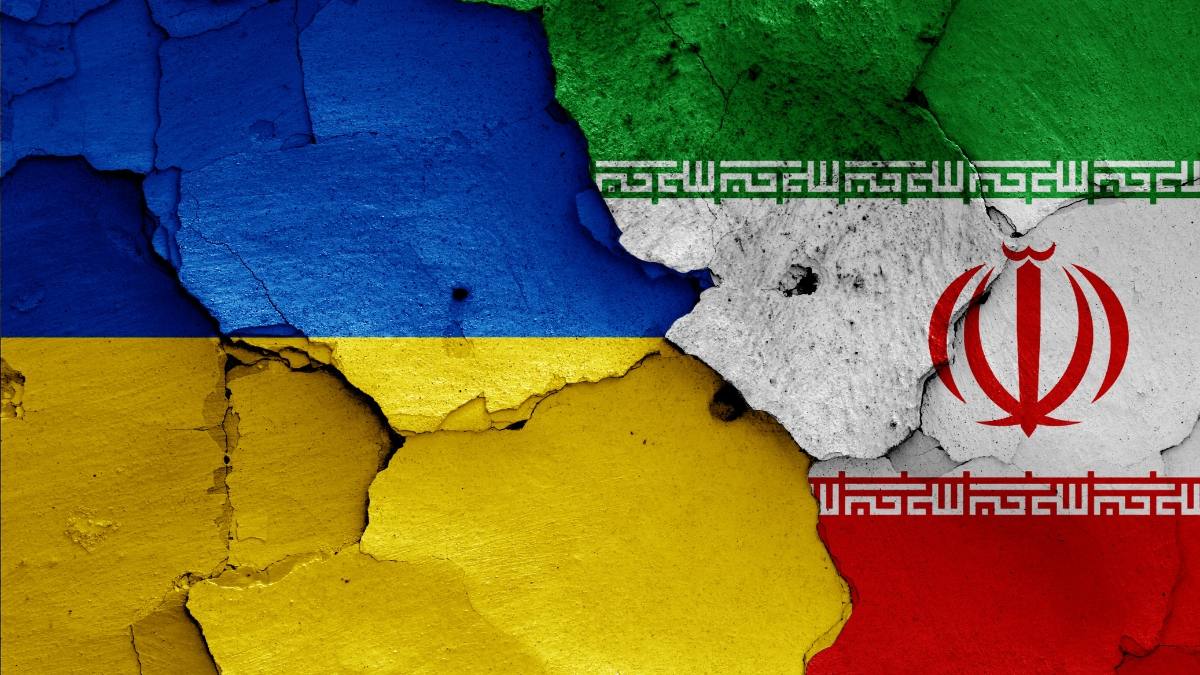
Hormuz-Kyiv: How Conflicts Are Now Insanely Changing The World Order
From Hormuz To Kyiv: How Today’s Conflicts Are Redrawing The Global Order
Introduction: The Return Of Geopolitics
For much of the period following the end of the Cold War, policymakers and economists believed the world was entering an era in which economics would increasingly replace geopolitics as the principal driver of international relations. Globalisation accelerated, trade expanded and multinational supply chains stretched across continents with remarkable efficiency. Energy moved through international markets, goods travelled freely through major shipping routes and production networks often appeared more influential than national borders themselves.
Economic interdependence was expected to reduce the likelihood of major conflict and encourage cooperation between countries with competing political systems and strategic interests.
The events of the past decade have challenged many of those assumptions.
The war in Ukraine, renewed instability across the Middle East and growing tensions surrounding strategic maritime routes have demonstrated that geography, military power and national security continue to shape international relations as profoundly as economics and technology. The return of geopolitical competition is influencing energy markets, trade flows, migration patterns and investment decisions on a global scale.
Three regions illustrate this transformation particularly clearly.
The first is Eastern Europe, where the conflict involving Russia and Ukraine has become the largest military confrontation on the European continent since the end of the Second World War. The second is the Middle East, where tensions involving Israel, the Palestinian territories and regional powers continue to influence diplomacy and energy security far beyond the region itself. The third is the Strait of Hormuz, one of the world’s most important energy corridors and a route through which a significant share of global oil and liquefied natural gas supplies continue to pass.
Although these crises appear geographically separate, their consequences are increasingly interconnected.
A disruption in the Gulf influences energy prices in Europe and Asia. Fighting in Eastern Europe affects grain supplies reaching Africa and the Middle East. Political instability in one region creates migration pressures that influence elections and domestic politics in another. Modern geopolitics operates through networks rather than isolated crises.
Energy markets provide perhaps the clearest example of this interdependence. European efforts to reduce dependence upon Russian energy have transformed global trade patterns involving liquefied natural gas, while tensions in the Gulf continue influencing oil prices and shipping costs. Countries that once regarded energy security primarily as an economic issue increasingly view it as a strategic and diplomatic priority.
Global supply chains are experiencing similar pressures. Shipping routes passing through the Middle East, the Black Sea and the Red Sea have faced growing disruption, forcing businesses to reconsider transport strategies, inventory management and sourcing arrangements.
The implications extend beyond governments and corporations.
Diaspora communities often maintain family, business and cultural ties across regions directly affected by conflict and instability. They experience geopolitical developments not only through news headlines but also through employment opportunities, migration policies, remittance flows and economic uncertainty.
The age of globalisation is not ending. It is evolving into a more political, more strategic and more security-conscious form of international integration. Understanding how conflicts from Hormuz to Kyiv are reshaping trade, diplomacy and international relations may therefore become essential to understanding the future direction of the international order itself.
The Strait Of Hormuz: Why A Narrow Waterway Matters To The Entire World
Few locations illustrate the relationship between geography and global politics more clearly than the Strait of Hormuz.
Stretching between the coastlines of Iran and the Arabian Peninsula, the waterway appears modest on a map. Yet despite its limited size, it remains one of the most strategically important maritime passages in the world economy. A substantial proportion of internationally traded crude oil and liquefied natural gas continues to move through this narrow corridor before reaching markets in Asia, Europe and beyond.
The economic implications of this concentration are immense.
Major energy exporters in the Gulf rely heavily upon the strait to reach international customers, while major importers depend upon it for stable and affordable supplies. Countries such as India, China, Japan and South Korea source significant portions of their energy requirements from producers whose exports travel through these waters.
As a result, developments in the region influence economies far beyond the Middle East.
Even the possibility of disruption can affect international markets. Oil prices frequently react to reports of military incidents, naval deployments or diplomatic tensions because traders understand that uncertainty alone can influence supply expectations and transportation costs.
Financial markets increasingly monitor developments in the Gulf with the same attention traditionally reserved for inflation data or central bank decisions.
The Geography Of Energy Security
The strategic importance of the Strait of Hormuz has grown alongside the global economy.
As industrial production expanded across Asia and energy demand increased, the stability of Gulf shipping routes became closely linked to economic growth in countries located thousands of kilometres away. The prosperity of manufacturing centres in Asia and consumer markets in Europe and North America increasingly depended upon maritime security in the Gulf.
This reality has shaped international diplomacy for decades.
Major powers maintain naval capabilities in and around the region not only to protect national interests but also to support the broader principle of freedom of navigation upon which international trade depends. Maritime security operations, multinational patrols and diplomatic engagement have become central features of regional security policy.
The relationship between energy and security is therefore exceptionally direct in the Gulf. Unlike many geopolitical disputes where economic consequences emerge gradually, developments affecting the Strait of Hormuz can influence fuel prices, shipping costs and investor confidence almost immediately.
Governments are therefore often forced to consider energy security and foreign policy simultaneously rather than as separate areas of decision-making.
Why Hormuz Matters To India
India’s position illustrates these realities particularly clearly.
As one of the world’s largest energy importers and one of the fastest-growing major economies, India possesses a significant interest in maintaining stability and open trade routes in the Gulf region. Energy affordability directly influences inflation, industrial competitiveness and household spending, making developments in Hormuz highly relevant to domestic economic policy.
The large Indian diaspora living and working across Gulf economies further strengthens these connections.
Economic prosperity in Gulf countries supports employment opportunities, remittance flows and business relationships that benefit millions of families in India and elsewhere in South Asia. Regional instability therefore carries implications extending far beyond energy markets alone.
The Strait of Hormuz ultimately demonstrates an enduring truth about international relations.
In an age of digital commerce and global financial networks, geography continues to matter profoundly. A narrow waterway between two coastlines can still influence inflation rates in Europe, manufacturing costs in Asia and diplomatic calculations in capitals around the world.
Few places illustrate that reality more clearly than the waters of Hormuz.
The Israel–Palestine Conflict And The New Middle Eastern Reality
Few international disputes have shaped global diplomacy as profoundly or as persistently as the conflict between Israel and Palestine.
For more than seven decades, the issue has influenced regional politics, international alliances and public opinion far beyond the territories directly involved. Successive generations of diplomats have sought political solutions while periods of negotiation have repeatedly alternated with periods of violence and instability.
The events of recent years have once again demonstrated that developments in the region rarely remain confined to the region itself.
Military confrontations, humanitarian crises and political tensions have generated diplomatic engagement involving the United States, European powers, regional governments and multilateral institutions. Questions relating to security, sovereignty, humanitarian law and regional stability have returned to the centre of international political debate.
The conflict is also reshaping the broader Middle Eastern strategic landscape.
Regional governments increasingly find themselves balancing domestic public opinion, security concerns and economic priorities while attempting to preserve diplomatic relationships that have become important to trade, investment and technological cooperation.
The Middle East today is significantly more interconnected economically than it was even a decade ago, making regional instability more consequential for international markets and supply chains.
Energy markets provide a clear example.
Oil prices frequently respond not only to actual supply disruptions but also to the possibility that wider tensions could affect production facilities, shipping routes or broader political stability. The interconnected nature of global energy markets means that developments in the Eastern Mediterranean or the Gulf can influence inflation and growth in countries thousands of kilometres away.
Shipping and logistics have become increasingly important considerations as well.
Trade routes connecting Europe and Asia pass through areas that have become more vulnerable to geopolitical uncertainty in recent years. Shipping companies, insurers and logistics providers are increasingly incorporating political risk assessments into operational planning in ways that would have seemed less urgent during earlier periods of relative stability.
For India, the implications are substantial.
India maintains important relationships across the Middle East involving energy security, trade, investment and the welfare of millions of Indian nationals living and working throughout the Gulf region.
Stability in the Middle East therefore carries implications not only for foreign policy but also for domestic economic planning and diaspora welfare.
The broader Middle Eastern reality emerging today is one of deep interdependence in which security, economics and diplomacy increasingly influence one another in ways that policymakers can no longer afford to analyse separately.
Kyiv And The Return Of War To Europe
For much of the period following the end of the Cold War, many Europeans believed that large-scale interstate conflict on the continent had become increasingly unlikely.
Economic integration expanded, political institutions strengthened and trade relationships deepened across the region. Security debates increasingly focused on terrorism, cyber threats and economic competition rather than conventional military confrontation between states. The assumption that Europe had entered a largely post-war era influenced political thinking, defence planning and economic policy for more than two decades.
The conflict in Ukraine changed those assumptions dramatically.
The war has become the largest and most consequential military confrontation in Europe since the middle of the twentieth century, reshaping security policy, diplomatic relationships and economic strategy across the continent. What began as a regional conflict quickly evolved into an event with global political and economic consequences.
The Transformation Of European Security
The impact on Europe’s security architecture has been profound.
Governments across the continent reassessed defence spending, military preparedness and alliance commitments with a level of urgency not seen for many years. Questions concerning deterrence, territorial security and strategic autonomy returned to the centre of political debate, fundamentally altering discussions that had previously focused more heavily on economic integration and social policy.
Energy policy experienced one of the most immediate transformations.
For decades, parts of Europe had developed significant dependence upon Russian energy supplies, particularly natural gas. The conflict accelerated efforts to diversify suppliers, expand liquefied natural gas infrastructure and invest more aggressively in renewable energy and alternative sources of power generation.
The speed of this transition surprised many observers.
Governments introduced new energy strategies, companies renegotiated supply arrangements and investment flowed rapidly towards infrastructure projects designed to improve resilience and reduce exposure to geopolitical risk.
Energy security moved from being a technical policy issue to becoming a central component of national security planning.
Food Security And Global Markets
Food security emerged as another major concern.
Both Russia and Ukraine occupy important positions within global agricultural markets, particularly in grain, vegetable oils and fertilisers. Disruptions to exports and transportation routes quickly influenced food prices in regions far removed from the conflict itself, particularly in parts of Africa, the Middle East and Asia that depend heavily upon imported agricultural products.
The experience highlighted the interconnected nature of modern economies.
A conflict occurring in Eastern Europe affected bread prices in North Africa, fertiliser costs in South Asia and food security planning in countries thousands of kilometres away. Globalisation had created extraordinary efficiencies, but it had also created significant interdependencies.
Supply chains experienced similar pressures.
Transport routes, insurance costs and commodity markets all responded to geopolitical uncertainty. Businesses increasingly recognised that supply chain resilience required consideration not only of economic variables but also political and security risks.
Strategic Autonomy In A Multipolar World
The diplomatic consequences have been equally significant.
International institutions, alliances and bilateral relationships have all been influenced by differing responses to the conflict. Countries have balanced strategic partnerships, economic interests and domestic political considerations while attempting to navigate a rapidly evolving geopolitical environment.
For many nations in Asia, Africa and Latin America, the conflict reinforced the importance of strategic autonomy.
Rather than aligning automatically with any single bloc, many governments sought to preserve relationships across competing powers while protecting national interests in energy, trade and food security. This approach reflects the increasingly multipolar nature of the international system.
India’s position reflects the complexity of contemporary diplomacy.
India has maintained longstanding strategic relationships with Russia while simultaneously deepening partnerships with Europe and North America. Managing these relationships while protecting national interests in energy security, defence procurement and international trade has required careful diplomatic balancing.
The Indian diaspora across Europe has experienced many of these developments directly.
Energy prices, inflation, labour markets and economic uncertainty have affected households and businesses throughout the continent, illustrating once again how international conflicts increasingly generate consequences far beyond the battlefield itself.
The war in Ukraine may ultimately be remembered not only for its immediate military significance but also for the way it transformed assumptions about European security and global stability.
Kyiv has become more than a city associated with a regional conflict.
It has become a symbol of the return of geopolitics to a world that had briefly hoped it had moved beyond it.
Energy, Food And Supply Chains: The New Geography Of Security
One of the clearest lessons emerging from contemporary conflicts is that national security can no longer be understood solely in military terms.
For much of the twentieth century, security debates focused primarily upon armies, borders and military alliances. Economic policy and national security policy were often treated as separate fields managed by different institutions and guided by different priorities.
Recent events have demonstrated that this distinction is becoming increasingly difficult to maintain.
Energy, food and supply chains have become strategic assets.
The conflict in Ukraine highlighted the importance of agricultural exports and fertiliser supplies to food security in regions thousands of kilometres away from the battlefield. Tensions in the Gulf continue influencing energy markets and industrial production across Asia and Europe, while disruptions to maritime trade routes affect manufacturing schedules, inflation rates and consumer prices worldwide.
Efficiency Versus Resilience
Modern economies depend upon systems that are highly efficient but also highly interconnected.
Components used in manufacturing often cross international borders several times before final assembly. Food products move through global transport networks linking farmers, processors and consumers located on different continents. Energy markets operate through pipelines, shipping routes and trading systems connecting producers and consumers across vast distances.
These networks create prosperity.
They also create vulnerability.
A disruption affecting one region can rapidly influence industries and households elsewhere because modern economies are increasingly dependent upon uninterrupted flows of goods, energy and information.
The Strait of Hormuz illustrates this reality particularly clearly.
A narrow maritime passage in the Gulf influences fuel prices in India, manufacturing costs in East Asia and inflation rates in Europe. Events affecting shipping through these waters become economic events for countries that may possess little direct involvement in regional politics.
The same principle applies to Ukraine.
Disruptions to grain exports and fertiliser supplies quickly affected food prices and agricultural production across Africa, Asia and the Middle East. Governments that had previously regarded food security as largely a domestic issue suddenly found themselves considering international transport routes and geopolitical developments as equally important factors.
The Rise Of Economic Security
Supply chains are therefore becoming matters of national strategy rather than operational efficiency alone.
Governments are encouraging diversification of suppliers, investment in domestic capabilities and the creation of strategic reserves designed to reduce vulnerability during periods of disruption. Businesses are adopting similar approaches by reducing dependence upon individual suppliers and building more resilient logistics networks.
This represents a significant change in economic thinking.
For many years, globalisation rewarded concentration and specialisation. The emerging environment increasingly rewards resilience, flexibility and geographic diversification alongside traditional economic considerations.
Energy policy reflects this transition particularly clearly.
Countries are expanding renewable energy production, diversifying import sources and investing in infrastructure capable of supporting alternative supply arrangements. Energy security is increasingly viewed not merely as an economic issue but as a strategic imperative.
For India, these developments carry particular importance.
As one of the world’s largest energy importers and one of the fastest-growing major economies, India depends heavily upon stable international trade routes and reliable access to global markets. Policies relating to energy diversification, domestic manufacturing and strategic reserves increasingly reflect these realities.
The broader lesson is becoming difficult to ignore.
Security in the twenty-first century involves access to energy, resilient food systems and secure supply chains as much as military capability.
The conflicts stretching from Hormuz to Kyiv have accelerated this transition and demonstrated that economic resilience and national resilience are becoming inseparable concepts.
Migration, Diaspora And The Human Consequences Of Conflict
Behind every geopolitical crisis lies a human story.
Maps display territorial boundaries, military analysts discuss strategy and economists measure disruptions to trade and energy markets. Yet conflicts are ultimately experienced by individuals and families whose lives are altered by insecurity, displacement and uncertainty.
The movement of people has become one of the defining consequences of modern conflict and one of the most significant political issues facing governments around the world.
The conflicts stretching from Eastern Europe to the Middle East have reinforced this reality.
War in Ukraine generated one of the largest population movements in Europe in recent decades, while instability across parts of the Middle East has continued to place pressure upon migration systems and humanitarian institutions.
Millions of people have been forced to make decisions not about opportunity or ambition but about safety and survival.
The Politics Of Population Movement
The implications extend far beyond immediate host countries.
Migration influences labour markets, housing systems, public services and political debates across entire regions. Questions relating to asylum, border management and integration increasingly occupy central positions within domestic politics throughout Europe and North America.
The economic dimensions are often complex.
Large population movements can create short-term pressure upon infrastructure and public spending while simultaneously contributing to labour markets and economic growth over longer periods.
Several European economies facing ageing populations and workforce shortages are simultaneously managing humanitarian responsibilities and demographic realities that require careful political balancing.
Diaspora communities frequently occupy a unique position during such periods.
Families and businesses often maintain relationships spanning countries affected by conflict and countries receiving displaced populations. Diaspora organisations regularly contribute to humanitarian assistance, fundraising initiatives and community support efforts while helping newcomers navigate unfamiliar social and administrative systems.
The Indian Diaspora Perspective
The Indian diaspora provides an important example of this broader phenomenon.
Indian communities are present throughout Europe, the Middle East and many regions affected indirectly by geopolitical instability. Their experiences frequently illustrate how international events influence everyday life through energy prices, employment conditions, investment decisions and migration policies even when conflicts occur far from where they live and work.
Labour migration adds another dimension to the discussion.
The Gulf economies continue relying heavily on international workforces, including millions of South Asian workers whose livelihoods depend upon regional stability and economic growth.
Political uncertainty can therefore affect employment opportunities, remittance flows and household incomes across countries geographically distant from the original source of instability.
The experience of recent years suggests that migration will remain a defining feature of international politics for the foreseeable future.
Conflicts may begin in specific places.
Their human consequences rarely remain there.
Conclusion: The Return Of History And The New Global Order
For much of the post-Cold War era, there was a widespread belief that the international system was moving steadily towards greater integration, predictability and cooperation.
The conflicts stretching from the Middle East to Eastern Europe have challenged that assumption.
They have demonstrated that geography, energy resources, military power and strategic competition continue to shape international affairs as profoundly as they did in earlier eras.
Globalisation changed the world.
It did not eliminate history, geography or national interests.
What has changed is the nature of their interaction.
Modern conflicts rarely remain confined within national borders because the systems connecting economies and societies are more extensive than at any point in human history.
A military confrontation in Eastern Europe affects food prices in Africa and Asia. Tensions in the Gulf influence inflation and industrial production across several continents. Instability in one region generates migration pressures and political consequences in another.
The world has become simultaneously more interconnected and more vulnerable.
Countries are responding accordingly.
Governments are diversifying energy sources, rebuilding strategic reserves, encouraging domestic manufacturing and reassessing dependencies that were once accepted as inevitable consequences of globalisation.
The international system itself is becoming more multipolar.
Many governments increasingly seek partnerships with multiple powers simultaneously, balancing economic opportunities with security considerations while preserving diplomatic flexibility.
India’s position reflects this broader transformation.
Its growing economic influence, strategic location and expanding international relationships place it at the centre of many of these global conversations. Energy security, maritime trade routes and supply chain resilience are not abstract foreign policy concepts but issues with direct implications for economic growth and national development.
The Indian diaspora occupies an equally important position.
Spread across every major region of the world, diaspora communities often experience geopolitical changes both locally and internationally at the same time. Their businesses, families and professional networks frequently connect societies that may otherwise appear geographically distant from one another.
The broader lesson emerging from recent global conflicts is not that globalisation has failed. Rather, it is that globalisation and geopolitics can no longer be understood or analysed as separate forces operating in isolation from one another. The economic interconnectedness that defined the post-Cold War era now exists alongside an increasingly fragmented and competitive geopolitical landscape.
Trade depends upon security. Investment depends upon stability. Economic prosperity, in turn, relies upon diplomatic relationships, predictable policies, and the effective functioning of international institutions. Supply chains, energy markets, financial systems and technological ecosystems are all vulnerable to political shocks and military confrontations occurring far beyond national borders.
The era in which economics could be discussed independently of politics has effectively come to an end. In its place, a more realistic and integrated understanding of international affairs is beginning to emerge, one that recognises the close relationship between strategic competition, security considerations and economic decision-making.
From the Strait of Hormuz to Kyiv, the contours of the international order are being rewritten in real time. The challenge facing governments, businesses and international institutions is no longer whether change is coming, but whether the international community can shape that change cooperatively and peacefully before events impose their own course upon it.
Disclaimer: The views, opinions and interpretations expressed in articles published in WFY – World For You are those of the respective authors and contributors and do not necessarily reflect the official position of the Editor, Editorial Board, publishers or affiliated organisations. Every effort is made to ensure the accuracy and reliability of information at the time of publication. However, facts, figures, laws, regulations, policies, scientific understanding and global developments may change over time. Readers are advised to independently verify information and seek appropriate professional advice before making decisions relating to health, finance, legal matters, immigration, education, investments or any other specialised subject. Articles published in WFY – World For You are intended for general information, discussion and educational purposes only and should not be construed as professional, medical, legal, financial or other expert advice. References to organisations, institutions, products, services or individuals are made solely for editorial, informational or illustrative purposes and do not constitute endorsement or recommendation unless explicitly stated. All rights to original content remain with their respective authors and contributors unless otherwise specified. Unauthorised reproduction, distribution or republication of material published in WFY – World For You without prior written permission is prohibited. © 2026 WFY – World For You. All Rights Reserved.