G20’s Great Divide: Can The World Restore Lost Diplomatic Trust?
By Selvan Durairaj
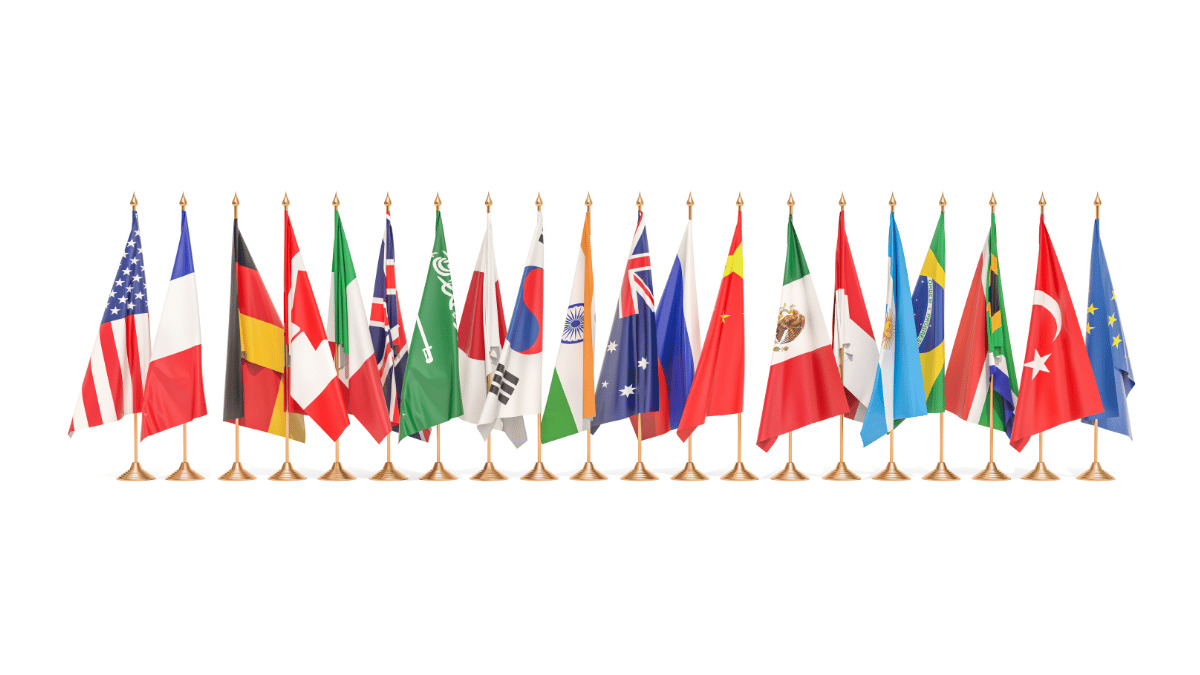
There is something striking about a gathering of the world’s leading economies that cannot agree on a family photograph. When foreign ministers assembled in Atlanta on 30 and 31 October for the G20 meeting, the customary group picture was removed from the programme after European representatives objected to appearing alongside Russia’s foreign minister. A photograph would not have ended a war, resolved a tariff dispute or reopened a shipping route. Yet its absence captured how difficult even the appearance of consensus has become.
The larger disagreements were considerably more serious. Russia’s war in Ukraine, the conflict involving the United States, Israel and Iran, competing interests in Asian waters, barriers to trade and the politics of critical minerals all pressed upon the meeting. Diplomats were expected to leave without a common declaration on the central security questions, even while acknowledging that the consequences of those disputes crossed every border.
The scene raises a question that extends beyond the G20: is global diplomacy losing its ability to influence events, or is it being forced to operate in a world where no single group of powerful countries can set the terms?
The distinction matters. Governments may disagree profoundly and still need one another. What is changing is their willingness to compromise, and perhaps the assumption that established international forums can turn that necessity into common action.
The G20 Was Built for a Different Kind of Emergency
The G20 began in 1999 as a forum for finance ministers and central bank governors after a period of serious international financial instability. The global financial crisis of 2008 brought it to the level of national leaders. Its purpose was practical: the largest developed and emerging economies would have a place to coordinate responses to problems that none could manage alone.
Today its membership consists of 19 countries and two regional organisations, the European Union and the African Union. Its reach is enormous, but its powers are limited. The G20 is not a world government, does not maintain a standing secretariat and cannot compel members to implement an agreement. Its conclusions depend on political will.
That arrangement worked best when members recognised a sufficiently urgent common threat. A financial system on the verge of collapse provided one. Even rival economies could see that a breakdown in credit and trade would damage them all.
The challenges of 2026 are different. Countries may share the consequences of a crisis while disagreeing about who caused it, who should change course and what a solution would require. In some cases, the states expected to negotiate are themselves involved in the conflict. Economic cooperation is therefore entangled with military strategy, national identity and domestic politics.
It is easier to agree that stable shipping benefits everyone than to agree whose naval deployments, sanctions or military operations make that stability impossible.
Ukraine Has Changed the Meaning of Sitting Together
Russia’s full-scale invasion of Ukraine in 2022 profoundly altered European security. For many European governments, diplomacy with Moscow cannot be separated from questions of territorial sovereignty, accountability and the safety of neighbouring states. Russia, for its part, continues to frame its position around its own asserted security interests and rejects the terms advanced by Ukraine and many Western governments.
The dispute reaches well beyond bilateral hostility. It affects energy routes, agricultural exports, defence expenditure, economic sanctions and the wider principle that borders must not be changed by force.
At Atlanta, the disagreement over the photograph became a visible expression of this deeper rupture. Some ministers considered a routine picture with their Russian counterpart inappropriate while the war continued. The host sought to keep the gathering functioning despite those objections.
Both positions reveal a difficulty facing modern diplomacy. Contact with an adversary can be essential to ending a conflict. Yet normal diplomatic rituals may also suggest acceptance of behaviour that other participants condemn. Governments must decide how to maintain communication without allowing meetings to become substitutes for accountability.
The result is a narrower space in which international forums can operate. They can bring adversaries into the same building. They cannot guarantee that the adversaries agree on what peace means.
The Middle East Has Made Distant Wars Everyone’s Concern
The conflict involving the United States, Israel and Iran has brought another kind of uncertainty into the same diplomatic arena. Since military operations began in late February 2026, threats to shipping and energy infrastructure have spread anxiety well beyond the countries directly involved. Attempts at a durable settlement remain unresolved, while wider regional tensions have drawn attention to Saudi Arabia, Yemen and important sea routes.
For governments far from the Gulf, this is not an abstract argument about strategic influence. Oil and natural gas prices affect transport, manufacturing and household budgets. Fertiliser shipments influence farming costs. Disrupted shipping means higher insurance charges, longer delivery times and more expensive imports.
These effects expose a contradiction. Major powers may differ on responsibility for the fighting, but their economies remain tied to the same maritime passages and commodity markets. The world’s interconnectedness has not vanished. Political agreement has simply become harder to achieve.
The G20 was designed to address shared economic vulnerabilities. Yet when those vulnerabilities arise from wars among or involving influential countries, its economic mandate cannot be separated neatly from political conflict. A declaration calling for stable supply chains will carry limited weight if members cannot agree on the measures needed to make the supply chains safe.
Economic Competition Is Becoming a Security Question
The divisions are not confined to active wars. Competition between the United States and China increasingly shapes trade policy, technology, investment and access to raw materials. Critical minerals used in semiconductors, energy systems, aircraft and advanced manufacturing are now part of strategic calculations.
Countries once discussed supply chains primarily in terms of cost and efficiency. They increasingly discuss them in terms of dependence and vulnerability. A government may see the same export restriction as a legitimate national-security measure; another may regard it as economic pressure.
This shift makes common rules harder to sustain. Tariffs, industrial subsidies, technology controls and demands for domestic production may satisfy immediate political priorities while creating new costs for trading partners. Even allies can differ over how far such measures should go.
In theory, a forum such as the G20 should help governments manage these tensions. In practice, the powers needed to write the rules are often those competing most intensely over them. Agreements become narrower, and like-minded countries begin forming smaller coalitions to pursue specific goals.
Such coalitions can deliver useful results. They can also deepen fragmentation if countries outside them are excluded from decisions that affect global markets.
Who Gets a Place at the Table?
Representation has become another test of the G20’s credibility. The African Union was admitted as a permanent member during India’s 2023 presidency, recognising that decisions about the global economy cannot responsibly overlook the continent’s concerns. Yet South Africa, itself a G20 member, was not invited by the United States to the Atlanta foreign ministers’ gathering, according to contemporaneous reporting.
The two facts sit uncomfortably together. Expanding representation in principle means little if participation can still become the subject of a political dispute.
Countries in Africa, Latin America and much of Asia have their own priorities: debt pressures, development finance, reliable food supplies, affordable energy and access to technology. They do not necessarily want every issue reduced to a contest between Washington, Beijing, Moscow and European capitals.
Their insistence on agency is not an inconvenience to global diplomacy. It is a necessary correction to a world in which a small group of countries has often dominated international decision-making.
The challenge is to make the forum genuinely inclusive while preserving its ability to act. A larger table should mean a wider understanding of the problem, not merely a larger number of voices talking past one another.
India’s Position: Influence Without Automatic Alignment
India occupies an important place in this changing landscape. It is a major economy, maintains strategic relationships with the United States and European countries, has longstanding ties with Russia, and must manage a complex relationship with China. It also seeks to be heard on development concerns shared by countries outside the traditional Western alliances.
India’s external affairs minister attended the Atlanta meeting and was also scheduled to participate in discussions with the Quad partners: Australia, Japan and the United States. This illustrates the overlapping forums in which New Delhi works. The Quad addresses Indo-Pacific cooperation and regional concerns; the G20 brings a much broader range of economies together.
India’s diplomatic task is not simply to choose one bloc. It is to advance its security and economic interests while maintaining enough dialogue across competing groups to influence outcomes. That independence can create opportunities for communication. It also invites scrutiny whenever the interests of India’s partners clash.
Strategic autonomy does not automatically produce successful diplomacy. To have influence, a country must be able to offer practical ideas, build trust and demonstrate that its decisions are consistent with the principles it promotes.
For India, the question is increasingly whether it can turn its position between competing powers into constructive leadership on trade, energy security, development and conflict prevention.
Does a Failed Declaration Mean Failed Diplomacy?
The temptation is to measure a summit solely by whether officials sign a document. That is understandable, but incomplete. A meeting can produce an impressive declaration that governments later ignore. Conversely, difficult conversations without a joint statement may prevent misunderstandings, open private channels or prepare agreements in narrower areas.
There is also evidence that the G20 can still cooperate. During the 2026 presidency, ministerial work on energy and finance produced agreed statements and practical commitments in particular sectors. That does not erase the failure to find broad political consensus, but it challenges the easy claim that the institution has become useless.
The real concern is the gap between cooperation on technical questions and paralysis on the conflicts that generate the largest risks. A government may endorse energy resilience while pursuing policies that unsettle energy markets. Countries may speak about food security while war endangers agricultural transport.
Diplomacy therefore needs more than a declaration. It needs consistency between the commitments governments make together and the actions they take separately.
When Multilateralism Weakens, Ordinary People Pay
The word multilateralism can sound distant from daily life. Its consequences are not. When governments cannot coordinate maritime security, traders and shipping crews face greater risk. When they cannot limit the economic effects of war, household prices rise. When international cooperation on development weakens, countries with fewer resources may struggle to absorb the shock.
For Indian-origin communities spread across the Gulf, Europe, North America, Africa and Asia-Pacific, these are not remote matters. Diplomatic friction can affect employment, visa policies, business confidence, education costs and the security of relatives living in conflict-prone regions. Families may experience a global political crisis first through a more expensive journey, a delayed shipment or anxious calls from abroad.
The wider consequence is the erosion of predictability. Businesses can plan around difficult rules more easily than around rules that change without warning. Households can adapt to gradual shifts more easily than to sudden shortages. Smaller countries can protect their interests more effectively when there are dependable forums in which disputes are heard.
An international system does not have to be perfectly fair to be useful. But it must offer some confidence that disagreements will be managed through negotiation rather than surprise, coercion or force.
What Could Restore Diplomatic Influence?
There is no simple reform that will remove rivalry from international politics. States will continue to disagree over security, ideology and resources. The more realistic goal is to prevent disagreements in one area from destroying cooperation everywhere else.
That begins with narrower, verifiable commitments. Governments may be unable to agree on a comprehensive peace settlement but still be able to protect civilian shipping, establish humanitarian access or improve communication between militaries. Progress on one practical issue should not be mistaken for a solution to the whole conflict, yet it can reduce the immediate danger.
It also requires credible representation. Countries affected by a decision should have meaningful opportunities to shape it. Diplomacy loses legitimacy when powerful governments demand cooperation but disregard the concerns of less influential participants.
Third, institutions must be judged by implementation. The value of a summit lies not in how carefully its final declaration is worded, but in what changes afterwards and whether states can be held publicly accountable for their commitments.
Finally, negotiation should not be confused with approval. Governments can speak to rivals while defending the sovereignty of other countries, maintaining sanctions when lawful and necessary, or seeking accountability for violations. Refusing every channel of communication may feel principled, but it can also leave conflicts with fewer exits.
The World Still Needs a Room Where Rivals Can Talk
The G20’s visible divisions are a symptom of a wider struggle over power, legitimacy and international rules. They cannot be resolved by a better photograph or a more ambitious communiqué. Nor can the world’s problems be solved by assuming that one capital, alliance or institution possesses all the answers.
The danger is not merely that diplomacy becomes slow. It is that governments begin to accept the absence of cooperation as normal, even when the costs of confrontation are shared by everyone.
The world still needs places where adversaries can exchange positions, where smaller countries can insist on being heard and where practical agreements remain possible despite deep political differences. The G20 can serve part of that purpose, provided its members recognise that influence is measured by results, not ceremonial unity.
A missing photograph is only a symbol. The more serious question is whether the countries in that room can still prevent their disagreements from becoming the world’s next emergency.
Disclaimer: This article is an independent editorial analysis based on information publicly available up to 31 October 2026. It does not represent the official position of any government, diplomatic mission or international organisation. Political and security developments can change rapidly; readers should consult updated primary sources for subsequent events.