
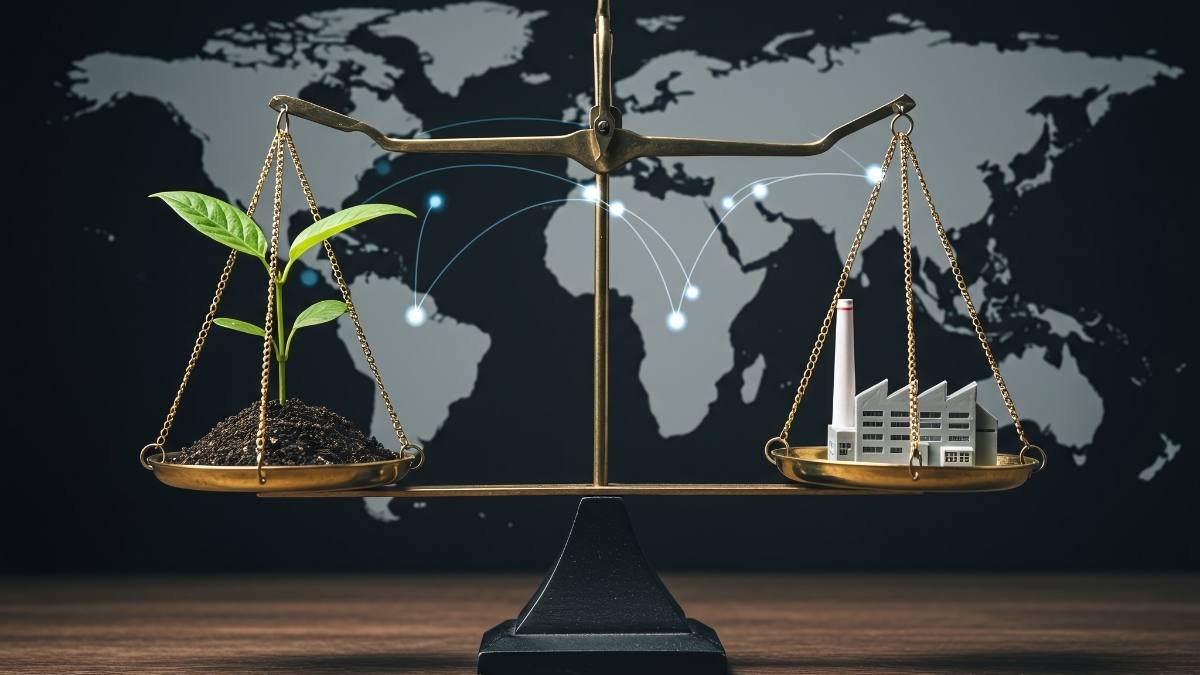
Clean Energy Now Enters A Turning Point In Jeopardy
By Pratik Shah, WFY Bureau | Science & Technology | The WFY Magazine, January, 2026 Anniversary Edition
Clean Energy’s Make-or-Break Moment: Technology, Transition, and Trade-offs
Summary
As the world enters 2026, the clean energy transition has reached a critical inflection point. Rapid advances in renewable technology and rising investment have brought clean power into the mainstream, yet grid constraints, storage shortages, mineral dependencies, and social trade-offs now threaten to slow progress. This article examines why clean energy’s next phase is less about ambition and more about execution, exploring the technological, economic, and human challenges that will determine whether the transition accelerates or stalls in the years ahead.
As the world steps into 2026, the clean energy transition has entered a decisive phase. The optimism that once surrounded renewables, electrification, and climate technology has not disappeared, but it has matured into something more complex and more demanding. Clean energy is no longer an abstract ambition or a moral aspiration. It is now a test of engineering capacity, political coordination, economic resilience, and social acceptance. The question facing governments, industries, and citizens alike is no longer whether the transition will happen, but whether it can be executed at the scale, speed, and stability required to meet global needs.
Over the past decade, renewable energy capacity has expanded at unprecedented rates. Solar and wind power have moved from niche alternatives to mainstream contributors in electricity generation. Electric vehicles have shifted from novelty to necessity in many urban markets. Energy efficiency technologies, smart grids, and digital monitoring systems are increasingly embedded in infrastructure planning. Yet as deployment accelerates, the limits of the existing system are becoming clearer. Grid congestion, storage shortages, mineral dependencies, and uneven access are revealing that clean energy is not a simple replacement of fossil fuels, but a deep structural transformation.
This is the moment when clean energy either consolidates its gains or stalls under its own weight.
From Breakthrough to Bottleneck
The early phase of the clean energy transition was driven by falling costs and rapid innovation. Solar panel prices dropped dramatically over the last decade, while wind turbines became larger, more efficient, and more reliable. These advances allowed renewables to compete economically with conventional power generation in many regions. Governments responded with ambitious targets, incentives, and regulatory frameworks designed to accelerate adoption.
However, as renewable penetration increases, new challenges emerge. Electricity grids designed for centralised, predictable fossil fuel generation are struggling to accommodate decentralised and variable renewable inputs. Solar and wind generation fluctuate with weather conditions, creating imbalances between supply and demand. Without sufficient storage or grid flexibility, excess power is wasted during peak generation periods, while shortages occur when renewable output falls.
By the start of 2026, grid constraints have become one of the most significant barriers to further clean energy expansion. Transmission lines are aging, under-built, or politically contested. Large-scale grid upgrades require years of planning, regulatory approvals, and public acceptance. In many regions, renewable projects are delayed not because of lack of investment or technology, but because they cannot connect to the grid in time.
This bottleneck highlights a critical truth: clean energy is not only about generating power differently, but about moving, storing, and managing energy in fundamentally new ways.
Storage: The Missing Link
Energy storage has long been recognised as the key to unlocking renewable potential. Batteries, pumped hydro, thermal storage, and emerging technologies such as green hydrogen are all part of the solution. Yet storage deployment has lagged behind generation capacity.
Lithium-ion batteries dominate current storage solutions, benefiting from decades of development driven by consumer electronics and electric vehicles. Grid-scale battery installations are increasing, but they remain insufficient to balance long-duration energy needs. Most existing batteries are designed for short-term fluctuations, not for multi-day or seasonal storage.
Alternative storage technologies face their own challenges. Pumped hydro offers large capacity but is geographically limited and environmentally contentious. Hydrogen promises long-term storage and cross-sector integration, but production remains energy-intensive and infrastructure is underdeveloped. Thermal storage is effective in specific industrial contexts but less adaptable to general grid use.
As 2026 begins, the gap between renewable generation growth and storage deployment is widening. Bridging this gap will require not only technological breakthroughs, but coordinated investment strategies, supportive policy frameworks, and new market mechanisms that value flexibility and resilience.
The Trade-Offs We Can No Longer Ignore
The clean energy transition has often been framed as a win-win proposition: lower emissions, cleaner air, economic growth, and job creation. While these benefits are real, the transition also involves difficult trade-offs that are becoming harder to overlook.
One of the most pressing concerns is mineral dependency. Renewable technologies rely heavily on critical minerals such as lithium, cobalt, nickel, copper, and rare earth elements. Demand for these materials is rising sharply as electric vehicles, batteries, and renewable infrastructure scale up. Mining and processing these minerals carry environmental and social costs, including land degradation, water pollution, and labour concerns.
Geopolitical concentration adds another layer of risk. A significant share of critical mineral production and processing is concentrated in a small number of countries. This creates vulnerabilities similar to those that characterised fossil fuel dependence, albeit in a different form. Supply disruptions, trade disputes, or export restrictions could slow clean energy deployment and increase costs.
Land use conflicts are also intensifying. Large solar farms, wind installations, and transmission corridors require space, often in rural or ecologically sensitive areas.
Communities may resist projects that alter landscapes, threaten livelihoods, or fail to deliver local benefits. Without inclusive planning and fair compensation, public support for clean energy can erode.
These trade-offs do not negate the necessity of the transition, but they demand more honest, nuanced decision-making. Clean energy is not cost-free. The challenge lies in managing its costs more equitably and transparently than those of the fossil fuel era.
Investment Is Rising, Complexity Is Rising Faster
Global investment in clean energy has continued to grow, reflecting confidence in the long-term direction of energy markets. Capital is flowing into renewable generation, electric mobility, grid upgrades, and emerging technologies. Financial institutions increasingly factor climate risk into investment decisions, while corporations pursue decarbonisation commitments across supply chains.
Yet investment alone does not guarantee success. The complexity of coordinating energy systems across borders, sectors, and time horizons is increasing. Clean energy projects face regulatory fragmentation, permitting delays, and inconsistent policy signals. Short-term political cycles often clash with long-term infrastructure planning.
For developing economies and emerging markets, the challenge is even greater. Many countries face rising energy demand, limited fiscal space, and existing infrastructure deficits. Balancing development goals with decarbonisation requires access to affordable finance, technology transfer, and capacity building. Without these, the global transition risks deepening inequality rather than reducing it.
The early months of 2026 underscore the need for smarter investment, not just more investment. Capital must flow not only to generation assets, but to grids, storage, skills, and institutions that enable system-wide transformation.
Technology at the Crossroads
Technology remains the engine of the clean energy transition, but its role is evolving. Incremental improvements in existing technologies are no longer enough. What is required now is integration.
Digital technologies are increasingly central to energy management. Artificial intelligence, advanced sensors, and data analytics enable real-time monitoring, demand forecasting, and predictive maintenance. Smart grids can balance supply and demand dynamically, reducing waste and improving reliability. Consumers can become active participants through distributed generation, storage, and demand response.
At the same time, innovation in materials science, power electronics, and energy conversion continues to push boundaries. Next-generation batteries, advanced nuclear designs, and carbon-neutral fuels are under development. While many of these technologies will not scale immediately, their progress will shape the medium- and long-term trajectory of the transition.
However, technological optimism must be tempered with realism. Innovation takes time, and deployment takes longer. Betting the transition on unproven technologies without addressing existing bottlenecks risks delay. The challenge for policymakers and industry leaders is to balance support for innovation with accelerated deployment of solutions already available.
The Human Dimension of Energy Transition
Clean energy is often discussed in technical or economic terms, but its success ultimately depends on people. Workers, consumers, communities, and citizens all play a role in shaping outcomes.
The transition will reshape labour markets. Jobs in renewable energy, grid management, and clean manufacturing are expanding, but they require different skills than those in fossil fuel industries. Managing this shift fairly requires investment in education, reskilling, and social protection. Regions dependent on fossil fuel extraction or processing need targeted support to avoid economic decline and social dislocation.
Consumer behaviour also matters. Electrification of transport and heating depends on adoption choices influenced by cost, convenience, and trust. Public understanding of energy systems remains limited, making communication and engagement essential. When people feel excluded from decision-making or burdened by costs, resistance grows.
Energy justice is emerging as a central theme. Access to clean, affordable, and reliable energy is uneven both within and between countries. A successful transition must address energy poverty alongside emissions reduction. Otherwise, clean energy risks being perceived as an elite project rather than a shared societal goal.
A Global Effort in a Fragmented World
The clean energy transition is inherently global, but it is unfolding in a fragmented geopolitical environment. Trade tensions, strategic competition, and divergent national priorities complicate cooperation. Policies designed to promote domestic industries can conflict with global supply chain efficiency. Export controls, subsidies, and localisation requirements shape investment flows and technology diffusion.
At the same time, climate impacts are becoming more visible and costly. Extreme weather events disrupt energy infrastructure, strain grids, and highlight vulnerabilities. These pressures create incentives for cooperation, even amid competition.
As 2026 begins, the global energy landscape reflects both interdependence and division. Managing this tension will require pragmatic diplomacy, flexible frameworks, and recognition that no single country can achieve energy security or climate stability alone.
The Make-or-Break Nature of the Moment
What makes this moment critical is not the lack of solutions, but the narrowing window for coordinated action. The technologies exist to significantly reduce emissions and transform energy systems. The capital exists to fund the transition. Public awareness of climate risk is higher than ever.
What remains uncertain is whether institutions, policies, and political will can keep pace.
Clean energy’s make-or-break moment lies in the next few years. Decisions taken now on grid investment, storage deployment, supply chain resilience, and social inclusion will shape outcomes for decades. Delays and half-measures will compound costs and lock in vulnerabilities. Bold, integrated action can deliver a more resilient, equitable, and sustainable energy future.
The transition is no longer a question of ambition. It is a test of execution.
Disclaimer: This article is based on publicly available data, trend analyses, and sectoral observations available up to the end of 2025. As 2026 has only just begun, projections and interpretations reflect early-year assessments rather than full-year outcomes. The views expressed are analytical in nature and intended for informational purposes only.