Trump Threatens Greenland Now: The Politics Of The Powerful NATO
By Arvind Patel, WFY Bureau | World Politics | The WFY Magazine, February 2026 Edition
Greenland has emerged as an unlikely but revealing pressure point in global affairs. What appears to be a strategic debate over Arctic security has, in fact, exposed a deeper transformation in how power asserts itself and how sovereignty is increasingly tested. As the United States speaks with unusual directness and Europe responds with caution rather than confidence, long-standing assumptions about alliance, restraint, and consent begin to loosen. This is not merely about territory. It is about a world adjusting, uneasily, to a politics where influence no longer waits to be invited.
There is a particular moment when geopolitics becomes unsettling.
Not when armies move.
Not when borders are crossed.
But when power stops bothering to explain itself.
Greenland sits inside that moment now.
For decades, the world’s largest island remained strategically important yet politically peripheral. Its frozen vastness mattered to military planners, but it rarely disturbed the surface of public debate. That changed when the language surrounding Greenland shifted from cooperation to possession, from shared security to unilateral necessity.
What is unfolding is not a sudden crisis, but a revealing one.
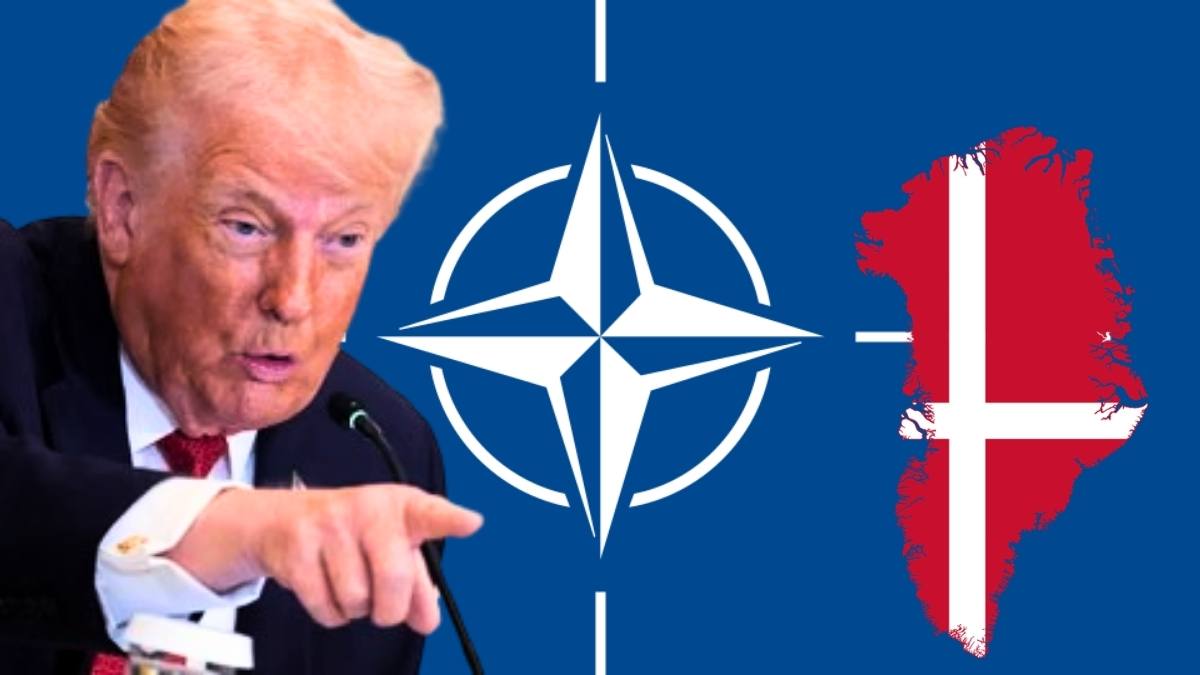
When Donald Trump frames Greenland primarily through the lens of American national security, the words themselves carry weight beyond policy. They signal a willingness to reorder priorities. Strategic interest comes first. Diplomatic convention follows, if at all.
For Europe, the unease lies not in Greenland’s geography, but in what this language implies about the future of sovereignty within alliances.
Why Greenland matters differently now
Greenland’s strategic relevance is real. Its Arctic location places it along emerging sea routes and near zones of increased Russian and Chinese activity. Its military infrastructure, established during the Cold War, continues to anchor American presence in the region.
None of this is new.
What is new is the way these facts are being mobilised. Greenland is an autonomous territory of Denmark, a European state and a long-standing ally within NATO. For decades, that status implied stability. Disputes, if any, would be managed quietly and collectively.
That assumption is now under strain.
The discomfort across European capitals stems from a simple realisation. Legal sovereignty does not automatically translate into political protection when strategic priorities are asserted bluntly. Greenland has become less a place than a test.
Europe’s caution speaks louder than its words
European leaders are not confused about Greenland’s status. Their hesitation is not intellectual. It is structural.
During high-level discussions on Ukraine’s future, Greenland hovered in the background, unspoken but present. Maintaining American engagement on Eastern Europe remained the overriding concern. Greenland became a secondary matter, one to be managed carefully rather than confronted openly.
Statements emerged affirming that Arctic security should be addressed collectively and that Greenland’s future belonged to Denmark and Greenland alone. The language was correct. The delivery was restrained. The unity was partial.
Only a small group of European powers chose to speak together.
This restraint reveals a deeper truth. Europe’s dependence on American military capabilities remains profound. Intelligence, air power, command systems, and deterrence are still anchored across the Atlantic. Challenging Washington risks consequences that Europe feels ill prepared to absorb.
This is not a failure of awareness. It is a limitation of leverage.
Big Power politics inside the alliance
The return of Big Power politics is often described as something happening at the edges of the international system. In Eastern Europe. In the Indo-Pacific. In regions where rivalry has long simmered.
Greenland suggests something more unsettling. This logic can operate within alliances as well.
Big Power politics is defined less by ideology than by behaviour. It treats rules as flexible. It tests reactions. It measures silence.
When the United States frames Greenland as a unilateral strategic necessity, it introduces a contradiction that Europe struggles to resolve. Arguments against territorial pressure elsewhere lose force when similar language appears closer to home.
This contradiction is not lost on observers beyond Europe.
NATO and the limits of assumption
NATO was built on shared interests, but sustained by shared restraint. Its treaties assume good faith among members. Its political culture depends on it.
There is an unspoken understanding that NATO does not adjudicate conflicts between its own members. That understanding has held in past disputes, largely because power asymmetries did not overwhelm the system.
Greenland changes the equation.
Denmark is one of NATO’s smaller but active allies. The United States remains its most powerful member by far. If power begins to operate without deference to alliance norms, NATO’s cohesion weakens not through formal rupture, but through quiet erosion.
European officials may insist publicly that NATO remains the forum for Arctic security. Privately, the concern is more fundamental. What happens when the forum itself becomes uncertain?
The illusion of European autonomy
For years, Europe has spoken about strategic autonomy. Defence budgets have risen. Policy papers have multiplied. The language of independence has grown more confident.
Greenland exposes the gap between ambition and capacity.
When faced with American pressure, Europe has repeatedly chosen accommodation. Trade disputes were softened. Retaliation was postponed. Silence became strategy. These decisions were pragmatic, but cumulative.
Greenland is not an exception. It is a continuation.
If Europe cannot assert a firm collective position when the sovereignty of one of its own members is indirectly challenged, its global credibility diminishes. Power notices. Rivals adjust.
Beyond Europe, a wider signal
For much of the Global South, the rules-based order has always appeared uneven. Principles were promoted loudly, but applied selectively.
What kept the system stable was predictability.
Greenland signals a shift away from that predictability. When sovereignty appears conditional even within alliances, smaller states reassess their assumptions. Security becomes transactional. Alignment becomes cautious.
For India and for a global diaspora watching these developments, the lesson is not ideological. It is practical. Power is becoming more direct. Guarantees are less certain. Silence is increasingly meaningful.
A quiet turning point
There is no invasion on the horizon. No emergency summit rewriting treaties. No dramatic rupture.
That is precisely why this moment matters.
The erosion of restraint rarely announces itself. It normalises. It settles into language. It becomes familiar.
Greenland is not the end point. It is a marker.
It forces an uncomfortable question that Europe has postponed for too long. In a world where power no longer waits for permission, what truly protects sovereignty?
The answer, for now, remains unsettled.
Disclaimer: This article is based on analysis of publicly available information and evolving geopolitical developments. It reflects the editorial perspective of The WFY Magazine and is intended for informational and contextual purposes only. Interpretations may change as events continue to unfold.