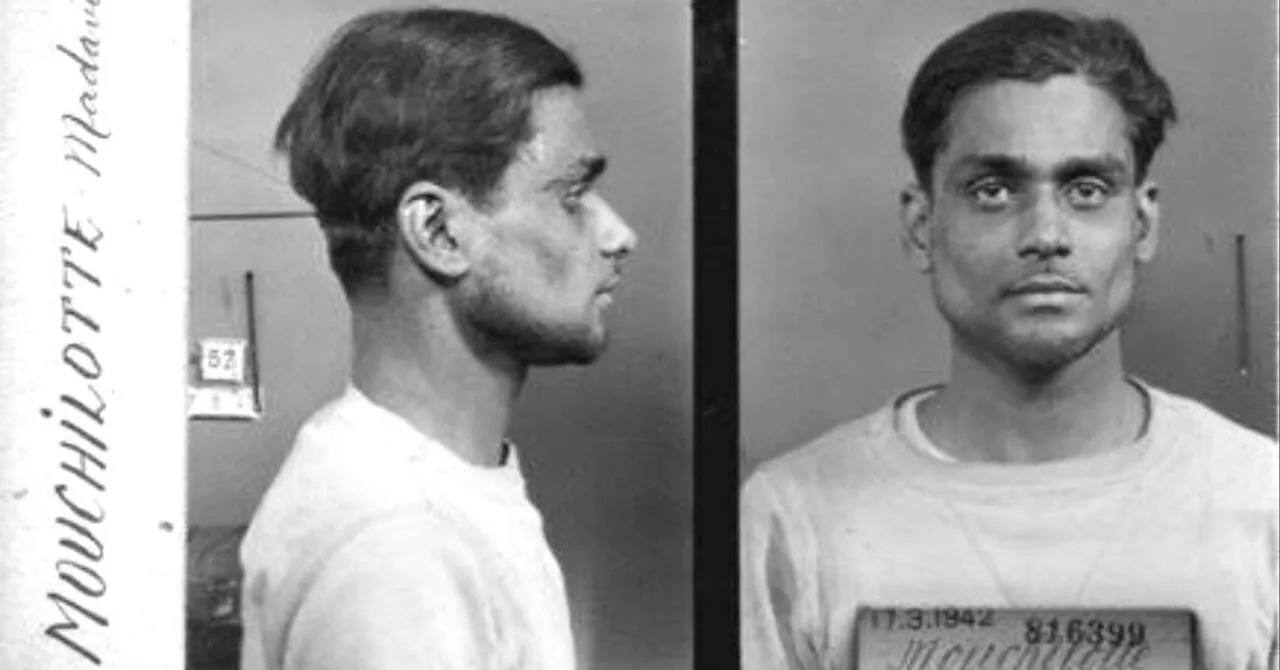
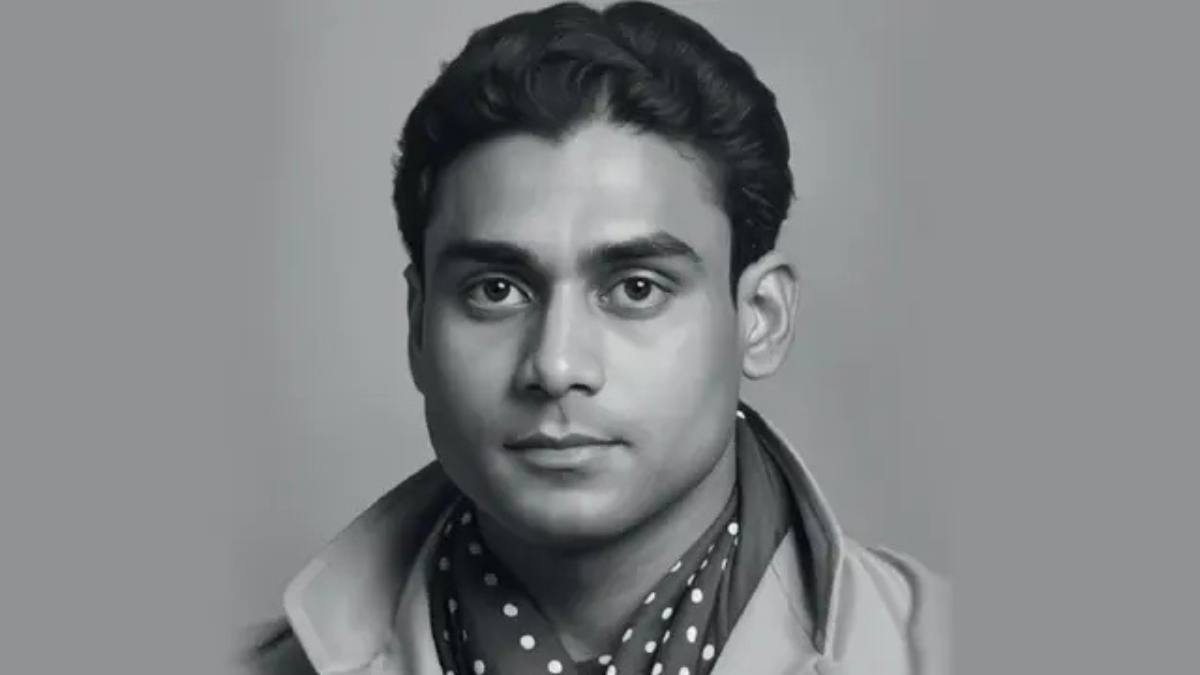
Revolutionary Madhavan: First Indian Victim Of The Nazi Concentration Camp
The Forgotten Indian in Hitler’s Europe and Why His Story Matters More Than Ever
By Melwyn Williams
“Long before the world spoke of global citizenship, a young Indian from Mahe gave his life fighting fascism in occupied France. Forgotten at home but remembered in foreign archives, Michilotte Madhavan’s story challenges us to rethink India’s place in one of the defining moral struggles of the twentieth century.”
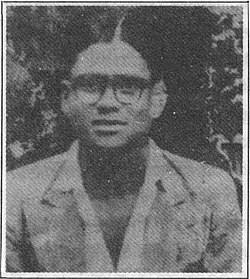
Few stories from the Second World War connect India, Europe and the struggle for human freedom as powerfully as that of Michilotte Madhavan. Born in the small French enclave of Mahe and educated at the prestigious Sorbonne University in Paris, Madhavan’s life took an extraordinary turn when Nazi Germany occupied France. Inspired by ideals of equality, justice and resistance to oppression, he joined the French Resistance and paid the ultimate price for his convictions. Arrested, tortured and executed by a Nazi firing squad in 1942 at the age of just twenty-eight, he is widely believed to be the only native-born Indian executed by the Nazis during the war. Yet despite his remarkable sacrifice, his name remained largely forgotten for decades. This is not merely the story of a young man who died resisting tyranny; it is the story of a forgotten Indian who stood at the crossroads of colonialism, fascism, social justice and global citizenship. Through his life, we uncover a hidden chapter of Indian diaspora history and rediscover a hero whose courage transcended borders, ideologies and generations.
Why did India forget one of its most extraordinary anti-fascist heroes, and what does his story reveal about the global role played by Indians in the fight against tyranny during World War II?
A Hero History Left Behind
History often remembers its victors, its generals and its political leaders. Their names fill textbooks, monuments are erected in their honour, and generations grow up learning about their achievements. Yet history is equally populated by individuals whose contributions were no less significant but whose stories gradually disappeared from public memory. Their sacrifices remain buried in archives, private letters, prison records and fading recollections, waiting for rediscovery.
One such figure is Michilotte Madhavan, a young man from the tiny French enclave of Mahe on India’s Malabar Coast. More than eight decades after his death, he remains virtually unknown to most Indians. Yet historians now believe that he may have been the only native-born Indian executed by Nazi Germany in occupied France during the Second World War.
His story is extraordinary not merely because of the manner of his death but because of what it reveals about a forgotten chapter of Indian and diaspora history. Long before the term “global citizen” entered modern vocabulary, Madhavan lived a life that crossed cultures, continents and political boundaries. Born in colonial India, educated in France, inspired by both Gandhian social reform and European anti-fascism, he ultimately gave his life resisting one of the most brutal regimes in human history.
The rediscovery of his story challenges many assumptions about India’s relationship with the Second World War. It reminds us that Indians were not merely participants in battles fought under imperial banners or actors in the struggle for independence. Some found themselves directly confronting fascism in Europe itself. Their experiences broaden our understanding of both Indian history and the history of the global Indian diaspora.
At a time when the world is once again debating questions of democracy, authoritarianism, identity and citizenship, the life of Michilotte Madhavan feels surprisingly contemporary. His story forces us to ask difficult questions about courage, responsibility and the choices ordinary individuals make when confronted by extraordinary circumstances.
Perhaps most importantly, it compels us to examine why some heroes are remembered while others are forgotten.
Beyond the Familiar Story of World War II
For most Indians, the history of the Second World War is viewed through a familiar lens. Discussions usually focus on the role of the British Indian Army, which mobilised more than 2.5 million volunteers and became the largest volunteer force in military history. Indian soldiers fought in North Africa, Italy, the Middle East and Southeast Asia. The war also intersects with the story of Subhas Chandra Bose and the Indian National Army, as well as the political developments that eventually accelerated the end of British colonial rule.
These narratives are important and deserve their place in India’s collective memory. Yet they tell only part of the story.
Far less attention has been paid to the thousands of Indians who lived outside the subcontinent during the turbulent decades leading up to the war. Across Europe, Indian students, intellectuals, professionals, merchant seamen and political activists, built lives far from home. Many found themselves in the midst of dramatic political transformations that would reshape the twentieth century.
Unlike those who observed events from a distance, these individuals experienced Europe’s crisis firsthand. They witnessed the rise of fascism, the collapse of democratic institutions, the persecution of minorities and political opponents, and the devastating consequences of extremist ideologies. Some simply endured these changes. Others became active participants in the resistance movements that emerged across occupied Europe.
Michilotte Madhavan belonged to this latter group.
His story reminds us that the Second World War was not merely a European conflict or an imperial conflict. It was a global confrontation between competing visions of humanity, governance and freedom. Indians living abroad were not immune to these struggles. In some cases, they became deeply involved in them.
The rediscovery of Madhavan’s life therefore expands the scope of Indian wartime history. It demonstrates that India’s encounter with fascism was not confined to battlefields in Burma or North Africa. It also occurred in university classrooms, underground resistance networks and prison cells in occupied France.
Growing Up in a Different India
To understand Madhavan’s journey, one must first understand the world into which he was born.
Michilotte Madhavan entered this world on 7 July 1914 in Mahe, a small coastal territory that occupied a unique position in colonial India. Although geographically surrounded by what is now Kerala, Mahe was part of French India and remained under French administration. This unusual status created a distinct cultural environment where Indian traditions existed alongside French political, educational and administrative influences.
Madhavan was born into a middle-class Thiyya family. His parents, Michilotte Govindan and Perunthodi Mathu, raised five children, of whom Madhavan was the third. Family accounts and historical records suggest that he displayed intelligence, curiosity and an independent spirit from an early age.
Historian C.H. Gangadharan notes that Madhavan often demonstrated a willingness to question authority and challenge injustice during his school years. While such observations may seem minor in retrospect, they reveal characteristics that would later define his life. The courage that ultimately led him into the French Resistance did not emerge suddenly in adulthood. It appears to have been part of his character long before he ever set foot in Europe.
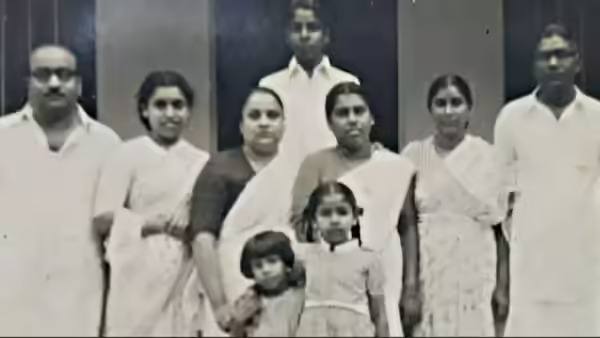
His education began at local French institutions in Mahe before continuing at the College Français in Pondicherry. These institutions exposed him to both Indian and French intellectual traditions. They also connected him to a broader world of ideas at a time when colonial societies across Asia and Africa were grappling with questions of identity, equality and self-determination.
The early twentieth century was an era of political awakening. Nationalist movements were gaining momentum across India. Social reform campaigns challenged entrenched inequalities. New ideologies circulated across continents. Young people increasingly viewed education not merely as a path to personal advancement but also as a means of contributing to social transformation.
Madhavan was very much a product of this environment. Yet his path would soon take him beyond the boundaries of colonial India and into the heart of Europe’s greatest crisis.
How a young man from a tiny French colony in India became a citizen of the world and sacrificed his life for values larger than nationality.
The Making of a Revolutionary
One of the most fascinating aspects of Madhavan’s life is that his commitment to justice began long before he became involved in anti-fascist politics. Before Paris, before the Resistance and before the war, he was already deeply engaged with social reform movements in India.
The visit of Mahatma Gandhi to Mahe in 1934 appears to have had a profound influence on many young people in the region, including Madhavan. Gandhi’s campaign against untouchability and his efforts to improve the lives of marginalised communities resonated strongly with a generation seeking meaningful social change. Inspired by these ideas, Madhavan became associated with the Youth League of French India and later joined the Harijan Sevak Sangh, the organisation established by Gandhi to work for the upliftment of disadvantaged communities.
What distinguished Madhavan was his willingness to translate ideals into action. Historical accounts indicate that after completing his studies each day, he spent evenings teaching children from Scheduled Caste communities in Pondicherry. This work rarely receives attention in discussions of his later life, yet it reveals an important dimension of his character. He was not merely interested in political theory. He believed that social justice required personal involvement and practical commitment.
These experiences shaped his worldview. They fostered a belief in equality, human dignity and collective responsibility that would remain central to his identity throughout his life. Long before he confronted fascism in Europe, he had already developed a moral framework grounded in opposition to discrimination and oppression.
Academically, Madhavan excelled. Recognised as one of the brightest students from French India, he earned the opportunity to pursue higher education in France. For a young man from Mahe, this was a remarkable achievement. International study remained beyond the reach of most Indians during the colonial era, and admission to a prestigious European university represented both personal accomplishment and extraordinary promise.
When he left India for Paris, he was embarking upon a journey that would transform his life forever.
A brilliant student, social reformer and young man in love whose future was destroyed by war, but whose principles survived him.
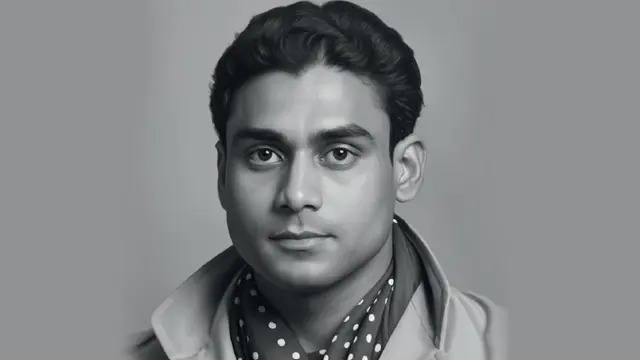
The Scholar from Mahe
When Michilotte Madhavan arrived in Paris in the late 1930s, he entered a city that stood at the centre of global intellectual and political life. For generations, Paris had attracted scholars, artists, scientists, writers and revolutionaries from around the world. It was a place where ideas were debated passionately, where political movements found expression and where the future often seemed to be taking shape in lecture halls, cafés and public squares.
For a young man from Mahe, the opportunity was extraordinary.
Madhavan enrolled at the prestigious Sorbonne University, one of Europe’s most respected institutions of higher learning. Most accounts identify him as a student of mathematics, although some records suggest he may also have pursued engineering-related studies. Whatever the exact discipline, his admission to the Sorbonne reflected considerable academic ability. Few students from French India had the opportunity to study at such an institution, and fewer still would go on to leave such a unique mark on history.
He lived at the Cité Universitaire, a residential complex that housed students from dozens of countries. The environment exposed him to a remarkable diversity of cultures, languages and political perspectives. It was here that Madhavan developed friendships with fellow Indian students, including Varadarajulu Subbiah, who would later become one of the most influential political figures in French India. The two reportedly spent long evenings discussing politics, colonialism, social reform and the rapidly changing world around them.
These conversations were taking place against the backdrop of one of the most turbulent periods in modern history. Across Europe, democratic institutions were under pressure. The economic devastation caused by the Great Depression had shaken confidence in governments and fuelled support for radical political movements. Fascism had already established itself in Italy under Benito Mussolini, while Adolf Hitler’s rise in Germany was transforming the political landscape of the continent.
Universities became centres of intense debate. Students and intellectuals increasingly felt compelled to take positions on the defining issues of their time. Questions about democracy, authoritarianism, social justice and human rights were no longer abstract subjects for academic discussion. They were becoming urgent political realities.
For Madhavan, the years in Paris proved transformative. He arrived as a gifted student from a small colonial territory. He gradually evolved into an internationally minded political thinker whose concerns extended far beyond the borders of India or France. The city expanded his horizons and introduced him to movements that would profoundly influence the course of his life.
Paris and the Politics of a Generation
To understand Madhavan’s political evolution, it is necessary to understand the atmosphere that prevailed across Europe during the 1930s. This was a generation shaped by crisis. The First World War had left deep scars across the continent, while the Great Depression created widespread unemployment, poverty and political instability. Many people questioned whether traditional political systems were capable of addressing the challenges they faced.
Into this vacuum stepped competing ideologies. Fascism promised national revival through strong leadership and aggressive nationalism. Socialism and communism offered alternative visions centred on economic equality and collective action. Across Europe, young people found themselves drawn into debates that would determine the future of entire societies.
Like many students of his era, Madhavan became increasingly involved in political activity. He joined the French Communist Party (PCF), one of the most active anti-fascist organisations in France. Today, such a decision must be understood within its historical context rather than through the lens of later Cold War politics. During the 1930s, many intellectuals viewed communist organisations as among the strongest forces resisting fascism and defending democratic freedoms.
For Madhavan, this commitment appears to have been a natural extension of the values he had already embraced in India. His involvement in the Harijan Sevak Sangh, his work with disadvantaged communities and his interest in social reform all point towards a concern with equality and justice. The fight against fascism represented another expression of those same principles.
Historical records suggest that he became increasingly active within political circles both inside and outside the university. Like many anti-fascists of his generation, he viewed the rise of Nazism not merely as a political development within Germany but as a threat to humanity itself. The persecution of minorities, the suppression of dissent and the glorification of authoritarian rule stood in direct opposition to the values he had come to believe in.
The world was moving towards conflict, and Madhavan was no longer simply observing events. He was becoming part of them.
A Love Story Amid War
Behind the political activist and future resistance fighter was another side of Michilotte Madhavan that is often overlooked. Before he became a martyr of the French Resistance, he was a young man building a life, pursuing an education and dreaming of a future beyond the political turmoil engulfing Europe.
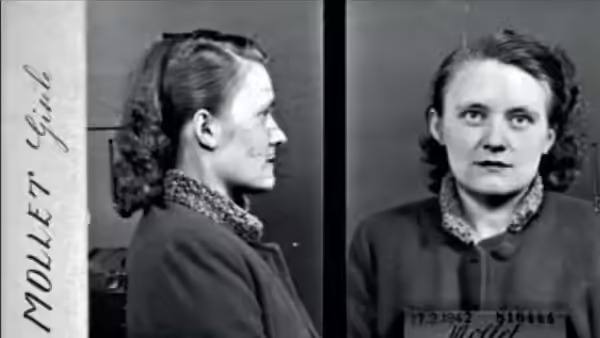
One of the most poignant chapters of his story involves a young French woman named Gisele Mollet.
Historical records and memoirs indicate that Madhavan and Gisele fell in love during their years in Paris. Gisele worked as a hotel maid, and despite coming from different backgrounds, the two developed a close relationship. Like countless young couples across Europe at the time, they imagined a future together once their studies and careers were established. Friends later recalled that they hoped to marry after the war.
Their relationship offers a rare glimpse into Madhavan’s personal life. Too often, historical figures are remembered only through their political commitments or public actions. Yet Madhavan was also a young student with ordinary hopes and aspirations. He dreamed of completing his education, finding meaningful work and building a family with the woman he loved.
Those dreams were shattered by war.
Following Madhavan’s arrest, Gisele reportedly rushed to his room at the Cité Universitaire in an attempt to remove anti-Nazi pamphlets and other potentially incriminating material before the authorities could discover them. Her efforts came too late. The room had already been searched, and the machinery of repression that had captured Madhavan soon reached her as well.
Gisele was arrested and later deported to Auschwitz, the notorious Nazi concentration and extermination camp in occupied Poland. She died there in 1943, barely a year after Madhavan’s execution.
The tragedy of Madhavan’s story therefore extends beyond his own death. It encompasses two young lives destroyed by a regime that viewed freedom, dissent and human dignity as threats to its existence. What began as a story of love and hope in the cafés and student quarters of Paris ended amid the brutality of war and occupation.
Behind every statistic of the Second World War lies a story like theirs: interrupted dreams, unfinished journeys and futures that never had the opportunity to unfold. Madhavan and Gisele were among millions whose lives were irrevocably altered by the conflict, but their story remains especially poignant because it reminds us that history’s greatest struggles are ultimately lived through individual human lives.
Hitler’s Occupied France
The turning point in Madhavan’s life came with the German invasion of France in 1940.
In one of the most dramatic military campaigns of the twentieth century, Nazi forces overwhelmed French defences and occupied much of the country within weeks. Paris fell in June 1940, and France was divided between German-controlled territory and the collaborationist Vichy regime.
For the people of France, the occupation transformed everyday life. Political freedoms disappeared. Opposition organisations were banned. The Gestapo and other security agencies expanded surveillance operations. Informers became common. Arrests, interrogations and deportations became routine features of life under occupation.
Students and intellectuals were viewed with particular suspicion. Universities had long served as centres of political debate, and occupation authorities feared they could become breeding grounds for resistance activity. Anti-Nazi literature, underground newspapers and political meetings were ruthlessly suppressed.
Yet repression produced an unexpected consequence. Rather than eliminating opposition, it encouraged the growth of resistance movements across the country.
The French Resistance was not a single organisation but a network of groups united by a common objective: opposing Nazi occupation. Members came from all walks of life. Teachers, railway workers, journalists, students, civil servants and ordinary citizens found different ways to resist. Some distributed clandestine newspapers. Others gathered intelligence for Allied forces. Many risked their lives helping those pursued by the occupation authorities.
Participation carried enormous risks. Arrest often led to imprisonment, torture or execution. Yet thousands continued.
It was within this atmosphere that Madhavan’s commitment to anti-fascism evolved from political belief into active resistance. What had begun as an intellectual opposition to fascism now became a direct confrontation with one of the most powerful and brutal regimes in history.
The choices he made during this period would ultimately determine his fate.
Joining the French Resistance
The German occupation of France confronted millions of people with difficult choices. Some chose accommodation, believing resistance to be futile. Others focused on survival, hoping to endure until the war ended. A smaller number chose a far more dangerous path. They entered the underground world of resistance, risking imprisonment, torture and death in pursuit of freedom.
Michilotte Madhavan belonged to this latter group.
Although many details of his activities remain obscured by the passage of time and the destruction of wartime records, surviving evidence makes it clear that he became actively involved in anti-Nazi operations in occupied Paris. French police reports and later historical research indicate that he was associated with underground student networks and anti-fascist groups operating in and around the university community. As a member of the French Communist Party, he was part of a political movement that had become one of the principal forces resisting German occupation.
Resistance took many forms. It included distributing anti-Nazi pamphlets, organising clandestine meetings, gathering intelligence, maintaining secret communication networks and supporting acts of sabotage. Such activities may seem modest when compared to conventional warfare, but they represented a serious threat to the occupation authorities. The Resistance challenged not only Nazi control but also the atmosphere of fear upon which that control depended.
For foreign students such as Madhavan, participation in these activities carried additional risks. Unlike many French citizens, they lacked the protection of family networks and local support systems. Discovery could mean isolation, imprisonment and, ultimately, death. Yet despite these dangers, Madhavan remained committed to the cause he had embraced.
His involvement soon attracted the attention of the authorities.
The Nazi Crackdown
By 1941 and 1942, German occupation forces had intensified their efforts to crush resistance movements throughout France. The Gestapo, supported by collaborationist elements within the French police, expanded surveillance operations and conducted widespread arrests. Student activists, communists and suspected anti-fascists became primary targets.
A Nazi police report later accused Madhavan of helping organise a resistance group associated with the Lycée Buffon area of Paris. Authorities also claimed to have recovered anti-Nazi literature from his residence at the Cité Universitaire. Whether every allegation made against him was accurate remains difficult to determine, but there is little doubt that the occupation authorities regarded him as a committed opponent of the regime.
On 9 March 1942, Madhavan was arrested by a special brigade of the French police operating under German authority. Like countless resistance members arrested during this period, he entered a system designed not to administer justice but to eliminate opposition.
His student life in Paris came to an abrupt end.
The future he had envisioned for himself was suddenly replaced by prison walls, interrogations and uncertainty.
Prisoner of the Gestapo
Following his arrest, Madhavan was handed over to the Gestapo, the feared secret police organisation that played a central role in suppressing resistance throughout occupied Europe. He was initially imprisoned at Cherche-Midi prison in Paris, a facility frequently used to detain political prisoners and resistance fighters.
Interrogations were often brutal. The objective was not merely to gather information but also to dismantle entire resistance networks. Prisoners faced immense psychological and physical pressure to reveal names, locations and operational details.
Historical accounts suggest that Madhavan endured this ordeal without betraying his comrades.
Later he was transferred to Fort de Romainville, one of the principal detention centres used by the Germans to hold political prisoners, hostages and resistance members awaiting execution or deportation. Located on the outskirts of Paris, the fort became infamous as a transit point for individuals who would later be sent to concentration camps or execution sites.
Prison records confirm Madhavan’s presence there. In Nazi documentation, he appeared not as a student or scholar but as another prisoner within a vast machinery of repression.
Yet even within prison walls, the spirit of resistance survived.
Former inmates later recalled acts of solidarity, political discussion and mutual support among prisoners. Many understood that they might never leave alive. Nevertheless, they continued to draw strength from one another and from the belief that their struggle had meaning beyond their individual fates.
The Rex Cinema Attack and Nazi Retribution
In September 1942, events outside the prison would determine Madhavan’s fate.
The French Resistance had increasingly adopted acts of sabotage and direct action against German targets. One of the most significant incidents occurred at the Rex Cinema in Paris, a popular venue frequented by German personnel. A bomb attack at the cinema resulted in casualties among German soldiers and intensified Nazi efforts to retaliate against resistance activities.
The German response was swift and ruthless.
Rather than limiting punishment to those directly involved, occupation authorities adopted a policy of collective reprisals. Hostages and political prisoners were selected for execution as a warning to others. The objective was clear: create sufficient fear to discourage future resistance.
Among those chosen for execution were forty-six prisoners held in Paris, including Michilotte Madhavan.
There would be no meaningful trial. No opportunity for defence. No appeal.
The decision had already been made.
The Road to Mont Valérien
On the morning of 21 September 1942, prison authorities removed Madhavan and forty-five fellow prisoners from Fort de Romainville. Like many hostages selected for execution, they initially knew little about what awaited them.
Some believed they were being transferred elsewhere. Others suspected the truth.
According to accounts preserved by survivors and later historians, the prisoners displayed remarkable composure during their final journey. As they were transported through Paris, many sang La Marseillaise, the French national anthem that had become a symbol of resistance and defiance under occupation.
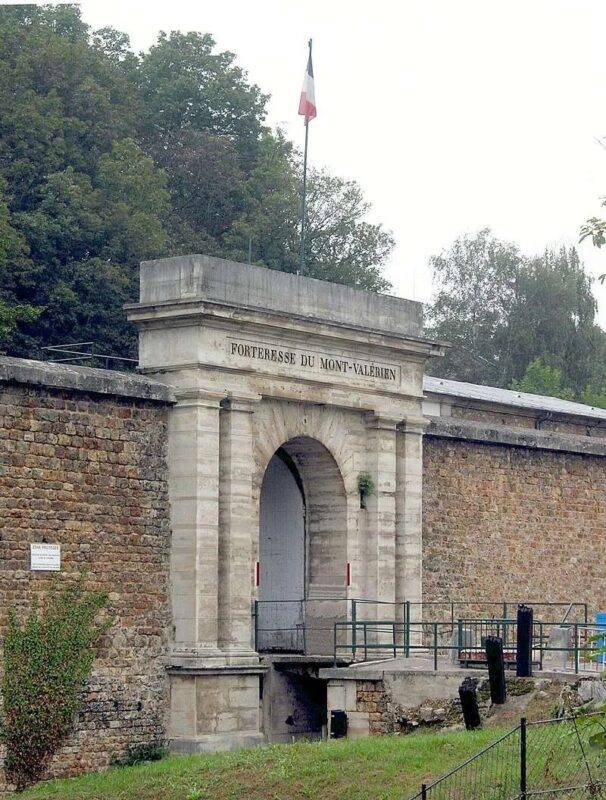
Their destination was Mont Valérien, a nineteenth-century fortress located west of Paris. During the German occupation, it became one of the principal execution sites in France. Between 1941 and 1944, more than a thousand resistance fighters, political prisoners and hostages were killed there.
The fortress has since become one of the most important memorials of the French Resistance.
On that September morning, however, it was simply a place of death.
The Final Act of Defiance
Among the most enduring accounts associated with Madhavan comes from Pierre Serge Choumoff, a fellow prisoner whose testimony later helped historians reconstruct aspects of the tragedy.
According to Choumoff, Madhavan may have had an opportunity to emphasise his Indian identity. Coming from French India, he could potentially have attempted to distinguish himself from the other prisoners selected for execution. Whether such a declaration would actually have altered the outcome remains uncertain.
What is significant is that he reportedly refused to separate himself from his comrades.
Choumoff later described him as a man proud of both his Indian origins and the values for which he was fighting. He did not seek special treatment. He did not attempt to save himself at the expense of others.
Witness accounts indicate that the condemned prisoners faced their fate with extraordinary courage. They were taken to the execution ground in groups. Each man was tied to a post. Unlike many executions elsewhere, they were not blindfolded.
At approximately 10:47 in the morning, the firing squad carried out its orders.
Within moments, forty-six lives were extinguished.
Among them was a twenty-eight-year-old student from Mahe who had travelled to France in pursuit of education and found himself instead at the centre of one of history’s greatest struggles.
The bodies of the executed prisoners were later burned.
The Nazis hoped that fear would erase both the resistance and its memory.
History would prove them wrong.
Why India Forgot Him
Perhaps the most surprising aspect of Madhavan’s story is not the manner of his death but the silence that followed it. One might reasonably expect that a young Indian who died resisting Nazism in occupied Europe would have become part of the country’s historical memory. Yet for decades, his story remained largely unknown outside a small circle of researchers, historians and family members.
Several factors contributed to this collective forgetting.
When Madhavan was executed in 1942, India itself was experiencing one of the most turbulent periods in its modern history. The Quit India Movement had erupted that same year. The final phase of the freedom struggle dominated political discourse. Within a few years, Independence and Partition would transform the subcontinent. These events understandably occupied the attention of political leaders, historians and the public.
Against such a backdrop, the story of a young student executed in occupied France struggled to find a place in national memory.
The fact that Madhavan came from French India further complicated matters. Much of post-Independence Indian historiography focused on British India and the mainstream nationalist movement. The histories of French and Portuguese territories often received less attention. Consequently, individuals like Madhavan fell between multiple narratives. He was not easily categorised as a freedom fighter in the conventional sense, nor was he remembered as part of France’s national story.
The geographical distance of the archives also contributed to his disappearance from public consciousness. Many of the records documenting his imprisonment and execution remained in France. Without dedicated efforts to recover and interpret them, his story remained inaccessible to most Indian researchers.
The result was a remarkable historical paradox. A young Indian who gave his life fighting fascism became virtually invisible in the country of his birth.
The Historians Who Brought Him Back
The rediscovery of Michilotte Madhavan was not accidental. It was the result of painstaking work by historians, researchers and writers determined to recover forgotten histories.
Among the most significant contributions came from Paris-based historian J.B.P. More, whose research pieced together information from French archives, prison records, resistance documentation and survivor testimonies. Through his work, a clearer picture of Madhavan’s life and death began to emerge.
Equally important were the recollections of Pierre Serge Choumoff, a fellow prisoner who survived and later provided crucial testimony regarding Madhavan’s final months. Choumoff’s accounts helped humanise a figure who otherwise might have remained little more than a name in official records.
The memoirs of French writer Charlotte Delbo also provided valuable insights. Delbo, herself a survivor of Nazi concentration camps, preserved details about resistance members, prisoners and the wider network of individuals caught in the machinery of Nazi repression. Through such writings, fragments of Madhavan’s story survived.
Malayalam writer M. Mukundan and other scholars from Mahe also played important roles in drawing attention to his legacy. Their efforts ensured that a story nearly lost to history would once again become part of public discourse.
Without these researchers, Madhavan might have remained buried in archival files indefinitely.
The Other Forgotten Indians Who Fought Fascism
Madhavan’s story is extraordinary, but it is not entirely unique. Across Europe and beyond, Indians participated in struggles against fascism in ways that remain insufficiently recognised.
Perhaps the most famous example is Noor Inayat Khan, the Indian-origin British spy who served with the Special Operations Executive in occupied France and was later executed by the Nazis. Her story has gradually gained international recognition, yet she represents only one part of a much larger picture.
Indian merchant seamen also played a vital role during the war. Thousands served aboard Allied vessels transporting essential supplies across dangerous waters patrolled by German submarines. Many never returned home. Their sacrifices rarely receive the attention accorded to conventional military campaigns.
Elsewhere, Indian students, workers and political activists found themselves caught in Europe’s turmoil. Some joined resistance movements. Others provided support networks for refugees and political exiles. Collectively, their experiences reveal a far more global Indian wartime presence than is commonly understood.
These stories challenge simplistic narratives about the Indian diaspora. They demonstrate that Indians abroad were not merely observers of world events. In many cases, they were active participants in shaping them.
Why Madhavan Matters Today
More than eighty years after his death, why should Michilotte Madhavan matter to us?
The answer lies partly in the nature of the values for which he stood. Madhavan’s struggle was not rooted in narrow nationalism or personal ambition. It was grounded in a belief that freedom, equality and human dignity were worth defending, even at great personal cost.
The world of the twenty-first century is very different from the world of 1942. Yet many of the questions that confronted Madhavan’s generation remain relevant. How should societies respond to authoritarianism? What responsibilities do individuals have when democratic values come under threat? How should citizens react when injustice becomes institutionalised?
Madhavan’s life offers no easy answers, but it does provide a powerful example of moral courage. He was not a famous leader or military commander. He was an ordinary individual who found himself confronted by extraordinary circumstances and chose to act according to his convictions.
His story also carries particular significance for the Indian diaspora. Modern discussions about overseas Indians often focus on economic success, entrepreneurship, technology and political influence. These achievements deserve recognition. Yet the history of the diaspora is broader and deeper. It also includes stories of sacrifice, activism and participation in global struggles for freedom and justice.
Madhavan represents that legacy.
He reminds us that Indians abroad have not merely contributed to economies and institutions. They have also contributed to causes and ideals that transcend national boundaries.
Returning a Forgotten Hero to History
The life of Michilotte Madhavan lasted only twenty-eight years, yet it intersected with some of the defining struggles of the twentieth century. He was a product of French India, inspired by Gandhian social reform, shaped by the intellectual climate of Paris, committed to anti-fascism and ultimately executed by one of history’s most brutal regimes.
His story connects colonial India to occupied France, local activism to global politics and personal conviction to historical consequence. It is a story of courage, but it is also a story of memory, of how easily remarkable lives can disappear from public consciousness when no one remains to tell their stories.
Today, Madhavan’s name is inscribed at Mont Valérien among the resistance fighters who gave their lives opposing Nazi occupation. Yet in India, recognition has come slowly. There are still no major national memorials dedicated to him. Many Indians remain unaware that one of their own stood against fascism in the heart of occupied Europe and paid the ultimate price.
Perhaps that is beginning to change.
As historians continue to recover forgotten chapters of the past, figures like Michilotte Madhavan are finally emerging from the shadows. Their stories enrich our understanding of both India and the wider world. They remind us that courage is not the exclusive domain of famous leaders and celebrated generals. Sometimes it belongs to students, teachers and ordinary citizens who choose principle over safety.
More than eight decades after his execution, Michilotte Madhavan deserves to be remembered not simply as a victim of Nazi brutality, but as a global Indian whose life embodied the universal struggle for freedom, dignity and justice. His story may have been forgotten for a time, but it remains one of the most remarkable chapters in the history of the Indian diaspora—a chapter that deserves its rightful place in our collective memory. (End of Cover Story)
The Forgotten Indian in Hitler’s Europe and Why His Story Matters More Than Ever
By Melwyn Williams
“Long before the world spoke of global citizenship, a young Indian from Mahe gave his life fighting fascism in occupied France. Forgotten at home but remembered in foreign archives, Michilotte Madhavan’s story challenges us to rethink India’s place in one of the defining moral struggles of the twentieth century.”
Few stories from the Second World War connect India, Europe and the struggle for human freedom as powerfully as that of Michilotte Madhavan. Born in the small French enclave of Mahe and educated at the prestigious Sorbonne University in Paris, Madhavan’s life took an extraordinary turn when Nazi Germany occupied France. Inspired by ideals of equality, justice and resistance to oppression, he joined the French Resistance and paid the ultimate price for his convictions. Arrested, tortured and executed by a Nazi firing squad in 1942 at the age of just twenty-eight, he is widely believed to be the only native-born Indian executed by the Nazis during the war. Yet despite his remarkable sacrifice, his name remained largely forgotten for decades. This is not merely the story of a young man who died resisting tyranny; it is the story of a forgotten Indian who stood at the crossroads of colonialism, fascism, social justice and global citizenship. Through his life, we uncover a hidden chapter of Indian diaspora history and rediscover a hero whose courage transcended borders, ideologies and generations.
Why did India forget one of its most extraordinary anti-fascist heroes, and what does his story reveal about the global role played by Indians in the fight against tyranny during World War II?
A Hero History Left Behind
History often remembers its victors, its generals and its political leaders. Their names fill textbooks, monuments are erected in their honour, and generations grow up learning about their achievements. Yet history is equally populated by individuals whose contributions were no less significant but whose stories gradually disappeared from public memory. Their sacrifices remain buried in archives, private letters, prison records and fading recollections, waiting for rediscovery.
One such figure is Michilotte Madhavan, a young man from the tiny French enclave of Mahe on India’s Malabar Coast. More than eight decades after his death, he remains virtually unknown to most Indians. Yet historians now believe that he may have been the only native-born Indian executed by Nazi Germany in occupied France during the Second World War.
His story is extraordinary not merely because of the manner of his death but because of what it reveals about a forgotten chapter of Indian and diaspora history. Long before the term “global citizen” entered modern vocabulary, Madhavan lived a life that crossed cultures, continents and political boundaries. Born in colonial India, educated in France, inspired by both Gandhian social reform and European anti-fascism, he ultimately gave his life resisting one of the most brutal regimes in human history.
The rediscovery of his story challenges many assumptions about India’s relationship with the Second World War. It reminds us that Indians were not merely participants in battles fought under imperial banners or actors in the struggle for independence. Some found themselves directly confronting fascism in Europe itself. Their experiences broaden our understanding of both Indian history and the history of the global Indian diaspora.
At a time when the world is once again debating questions of democracy, authoritarianism, identity and citizenship, the life of Michilotte Madhavan feels surprisingly contemporary. His story forces us to ask difficult questions about courage, responsibility and the choices ordinary individuals make when confronted by extraordinary circumstances.
Perhaps most importantly, it compels us to examine why some heroes are remembered while others are forgotten.
Beyond the Familiar Story of World War II
For most Indians, the history of the Second World War is viewed through a familiar lens. Discussions usually focus on the role of the British Indian Army, which mobilised more than 2.5 million volunteers and became the largest volunteer force in military history. Indian soldiers fought in North Africa, Italy, the Middle East and Southeast Asia. The war also intersects with the story of Subhas Chandra Bose and the Indian National Army, as well as the political developments that eventually accelerated the end of British colonial rule.
These narratives are important and deserve their place in India’s collective memory. Yet they tell only part of the story.
Far less attention has been paid to the thousands of Indians who lived outside the subcontinent during the turbulent decades leading up to the war. Across Europe, Indian students, intellectuals, professionals, merchant seamen and political activists, built lives far from home. Many found themselves in the midst of dramatic political transformations that would reshape the twentieth century.
Unlike those who observed events from a distance, these individuals experienced Europe’s crisis firsthand. They witnessed the rise of fascism, the collapse of democratic institutions, the persecution of minorities and political opponents, and the devastating consequences of extremist ideologies. Some simply endured these changes. Others became active participants in the resistance movements that emerged across occupied Europe.
Michilotte Madhavan belonged to this latter group.
His story reminds us that the Second World War was not merely a European conflict or an imperial conflict. It was a global confrontation between competing visions of humanity, governance and freedom. Indians living abroad were not immune to these struggles. In some cases, they became deeply involved in them.
The rediscovery of Madhavan’s life therefore expands the scope of Indian wartime history. It demonstrates that India’s encounter with fascism was not confined to battlefields in Burma or North Africa. It also occurred in university classrooms, underground resistance networks and prison cells in occupied France.
Growing Up in a Different India
To understand Madhavan’s journey, one must first understand the world into which he was born.
Michilotte Madhavan entered the world on 7 July 1914 in Mahe, a small coastal territory that occupied a unique position in colonial India. Although geographically surrounded by what is now Kerala, Mahe was part of French India and remained under French administration. This unusual status created a distinct cultural environment where Indian traditions existed alongside French political, educational and administrative influences.
Madhavan was born into a middle-class Thiyya family. His parents, Michilotte Govindan and Perunthodi Mathu, raised five children, of whom Madhavan was the third. Family accounts and historical records suggest that he displayed intelligence, curiosity and an independent spirit from an early age.
Historian C.H. Gangadharan notes that Madhavan often demonstrated a willingness to question authority and challenge injustice during his school years. While such observations may seem minor in retrospect, they reveal characteristics that would later define his life. The courage that ultimately led him into the French Resistance did not emerge suddenly in adulthood. It appears to have been part of his character long before he ever set foot in Europe.
His education began at local French institutions in Mahe before continuing at the College Français in Pondicherry. These institutions exposed him to both Indian and French intellectual traditions. They also connected him to a broader world of ideas at a time when colonial societies across Asia and Africa were grappling with questions of identity, equality and self-determination.
The early twentieth century was an era of political awakening. Nationalist movements were gaining momentum across India. Social reform campaigns challenged entrenched inequalities. New ideologies circulated across continents. Young people increasingly viewed education not merely as a path to personal advancement but also as a means of contributing to social transformation.
Madhavan was very much a product of this environment. Yet his path would soon take him beyond the boundaries of colonial India and into the heart of Europe’s greatest crisis.
How a young man from a tiny French colony in India became a citizen of the world and sacrificed his life for values larger than nationality.
The Making of a Revolutionary
One of the most fascinating aspects of Madhavan’s life is that his commitment to justice began long before he became involved in anti-fascist politics. Before Paris, before the Resistance and before the war, he was already deeply engaged with social reform movements in India.
The visit of Mahatma Gandhi to Mahe in 1934 appears to have had a profound influence on many young people in the region, including Madhavan. Gandhi’s campaign against untouchability and his efforts to improve the lives of marginalised communities resonated strongly with a generation seeking meaningful social change. Inspired by these ideas, Madhavan became associated with the Youth League of French India and later joined the Harijan Sevak Sangh, the organisation established by Gandhi to work for the upliftment of disadvantaged communities.
What distinguished Madhavan was his willingness to translate ideals into action. Historical accounts indicate that after completing his studies each day, he spent evenings teaching children from Scheduled Caste communities in Pondicherry. This work rarely receives attention in discussions of his later life, yet it reveals an important dimension of his character. He was not merely interested in political theory. He believed that social justice required personal involvement and practical commitment.
These experiences shaped his worldview. They fostered a belief in equality, human dignity and collective responsibility that would remain central to his identity throughout his life. Long before he confronted fascism in Europe, he had already developed a moral framework grounded in opposition to discrimination and oppression.
Academically, Madhavan excelled. Recognised as one of the brightest students from French India, he earned the opportunity to pursue higher education in France. For a young man from Mahe, this was a remarkable achievement. International study remained beyond the reach of most Indians during the colonial era, and admission to a prestigious European university represented both personal accomplishment and extraordinary promise.
When he left India for Paris, he was embarking upon a journey that would transform his life forever.
A brilliant student, social reformer and young man in love whose future was destroyed by war, but whose principles survived him.
The Scholar from Mahe
When Michilotte Madhavan arrived in Paris in the late 1930s, he entered a city that stood at the centre of global intellectual and political life. For generations, Paris had attracted scholars, artists, scientists, writers and revolutionaries from around the world. It was a place where ideas were debated passionately, where political movements found expression and where the future often seemed to be taking shape in lecture halls, cafés and public squares.
For a young man from Mahe, the opportunity was extraordinary.
Madhavan enrolled at the prestigious Sorbonne University, one of Europe’s most respected institutions of higher learning. Most accounts identify him as a student of mathematics, although some records suggest he may also have pursued engineering-related studies. Whatever the exact discipline, his admission to the Sorbonne reflected considerable academic ability. Few students from French India had the opportunity to study at such an institution, and fewer still would go on to leave such a unique mark on history.
He lived at the Cité Universitaire, a residential complex that housed students from dozens of countries. The environment exposed him to a remarkable diversity of cultures, languages and political perspectives. It was here that Madhavan developed friendships with fellow Indian students, including Varadarajulu Subbiah, who would later become one of the most influential political figures in French India. The two reportedly spent long evenings discussing politics, colonialism, social reform and the rapidly changing world around them.
These conversations were taking place against the backdrop of one of the most turbulent periods in modern history. Across Europe, democratic institutions were under pressure. The economic devastation caused by the Great Depression had shaken confidence in governments and fuelled support for radical political movements. Fascism had already established itself in Italy under Benito Mussolini, while Adolf Hitler’s rise in Germany was transforming the political landscape of the continent.
Universities became centres of intense debate. Students and intellectuals increasingly felt compelled to take positions on the defining issues of their time. Questions about democracy, authoritarianism, social justice and human rights were no longer abstract subjects for academic discussion. They were becoming urgent political realities.
For Madhavan, the years in Paris proved transformative. He arrived as a gifted student from a small colonial territory. He gradually evolved into an internationally minded political thinker whose concerns extended far beyond the borders of India or France. The city expanded his horizons and introduced him to movements that would profoundly influence the course of his life.
Paris and the Politics of a Generation
To understand Madhavan’s political evolution, it is necessary to understand the atmosphere that prevailed across Europe during the 1930s. This was a generation shaped by crisis. The First World War had left deep scars across the continent, while the Great Depression created widespread unemployment, poverty and political instability. Many people questioned whether traditional political systems were capable of addressing the challenges they faced.
Into this vacuum stepped competing ideologies. Fascism promised national revival through strong leadership and aggressive nationalism. Socialism and communism offered alternative visions centred on economic equality and collective action. Across Europe, young people found themselves drawn into debates that would determine the future of entire societies.
Like many students of his era, Madhavan became increasingly involved in political activity. He joined the French Communist Party (PCF), one of the most active anti-fascist organisations in France. Today, such a decision must be understood within its historical context rather than through the lens of later Cold War politics. During the 1930s, many intellectuals viewed communist organisations as among the strongest forces resisting fascism and defending democratic freedoms.
For Madhavan, this commitment appears to have been a natural extension of the values he had already embraced in India. His involvement in the Harijan Sevak Sangh, his work with disadvantaged communities and his interest in social reform all point towards a concern with equality and justice. The fight against fascism represented another expression of those same principles.
Historical records suggest that he became increasingly active within political circles both inside and outside the university. Like many anti-fascists of his generation, he viewed the rise of Nazism not merely as a political development within Germany but as a threat to humanity itself. The persecution of minorities, the suppression of dissent and the glorification of authoritarian rule stood in direct opposition to the values he had come to believe in.
The world was moving towards conflict, and Madhavan was no longer simply observing events. He was becoming part of them.
A Love Story Amid War
Behind the political activist and future resistance fighter was another side of Michilotte Madhavan that is often overlooked. Before he became a martyr of the French Resistance, he was a young man building a life, pursuing an education and dreaming of a future beyond the political turmoil engulfing Europe.
One of the most poignant chapters of his story involves a young French woman named Gisele Mollet.
Historical records and memoirs indicate that Madhavan and Gisele fell in love during their years in Paris. Gisele worked as a hotel maid, and despite coming from different backgrounds, the two developed a close relationship. Like countless young couples across Europe at the time, they imagined a future together once their studies and careers were established. Friends later recalled that they hoped to marry after the war.
Their relationship offers a rare glimpse into Madhavan’s personal life. Too often, historical figures are remembered only through their political commitments or public actions. Yet Madhavan was also a young student with ordinary hopes and aspirations. He dreamed of completing his education, finding meaningful work and building a family with the woman he loved.
Those dreams were shattered by war.
Following Madhavan’s arrest, Gisele reportedly rushed to his room at the Cité Universitaire in an attempt to remove anti-Nazi pamphlets and other potentially incriminating material before the authorities could discover them. Her efforts came too late. The room had already been searched, and the machinery of repression that had captured Madhavan soon reached her as well.
Gisele was arrested and later deported to Auschwitz, the notorious Nazi concentration and extermination camp in occupied Poland. She died there in 1943, barely a year after Madhavan’s execution.
The tragedy of Madhavan’s story therefore extends beyond his own death. It encompasses two young lives destroyed by a regime that viewed freedom, dissent and human dignity as threats to its existence. What began as a story of love and hope in the cafés and student quarters of Paris ended amid the brutality of war and occupation.
Behind every statistic of the Second World War lies a story like theirs: interrupted dreams, unfinished journeys and futures that never had the opportunity to unfold. Madhavan and Gisele were among millions whose lives were irrevocably altered by the conflict, but their story remains especially poignant because it reminds us that history’s greatest struggles are ultimately lived through individual human lives.
Hitler’s Occupied France
The turning point in Madhavan’s life came with the German invasion of France in 1940.
In one of the most dramatic military campaigns of the twentieth century, Nazi forces overwhelmed French defences and occupied much of the country within weeks. Paris fell in June 1940, and France was divided between German-controlled territory and the collaborationist Vichy regime.
For the people of France, the occupation transformed everyday life. Political freedoms disappeared. Opposition organisations were banned. The Gestapo and other security agencies expanded surveillance operations. Informers became common. Arrests, interrogations and deportations became routine features of life under occupation.
Students and intellectuals were viewed with particular suspicion. Universities had long served as centres of political debate, and occupation authorities feared they could become breeding grounds for resistance activity. Anti-Nazi literature, underground newspapers and political meetings were ruthlessly suppressed.
Yet repression produced an unexpected consequence. Rather than eliminating opposition, it encouraged the growth of resistance movements across the country.
The French Resistance was not a single organisation but a network of groups united by a common objective: opposing Nazi occupation. Members came from all walks of life. Teachers, railway workers, journalists, students, civil servants and ordinary citizens found different ways to resist. Some distributed clandestine newspapers. Others gathered intelligence for Allied forces. Many risked their lives helping those pursued by the occupation authorities.
Participation carried enormous risks. Arrest often led to imprisonment, torture or execution. Yet thousands continued.
It was within this atmosphere that Madhavan’s commitment to anti-fascism evolved from political belief into active resistance. What had begun as an intellectual opposition to fascism now became a direct confrontation with one of the most powerful and brutal regimes in history.
The choices he made during this period would ultimately determine his fate.
Joining the French Resistance
The German occupation of France confronted millions of people with difficult choices. Some chose accommodation, believing resistance to be futile. Others focused on survival, hoping to endure until the war ended. A smaller number chose a far more dangerous path. They entered the underground world of resistance, risking imprisonment, torture and death in pursuit of freedom.
Michilotte Madhavan belonged to this latter group.
Although many details of his activities remain obscured by the passage of time and the destruction of wartime records, surviving evidence makes it clear that he became actively involved in anti-Nazi operations in occupied Paris. French police reports and later historical research indicate that he was associated with underground student networks and anti-fascist groups operating in and around the university community. As a member of the French Communist Party, he was part of a political movement that had become one of the principal forces resisting German occupation.
Resistance took many forms. It included distributing anti-Nazi pamphlets, organising clandestine meetings, gathering intelligence, maintaining secret communication networks and supporting acts of sabotage. Such activities may seem modest when compared to conventional warfare, but they represented a serious threat to the occupation authorities. The Resistance challenged not only Nazi control but also the atmosphere of fear upon which that control depended.
For foreign students such as Madhavan, participation in these activities carried additional risks. Unlike many French citizens, they lacked the protection of family networks and local support systems. Discovery could mean isolation, imprisonment and, ultimately, death. Yet despite these dangers, Madhavan remained committed to the cause he had embraced.
His involvement soon attracted the attention of the authorities.
The Nazi Crackdown
By 1941 and 1942, German occupation forces had intensified their efforts to crush resistance movements throughout France. The Gestapo, supported by collaborationist elements within the French police, expanded surveillance operations and conducted widespread arrests. Student activists, communists and suspected anti-fascists became primary targets.
A Nazi police report later accused Madhavan of helping organise a resistance group associated with the Lycée Buffon area of Paris. Authorities also claimed to have recovered anti-Nazi literature from his residence at the Cité Universitaire. Whether every allegation made against him was accurate remains difficult to determine, but there is little doubt that the occupation authorities regarded him as a committed opponent of the regime.
On 9 March 1942, Madhavan was arrested by a special brigade of the French police operating under German authority. Like countless resistance members arrested during this period, he entered a system designed not to administer justice but to eliminate opposition.
His student life in Paris came to an abrupt end.
The future he had envisioned for himself was suddenly replaced by prison walls, interrogations and uncertainty.
Prisoner of the Gestapo
Following his arrest, Madhavan was handed over to the Gestapo, the feared secret police organisation that played a central role in suppressing resistance throughout occupied Europe. He was initially imprisoned at Cherche-Midi prison in Paris, a facility frequently used to detain political prisoners and resistance fighters.
Interrogations were often brutal. The objective was not merely to gather information but also to dismantle entire resistance networks. Prisoners faced immense psychological and physical pressure to reveal names, locations and operational details.
Historical accounts suggest that Madhavan endured this ordeal without betraying his comrades.
Later he was transferred to Fort de Romainville, one of the principal detention centres used by the Germans to hold political prisoners, hostages and resistance members awaiting execution or deportation. Located on the outskirts of Paris, the fort became infamous as a transit point for individuals who would later be sent to concentration camps or execution sites.
Prison records confirm Madhavan’s presence there. In Nazi documentation, he appeared not as a student or scholar but as another prisoner within a vast machinery of repression.
Yet even within prison walls, the spirit of resistance survived.
Former inmates later recalled acts of solidarity, political discussion and mutual support among prisoners. Many understood that they might never leave alive. Nevertheless, they continued to draw strength from one another and from the belief that their struggle had meaning beyond their individual fates.
The Rex Cinema Attack and Nazi Retribution
In September 1942, events outside the prison would determine Madhavan’s fate.
The French Resistance had increasingly adopted acts of sabotage and direct action against German targets. One of the most significant incidents occurred at the Rex Cinema in Paris, a popular venue frequented by German personnel. A bomb attack at the cinema resulted in casualties among German soldiers and intensified Nazi efforts to retaliate against resistance activities.
The German response was swift and ruthless.
Rather than limiting punishment to those directly involved, occupation authorities adopted a policy of collective reprisals. Hostages and political prisoners were selected for execution as a warning to others. The objective was clear: create sufficient fear to discourage future resistance.
Among those chosen for execution were forty-six prisoners held in Paris, including Michilotte Madhavan.
There would be no meaningful trial. No opportunity for defence. No appeal.
The decision had already been made.
The Road to Mont Valérien
On the morning of 21 September 1942, prison authorities removed Madhavan and forty-five fellow prisoners from Fort de Romainville. Like many hostages selected for execution, they initially knew little about what awaited them.
Some believed they were being transferred elsewhere. Others suspected the truth.
According to accounts preserved by survivors and later historians, the prisoners displayed remarkable composure during their final journey. As they were transported through Paris, many sang La Marseillaise, the French national anthem that had become a symbol of resistance and defiance under occupation.
Their destination was Mont Valérien, a nineteenth-century fortress located west of Paris. During the German occupation, it became one of the principal execution sites in France. Between 1941 and 1944, more than a thousand resistance fighters, political prisoners and hostages were killed there.
The fortress has since become one of the most important memorials of the French Resistance.
On that September morning, however, it was simply a place of death.
The Final Act of Defiance
Among the most enduring accounts associated with Madhavan comes from Pierre Serge Choumoff, a fellow prisoner whose testimony later helped historians reconstruct aspects of the tragedy.
According to Choumoff, Madhavan may have had an opportunity to emphasise his Indian identity. Coming from French India, he could potentially have attempted to distinguish himself from the other prisoners selected for execution. Whether such a declaration would actually have altered the outcome remains uncertain.
What is significant is that he reportedly refused to separate himself from his comrades.
Choumoff later described him as a man proud of both his Indian origins and the values for which he was fighting. He did not seek special treatment. He did not attempt to save himself at the expense of others.
Witness accounts indicate that the condemned prisoners faced their fate with extraordinary courage. They were taken to the execution ground in groups. Each man was tied to a post. Unlike many executions elsewhere, they were not blindfolded.
At approximately 10:47 in the morning, the firing squad carried out its orders.
Within moments, forty-six lives were extinguished.
Among them was a twenty-eight-year-old student from Mahe who had travelled to France in pursuit of education and found himself instead at the centre of one of history’s greatest struggles.
The bodies of the executed prisoners were later burned.
The Nazis hoped that fear would erase both the resistance and its memory.
History would prove them wrong.

Why India Forgot Him
Perhaps the most surprising aspect of Madhavan’s story is not the manner of his death but the silence that followed it. One might reasonably expect that a young Indian who died resisting Nazism in occupied Europe would have become part of the country’s historical memory. Yet for decades, his story remained largely unknown outside a small circle of researchers, historians and family members.
Several factors contributed to this collective forgetting.
When Madhavan was executed in 1942, India itself was experiencing one of the most turbulent periods in its modern history. The Quit India Movement had erupted that same year. The final phase of the freedom struggle dominated political discourse. Within a few years, Independence and Partition would transform the subcontinent. These events understandably occupied the attention of political leaders, historians and the public.
Against such a backdrop, the story of a young student executed in occupied France struggled to find a place in national memory.
The fact that Madhavan came from French India further complicated matters. Much of post-Independence Indian historiography focused on British India and the mainstream nationalist movement. The histories of French and Portuguese territories often received less attention. Consequently, individuals like Madhavan fell between multiple narratives. He was not easily categorised as a freedom fighter in the conventional sense, nor was he remembered as part of France’s national story.
The geographical distance of the archives also contributed to his disappearance from public consciousness. Many of the records documenting his imprisonment and execution remained in France. Without dedicated efforts to recover and interpret them, his story remained inaccessible to most Indian researchers.
The result was a remarkable historical paradox. A young Indian who gave his life fighting fascism became virtually invisible in the country of his birth.
The Historians Who Brought Him Back
The rediscovery of Michilotte Madhavan was not accidental. It was the result of painstaking work by historians, researchers and writers determined to recover forgotten histories.
Among the most significant contributions came from Paris-based historian J.B.P. More, whose research pieced together information from French archives, prison records, resistance documentation and survivor testimonies. Through his work, a clearer picture of Madhavan’s life and death began to emerge.
Equally important were the recollections of Pierre Serge Choumoff, a fellow prisoner who survived and later provided crucial testimony regarding Madhavan’s final months. Choumoff’s accounts helped humanise a figure who otherwise might have remained little more than a name in official records.
The memoirs of French writer Charlotte Delbo also provided valuable insights. Delbo, herself a survivor of Nazi concentration camps, preserved details about resistance members, prisoners and the wider network of individuals caught in the machinery of Nazi repression. Through such writings, fragments of Madhavan’s story survived.
Malayalam writer M. Mukundan and other scholars from Mahe also played important roles in drawing attention to his legacy. Their efforts ensured that a story nearly lost to history would once again become part of public discourse.
Without these researchers, Madhavan might have remained buried in archival files indefinitely.
The Other Forgotten Indians Who Fought Fascism
Madhavan’s story is extraordinary, but it is not entirely unique. Across Europe and beyond, Indians participated in struggles against fascism in ways that remain insufficiently recognised.
Perhaps the most famous example is Noor Inayat Khan, the Indian-origin British spy who served with the Special Operations Executive in occupied France and was later executed by the Nazis. Her story has gradually gained international recognition, yet she represents only one part of a much larger picture.
Indian merchant seamen also played a vital role during the war. Thousands served aboard Allied vessels transporting essential supplies across dangerous waters patrolled by German submarines. Many never returned home. Their sacrifices rarely receive the attention accorded to conventional military campaigns.
Elsewhere, Indian students, workers and political activists found themselves caught in Europe’s turmoil. Some joined resistance movements. Others provided support networks for refugees and political exiles. Collectively, their experiences reveal a far more global Indian wartime presence than is commonly understood.
These stories challenge simplistic narratives about the Indian diaspora. They demonstrate that Indians abroad were not merely observers of world events. In many cases, they were active participants in shaping them.
Why Madhavan Matters Today
More than eighty years after his death, why should Michilotte Madhavan matter to us?
The answer lies partly in the nature of the values for which he stood. Madhavan’s struggle was not rooted in narrow nationalism or personal ambition. It was grounded in a belief that freedom, equality and human dignity were worth defending, even at great personal cost.
The world of the twenty-first century is very different from the world of 1942. Yet many of the questions that confronted Madhavan’s generation remain relevant. How should societies respond to authoritarianism? What responsibilities do individuals have when democratic values come under threat? How should citizens react when injustice becomes institutionalised?
Madhavan’s life offers no easy answers, but it does provide a powerful example of moral courage. He was not a famous leader or military commander. He was an ordinary individual who found himself confronted by extraordinary circumstances and chose to act according to his convictions.
His story also carries particular significance for the Indian diaspora. Modern discussions about overseas Indians often focus on economic success, entrepreneurship, technology and political influence. These achievements deserve recognition. Yet the history of the diaspora is broader and deeper. It also includes stories of sacrifice, activism and participation in global struggles for freedom and justice.
Madhavan represents that legacy.
He reminds us that Indians abroad have not merely contributed to economies and institutions. They have also contributed to causes and ideals that transcend national boundaries.
Returning a Forgotten Hero to History
The life of Michilotte Madhavan lasted only twenty-eight years, yet it intersected with some of the defining struggles of the twentieth century. He was a product of French India, inspired by Gandhian social reform, shaped by the intellectual climate of Paris, committed to anti-fascism and ultimately executed by one of history’s most brutal regimes.
His story connects colonial India to occupied France, local activism to global politics and personal conviction to historical consequence. It is a story of courage, but it is also a story of memory, of how easily remarkable lives can disappear from public consciousness when no one remains to tell their stories.
Today, Madhavan’s name is inscribed at Mont Valérien among the resistance fighters who gave their lives opposing Nazi occupation. Yet in India, recognition has come slowly. There are still no major national memorials dedicated to him. Many Indians remain unaware that one of their own stood against fascism in the heart of occupied Europe and paid the ultimate price.
Perhaps that is beginning to change.
As historians continue to recover forgotten chapters of the past, figures like Michilotte Madhavan are finally emerging from the shadows. Their stories enrich our understanding of both India and the wider world. They remind us that courage is not the exclusive domain of famous leaders and celebrated generals. Sometimes it belongs to students, teachers and ordinary citizens who choose principle over safety.
More than eight decades after his execution, Michilotte Madhavan deserves to be remembered not simply as a victim of Nazi brutality, but as a global Indian whose life embodied the universal struggle for freedom, dignity and justice. His story may have been forgotten for a time, but it remains one of the most remarkable chapters in the history of the Indian diaspora—a chapter that deserves its rightful place in our collective memory.