
Dining In The Dark: A Powerful World Beyond Sight
Beyond The Darkness: The Powerful Human Idea Behind Dining Without Sight
By Achint Ganguly
When the lights go out, something else begins to become visible: our humanity.
For most people, dining is an intensely visual experience. We read the menu, look around the restaurant, watch the people sitting across the table and examine the food when it arrives. Colour and presentation influence our expectations even before we taste the first mouthful. Now imagine taking sight completely out of that familiar experience. The restaurant is dark, the food cannot be seen and even reaching for a glass or finding the edge of the table requires greater awareness. Suddenly, an ordinary meal becomes something very different.
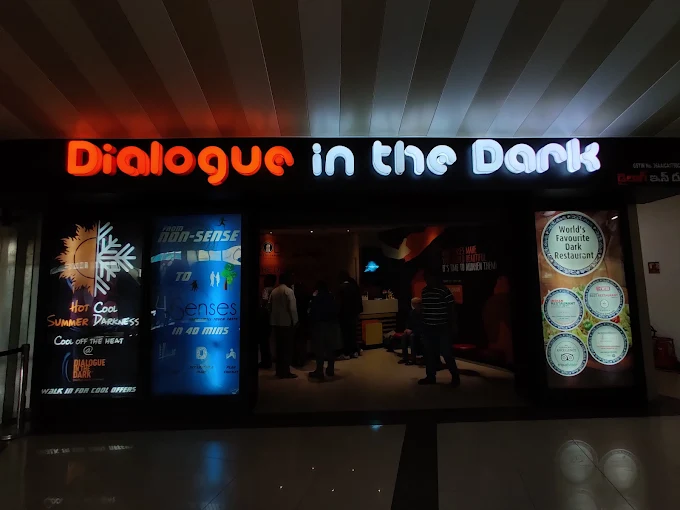
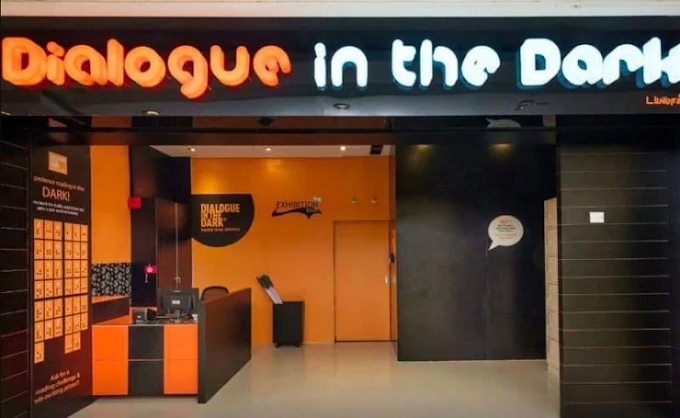
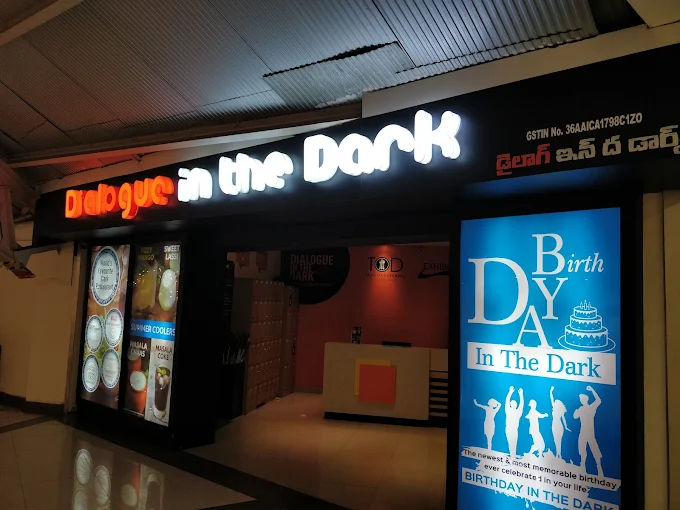
The idea of dining in darkness has been explored in different parts of the world, sometimes primarily as a sensory experience and elsewhere with a larger social purpose. Hyderabad, too, experienced this concept through Dialogue in the Dark at Inorbit Mall, where visitors entered a completely dark environment and were guided by visually impaired people. The Hyderabad experience is no longer operating at that location, but the humane idea behind it remains relevant and deserves to be revisited.
A dark restaurant should never be understood merely as a restaurant with an unusual ambience. At its best, the concept asks sighted people to surrender, temporarily and voluntarily, something they normally take completely for granted. In doing so, it can open a conversation about visual impairment, independence, accessibility, employment and, most importantly, the assumptions we make about other people’s abilities.
EXPERIENCING LIFE BEYOND SIGHT
Take away sight from a meal and the other senses begin demanding greater attention. The aroma of food becomes more pronounced, texture becomes more important and the sound of a person’s voice assumes a different significance. A diner becomes more conscious of where things are placed and more dependent upon communication and trust. The reassuring presence of someone who knows how to navigate the darkness can suddenly matter enormously.
For a sighted person, such an experience can offer a small insight into how dependent everyday life is upon vision. It can make us think about tasks we perform almost automatically and about how differently environments need to be approached when visual information is unavailable.
There is, however, an important distinction. A short period spent dining in darkness cannot replicate blindness, and it should never pretend to do so. The sighted visitor knows that the experience is temporary and that the lights will eventually return. The everyday realities of living with visual impairment are far more complex than anything that can be understood over the course of a meal.
The real value of the experience lies elsewhere. It interrupts familiarity and encourages the visitor to ask a question that may rarely occur in ordinary circumstances: How would the world feel if I had to experience it differently?
That question can be the beginning of empathy.
FROM CURIOSITY TO EMPATHY
Many visitors would naturally approach a dark dining experience out of curiosity. Eating without seeing one’s food is unusual, perhaps even exciting. In an age when people constantly search for new experiences to photograph, record and share, the novelty itself could easily become the attraction.
But the idea becomes far more meaningful when the experience leaves behind something more enduring than a social-media post.
Dining in darkness can encourage people to think about accessibility in everyday life. How easily can someone with visual impairment navigate a public building? Is information available in accessible forms? How inclusive are our schools, offices, transport systems and public spaces? Do employers see a person’s capabilities first, or does the disability become the first and sometimes only thing they notice?
These are much larger questions than a restaurant can answer. But a carefully designed experience can begin the conversation.
This is particularly significant when visually impaired people themselves are involved meaningfully in the experience. In ordinary circumstances, society frequently imagines the sighted person as the guide and the visually impaired person as someone requiring assistance. Inside a dark environment, those roles can change dramatically. The sighted guest may become uncertain and dependent upon instructions, while a visually impaired guide who is confident in navigating without sight becomes the person providing reassurance.
For a short period, the conventional assumption about who is helping whom is reversed. That can teach more about ability than any amount of sentimental messaging.
ABILITY BEFORE DISABILITY
One of the strongest possibilities within the dark restaurant concept is employment. Visually impaired people can take meaningful roles in hospitality, customer interaction, training, operations and sensory-based experiences wherever those responsibilities are appropriate, properly supported and safe. Their involvement should not be presented as charity, nor should employees become exhibits intended to make customers feel sympathetic.
The principle should instead be straightforward: recognise ability before disability.
Employment is more than a source of income. It provides independence, confidence, professional identity and participation in society. When businesses create genuine opportunities for people with disabilities, the message is fundamentally different from one based upon pity. It says that a person has something valuable to contribute and deserves the opportunity to contribute it.
The philosophy behind such employment can perhaps be expressed in one simple sentence: “We don’t need sympathy. We need opportunity.”
That distinction matters. Sympathy may be well intentioned, but opportunity creates participation. A visually impaired employee should not be valued because employing that person makes an organisation appear compassionate. The employee should be valued because he or she is capable of doing meaningful work.
A dark restaurant can make this idea unusually visible, even while operating in darkness. The person whom a sighted guest may initially have assumed needed assistance may become the very person upon whom the guest depends.
WHY HYDERABAD MATTERS
Hyderabad offers an interesting cultural setting for such an idea because food and hospitality are deeply woven into the identity of the city. Its culinary traditions are celebrated far beyond Telangana, while eating together remains an important social experience for families, friends and visitors.
Dining in darkness adds another dimension to that culture of hospitality. The experience is no longer only about serving good food. Communication, trust, assistance and understanding become equally important.
Such a concept can appeal to families, young people, corporate groups, students, entrepreneurs and visitors. For children and young adults in particular, it can become an informal lesson in empathy and accessibility. Instead of merely being told in a classroom that people experience the world differently, they encounter a situation in which communication and trust become immediately necessary.
That experience should not be exaggerated. A meal will not transform everyone’s understanding of disability, nor will it solve the structural problems faced by people with visual impairment. But meaningful experiences can sometimes begin conversations that abstract instruction does not.
WHEN BUSINESS MEETS SOCIAL PURPOSE
A socially meaningful restaurant does not necessarily have to choose between commercial viability and social purpose. If professionally managed, a dark dining experience can operate as a genuine hospitality business while incorporating an equally genuine social objective.
Employment opportunities for visually impaired people could form one part of that model. Accessibility and empathy programmes could provide another. Student and corporate experiences, skill development, vocational training, inclusive hospitality practices and collaborations with organisations working with persons with disabilities could extend the impact beyond the dining table.
The important word, however, is genuine.
Social purpose should not become a marketing device. If a restaurant presents itself as an inclusive enterprise, that commitment should be visible in its employment practices, training, accessibility and treatment of employees. The social component should be sustainable, measurable and integrated into the business rather than appearing only in advertising material.
This is particularly important when disability is involved. People with disabilities should never be used as inspirational props for customers. Inclusion means treating people as professionals, colleagues and contributors, with the same dignity and expectations afforded to anyone else.
A responsible enterprise could therefore ask itself some practical questions.
Is it creating meaningful and sustainable employment?
Is it providing proper training?
Are employees receiving opportunities to develop professionally?
Are accessibility principles incorporated into the organisation itself?
Is its social mission producing measurable outcomes?
When the answers to such questions are positive, commercial activity and social purpose can strengthen rather than contradict one another.
WHAT HAPPENS AFTER THE MEAL?
Perhaps the most powerful part of dining in darkness is not what happens during the meal but what happens when it ends.
When the lights return, the sighted guest once again sees the table, the plate, the room and the faces around it. Actions that had required caution only moments earlier become effortless again. But the experience may have altered the way the guest looks at the person who provided guidance through the darkness.
That person is no longer simply a staff member. For part of the evening, he or she possessed skills and confidence upon which the guest depended. The experience can therefore challenge a familiar social assumption: disability does not automatically mean inability, and independence does not always belong to the person who can see.
The menu, too, becomes more than food, and the restaurant becomes more than a place to eat. Darkness has provided a setting for conversations about inclusion, dignity, independence and human potential.
The real success of such an experience should therefore not be measured only by the number of meals served. It should also be measured by what people carry away from the table.
Does a student begin thinking differently about accessibility? Does an employer reconsider what a visually impaired person may be capable of doing? Does a family discuss inclusion on the journey home? Does someone begin noticing barriers in public spaces that had previously been invisible to them?
If so, the darkness has served a purpose.
A MOMENT OF GRATITUDE
There is another response that dining in complete darkness can produce: gratitude.
Sighted people rarely begin their day thinking about the ability to see. We open our eyes, recognise the room, read a message, choose our clothes, cross a road, recognise a face and move through familiar surroundings without considering how heavily we depend upon vision. What is continuously available to us easily becomes invisible as a privilege.
When light returns after a period of complete darkness, even ordinary things can momentarily appear different. A face, a plate of food, the colour of a wall or simply the ability to walk confidently across a room may acquire renewed significance.
It is understandable that such a moment might inspire a simple expression: “Thank you, God, for the gift of sight.”
But gratitude for sight should not become pity for those who do not possess it. That would miss one of the most important lessons of the experience. A visually impaired person’s life should not automatically be imagined as a tragedy, nor should disability be allowed to define the totality of an individual.
Indeed, the experience may have demonstrated precisely the opposite. In darkness, the visually impaired person may have been more confident than the sighted guest. The person we instinctively imagined as needing assistance may have been the person providing it.
That realisation can be more valuable than sympathy.
BEYOND THE DARKNESS
The larger purpose of a dark restaurant should therefore be much greater than creating an unusual dining destination. Novelty may bring people through the door, but awareness, dignity and inclusion should give the experience its meaning.
For one evening, a sighted customer voluntarily gives up the ability to see. In return, the experience can offer an opportunity to listen more carefully, trust another person, reconsider familiar assumptions and become more conscious of a sense that is usually taken for granted.
No restaurant can reproduce the lived reality of visual impairment, and no single meal can create an inclusive society. But a thoughtfully designed experience can start a conversation, and conversations sometimes change the way people see one another.
Perhaps that is the most humane idea behind dining in darkness. We enter believing that the experience is about what happens when we cannot see. We may leave understanding that the more important question is how clearly we see other people when the lights are on.
And if that experience allows us to return to the world with a little more gratitude for what we have, a little more respect for what others can do and a little less willingness to define a person by disability, then the darkness has illuminated something worthwhile.