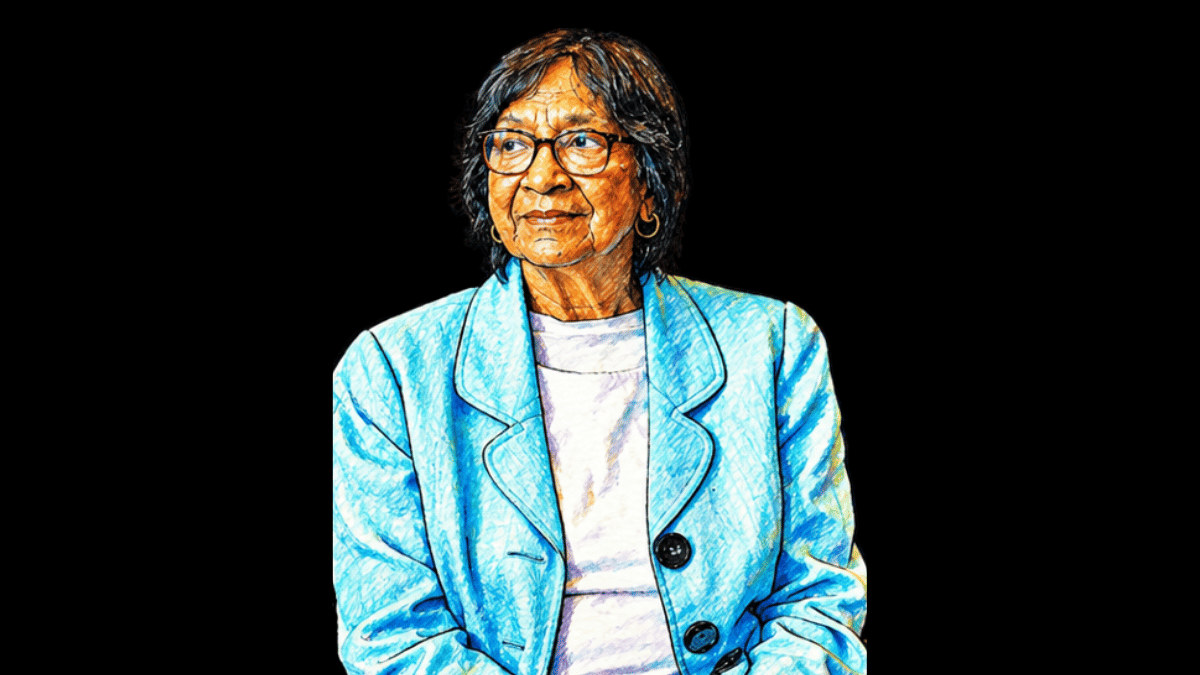
Navi Pillay: A Fearless Life Defending Justice Against The Powerful
From apartheid-era Durban to the highest courts of international law, the 2026 Nobel Peace Prize laureate has spent a lifetime asking whether power can be made answerable to principle.
By Melwyn Williams | Cover Story | November 2026
The courtroom that brought a life full circle
On 9 October 2026, Navanethem “Navi” Pillay was seated in Courtroom 600 in Nuremberg, Germany, listening to a discussion about justice and reparations. It was the room in which leading figures of Nazi Germany had faced trial after the Second World War, a place that helped define the modern expectation that even those who wield enormous power can be called to account.
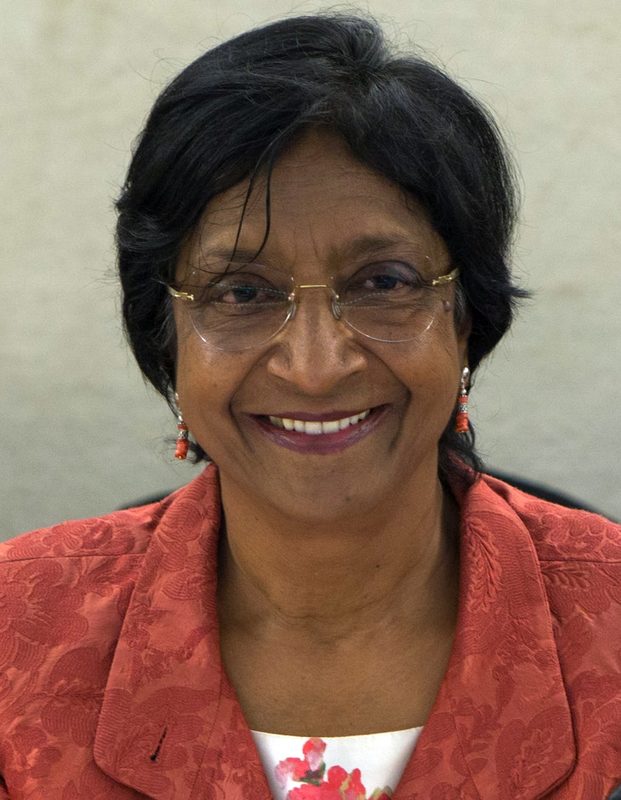
Then came unexpected news. The Norwegian Nobel Committee had chosen Pillay for the 2026 Nobel Peace Prize, recognising her work for peace and international law. At a gathering devoted to the legacy of international justice, the announcement brought her career into extraordinary focus.
There was a remarkable earlier chapter to this moment. Decades before, as a law student in racially divided South Africa, Pillay had discovered transcripts of the Nuremberg Trials in the library of the University of Natal. She had been studying in a system that segregated students by race. Those records introduced a profoundly different possibility: law need not merely protect authority; it could also restrain it.
The distance between those two scenes is the distance of an exceptional life. The young woman who read about justice from the margins of an unequal society became a lawyer confronting apartheid, a judge in cases arising from genocide, a leader of international human rights institutions and, at 85, a Nobel laureate.
But the central story is not the accumulation of offices or honours. It is the persistence of one difficult question through decades of political change: what happens when the people or institutions accused of doing harm are also the ones with the greatest power to escape scrutiny?
For WFY, Pillay’s life carries particular resonance. She is South African by birth, Indian Tamil by ancestry and international in the reach of her work. Her story shows how a person shaped by a history of exclusion can help build institutions intended to protect people far beyond any single community.
A childhood under a system built on separation
Pillay was born on 23 September 1941 in the Clairwood area of Durban, South Africa. Her father drove a bus, and her family lived in a modest Indian neighbourhood. She grew up as the country’s racial hierarchy hardened into the official system of apartheid, under which where people could live, study, work and move depended on classifications imposed by the state.
For a child of Indian descent, discrimination was not an abstract political debate. It shaped the ordinary geography of life: schools, public facilities, professional opportunities and access to institutions that were meant to serve everyone. Those restrictions communicated a message about who deserved to be heard and who could expect protection.
This background matters because Pillay’s later insistence on equal legal standards did not begin in an international courtroom. It began in a country where the law itself was used to organise inequality. An unjust rule could arrive wearing the appearance of official procedure. A judge, police officer or government department could act within a legal structure while denying people their basic dignity.
Pillay studied at the University of Natal, earning a bachelor’s degree in the early 1960s before qualifying in law. University gave her knowledge and credentials, but it did not remove the barriers awaiting a Black woman entering a profession dominated by white men. She encountered a country that needed advocates for those excluded from power while making it extraordinarily difficult for someone like her to become one.
The Nuremberg transcripts she found as a student suggested a wider legal horizon. They described an attempt, however imperfect, to place individuals on trial for atrocities carried out under state authority. The principle was startling in its implications: an official position, a military command or a claim of obedience did not necessarily place someone beyond moral and legal responsibility.
The idea stayed with her long before she had the opportunity to put it into practice on an international stage.
Opening a door that had been kept closed
In 1967, Pillay established a legal practice in Natal, becoming a pioneering Black woman in a profession with few openings for her. It was an achievement that should not be mistaken for easy acceptance. The obstacles were both formal and social, reinforced by an apartheid legal order and by assumptions about race and gender within the profession.
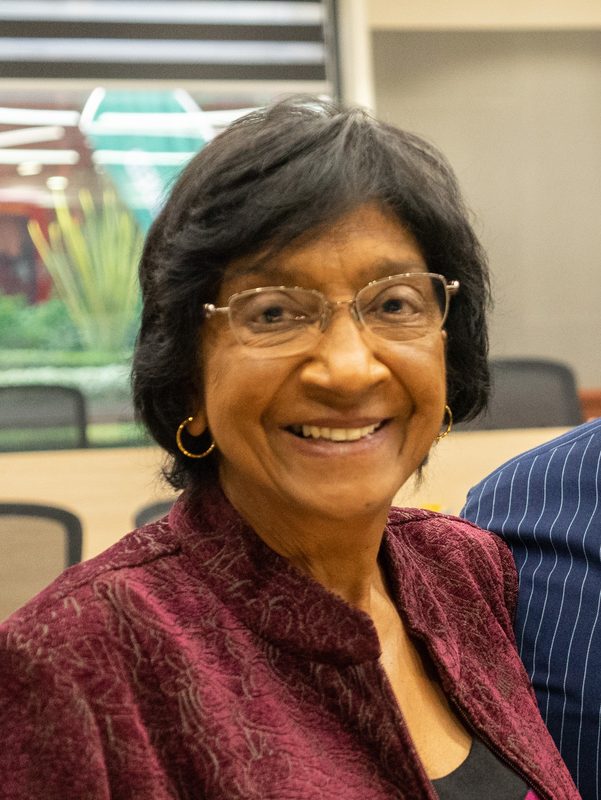
Her practice brought her into contact with anti-apartheid activists, political prisoners and women seeking protection from abuse. She worked on matters involving the rights of imprisoned opponents of apartheid, including Nelson Mandela, and challenged restrictions that denied detainees proper legal access. She also confronted the vulnerability of women whose suffering was too often dismissed as a private matter.
The work carried personal costs. Her husband was detained by apartheid authorities, bringing the machinery of political repression into her own family life. In the early 1970s, she helped secure an important legal victory concerning prisoners’ access to lawyers. Such gains did not dismantle apartheid, but they mattered to people facing a state that could isolate them and control the conditions of their detention.
These years reveal an important feature of her approach. The work of justice is not always expressed in grand declarations. Sometimes it means ensuring that a person in custody can see a lawyer. Sometimes it means recording abuse that an institution would prefer to conceal. Sometimes it means returning to court after a setback because the alternative is accepting that a person’s rights exist only on paper.
Pillay’s legal work also took place within a wider struggle led by countless South Africans. Her contribution belongs to that collective history; it does not replace it. Organisers, political prisoners, community leaders, workers and lawyers all confronted apartheid from different positions. An honest account of her career recognises both her individual courage and the broader movement that made democratic change possible.
From an outsider in the courts to a judge
When South Africa moved towards democracy, the significance of those decades became clearer. In 1995, Pillay was appointed to the country’s High Court, becoming its first Black woman judge. The appointment was a personal milestone, but it also carried the symbolism of a system being asked to transform.
For much of her career as a lawyer under apartheid, she had been barred from entering a judge’s chambers because of racial rules. Now she would sit on the bench herself. The shift said something powerful about democratic possibility, while also reminding the country that removing legal exclusions could not immediately erase the habits and inequalities they had produced.
That same year, Pillay’s professional life took another dramatic turn. She joined the International Criminal Tribunal for Rwanda, established after the 1994 genocide against the Tutsi. Its task was to prosecute those responsible for genocide and other grave violations of international humanitarian law.
South Africa had just begun constructing a more democratic future. Rwanda, meanwhile, was confronting the aftermath of mass killing and devastation. Moving from one setting to the other brought Pillay face to face with a terrible global question: what can courts realistically accomplish after violence has already shattered a society?
Rwanda and the meaning of accountability
The Rwanda tribunal operated in Arusha, Tanzania. Its setting was far removed from the communities where the crimes had taken place, and the challenges were considerable. Witnesses had endured profound trauma. Prosecutors and defence lawyers came from different legal traditions. Investigators needed reliable evidence, interpreters and the cooperation of governments. Proceedings were expensive and often painfully slow.
An international trial also has two demanding obligations that can appear to pull in different directions. It must take victims seriously, particularly those whose stories have long been ignored. At the same time, it must give accused persons a fair trial, requiring proof rather than assuming guilt from the scale or horror of events. Without that fairness, an institution created to demonstrate the rule of law risks weakening its own authority.
Pillay’s work at the tribunal brought those obligations together. One of the most consequential judgments in which she participated was the 1998 case against Jean-Paul Akayesu, a former local official. A panel of three judges convicted him of genocide, making the case a landmark in international criminal justice.
The judgment also helped change how international law treated sexual violence in conflict. The tribunal recognised that rape and other sexual violence could amount to acts of genocide when committed with the specific intent required by the Genocide Convention: the intent to destroy, in whole or in part, a protected national, ethnic, racial or religious group.
That legal development was not a claim that every act of sexual violence during war automatically constitutes genocide. It was a recognition that such violence can be central to campaigns of persecution and destruction and must be examined with the same seriousness as other atrocities.
Pillay was one member of the three-judge panel, not the sole author of the decision. Nevertheless, her influence on its treatment of sexual violence has been widely recognised. Her years of advocacy for women had prepared her to notice harms that legal systems sometimes treated as secondary, inevitable or too difficult to address.
Why does a change in legal language matter? Because what a court is willing to name affects what investigators collect, what prosecutors pursue and what survivors may eventually be able to establish in the public record. The law cannot undo an assault or restore a lost life. It can, however, reject the idea that certain suffering is too ordinary to count.
The difficult business of making justice work
Pillay became president of the Rwanda tribunal in 1999 and served in that role until 2003. If the Akayesu judgment showed what international law could achieve at its best, the presidency exposed the practical obstacles standing between legal ideals and justice delivered.
The problems included administrative delays, shortages of equipment, difficulties with interpretation and the complicated task of securing witness cooperation. Trials could stretch far longer than victims, accused persons or observers had expected. The tribunal also faced criticism for its distance from ordinary Rwandans, for high costs and for the limits of the cases it could pursue.
These were not incidental weaknesses. A criminal court that moves too slowly can fail the very people it exists to serve. Witness memories fade, families wait for answers, communities struggle to understand proceedings taking place elsewhere and accused persons remain in legal uncertainty.
Nor can a verdict alone rebuild the trust destroyed by genocide. Criminal justice can establish responsibility for particular acts, while healing requires broader social work: remembrance, education, reparations where possible, institutional reform and long-term political commitment. The two are connected, but they are not interchangeable.
Pillay’s career is often described through landmark decisions. Its less glamorous lesson is that justice also depends on translators arriving on time, evidence being preserved, witnesses being protected and institutions resisting bureaucracy. A lofty principle has limited value if the machinery intended to uphold it cannot function.
Building a court intended to outlast a crisis
In 2003, Pillay joined the International Criminal Court in The Hague, serving as a judge until 2008. The ICC represented a different ambition from the tribunal created for Rwanda. Rather than being established for a single conflict, it was designed as a permanent court dealing with genocide, crimes against humanity, war crimes and, under the applicable legal framework, the crime of aggression.
The distinction matters. Temporary tribunals respond after catastrophe. A permanent institution attempts to make accountability part of the continuing international order. In principle, its existence tells leaders and armed groups that the possibility of prosecution need not depend on a fresh political agreement after every new conflict.
Yet the ICC has never possessed unlimited jurisdiction or the independent enforcement power of a national police force. Its authority depends on legal rules about territory, nationality, referrals and cooperation. Some major states do not belong to its treaty system. Arrests may depend on governments willing to execute warrants, and political pressure can obstruct investigations or make justice appear selective.
To understand Pillay’s commitment to the court, it is necessary to keep its ambition and its constraints in view. International criminal law does not abolish power politics. At best, it creates rules and forums that make some abuses harder to deny, some decisions harder to justify and some individuals less certain of permanent impunity.
That achievement is meaningful, but it is incomplete. A court may issue a judgment without securing every suspect. An investigation may document atrocities without stopping ongoing violence. Families may receive a measure of public truth while still waiting for safety and reconstruction. Justice is not a single dramatic verdict; it is a process that can remain unfinished for years.
A voice for rights beyond the courtroom
In 2008, Pillay became the United Nations High Commissioner for Human Rights, serving until 2014. The role changed the nature of her influence. Instead of adjudicating individual cases, she was now expected to draw attention to patterns of abuse, press governments to meet human rights obligations and speak for people often absent from international political discussions.
That work involved civil and political freedoms, discrimination, violence against civilians and accountability for serious violations. The office’s reach is global, but its influence is shaped by diplomacy, the cooperation of states, the quality of information available and the attention of the international community.
The High Commissioner may sound an alarm, document abuses and urge governments to act. The office cannot command a country’s security forces or guarantee that a recommendation will be followed. Its value lies partly in keeping principles visible when powerful actors would prefer silence.
Pillay’s experience on both sides of that divide helped shape her public role. She knew why evidence and legal precision matter, but she also knew the danger of waiting until every institution agrees before acknowledging the suffering of people in immediate need.
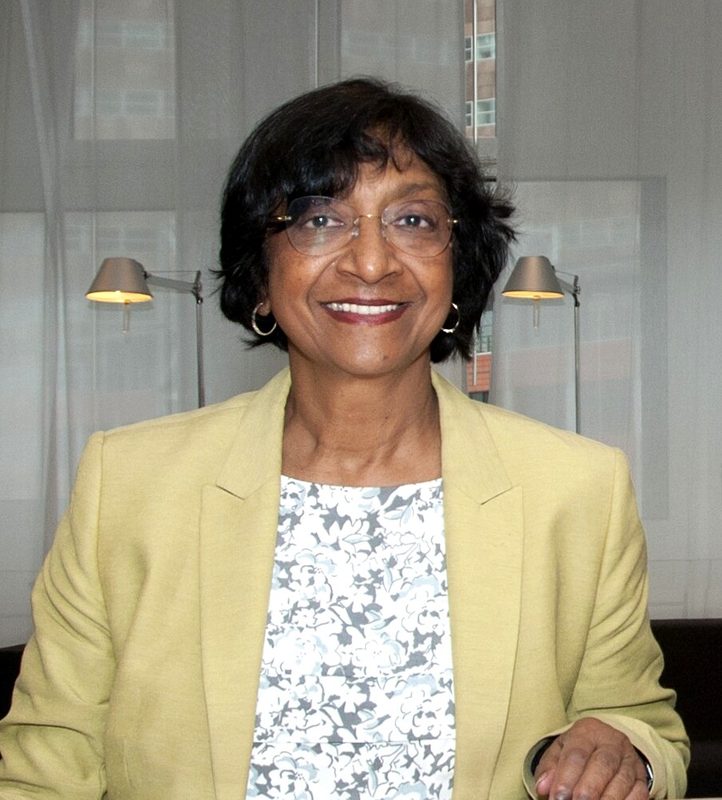
Her career subsequently included service as a judge ad hoc at the International Court of Justice in the case brought by The Gambia against Myanmar under the Genocide Convention. That work belongs to a different legal framework from the ICC: the International Court of Justice deals principally with disputes between states, while the ICC prosecutes individuals. The distinction may appear technical, but it determines whose responsibility is being examined and what remedies a court can provide.
Across these roles, Pillay moved between local rights, individual criminal accountability and the responsibilities of states. The common thread was the effort to give legal meaning to the claim that human dignity does not end at a border or at the office door of a powerful official.
When the principles become politically uncomfortable
Any serious cover story about Pillay must also examine the controversies surrounding her more recent work. From 2021 to 2025, she chaired a United Nations Independent International Commission of Inquiry mandated to investigate alleged violations of international human rights law and humanitarian law in Israel and the Occupied Palestinian Territory.
The commission investigated the attacks by Hamas and other armed groups against civilians in Israel on 7 October 2023, including killings and hostage-taking. It also examined Israeli military operations and conduct in Gaza and the wider occupied territory. Its 2024 findings addressed alleged crimes by different parties, including serious violations attributed to Hamas and Israeli authorities.
In September 2025, the commission issued a report concluding that Israel had committed genocide against Palestinians in Gaza. Israeli authorities rejected that conclusion and challenged the commission’s credibility and methods. The disagreement was substantial, not a minor footnote, and it became a significant part of the response to Pillay’s work and later Nobel recognition.
It is essential to explain precisely what such a finding means. An investigative commission is not a criminal court, and its report is not a binding judicial verdict. Its assessment may contribute to public debate and legal scrutiny, but it should not be described as a final determination by the International Court of Justice or International Criminal Court. Those institutions have different mandates, procedures and standards.
Nor should the existence of controversy excuse poor reporting. Allegations about the conduct of Hamas, Israel or any other actor should be attributed to the institutions making them, examined in their proper legal context and presented with the relevant responses. Civilians’ suffering does not disappear because political leaders dispute responsibility. Equally, an accusation does not become a court judgment merely because it appears in a United Nations document.
The central test of the rule of law is especially demanding in such circumstances. Can an inquiry protect its independence while its findings are fiercely contested? Can it document crimes by more than one party without allowing one tragedy to erase another? Can officials apply consistent standards while being accused of partiality by those under investigation?
These are legitimate questions for readers to ask. Pillay’s record deserves scrutiny, as does the work of every international institution. Respect for a jurist’s achievements does not require uncritical acceptance of every conclusion reached by a body she has led. In fact, insistence on transparency, evidence and procedural fairness is among the strongest ways to take her lifelong principles seriously.
The limits of a world governed by law
The Nobel recognition arrived at a time when international institutions faced enormous pressure. Wars continued, major powers disputed the authority of global courts and governments often demanded accountability for their adversaries while resisting scrutiny of their own decisions.
The contradiction runs to the heart of Pillay’s life’s work. International law is strongest when states accept that rules may bind them even when doing so is inconvenient. It is weakest when law becomes merely another instrument of political rivalry, invoked against opponents and ignored by allies.
Critics of international criminal justice point to uneven enforcement, slow investigations, extraordinary expense and the risk that courts may appear more willing or able to pursue leaders from some regions than others. These concerns are not trivial. When a system claims universal principles but delivers visibly uneven outcomes, trust suffers.
Yet there is another side to the argument. Before international criminal mechanisms developed, political leaders could more easily assume that certain atrocities would remain beyond legal examination outside their own states. The creation of tribunals, the preservation of evidence and the possibility of individual prosecution have changed that calculation, even if only partially.
The useful question is therefore not whether international law has solved global injustice. It plainly has not. The question is whether the world is better served by improving imperfect institutions or by abandoning the principle that powerful actors should face independent scrutiny. Pillay’s career presents a sustained argument for the first course.
That position can be defended without romanticising courts. Law needs political commitment, and political commitment needs citizens who understand why independent institutions matter. Neither noble language nor a prestigious prize can replace the patience required to make those institutions fair, accessible and effective.
A daughter of the diaspora, a citizen of a wider cause
For the global Indian community, Pillay’s journey carries meaning beyond the Nobel announcement. Born into a family of Indian Tamil origin in Durban, she inherited a history of migration and a place within South Africa’s complex social landscape. Her life’s work was not confined to the concerns of people sharing her ancestry, yet that background was part of the experience that made exclusion impossible for her to overlook.
Her most enduring contribution was not simply to enter institutions that had once excluded people like her. It was to use those institutions to address the needs of others: prisoners without access to lawyers, survivors of mass violence, women whose testimony had been marginalised and communities demanding that their suffering be investigated.
This is a more demanding model of representation than personal success alone. It suggests that education and professional opportunity carry responsibilities, especially for those who know what exclusion feels like. The measure of progress is not only who reaches a position of influence, but also whose rights are better protected because that influence exists.
There is also a lesson about identity. Pillay’s Indian heritage, South African upbringing, international training and work across continents did not require her to choose a single community’s dignity over another’s. Her professional commitments rested on the proposition that basic legal protections belong to people regardless of nationality, religion, ancestry or political allegiance.
In a world where identity is often used to divide, that is a powerful inheritance for younger members of the diaspora. Roots can provide a sense of belonging without narrowing the circle of people whose lives matter.
What the Nobel Prize recognises, and what it cannot finish
The Norwegian Nobel Committee announced the 2026 Peace Prize on 9 October. The formal presentation is scheduled for 10 December in Oslo. For Pillay, the honour recognises a career stretching from apartheid South Africa to the international legal institutions that developed in the decades after the Second World War.
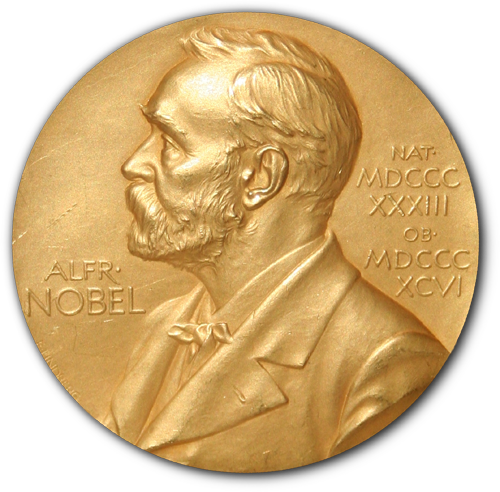
It does not mean every legal question associated with that career has been settled, every allegation proven or every institution placed beyond criticism. Nor does it guarantee that states will cooperate more readily with courts tomorrow than they did yesterday.
What the award can do is direct attention towards a principle that seems increasingly vulnerable: no person or government should be automatically exempt from examination because of wealth, force, office or international influence. The idea is simple to state and profoundly difficult to sustain.
Pillay’s life also complicates the familiar image of the solitary hero. The judgments that shaped international law were written by benches of judges, built on evidence gathered by investigators, advanced through arguments by lawyers and made possible by people willing to testify. Her accomplishments emerged from collective institutions, and those institutions could function only because many people accepted the slow, often unspectacular work of law.
That does not diminish her role. It locates her leadership where it belongs: in a commitment to make institutions stronger than any single personality. Public life desperately needs such examples, particularly when personal power is celebrated more loudly than public responsibility.
For students of journalism, law and public affairs, her career offers a second lesson. To tell stories of injustice well, one must be willing to distinguish a claim from a finding, a finding from a judgment, and a judgment from the actual delivery of remedy. Precision does not weaken a moral argument. It protects its credibility.
And for ordinary citizens, Pillay’s story offers a reminder that large changes often begin in modest places. An aspiring lawyer reads courtroom records in a university library. A prisoner gains access to legal counsel. A survivor’s testimony changes how a court understands a crime. None of these moments ends injustice. Together, they can alter what societies are willing to accept.
Back to Courtroom 600
It is difficult to imagine a more fitting setting for the announcement of Pillay’s Nobel Prize than Nuremberg. As a young student in Durban, she had encountered that city’s trials through printed pages, at a time when the law around her protected a system of racial separation. On a day in October 2026, she was physically present in the courtroom where an earlier generation had sought to establish that even the most powerful officials could be held accountable.
The symbolism is striking, but the work remains unfinished. International institutions continue to struggle with selective enforcement, conflict, political resistance and the expectations of people who need protection now, not after years of procedure. Those problems will not disappear with an award ceremony.
Pillay’s achievement is to have helped move an aspiration from the page to practical legal institutions, while witnessing their limitations firsthand. She has seen laws used to deny people equality, and she has helped courts articulate rules intended to defend it. She has experienced the distance between authority and accountability from both sides of the bench.
The deepest meaning of her life lies there. Justice is not proved by how confidently the powerful speak of it. It is proved by whether the vulnerable can invoke it, and whether the powerful must answer to it.
That is why Navi Pillay belongs on WFY’s November cover. Her journey tells us not that the world has finally become just, but that the effort to make power answerable to law is worth pursuing, even when progress is slow, contested and incomplete.
Editorial disclaimer: This is an independently researched WFY biographical and analytical feature, not an interview with Navi Pillay, an authorised biography or an endorsement by the subject or any organisation mentioned. Legal findings are attributed to the bodies that made them. Investigative commission assessments should not be confused with final, binding court judgments. The article reflects information available as of 31 October 2026; legal proceedings and public positions may subsequently change.