
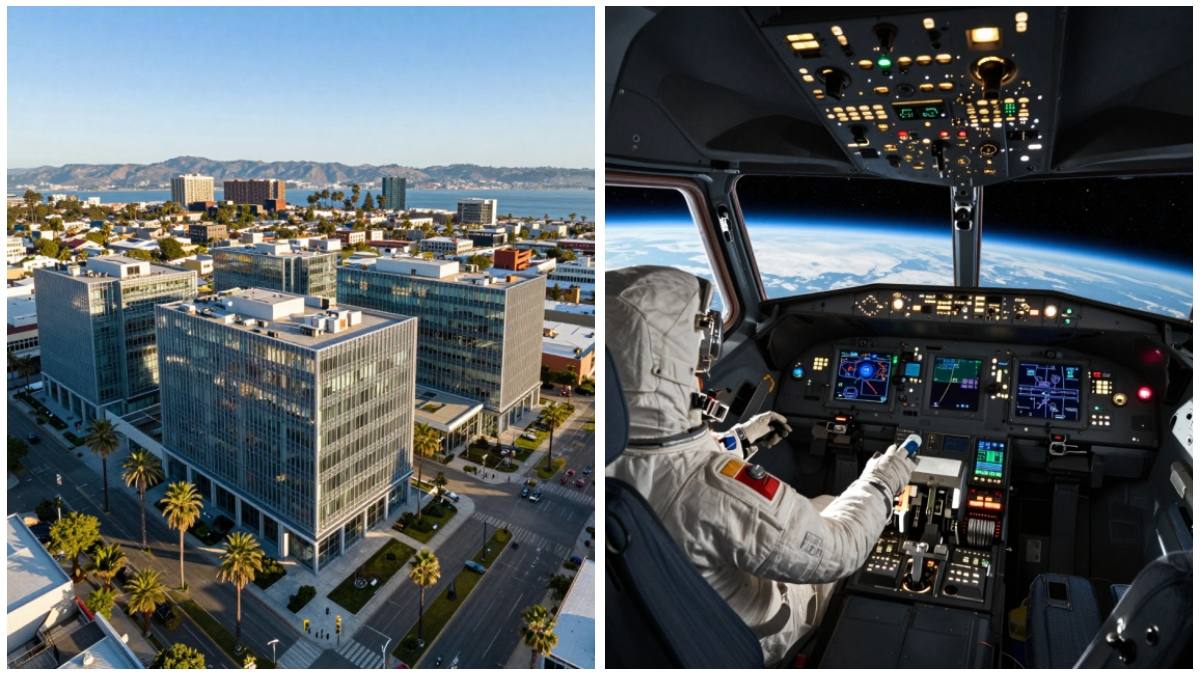
The Great Indian Talent: From Silicon Valley To Space Exploration, The Best In The World
From Silicon Valley To Space Exploration: Indian-Origin Scientists On The Frontier
The New Geography Of Scientific Discovery
For much of modern history, scientific progress was often associated with particular nations, institutions and laboratories that served as centres of intellectual gravity for the rest of the world. Britain dominated much of the nineteenth century scientific landscape, while the twentieth century witnessed the rise of the United States as the principal destination for research funding, technological innovation and advanced scientific education. Today, however, scientific discovery increasingly resembles a global network rather than a collection of isolated national efforts. Researchers collaborate across continents, universities operate multinational partnerships and major breakthroughs frequently emerge from teams whose members may never share the same country, language or cultural background.
Few communities illustrate this transformation more clearly than scientists and researchers of Indian origin. Their presence has become increasingly visible across some of the world’s most advanced laboratories, universities, research centres and technology companies. Whether in artificial intelligence institutes in California, biomedical laboratories in Cambridge, quantum computing centres in Europe or space agencies in North America, Indian-origin scientists are contributing to work that extends far beyond national borders and immediate commercial interests.
This development reflects broader changes in both migration and education during the latter half of the twentieth century. Universities in the United States, Britain, Canada and Australia attracted large numbers of students from India who later entered research careers in engineering, medicine, computing and the physical sciences. Successive generations built upon these foundations, creating academic and professional networks that continue to influence scientific research today. The result has been the emergence of an extraordinarily international scientific community in which expertise and collaboration matter far more than geography or nationality.
The significance of this trend extends beyond questions of representation or diversity. Science itself is becoming increasingly dependent upon the movement of talent across borders. Large-scale projects in fields such as particle physics, climate science, genomics and space exploration require expertise that no single country can supply independently. In this environment, highly skilled scientific migration has become an essential component of global innovation rather than merely a consequence of it.
For Indian-origin scientists, this has created opportunities to participate in some of humanity’s most ambitious intellectual and technological projects. Their contributions increasingly shape discoveries that influence healthcare systems, energy transitions, environmental policy and our understanding of the universe itself. The story of Indian-origin science in the twenty-first century is therefore not simply a story of migration or professional success. It is a story about the changing nature of scientific discovery in an interconnected world.
Reaching For The Stars: Indian-Origin Scientists In Space Exploration
Space exploration remains one of humanity’s most ambitious scientific pursuits, combining engineering, physics, mathematics, computing and international cooperation on a scale rarely seen elsewhere. Over the past two decades, scientists and engineers of Indian origin have become increasingly visible within this frontier sector, contributing to projects involving planetary exploration, satellite technologies, deep-space missions and next-generation aerospace systems.
Their presence can be found across both public institutions and private companies. Space agencies such as NASA continue to attract researchers and engineers of Indian heritage working in areas ranging from propulsion systems and robotics to planetary science and mission design. The growth of commercial space companies has further expanded opportunities for highly specialised scientists and engineers, particularly in fields such as reusable launch systems, autonomous navigation and advanced materials engineering.
The commercialisation of space has fundamentally altered the scientific landscape. What was once dominated by national governments and Cold War competition is increasingly characterised by public-private partnerships and international collaboration. Satellites underpin global communications, weather forecasting, navigation systems and financial transactions, while advances in launch technology are rapidly reducing the cost of access to orbit. Scientists of Indian origin are contributing to many of these developments, often working within multinational teams whose projects have implications for entire industries rather than individual countries.
Planetary science represents another area of growing influence. Missions to Mars, lunar exploration programmes and research involving asteroids and deep-space environments depend upon extraordinarily diverse expertise drawn from institutions around the world. The complexity of modern space science means that discoveries increasingly emerge from collaborative ecosystems rather than isolated laboratories. In many respects, space exploration has become one of the clearest examples of global science in action.
The significance of these contributions extends beyond scientific achievement alone. Space technologies increasingly influence national security, telecommunications, agriculture, climate monitoring and disaster management. As governments invest more heavily in strategic space capabilities, scientists and engineers capable of operating at the frontier of aerospace research are becoming increasingly important to economic competitiveness and technological sovereignty.
Beyond Space: Medicine, Climate Science And The Next Scientific Frontiers
The influence of Indian-origin scientists extends far beyond rockets and spacecraft. Biotechnology, medicine, climate science, advanced materials and quantum computing are all witnessing significant contributions from researchers working across universities, hospitals, government laboratories and private research institutions around the world.
Medicine remains one of the most visible examples. Researchers of Indian heritage occupy senior positions in pharmaceutical companies, biomedical research institutes and public health organisations involved in the development of new therapies, diagnostic technologies and treatment protocols. The experience of the COVID-19 pandemic demonstrated the importance of international scientific collaboration and highlighted the increasingly global nature of modern medical research. Scientific advances developed in one laboratory can rapidly influence healthcare outcomes on the other side of the world.
Climate science presents another frontier where international expertise has become indispensable. Rising temperatures, changing weather patterns and environmental degradation do not recognise political boundaries, requiring coordinated research efforts involving meteorologists, data scientists, oceanographers and environmental engineers from multiple countries. Scientists of Indian origin contribute significantly to research involving climate modelling, renewable energy technologies and sustainability solutions that are likely to shape economic policy throughout the coming decades.
Quantum computing and advanced computing technologies represent perhaps the next major scientific revolution after artificial intelligence. Governments and corporations are investing billions of dollars into research that could transform cybersecurity, pharmaceutical development, logistics and materials science. Universities and laboratories across North America, Europe and Asia are competing to develop practical quantum technologies, and researchers of Indian origin are increasingly visible within these programmes.
What unites these fields is their dependence upon collaboration, mobility and the exchange of ideas across borders. The image of the solitary scientist working in isolation has largely given way to international teams connected through digital infrastructure, shared databases and multinational funding arrangements. Scientific leadership in the twenty-first century is therefore becoming increasingly international, and Indian-origin scientists are among the communities most visibly benefiting from and contributing to this transformation.
The rise of Indian-origin researchers ultimately reflects a larger truth about modern science itself. Innovation no longer belongs exclusively to individual nations or institutions. It emerges from global networks of talent capable of moving freely between disciplines, organisations and countries in pursuit of solutions to challenges shared by humanity as a whole. From artificial intelligence and biotechnology to climate science and space exploration, the future of discovery is likely to be shaped not by geography but by collaboration.
If the twentieth century belonged to national scientific programmes and industrial laboratories, the twenty-first century may well belong to global scientific communities whose members are connected less by borders than by curiosity, expertise and shared ambition. Scientists of Indian origin are increasingly prominent within those communities, helping shape discoveries that will influence not only the future of technology but the future of civilisation itself.
Disclaimer: The views, opinions and interpretations expressed in articles published in WFY – World For You are those of the respective authors and contributors and do not necessarily reflect the official position of the Editor, Editorial Board, publishers or affiliated organisations. Every effort is made to ensure the accuracy and reliability of information at the time of publication. However, facts, figures, laws, regulations, policies, scientific understanding and global developments may change over time. Readers are advised to independently verify information and seek appropriate professional advice before making decisions relating to health, finance, legal matters, immigration, education, investments or any other specialised subject. Articles published in WFY – World For You are intended for general information, discussion and educational purposes only and should not be construed as professional, medical, legal, financial or other expert advice. References to organisations, institutions, products, services or individuals are made solely for editorial, informational or illustrative purposes and do not constitute endorsement or recommendation unless explicitly stated. All rights to original content remain with their respective authors and contributors unless otherwise specified. Unauthorised reproduction, distribution or republication of material published in WFY – World For You without prior written permission is prohibited. © 2026 WFY – World For You. All Rights Reserved.