

The Rise Of Arvid Lindblad: Grit In A New World
By Wilfred Melwyn, WFY Bureau | Sports | The WFY Magazine, January 2026 Anniversary Edition
ARVID LINDBLAD: A New Name, A Long Road, And A Global Gaze
Summary
At a time when global motorsport is becoming increasingly competitive, data-driven and unforgiving, Arvid Lindblad’s rise through the junior racing ranks has drawn attention well beyond the paddock. Of Indian origin and competing within one of the most demanding driver development systems in the world, his journey reflects not only exceptional talent but also the evolving realities of elite sport: early specialisation, intense pressure, cultural navigation and financial stakes. This article traces Lindblad’s background, racing progression and the broader system shaping his career, offering readers a clear view of what it now takes to reach the threshold of Formula One.
A teenager at the edge of a demanding world

In the intensely competitive universe of international motorsport, names appear early, rise fast and disappear just as quickly. Very few survive the unforgiving ladder from karting to the highest level of single-seater racing. Fewer still do so while carrying layered identities, cultural expectations and global scrutiny.
Among those navigating this narrow passage today is Arvid Lindblad.
Still in his teens, Lindblad has already entered conversations usually reserved for far older drivers. His performances in junior categories, combined with his presence in one of motorsport’s most exacting development systems, have placed him on a pathway that only a handful ever reach. For followers of racing, he represents promise. For the Indian diaspora, his story carries an added dimension, one rooted in heritage, representation and the widening geography of elite sport.
This is not a story of instant stardom. It is a story of systems, pressure, identity and the economics of modern racing.
The motorsport ladder: narrow, expensive and ruthless
To understand the significance of Lindblad’s journey, it is essential to grasp how contemporary motorsport works.
Formula racing does not operate like most professional sports. There are no mass drafts, no school leagues feeding professional clubs, and no guarantee that talent alone will carry a driver forward. Instead, the pathway from karting to the top tier is structured as a steep, tiered funnel.
Most professional drivers begin karting before their teenage years. By the age of 14 or 15, the strongest talents move into entry-level formula categories, often regional Formula 4 championships. From there, progression leads through Formula 3, Formula 2 and, finally, Formula 1.
At each step, the field narrows dramatically. Costs escalate sharply. Competition intensifies. Careers are often decided by hundredths of a second.
Studies of junior single-seater racing consistently show that less than one percent of karting entrants ever reach the highest levels of the sport. The reasons are not only performance-based. Funding, sponsorship, team access and political alignment within racing academies all play decisive roles.
In this context, any driver who reaches the upper levels of the junior system has already beaten extraordinary odds.

Early beginnings and structured exposure
Like many elite drivers, Lindblad’s motorsport journey began in karting, the proving ground where reflexes, racecraft and resilience are forged early. Karting circuits across Europe serve as a de facto training academy for future professionals, exposing young drivers to international competition long before adulthood.
What sets Lindblad apart is not simply early success, but the pace at which he adapted to structured, high-pressure environments. Moving from karts into formula machinery requires a rapid recalibration of skills. Cars are heavier, faster and technically more complex. Feedback to engineers, tyre management and race strategy suddenly matter as much as outright speed.
By the time a driver reaches their mid-teens, raw instinct must be supplemented by discipline and technical understanding. Those who fail to adapt rarely progress.
Lindblad’s transition into junior single-seaters placed him among a small cohort deemed capable of absorbing this complexity early. This capacity to learn, adjust and perform under scrutiny is often what distinguishes long-term prospects from short-lived sensations.
The role of development programmes
Modern motorsport is shaped heavily by driver academies. These programmes identify talent early, provide structured training and place drivers within competitive teams. In return, they demand consistency, results and psychological robustness.
Lindblad’s association with the Red Bull Junior Team situates him within one of the most demanding talent pipelines in the sport. The programme has produced multiple Formula 1 drivers, but it is also known for its unforgiving standards. Advancement is never guaranteed. Underperformance can lead to swift exits.

Development academies offer more than funding. They provide access to elite coaching, simulator training, physical conditioning and race engineering support. They also impose constant evaluation.
Drivers are assessed not only on lap times, but on adaptability, professionalism and mental strength. Every race weekend becomes a test of suitability for higher levels.
For a teenager, this environment can be both enabling and overwhelming. The margin for error is thin, and the consequences of failure are immediate.
Junior championships and performance metrics
Performance in junior championships is often misunderstood by casual observers. Winning races matters, but context matters more.
Drivers are evaluated on qualifying consistency, racecraft, tyre management, ability to overtake and defensive driving under pressure. Engineers analyse telemetry in minute detail, comparing drivers across teams and conditions.
Statistics from junior formula categories show that consistent top-five finishes often matter more than sporadic wins. Development programmes value drivers who extract performance reliably, communicate clearly and improve steadily.
Lindblad’s results across junior categories reflect this broader assessment framework. His progression has been marked by competitiveness in strong fields, adaptability across circuits and a maturity that belies his age.
Such traits are critical in a system where raw speed alone is insufficient.
Identity in a global sport
Motorsport remains one of the most European-centric global sports. While drivers come from diverse backgrounds, access to elite pathways is still concentrated geographically and economically.
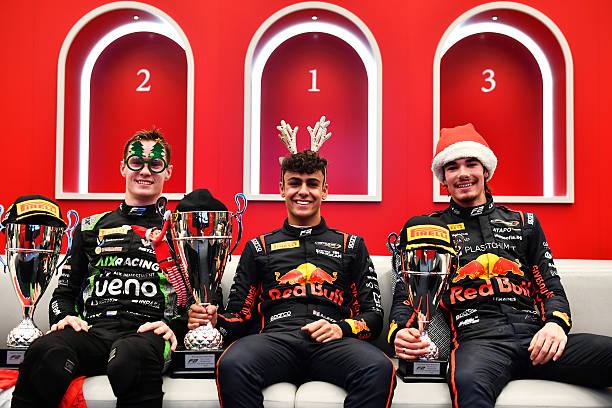
For a driver of Indian origin, even partial, representation carries symbolic weight. India has a limited history of sustained presence at the top levels of global motorsport. Structural barriers, cost and limited domestic infrastructure have historically restricted participation.
Within the Indian diaspora, Lindblad’s rise is followed with particular interest. His story intersects with broader conversations about identity, belonging and representation in elite global spaces.
Athletes of mixed heritage often navigate complex expectations. They are simultaneously embraced and questioned, celebrated and scrutinised. In global sport, identity can become a narrative lens imposed from outside.
For Lindblad, the challenge is to allow heritage to enrich his story without allowing it to overshadow his primary identity as a racing driver. Motorsport is unforgiving to distractions. Performance remains the ultimate currency.
The economics behind the dream
Behind every junior racing career lies a substantial financial reality.
Even at entry-level formula categories, annual budgets can run into hundreds of thousands of euros. At higher levels, costs escalate into the millions. While development programmes offset some expenses, funding gaps are common.
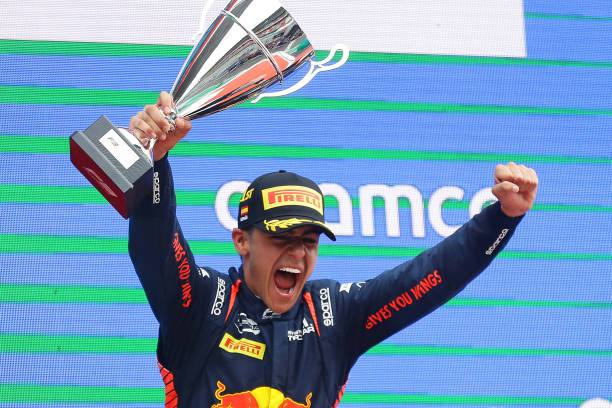
Families often bear early costs, investing heavily long before outcomes are certain. Sponsorship becomes crucial, but sponsors themselves seek visibility and results.
Data from motorsport industry analyses indicate that financial attrition accounts for a significant proportion of junior driver dropouts. Talent alone rarely sustains a career.
This economic pressure shapes driver behaviour. Risk management becomes essential. Aggressive moves that lead to crashes can damage both championship standings and reputations. Consistency is rewarded.
Lindblad’s measured approach on track reflects an awareness of these realities. Survival in junior racing is as much about avoiding mistakes as it is about chasing victories.
Mental resilience under constant evaluation
Few sports place young athletes under continuous, technical scrutiny like motorsport.
Every lap is recorded. Every decision is reviewed. Mistakes are replayed repeatedly. Progress is quantified relentlessly.
Sports psychology research indicates that young drivers face high levels of performance anxiety, particularly those embedded in elite development programmes. The absence of team rotation or long-term contracts amplifies insecurity.
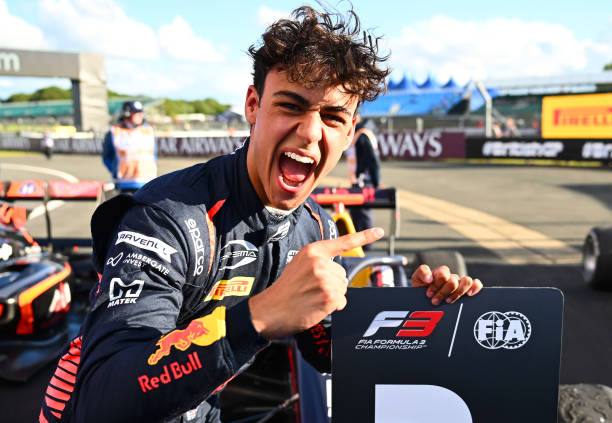
Building mental resilience is therefore as critical as physical training. Drivers are taught coping strategies, focus techniques and emotional regulation skills early.
Lindblad’s ability to maintain composure under pressure has been noted within racing circles. Calm radio communication, controlled aggression and steady improvement suggest a psychological profile suited to long-term progression.
In motorsport, mental collapse often precedes physical one.
The Formula 1 horizon and its realities
Formula 1 represents the pinnacle of single-seater racing, but reaching it is no guarantee of longevity.
The grid is limited. Opportunities are scarce. Competition extends beyond driving ability into political alignment, timing and marketability.
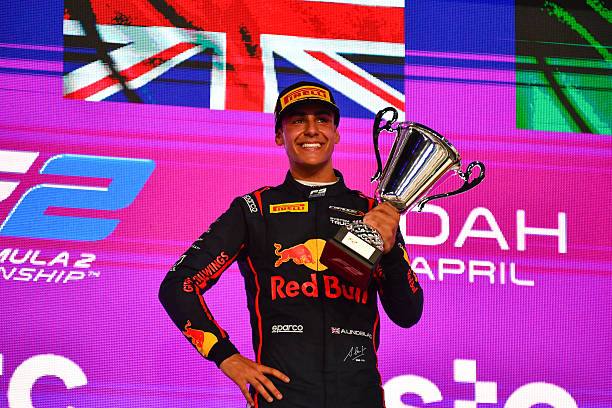
Drivers graduating from Formula 2 face a bottleneck. Each season, only a small number of seats open. Teams balance youth with experience, performance with commercial considerations.
For a driver like Lindblad, the pathway is still unfolding. The focus remains on development rather than destination. Premature expectations can be damaging.
Motorsport history is filled with prodigies who peaked early and faded. Sustained progression requires patience, adaptability and support systems that extend beyond the racetrack.
Why this story matters beyond racing
For The WFY, Lindblad’s journey resonates beyond lap charts and podiums.
It reflects how global sport is evolving. Talent now emerges across borders, shaped by transnational identities and globalised systems. Diaspora communities increasingly find themselves represented in arenas once distant.
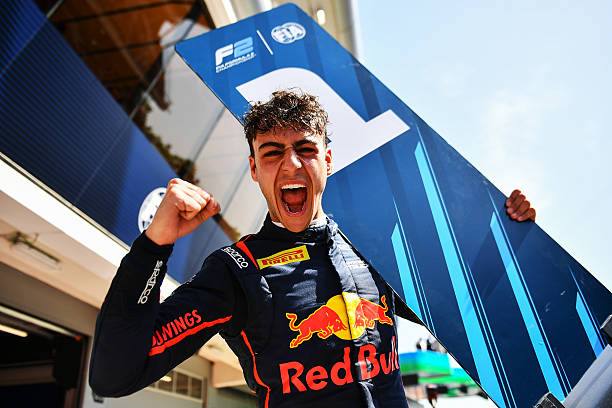
At the same time, the story underscores the inequalities embedded in elite sport. Access remains uneven. Success demands resources, networks and institutional backing.
Lindblad’s rise invites reflection on how pathways can be widened, how emerging motorsport markets can be nurtured and how representation can inspire participation without romanticising the struggle.
Looking ahead with realism
As of early 2026, Lindblad’s career remains in motion. Junior results continue to shape his prospects. Development benchmarks remain unforgiving.
What is certain is that he has already crossed thresholds that most never reach. His journey offers a case study in modern motorsport development, where talent, structure and resilience intersect.
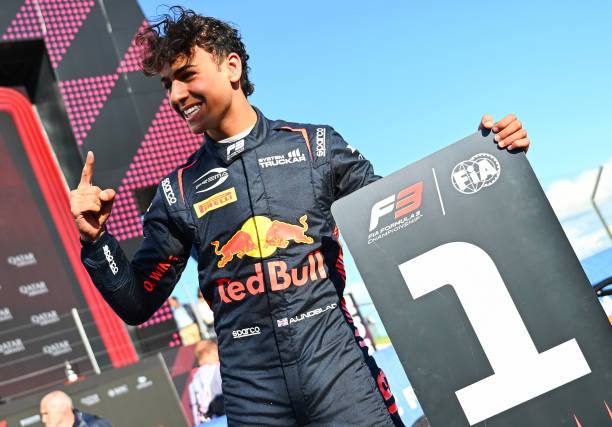
For young drivers watching from India and across the diaspora, his progress sends a clear message. Entry into global sport is possible, but it demands early commitment, sustained support and acceptance of uncertainty.
There are no shortcuts. Only long roads.

Disclaimer: This article is intended for editorial and informational purposes only. Career projections in professional motorsport are inherently uncertain and subject to performance, regulatory and commercial factors. All information reflects publicly available data and trends up to 31 December 2025. The WFY does not claim to predict or guarantee future sporting outcomes.