
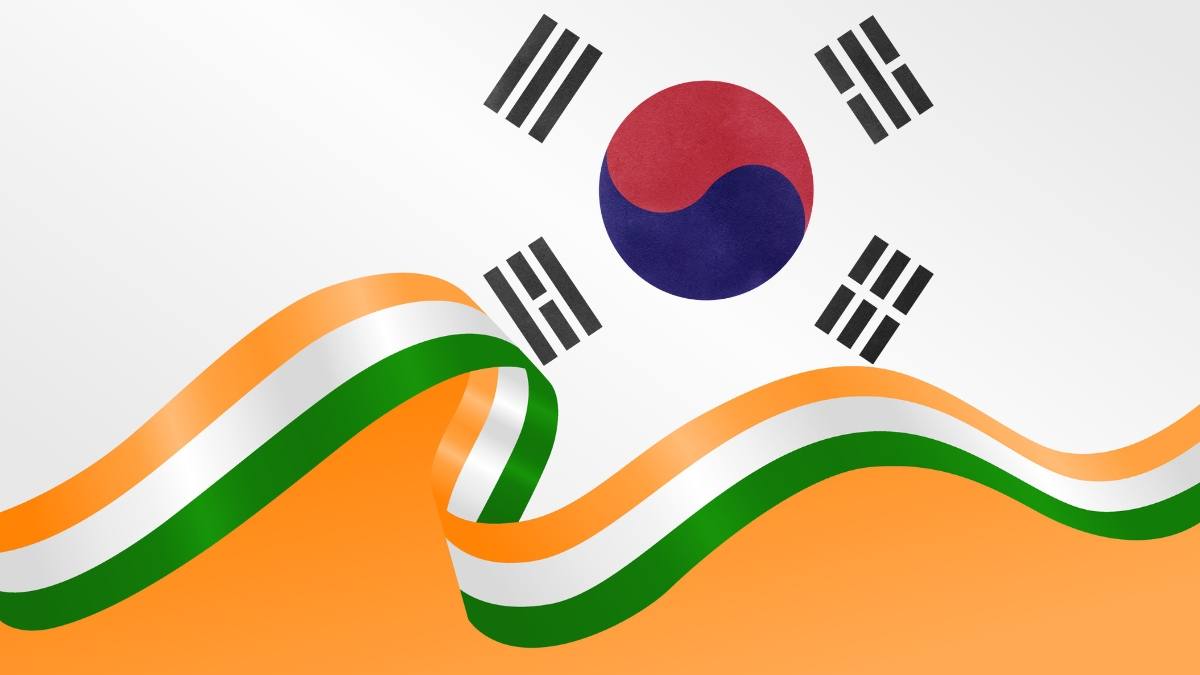
Unexpected: Why Are Korean Insurers Now Eyeing Indian Markets?
By WFY Bureau | Finance & Legal | The WFY Magazine, February, 2026, Edition
Why Leading South Korean Insurers Are Looking at India Now
It begins with a quiet imbalance that few outside the financial sector notice. India has a young population, rising incomes, expanding cities, and an almost obsessive appetite for protection of assets, health, and livelihoods. Yet insurance remains oddly marginal in everyday financial behaviour. For decades, this contradiction has lingered in policy papers and boardroom slides. Now, it has begun to draw serious attention from an unexpected corner of Asia.
South Korea’s largest insurance groups are exploring India not as a speculative bet, but as a long-term structural play. The timing is not accidental. Regulatory doors that were once firmly shut have opened. Capital rules have eased. India’s own insurance firms are searching for partners who bring patience, technology, and underwriting discipline. For Korean insurers, facing maturity and margin pressure at home, India looks less like a frontier and more like unfinished business.
This interest carries implications well beyond balance sheets. For the Indian diaspora, particularly those working across Asia, Europe, North America, and the Gulf, it signals a shift in how India is being perceived as a financial market. Not merely large, but investable. Not just promising, but reform-ready.
What follows is not a deal announcement or a market forecast dressed up as optimism. It is an attempt to understand why Korean insurers are circling India now, what they are likely to encounter, and what their arrival could mean for policyholders, regulators, and the wider Indian financial ecosystem.
A Market Too Large to Ignore, Yet Too Complex to Rush
India’s insurance market is estimated at around USD 130 billion in annual premiums, placing it among the world’s largest by volume. Yet size alone does not tell the story. Insurance penetration, measured as total premiums relative to GDP, remains at roughly 3.7 percent. In advanced economies, that figure often crosses 7 or even 10 percent. In some Asian peers, it is higher still.
This gap has been interpreted in two ways. For global insurers, it suggests headroom for growth. For domestic players, it reflects structural friction. Distribution remains expensive. Claims management is uneven. Trust deficits persist, especially in health and life insurance. Profitability, compared to international benchmarks, remains thin.
South Korean insurers are familiar with these tensions. Their domestic market is saturated, ageing, and heavily regulated. Growth there comes incrementally, often through product innovation rather than new customers. India, by contrast, offers scale. Millions of first-time insurance buyers enter the market each year, driven by urbanisation, formal employment, and growing awareness of risk.
But India also resists shortcuts. Previous waves of foreign insurers entered through joint ventures, only to find that minority ownership limited strategic control. Decision-making slowed. Capital allocation became cautious. Many global players stayed, but few thrived.
That context matters. When Korean insurers explore India today, they do so under different rules and with clearer eyes.
The Regulatory Shift That Changed the Conversation
India’s decision to allow full foreign ownership in insurance companies marks a turning point. For decades, overseas insurers were capped at minority stakes, typically partnering with Indian conglomerates or financial institutions. While this helped build domestic capacity, it often diluted accountability and long-term planning.
Full ownership changes the equation. It allows foreign insurers to bring capital, technology, and governance models without compromise. It also places full responsibility for performance on the entrant, removing the safety net of shared blame.
This matters particularly to Korean firms, whose corporate culture emphasises control, long-term returns, and disciplined execution. Partial ownership was never an attractive model for them. Full ownership, even if achieved gradually through acquisition or staged investment, aligns better with their internal risk frameworks.
The regulatory environment is also evolving in other ways. India’s insurance regulator is expected to gain stronger legislative powers to regulate commissions, enforce compliance, and claw back wrongful gains. These reforms aim to address long-standing concerns around mis-selling and excessive distribution costs.
For insurers with strong internal controls and conservative underwriting, such reforms are not obstacles. They are, in fact, competitive advantages.
Why Korea, and Why Now?
South Korea’s financial institutions have spent the past two decades expanding abroad, particularly across Asia. Korean banks, asset managers, and insurers have followed their corporate clients into emerging markets, financing factories, infrastructure, and consumer lending.
India has long been on that map, but insurance lagged behind automobiles, electronics, and manufacturing. Hyundai, Samsung, and LG built factories and brands in India, embedding themselves deeply into the economy. Their financial arms watched from a distance.
That distance is shrinking. Korean insurers face margin compression at home due to low interest rates and high claims ratios, particularly in health and motor insurance. At the same time, India’s macroeconomic story has stabilised. Growth rates remain among the highest globally. Digital infrastructure has improved underwriting and claims processing. Public awareness of insurance, sharpened by the pandemic, has increased.
There is also a strategic element. Korean insurers see India not only as a domestic market, but as a base for serving South Asia and parts of the Indian Ocean region. Over time, this could include cross-border health cover, travel insurance, and reinsurance operations.
In that sense, India is not just a market. It is a platform.
Non-Life Insurance: The First Point of Entry
Among the Korean insurers exploring India, there is a clear focus on non-life insurance. Motor, health, property, and liability insurance offer relatively faster premium growth and clearer actuarial data compared to life insurance, which requires longer gestation and deeper distribution networks.
India’s motor insurance market is large but competitive, driven by mandatory third-party cover and growing vehicle ownership. Health insurance has expanded rapidly, fuelled by rising medical costs and limited public healthcare capacity. Commercial insurance, particularly for small and medium enterprises, remains underpenetrated.
Korean insurers bring experience in these segments. They operate in densely populated, technologically advanced markets where fraud control, claims efficiency, and customer retention are critical. Their expertise in data analytics and risk pricing could help address some of India’s persistent inefficiencies.
However, competition will be intense. India has over 60 insurers, including well-established public sector firms and agile private players. Foreign entrants will need to differentiate themselves not through price alone, but through service quality and trust.
Life Insurance: A Longer, More Delicate Play
Life insurance presents a different challenge. It dominates India’s insurance landscape in terms of premium volume, but it is also heavily relationship-driven. Agents, bancassurance partnerships, and brand legacy matter deeply.
For a foreign entrant, particularly one without a household name in India, building credibility in life insurance requires time. Products such as retirement plans and annuities demand long-term confidence in the insurer’s stability and governance.
Korean financial groups have strengths here too. South Korea has one of the world’s most developed retirement and annuity markets. Its insurers manage large pools of long-term savings and are accustomed to strict solvency norms.
If Korean firms enter India’s life insurance sector, they are likely to do so selectively, focusing on urban customers, retirement planning, and digitally distributed products. The mass market may come later, if at all.
The Profitability Puzzle
India’s insurance sector has struggled with profitability for years. High commissions, particularly in life insurance, erode margins. Claims ratios in health insurance have risen steadily. Price competition, often driven by short-term market share goals, has undercut underwriting discipline.
Global consultants have noted that profit margins in India remain below those of comparable Asian markets. This is not a secret. Any foreign entrant knows it.
So why proceed?
The answer lies in horizon. Korean insurers are not chasing quick returns. They are seeking long-duration assets and stable premium growth over decades. India’s demographics support that view. A young workforce today becomes a retirement market tomorrow. Urbanisation increases demand for property and liability insurance. Climate risks elevate the need for more sophisticated coverage.
Profitability, in this context, is not an immediate metric. Sustainability is.
Technology as a Quiet Differentiator
One area where Korean insurers could reshape expectations is technology. South Korea is among the world’s most digitally integrated economies. Insurers there rely heavily on automation, artificial intelligence, and real-time data for underwriting and claims.
India has made rapid progress in digital payments, identity verification, and health data systems. The pieces exist. What is often missing is integration.
Foreign insurers with advanced systems could push the market towards faster claims settlement, more accurate pricing, and reduced fraud. This would benefit not only customers, but also regulators and the industry at large.
However, technology alone does not solve cultural challenges. Insurance remains an emotional product. Trust is built slowly, often through human interaction. Any insurer that underestimates this will struggle, regardless of its digital prowess.
Implications for Indian Consumers
For Indian policyholders, increased foreign participation could bring both opportunity and risk. Greater competition may improve service standards and product variety. International best practices could raise transparency and governance.
At the same time, aggressive growth strategies could exacerbate mis-selling if not carefully monitored. Regulatory vigilance will be essential.
Consumers will need to become more informed, comparing not just premiums but claim settlement ratios, solvency margins, and customer service records. Financial literacy, long discussed but unevenly delivered, becomes even more important in a more crowded market.
The Diaspora Angle
For the Indian diaspora, particularly those with financial ties to India, these developments matter in practical ways. Many non-resident Indians invest in Indian insurance products for retirement, estate planning, or family security. The entry of globally recognised insurers could offer additional options and confidence.
Diaspora professionals working in finance, actuarial science, and compliance may also find new career pathways as foreign insurers build teams in India. Cross-border expertise, particularly in regulation and risk management, will be in demand.
More broadly, the interest of Korean insurers reinforces a narrative that India’s financial sector is maturing. It is no longer seen solely as a high-growth, high-risk market, but as a complex system capable of absorbing global capital responsibly.
What Could Go Wrong
No market entry is guaranteed success. India’s regulatory environment, while improving, remains complex. Policy shifts can be slow. Judicial processes are lengthy. Local competition is intense and often politically connected.
Foreign insurers must also navigate public perception. Insurance disputes attract media attention and can quickly erode trust. Cultural missteps, particularly around claims handling, can be costly.
There is also the broader economic context. Global interest rates, geopolitical tensions, and currency volatility all influence long-term financial investments. Korean insurers will need resilience as much as ambition.
A Measured Optimism
The exploration of India by leading South Korean insurers should not be read as a headline-grabbing invasion. It is cautious, analytical, and incremental. Meetings with regulators, market advisers, and potential partners reflect a desire to understand before committing.
This is, perhaps, the most encouraging sign. It suggests that India is being taken seriously, not romantically. That foreign capital is learning from past missteps, both its own and others’.
For India, the challenge will be to welcome this interest without diluting regulatory integrity. For insurers, the task will be to adapt without losing discipline.
The story is still unfolding. No licences have been granted. No acquisitions announced. But the direction is clear.
India’s insurance market is no longer a distant aspiration. It is a conversation that serious global players are willing to have, patiently and at length.
Disclaimer: This article is intended for general informational and journalistic purposes only. It does not constitute financial, investment, or legal advice. Readers should consult qualified professionals before making any insurance or investment decisions. The views expressed are those of the editorial desk based on publicly available information and independent analysis as of the time of publication.