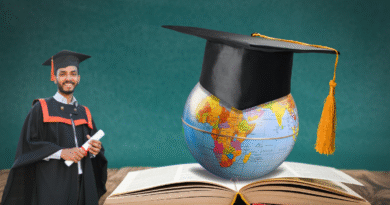

Education Sans Borders Is Now Facing A Lurking Credibility?
By Aisha Sabah, WFY Bureau | Academics | The WFY Magazine, January, 2026 Anniversary edition
Education Without Borders: Online Degrees, Hybrid Learning, and Academic Credibility
Summary
Across continents and screens, higher education is shedding its physical boundaries. Online degrees and hybrid learning models are reshaping how knowledge is delivered, who gains access, and how academic credibility is judged. As universities, employers, and students adapt to a borderless learning ecosystem, the central question is no longer whether digital education works, but how trust, quality, and recognition can be preserved in a global academic marketplace.
Introduction: The Campus Without Walls
At the dawn of 2026, the idea of education being tied to a single physical campus feels increasingly outdated. Lecture halls still exist, libraries still matter, and face-to-face mentorship remains invaluable. Yet, the centre of gravity in global education has unmistakably shifted. Degrees are now earned across time zones, classrooms are accessed through screens, and faculty meetings often take place in digital rooms rather than oak-panelled offices.
For millions across the world, especially within the Indian diaspora, education without borders is no longer an experiment. It is a lived reality. Online degrees, hybrid programmes, micro-credentials, and cross-border academic partnerships have transformed who gets access to higher education, how learning is delivered, and what credibility truly means in a global labour market.
This transformation raises difficult and necessary questions. Are online and hybrid degrees equal to traditional ones? How do employers assess academic quality when classrooms are virtual? Can credibility travel across borders as easily as content does? And most importantly, is higher education becoming more democratic, or merely more commercial?
From Emergency Measure to Structural Shift
The early 2020s forced universities worldwide into an unplanned digital migration. What began as an emergency response to global disruption soon revealed deeper structural possibilities. By the mid-2020s, distance education was no longer framed as a temporary substitute. It became a permanent pillar of higher education strategy.
Universities that once treated online programmes as peripheral revenue streams began integrating them into their core academic missions. Degree structures were redesigned to allow flexible pacing, blended instruction, and remote participation without sacrificing academic rigour. In many cases, institutions discovered that digital delivery, when thoughtfully designed, could widen access without diluting standards.
For students in India, Africa, Southeast Asia, and diaspora communities across North America and Europe, this shift was transformative. High-quality education from globally reputed institutions became accessible without the prohibitive costs of relocation, visas, and living expenses. The classroom became global, and peer groups more diverse than ever before.
The Rise of Hybrid Learning Models
Purely online education is only one part of the story. The real evolution lies in hybrid learning, where physical and digital experiences are intentionally combined. Hybrid universities now offer programmes that blend online coursework with short on-campus residencies, regional learning hubs, industry placements, and collaborative research modules.
This model reflects a pragmatic recognition that not all learning outcomes are best achieved online. Laboratory work, field research, clinical training, and creative practice often require physical presence. At the same time, theoretical instruction, seminars, assessments, and even supervision can be effectively delivered through digital platforms.
Hybrid learning also responds to the realities of adult learners. Many students pursuing advanced degrees in 2026 are working professionals, caregivers, or migrants balancing education with economic responsibilities. Hybrid models allow them to study without stepping out of their lives entirely.
Online Degrees and the Question of Stigma
Despite their growing prevalence, online degrees continue to face scrutiny. Questions about academic seriousness, student engagement, assessment integrity, and institutional accountability persist. For decades, distance education was associated with correspondence courses and inconsistent quality, leaving a legacy of scepticism.
However, the contemporary online degree bears little resemblance to its predecessors. Leading institutions now apply the same admission standards, curriculum frameworks, and faculty oversight to online programmes as they do to on-campus ones. In many cases, students enrolled online are taught by the same professors, evaluated through comparable assessments, and awarded identical degrees.
Employer perceptions are also evolving. Rather than focusing on the mode of delivery, hiring managers increasingly assess outcomes: skills demonstrated, projects completed, and relevance to organisational needs. In fields such as data science, business analytics, public policy, and education, online graduates are often valued for their self-discipline, adaptability, and technological fluency.
That said, credibility remains uneven. The global market is crowded with providers of varying quality, making discernment essential. Accreditation, institutional reputation, and transparency have become critical markers of legitimacy.
Accreditation in a Borderless Academic World
As education transcends borders, accreditation systems face unprecedented strain. Traditional national frameworks were designed for campus-based institutions operating within a single jurisdiction. Online and hybrid education complicate this model, as students, faculty, and institutional operations may span multiple countries.
In response, international accreditation bodies and cross-border quality assurance networks have gained prominence. Universities offering online degrees increasingly seek recognition from globally respected agencies to reassure students and employers alike. Transparent disclosure of curriculum design, faculty qualifications, assessment methods, and learning outcomes has become standard practice.
For students, especially those in the Indian diaspora, navigating accreditation requires careful attention. A degree recognised in one country may not automatically translate into professional eligibility elsewhere. Medicine, law, teaching, and engineering remain tightly regulated fields, where local licensing often matters as much as academic credentials.
The challenge for policymakers is to balance openness with protection. While innovation must be encouraged, safeguards are essential to prevent the dilution of academic standards and the exploitation of learners.
Technology as Enabler and Disruptor
Technology sits at the heart of borderless education. Learning management systems, artificial intelligence-driven assessment tools, virtual laboratories, and immersive simulations have expanded what can be taught and learned remotely. Adaptive learning platforms personalise content delivery, while analytics help institutions track student engagement and success.
At the same time, technology introduces new risks. Data privacy, algorithmic bias, digital surveillance, and unequal access to reliable connectivity remain pressing concerns. The digital divide has not disappeared; it has merely shifted form. Students without stable internet access or adequate devices are still disadvantaged, even in a supposedly global classroom.
Universities that succeed in this environment are those that treat technology as a pedagogical tool rather than a shortcut. Effective online education requires intentional design, trained faculty, and ongoing evaluation. When technology is used to enhance human interaction rather than replace it, learning outcomes improve significantly.
The Indian Diaspora and Transnational Learning
Few communities embody the promise and complexity of borderless education more vividly than the Indian diaspora. Spread across continents, Indian learners have long relied on education as a pathway to mobility, stability, and influence. Online and hybrid learning have amplified these possibilities.
Diaspora students now pursue degrees that combine global theory with local relevance. An Indian professional in Dubai may study public health through a European university while applying insights to regional policy challenges. A software engineer in Canada may complete a management degree online while leading teams across Asia.
This transnational approach enriches academic discourse. Classrooms become spaces where diverse cultural perspectives intersect, challenging assumptions and broadening understanding. At the same time, it raises questions about identity, belonging, and intellectual ownership in a globalised academic world.
Employers, Skills, and the Changing Value of Degrees
Perhaps the most significant shift in academic credibility lies in how employers evaluate education. The degree itself is no longer the sole indicator of competence. Skills, adaptability, and continuous learning matter as much as institutional pedigree.
Online and hybrid programmes often emphasise applied learning, project-based assessment, and collaboration across cultures. Graduates accustomed to virtual teamwork and self-directed study are well prepared for modern workplaces that operate across borders and platforms.
However, this trend also places pressure on universities to remain relevant. Academic content must evolve alongside industry needs without sacrificing critical thinking, ethical reasoning, and foundational knowledge. The challenge is to avoid reducing education to mere credentialism while responding to economic realities.
Equity, Access, and the Risk of a Two-Tier System
While borderless education promises inclusion, it also risks creating new inequalities. Elite institutions may offer premium hybrid programmes with high fees, while less resourced providers struggle to compete. There is a danger of a two-tier system, where global credentials become accessible only to those who can afford them.
Public universities, philanthropic initiatives, and policy interventions play a crucial role in countering this trend. Scholarships, open educational resources, and partnerships with local institutions can help ensure that quality education remains accessible.
Equally important is cultural sensitivity. Education delivered across borders must respect local contexts rather than impose uniform models. Academic credibility depends not only on global recognition but also on local relevance.
Rethinking the Meaning of Academic Credibility
At its core, credibility in education is about trust. Trust that learning is meaningful, assessment is fair, and qualifications reflect genuine achievement. In a borderless academic world, this trust must be earned continuously through transparency, accountability, and ethical practice.
Online and hybrid education are neither inherently inferior nor automatically superior. Their value depends on how thoughtfully they are designed and governed. As 2026 begins, the debate is no longer about whether education can exist without borders, but about how responsibly it does so.
The Road Ahead
Education without borders is reshaping not just degrees, but the very idea of learning as a lifelong, global endeavour. For students, it offers unprecedented choice and flexibility. For institutions, it demands innovation and humility. For employers, it requires a more nuanced understanding of talent.
The task ahead is to ensure that openness does not come at the cost of integrity. If universities, regulators, and learners rise to this challenge, borderless education may yet fulfil its promise of a more equitable and connected intellectual world.
Disclaimer: This article is intended for informational and analytical purposes only. It reflects trends and observations based on publicly available research and developments as of late 2025 and early 2026. Academic policies, accreditation standards, and employer perceptions may vary by country, institution, and discipline. Readers are advised to verify specific requirements and credentials with relevant authorities before making educational or professional decisions.