
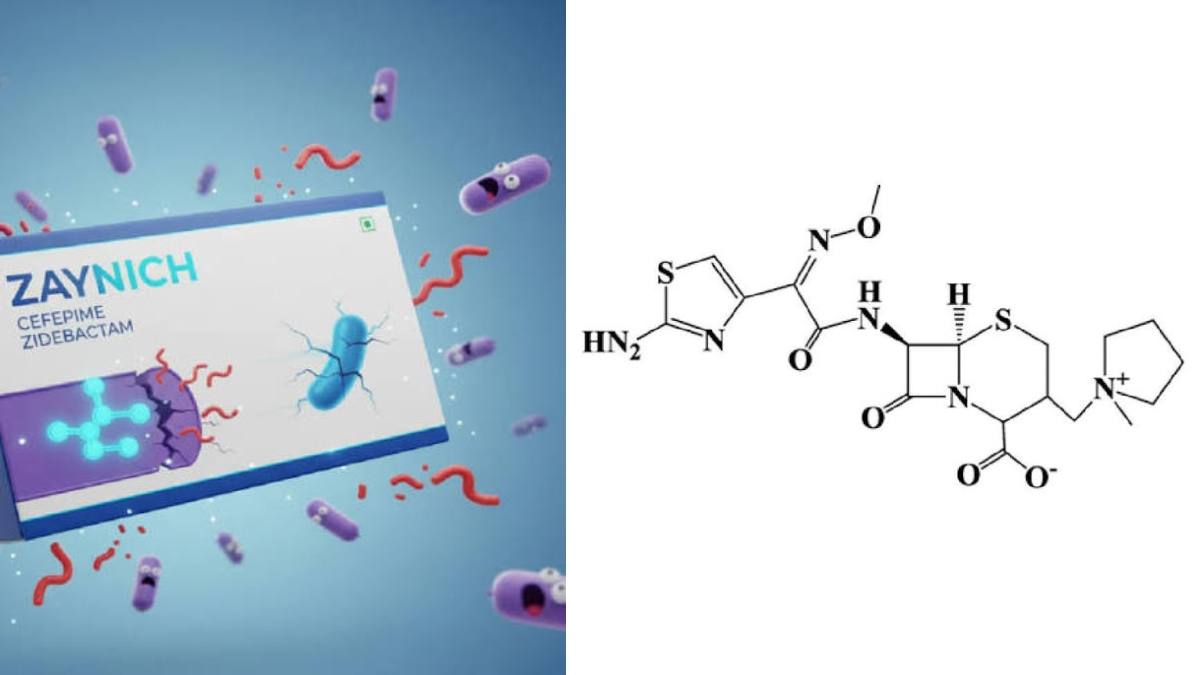
India’s First Antibiotic, Zaynich: Amazing Hope Against Superbugs
India’s First Novel Antibiotic Zaynich: A Leap in Medical Science
On 30th May 2026, the US Food and Drug Administration (FDA) approved Zaynich (cefepime and zidebactam), a novel intravenous antibiotic developed entirely by Mumbai-based Wockhardt, making it the first New Chemical Entity (NCE) fully invented, developed, and commercialised by an Indian pharmaceutical company to receive FDA approval. An NCE, in plain terms, is a molecule that did not exist before
India’s first fully homegrown FDA-approved drug, marking a milestone for Indian pharma. India built one of the world’s great pharmaceutical industries on the back of generics, affordable, high-quality medicines that reach billions globally. But originating a molecule entirely from scratch.
Zaynich targets drug-resistant bacteria, showing high cure rates for complicated UTIs and addressing the global antimicrobial resistance crisis.
The approval also comes amid an escalating global antimicrobial resistance crisis. Over 2.8 million resistant infections occur in the US alone each year, killing more than 35,000 people.
What makes Zaynich clinically distinctive is its mechanism. Unlike most antibiotics in its class, which target a single bacterial protein, Zaynich attacks three simultaneously, making it significantly harder for bacteria to develop resistance. The result is an antibiotic that can kill drug-resistant bacteria for which doctors currently have almost no treatment .It has a shorter 3-day once-daily treatment regimen in clinical studies, which is different from many conventional macrolide courses
The Phase 3 results were striking. In its pivotal Phase 3 trial—a randomised, double-blind study conducted across 64 sites in the US, Europe, Latin America, China, and India, known as the ENHANCE-1 study—Zaynich achieved an 89 percent composite cure rate against complicated urinary tract infections (UTIs), compared with 68.4 percent for meropenem, currently the last-resort antibiotic for such cases.
Nafithromycin & Zaynich are quite different drugs and are aimed at different types of infections. Although both are major Indian-developed antibiotic advances, they are not substitutes for each other.
Nafithromycin works by blocking bacterial protein synthesis and was developed primarily for respiratory infections such as pneumonia. It was introduced as India’s first indigenous macrolide antibiotic and offers an ultra-short oral regimen.
Zaynich is a more heavy-duty hospital antibiotic. It combines cefepime with zidebactam, a newer resistance-fighting molecule. It targets difficult Gram-negative organisms such as Escherichia coli (E. coli), Klebsiella pneumoniae, and Pseudomonas aeruginosa that may resist many existing antibiotics.
A simple way to remember it:
Nafithromycin → lungs / pneumonia / oral tablet
Zaynich → severe superbug infections / IV hospital drug
Neither should be chosen by symptoms alone. The right antibiotic usually depends on culture reports, suspected bacteria, kidney function, and resistance patterns.
The discovery team itself is comprised of a deep roster of hundreds of researchers spanning chemistry, microbiology, and clinical pharmacology over a nearly 15-year research timeline . It was not a “single eureka moment” invention. Discovery took about five years just to identify the molecule, and the full pathway from research to approved medicine stretched over more than a decade.
The Drugs Controller General of India (DCGI) approved Zaynich in India on 27th May 2026 , three days before the FDA. A marketing application is pending with the European Medicines Agency (EMA).
Zaynich in India was developed by a multidisciplinary team of over 150 scientists led by researchers such as Mahesh Patel – described as a key scientific leader “brain behind the drug” in reporting about Zaynich.
Habil Khorakiwala – initiated and supported the long-term antibiotic discovery program along with Murtaza Khorakiwala and supported by Wockhardt’s research leadership, with experts from medicinal chemistry, microbiology, molecular biology, toxicology, pharmacology, and clinical research.
There is an ongoing need for new antibiotics to combat these drug-resistant pathogens.
Disclaimer: The views, opinions and interpretations expressed in articles published in WFY – World For You are those of the respective authors and contributors and do not necessarily reflect the official position of the Editor, Editorial Board, publishers or affiliated organisations. Every effort is made to ensure the accuracy and reliability of information at the time of publication. However, facts, figures, laws, regulations, policies, scientific understanding and global developments may change over time. Readers are advised to independently verify information and seek appropriate professional advice before making decisions relating to health, finance, legal matters, immigration, education, investments or any other specialised subject. Articles published in WFY – World For You are intended for general information, discussion and educational purposes only and should not be construed as professional, medical, legal, financial or other expert advice. References to organisations, institutions, products, services or individuals are made solely for editorial, informational or illustrative purposes and do not constitute endorsement or recommendation unless explicitly stated. All rights to original content remain with their respective authors and contributors unless otherwise specified. Unauthorised reproduction, distribution or republication of material published in WFY – World For You without prior written permission is prohibited. © 2026 WFY – World For You. All Rights Reserved.