Khichuri Bhog: This Is The Best And Authentic Recipe
Khichuri Bhog: Traditional Bengali Bhoger Khichuri
Serves: 5–6
Preparation: 25 minutes
Cooking: 40–45 minutes
Ingredients
For the khichuri, take 1 cup Gobindobhog rice, 1 cup sona moong dal or good-quality yellow moong dal, 2 medium potatoes cut into large chunks, about 2 cups cauliflower florets, ½ cup green peas, 1 medium tomato chopped or quartered, 3–4 green chillies slit, 1½ tablespoons fresh ginger paste, 3 tablespoons mustard oil, 2–3 tablespoons ghee, salt to taste, about 1 teaspoon sugar, 1 teaspoon turmeric powder, 1 teaspoon cumin powder and approximately 5–6 cups hot water, with a little extra available if required.
For the phoron, or tempering, use 2 bay leaves, 2 dried red chillies, 1 teaspoon cumin seeds, a 1-inch piece of cinnamon, 3–4 green cardamom pods and 4 cloves. You can also add 10–12 cashew nuts and 1–2 tablespoons raisins. They occur in festive versions, although they are not indispensable.
Roast the Moong Dal
Place the dry moong dal in a heavy-bottomed kadai or pan without oil. Roast it over low to medium heat, stirring continuously, until the grains become lightly golden and release their distinctive nutty aroma. Do not allow them to become dark brown or burn.
Remove the roasted dal, allow it to cool briefly and wash it. Wash the Gobindobhog rice separately and drain it. The dry roasting of the moong dal is one of the defining steps of Bengali bhoger khichuri and contributes enormously to its characteristic aroma.
Fry the Autumn Vegetables
Heat the mustard oil in the same heavy kadai. Once properly hot, reduce the heat and add the potato pieces with a small pinch of turmeric. Fry until they begin developing a golden exterior, then remove them.
Next add the cauliflower florets and fry until lightly browned around the edges. Remove and keep aside. This preliminary frying prevents the vegetables from simply dissolving into the rice and dal and gives the finished khichuri greater depth of flavour. Traditional versions commonly use potato, cauliflower and peas. Maayeka
If you specifically want the ghee-roasted cauliflower and potatoes described in your introduction, you can add a spoonful of ghee to the mustard oil while frying them. For bhog, however, I would retain some mustard oil because its flavour is characteristic of the Bengali preparation.
Build the Bhoger Khichuri
Add a tablespoon of ghee to the remaining oil. Add the cumin seeds, bay leaves, dried red chillies, cinnamon, cardamom and cloves. Allow the spices to release their aroma without burning.
Lower the heat. Add the ginger paste, turmeric and cumin powder mixed with a splash of water so that the powdered spices do not scorch. Cook gently until the raw smell of the ginger disappears.
Add the tomato and cook until softened. Then add the roasted moong dal and Gobindobhog rice. Stir gently for a couple of minutes so that the grains become coated with the spices and fat.
Pour in about 5 cups of hot water, add salt and bring everything to a boil. Lower the heat and allow the dal and rice to cook gently.
Once they have begun to soften, add the fried potatoes. Add the cauliflower somewhat later so that it retains its shape, together with the green peas and slit green chillies. Continue cooking over low to medium heat, stirring occasionally and carefully, particularly near the bottom of the pan.
If the khichuri becomes too thick before the rice and dal are properly cooked, add more hot water rather than cold water.
Getting the Consistency Right
This is important. Bhoger khichuri should not be dry and separate like pulao, nor should it become an indistinguishable paste.
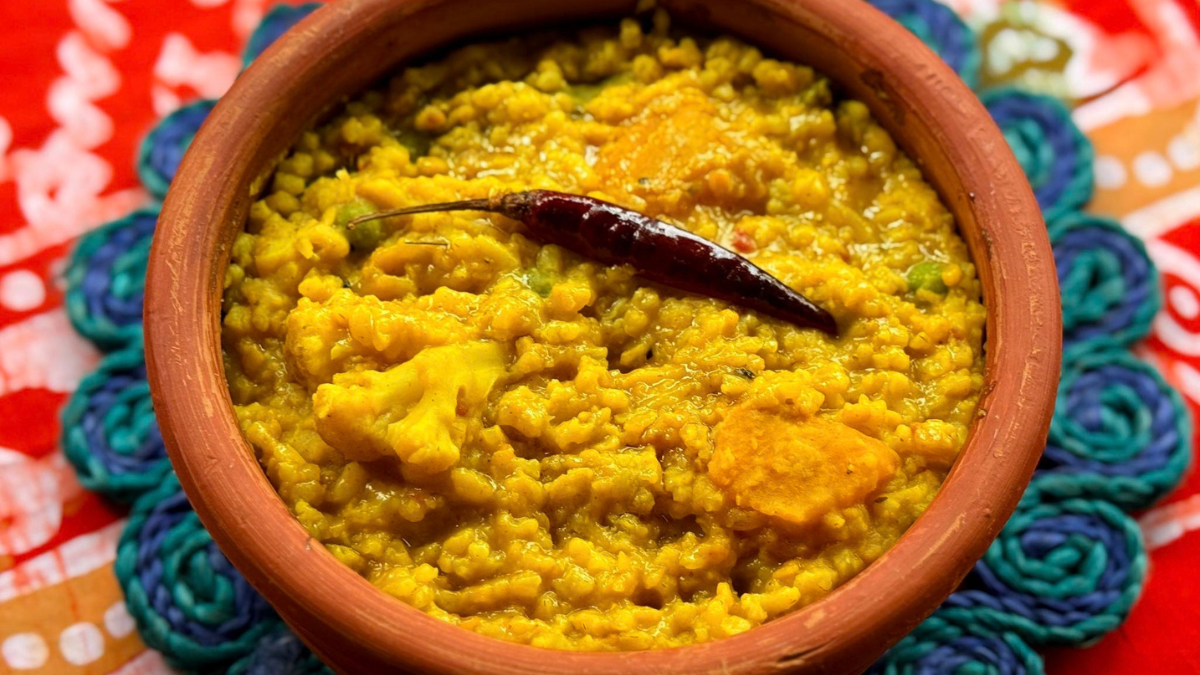
The rice and dal should be completely tender and meld into one another, while the potatoes and cauliflower remain recognisable. When freshly cooked, it should have a soft, flowing consistency because it will thicken considerably as it rests.
Gobindobhog rice is particularly important here. Its short grains and distinctive fragrance give Bengali khichuri a character that long-grained basmati does not quite reproduce. Traditional recipe sources specifically recommend Gobindobhog or another fragrant short-grained rice for this reason. Spicy punch
The Final Bhog Touch
When everything is cooked, add approximately 1 teaspoon sugar. Bengali bhoger khichuri traditionally has a very subtle sweetness, but it should never taste like a sweet dish.
Add another generous spoonful of ghee and gently fold it through. If using cashews and raisins, lightly fry them in ghee beforehand and add them towards the end.
Cover the pot and allow the khichuri to rest for about five minutes before serving. The fragrance of Gobindobhog rice, roasted moong dal, ghee and whole spices should be immediately noticeable when the lid is lifted.
What Makes It Authentic
The essential character of Bengali Bhoger Khichuri comes from a few things: Gobindobhog rice, properly dry-roasted moong dal, no onion, no garlic, ginger, whole spices, mustard oil and ghee, and large pieces of potato and cauliflower. The final texture should be soft and comforting rather than dry.
For an actual puja bhog, traditional religious practice may impose additional rules concerning ingredients, utensils and tasting the food before offering it. Those practices differ between households and temples, so they should be followed according to the particular tradition.
Bhoger khichuri is traditionally served with labra, begun bhaja or beguni, papad and a sweet Bengali tomato chutney, often followed by payesh or another sweet.