

Serving People: This Is The Remarkable Life Of Ramnik Singh Walia
By WFY Bureau | Human Interests & Social Pursuits | The WFY Magazine, January, 2026 Anniversary Edition
From Conscience to Community: The Human Rights Journey of Ramnik Singh Walia
A life shaped by awareness, not accident
Human rights work rarely begins with applause. More often, it begins with discomfort: a recognition that something is not right, and a refusal to look away. The story of Ramnik Singh Walia belongs firmly in this tradition. His journey from a privileged upbringing in New Delhi to becoming one of Australia’s most respected community-based human rights advocates is not a tale of sudden transformation, but of steady moral alignment.
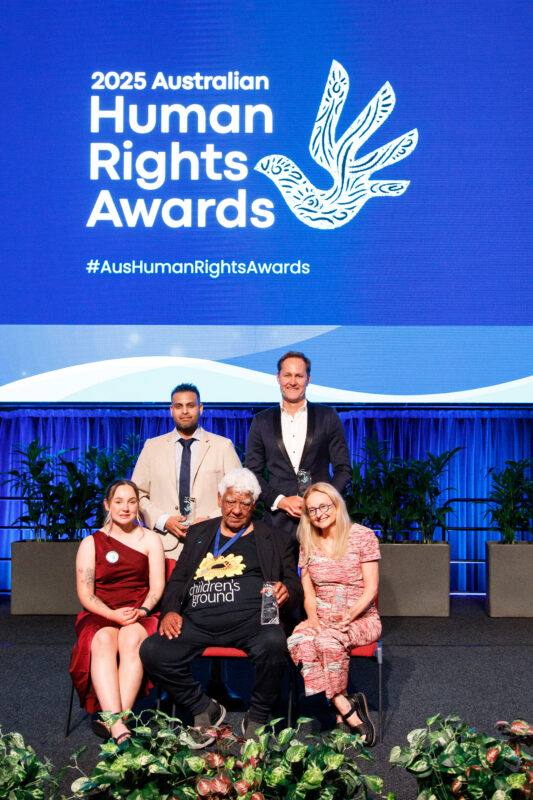
In December 2025, Ramnik Singh Walia was awarded the Australian Human Rights Award – Community Category, one of the country’s highest national honours. Presented by the Australian Human Rights Commission, the award recognised his leadership in advancing dignity, access, and fairness for older Australians, people with disabilities, and First Nations communities, particularly in remote and regional parts of the Northern Territory. Yet the award marked not a culmination, but a visible acknowledgement of years of work that had largely unfolded away from national attention.
For the Indian diaspora, Ramnik’s story carries particular resonance. It reflects the evolving role of global Indians not merely as economic contributors or cultural ambassadors, but as ethical actors shaping the societies they inhabit.
Privilege, questions, and early conscience
Born and raised in New Delhi, Ramnik grew up in an affluent household of professionals whose achievements spanned banking, defence, and construction. Material stability, however, was accompanied by a strong emphasis on education, discipline, and service. These values did not shield him from inequality; instead, they sharpened his awareness of it.
From an early age, Ramnik noticed the contrasts that defined Indian society. He observed how opportunity clustered around certain lives while remaining distant from others shaped by caste, disability, poverty, or circumstance. These observations did not provoke anger so much as inquiry. Why did inequality persist? Why were some voices amplified while others remained unheard? And, crucially, what responsibility did those with privilege carry?
These questions became formative. Rather than accepting inequality as inevitable, Ramnik came to believe that injustice endures largely through silence. This belief would later become the moral engine of his advocacy.
Australia as a classroom beyond the curriculum
In February 2007, Ramnik moved to Australia as an international student, enrolling at the University of Tasmania. What began as an academic decision soon evolved into a deeper social education. Australia, with its own histories of migration, dispossession, and multicultural negotiation, offered him a different vantage point from which to study systems, belonging, and power.

By 2008, Ramnik had been appointed Student Ambassador at the university, supporting both international and domestic students. He became a visible presence at Harmony Day and campus events, often serving as Master of Ceremonies. His role was not merely administrative; it was connective. He helped students from diverse backgrounds feel seen and included, translating abstract ideas of multiculturalism into lived experience.
Academically, Ramnik pursued a Bachelor of Arts in Sociology and Public Policy, followed by a Master’s degree in Journalism, Media, and Communications. Later, he complemented these qualifications with studies in community services, specialising in aged care and disability. Education, for him, was never about accumulation of credentials. It was about learning how systems functioned and, importantly, how they could fail.
Media as a bridge, not a megaphone
Between 2010 and 2014, Ramnik made history as the first radio presenter of Indian heritage to host programs in both Hobart and Launceston. Through Edge Radio and City Park Radio, he carved out space for multicultural voices, focusing on shared values rather than difference alone.
In a media landscape often driven by spectacle, Ramnik’s approach was deliberate and inclusive. He treated broadcasting as a tool for community-building, not self-promotion. His work was recognised nationally in 2012 when he received the Youth Broadcaster of the Year award from the National Ethnic and Multicultural Broadcasters Council of Australia.
This period sharpened his understanding of narrative power. He saw how stories could either reinforce stereotypes or dismantle them, and how visibility, when handled responsibly, could foster empathy rather than division.
From observation to action: entering community services
In 2014, Ramnik transitioned into Tasmania’s disability services sector. He began with hands-on support roles, working directly with individuals whose lives were shaped by both personal challenges and systemic neglect. Over time, he moved into leadership positions, but he never relinquished the grounding that frontline work provided.
His aim was clear: people with disabilities should not merely receive services; they should be respected as decision-makers in their own lives. This principle guided his work and challenged prevailing attitudes that framed disability primarily through dependency.
In 2017, Ramnik launched Embrace, Tasmania’s first e-learning program designed to help businesses become more inclusive of people with disabilities. The initiative addressed misconceptions around productivity and accommodation, demonstrating that inclusion and efficiency were not opposing values. At a time when disability employment rates remained stubbornly low, such interventions carried both social and economic significance.
The Northern Territory: advocacy where distance multiplies disadvantage
Ramnik’s move to the Northern Territory in 2019 marked a decisive turn in his advocacy. Working across remote communities in East Arnhem Land, he encountered a convergence of challenges: geographic isolation, limited infrastructure, cultural marginalisation, and historical injustice faced by First Nations communities.
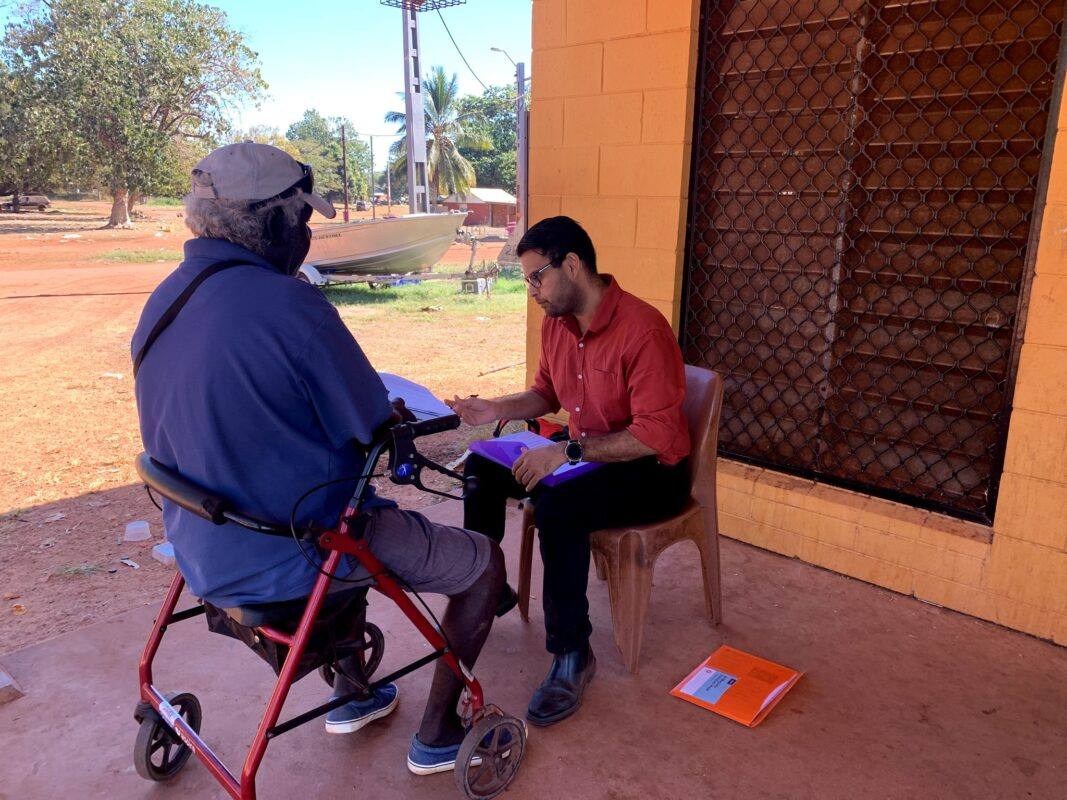
Rather than imposing solutions, Ramnik approached his work with humility. He built relationships with Aboriginal Elders and community members, recognising that trust was not a given but something to be earned. Access to care, he believed, should never depend on postcode.
During this period, he developed Mynamak Vibes – Ramo Roar and Wassup Milingimbi, monthly newsletters that kept families and guardians informed about the wellbeing of loved ones receiving aged care and disability support. In contexts where communication was often minimal, these newsletters restored transparency and dignity.

By the time Ramnik formally entered seniors’ and disability rights advocacy at Darwin Community Legal Service in 2021, he had already spent seven years on the frontline. That experience shaped his legal advocacy, grounding it in lived realities rather than abstract policy.
Advocacy that alters systems, not just outcomes
At Darwin Community Legal Service, Ramnik emerged as a formidable advocate for older Australians and people with disabilities. His work addressed complex cases involving neglect, financial abuse, accessibility barriers, and systemic failure. In many instances, his interventions prevented irreversible harm and restored long-denied dignity.
His advocacy spanned the Northern Territory, from Darwin to Katherine, the Cox Peninsula, and remote regions of East and West Arnhem Land. He facilitated more than 150 community workshops on aged and disability rights, ensuring that legal knowledge reached those who needed it most. He also developed multilingual resources, recognising that language remains a critical barrier to access.

One of his most significant initiatives was the Rural and Remote Advocacy Project, launched in 2024. This pioneering program trained residents from Milingimbi and Ramingining as aged care champions, equipping them with knowledge to support elders within their own communities. The model shifted advocacy from an external intervention to a locally embedded capacity.
Infrastructure advocacy also formed a crucial part of his work. In Maningrida, one of Australia’s most remote regions, Ramnik championed the installation of a passenger lift at the local airport, enabling safe and dignified air travel for people with disabilities. Similarly, his efforts contributed to the redesign of the Mandorah ferry terminal on the Cox Peninsula, transforming it from an inaccessible facility into one meeting national accessibility standards.
These achievements illustrate a consistent philosophy: human rights are not abstract ideals but practical conditions that must be built into everyday systems.
Faith, reform, and intellectual inheritance
Ramnik’s approach to advocacy is deeply informed by his Sikh faith, which emphasises honest living, purposeful work, and responsibility towards the wider community. These teachings translate into a form of activism that is principled yet grounded, moral without being moralistic.
He also draws inspiration from Raja Ram Mohan Roy, the Indian social reformer who believed that progress required courage, education, and reasoned challenge to injustice. Like Roy, Ramnik sees silence as a form of complicity and reform as a collective responsibility.
This intellectual inheritance situates his work within a longer tradition of Indian social reform, one that values systemic change over symbolic gestures.
National recognition without moral complacency
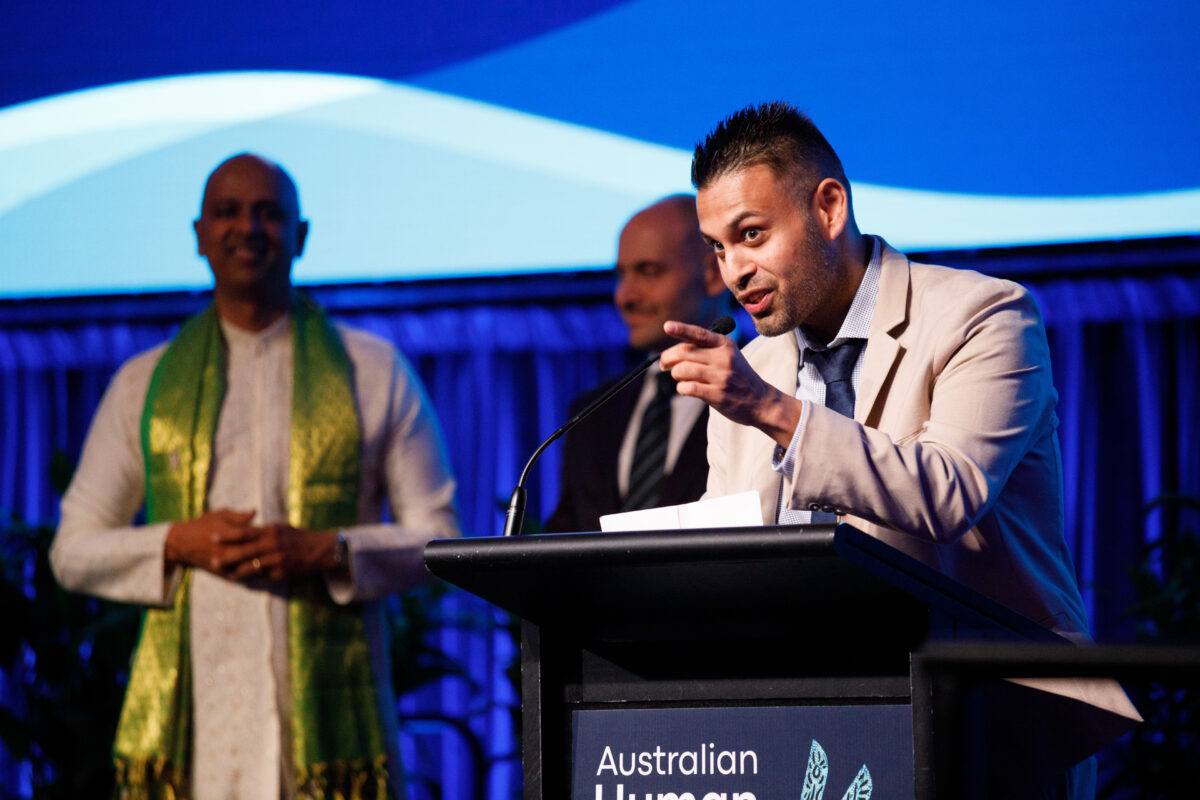
In December 2025, Ramnik’s journey reached a national milestone with the Australian Human Rights Award – Community Category. The honour followed his 2024 Northern Territory Human Rights Award, marking an advocacy trajectory that delivered tangible outcomes at multiple levels.
In reflecting on Australia’s role in shaping the Universal Declaration of Human Rights in 1948, Ramnik emphasised that laws and policies, while essential, remain incomplete without everyday action. Rights, in his view, are strengthened when individuals take responsibility for one another, especially in spaces where oversight is weakest.
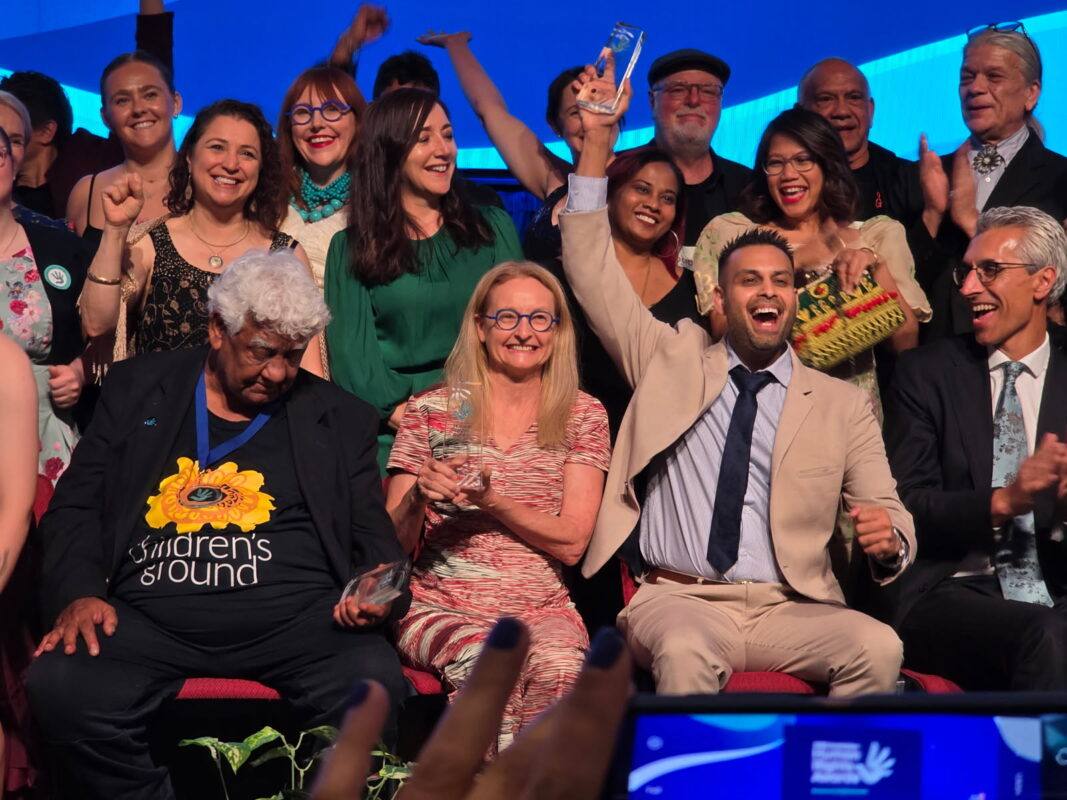
Despite national recognition, Ramnik measures success not by accolades but by trust. The trust of elders who feel heard, families who feel supported, and communities who know that advocacy will not retreat at the first sign of resistance.
Diaspora responsibility in an unsettled world
For the Indian diaspora, Ramnik Singh Walia’s story offers a compelling counter-narrative to more familiar markers of success. It reframes achievement not solely in terms of economic mobility or professional status, but in terms of ethical contribution.
Diaspora communities occupy a unique position. They straddle cultures, systems, and moral expectations. With this position comes responsibility: to challenge exclusion, to amplify marginalised voices, and to contribute to social cohesion in meaningful ways.
Ramnik’s work demonstrates that diaspora engagement need not be loud to be transformative. It can be patient, local, and deeply relational.
Looking ahead: return, renewal, responsibility
Looking to the future, Ramnik hopes to return to India in later years to give back to the society that shaped his conscience. He envisions establishing a school or community institution focused on inclusion, human rights, and social cohesion. The aspiration reflects continuity rather than departure, a belief that responsibility does not end at national borders.

From a young observer of inequality in New Delhi to a national voice for human rights in Australia, Ramnik Singh Walia’s journey underscores a simple but demanding truth. Real change begins quietly, with awareness, courage, and the decision to act when silence would be easier.
His guiding principle remains unchanged: inclusion is not a favour. It is a responsibility.