
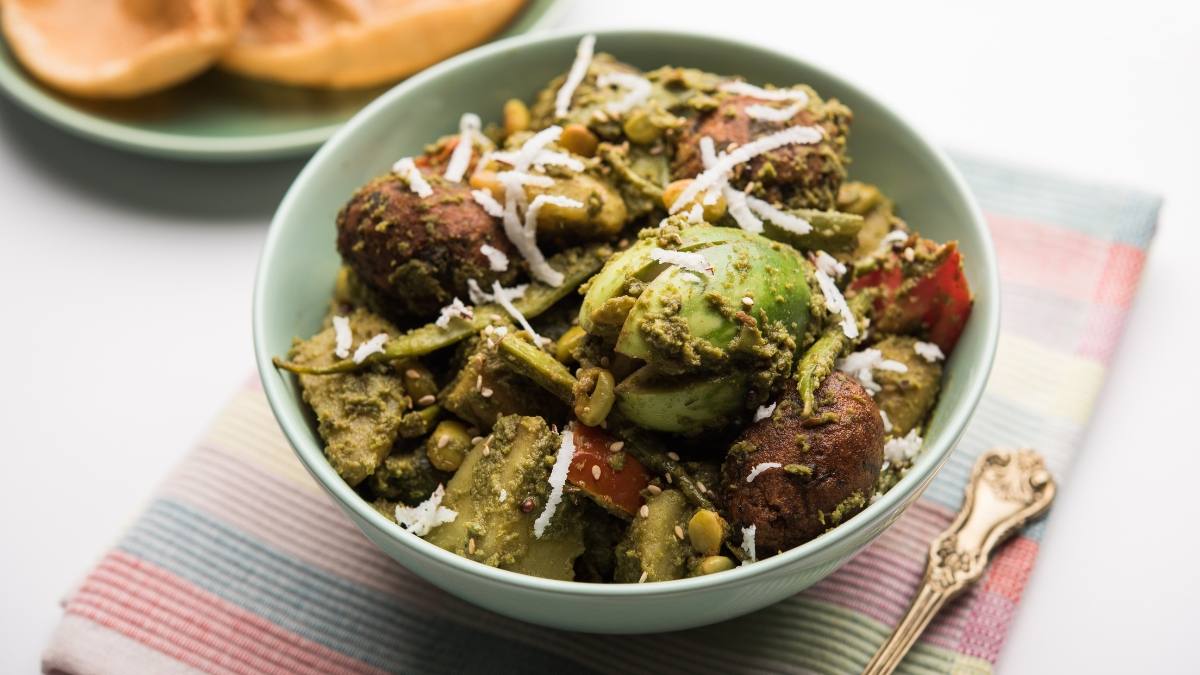
This Is The Best And Authentic Undhiyu Recipe
From The Kitchens of India | The WFY Magazine | February Edition
From the Kitchens of India
Undhiyu (Authentic Gujarati Winter Dish)
Undhiyu is not a recipe that submits easily to shortcuts. It is seasonal, slow, and collective by nature. Traditionally prepared in the winter months of Gujarat, especially around Uttarayan, Undhiyu is less a dish and more a ritual. Families gather. Vegetables are sourced carefully. Hands are stained with green masala. Time is allowed to do its work.
The name Undhiyu comes from the Gujarati word undhu, meaning upside down. In its oldest form, the dish was cooked in an earthen pot buried partially in the ground, heated from above with slow-burning firewood. The vegetables cooked gently in their own steam, absorbing flavours without agitation. While modern kitchens may not recreate this method fully, the spirit of patience and balance remains essential.
This is a traditional, no-compromise recipe, as prepared in many Gujarati homes. Not restaurant-style, not simplified, and not adapted for speed.
Ingredients (Serves 6–8)
Seasonal Vegetables (core to authenticity)
- Purple yam (ratalu) – 250 g
- Sweet potatoes – 2 medium
- Baby potatoes – 8 to 10
- Raw bananas – 2
- Elephant foot yam (suran) – 150 g
- Flat beans (papdi / valor) – 200 g
- Fresh green tuvar (pigeon peas) – 1 cup
- Baby brinjals – 6 to 8 (slit crosswise)
For Muthia (fenugreek dumplings)
- Fresh methi leaves (finely chopped) – 1½ cups
- Gram flour (besan) – ¾ cup
- Whole wheat flour – 2 tablespoons
- Semolina (rava) – 1 tablespoon
- Ginger paste – 1 teaspoon
- Green chilli paste – 1 teaspoon
- Turmeric powder – ¼ teaspoon
- Salt – to taste
- Sugar – a pinch
- Oil – 1 teaspoon
- Water – as needed
For the Green Masala
- Fresh coriander leaves – 1½ cups
- Fresh grated coconut – 1 cup
- Green chillies – 4 to 6 (adjust to tolerance)
- Ginger – 1½ tablespoons
- Garlic – optional, 4 cloves (many traditional homes skip this)
- Sesame seeds – 3 tablespoons
- Roasted groundnuts – 3 tablespoons
- Garam masala – 1 teaspoon
- Coriander powder – 1½ teaspoons
- Cumin powder – 1 teaspoon
- Turmeric powder – ½ teaspoon
- Red chilli powder – 1 teaspoon
- Sugar or jaggery – 1½ tablespoons
- Lemon juice – 1 tablespoon
- Salt – to taste
For Cooking
- Groundnut oil – 5 to 6 tablespoons
- Ajwain (carom seeds) – ½ teaspoon
- Hing (asafoetida) – a pinch
- Water – minimal, only if required
Preparation
Step 1: Prepare the Muthia
Mix all muthia ingredients into a soft but firm dough. Shape into small oval dumplings. Steam for 12 to 15 minutes until cooked. Cool slightly and cut each dumpling into halves. Keep aside. Do not fry at this stage.
Step 2: Prepare the Vegetables
Peel and cut all root vegetables into large chunks. Brinjals should be slit but kept whole. Papdi beans should be opened and strings removed. Keep vegetables immersed briefly in water, then drain thoroughly. Moisture must be minimal.
Step 3: Prepare the Green Masala
Grind all masala ingredients into a coarse paste. It should not be smooth. Texture matters. Taste and adjust salt, sweetness, and heat. The flavour should be assertive but balanced.
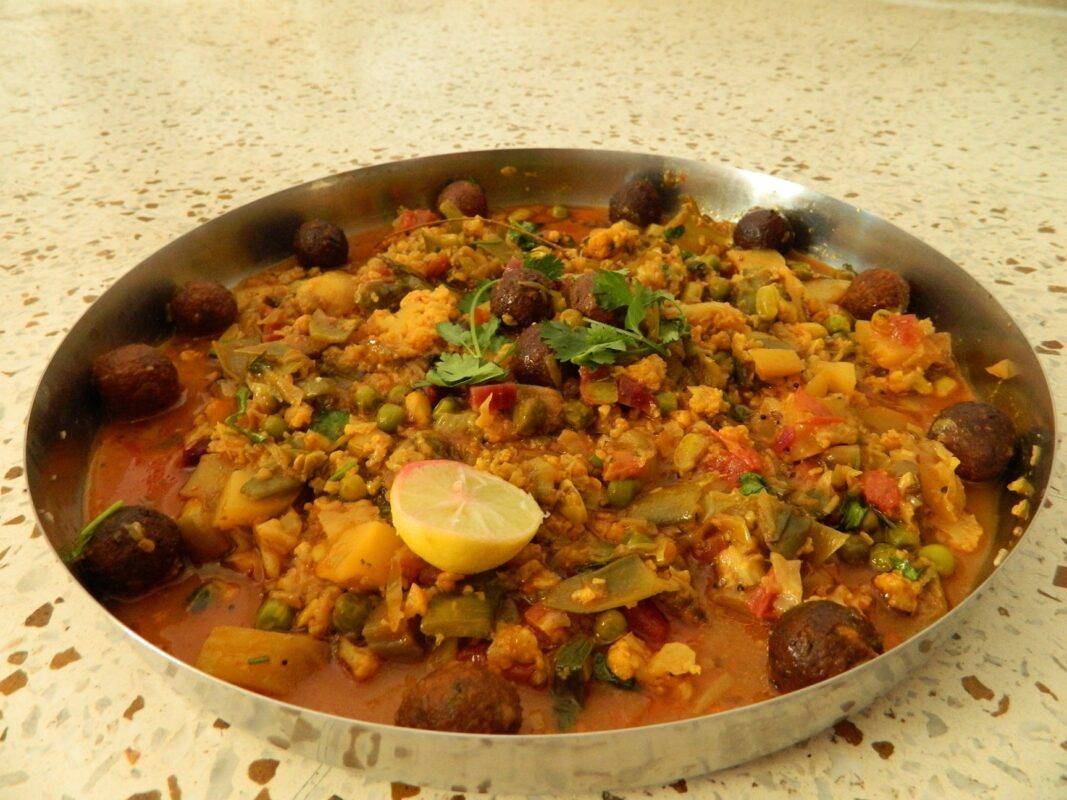
Assembling the Undhiyu
Take a heavy-bottomed pot or deep kadhai with a tight-fitting lid. Traditionally, earthenware is preferred.
Heat groundnut oil on low flame. Add ajwain and hing. Let them release aroma.
Now layer the vegetables, without stirring excessively:
- Root vegetables at the bottom
- Papdi beans and tuvar
- Brinjals stuffed generously with green masala
- Remaining vegetables
Spread the remaining green masala evenly over the top. Add the steamed muthia pieces.
Cover tightly. Cook on very low heat for 45 to 60 minutes. Do not stir frequently. Gently shake the pot once or twice if needed. The vegetables should cook in their own moisture. Add a few tablespoons of water only if absolutely necessary.
The Undhiyu is ready when all vegetables are tender and coated with masala, oil separating lightly at the edges.
Resting and Serving
Turn off the heat and let the Undhiyu rest covered for at least 15 minutes before serving. This resting period deepens the flavour.
Serve hot with:
- Puris
- Rotlas or bajra rotis
- A bowl of thin buttermilk
- Fresh lemon wedges
Undhiyu tastes better after a few hours and even the next day.
A Note on Authenticity
Authentic Undhiyu is not fiery. It is not oily. It does not rely on overpowering spices. Its strength lies in seasonality and restraint. Every vegetable has a role. Removing or substituting them changes the dish fundamentally.
In many Gujarati homes, Undhiyu is cooked once or twice a year. That rarity is part of its meaning. It teaches patience. It rewards care. And it reminds us that some dishes are not meant to be rushed.
Disclaimer: This recipe is shared for cultural and culinary documentation. Regional variations may exist across Gujarat, and home practices may differ based on family tradition and seasonal availability of ingredients.